IT Runbook Automation in ITSM: Automating Repetitive Tasks from Password Resets to Server Reboots

IT runbook automation in ITSM eliminates the repetitive manual tasks that consume service desk capacity — password resets, server reboots, account unlocks, certificate renewals — by triggering automated action sequences from ITSM event conditions. This guide explains how Virima runbook automation works and how to convert manual runbooks into automated workflows.
- IT teams spend an estimated 2-3 months per year on repetitive, manual tasks that automation handles better.
- Runbook automation in ITSM converts step-by-step IT procedures into event-triggered automated workflows.
- Virima 6.1.1 runbook automation executes ITSM event conditions (ticket category, CI state, schedule) against action sequences — with CMDB data determining execution context.
- Common candidates: password resets, server reboots, account unlocks, patch-triggered restarts, and certificate renewals.
- Automating the top 10 highest-volume service desk requests can reduce ticket handling time by 60-80% for those categories.
Table of Contents
- What Is Runbook Automation in ITSM?
- The Most Common IT Tasks That Should Be Automated
- How Virima Runbook Automation Works
- Connecting Runbook Automation to ITSM Workflows
- From Manual Runbook to Automated Workflow: A Practical Conversion Guide
- How Runbook Automation Reduces Service Desk Ticket Volume
- Conclusion
- FAQ
Ask any service desk manager which tasks consume the most agent time, and the answer is always the same: the same 10 tasks, every week. Password resets. Account unlocks. Server reboots after patch updates. Certificate renewals. Software installations. Each one follows a defined, repeatable process. Each one requires a human to initiate it, monitor it, and close the ticket.
TeamDynamix estimates that IT teams spend 2-3 months per year on manual tasks that automation could handle. That is not time spent on complex incidents, strategic projects, or service improvement. It is time spent on tickets that arrive with predictable regularity, follow the same steps every time, and produce the same outcome — unless a human makes an error.
Runbook automation in ITSM takes those repeatable processes and executes them automatically, triggered by the ITSM events that used to require human response.
What Is Runbook Automation in ITSM? {#what-is-runbook-automation-in-itsm}
A runbook is a documented procedure — a step-by-step guide that an IT team member follows to complete a specific task or respond to a specific event. Traditional runbooks are written documents: checklists, wikis, or knowledge base articles that a service desk agent opens, reads, and follows manually.
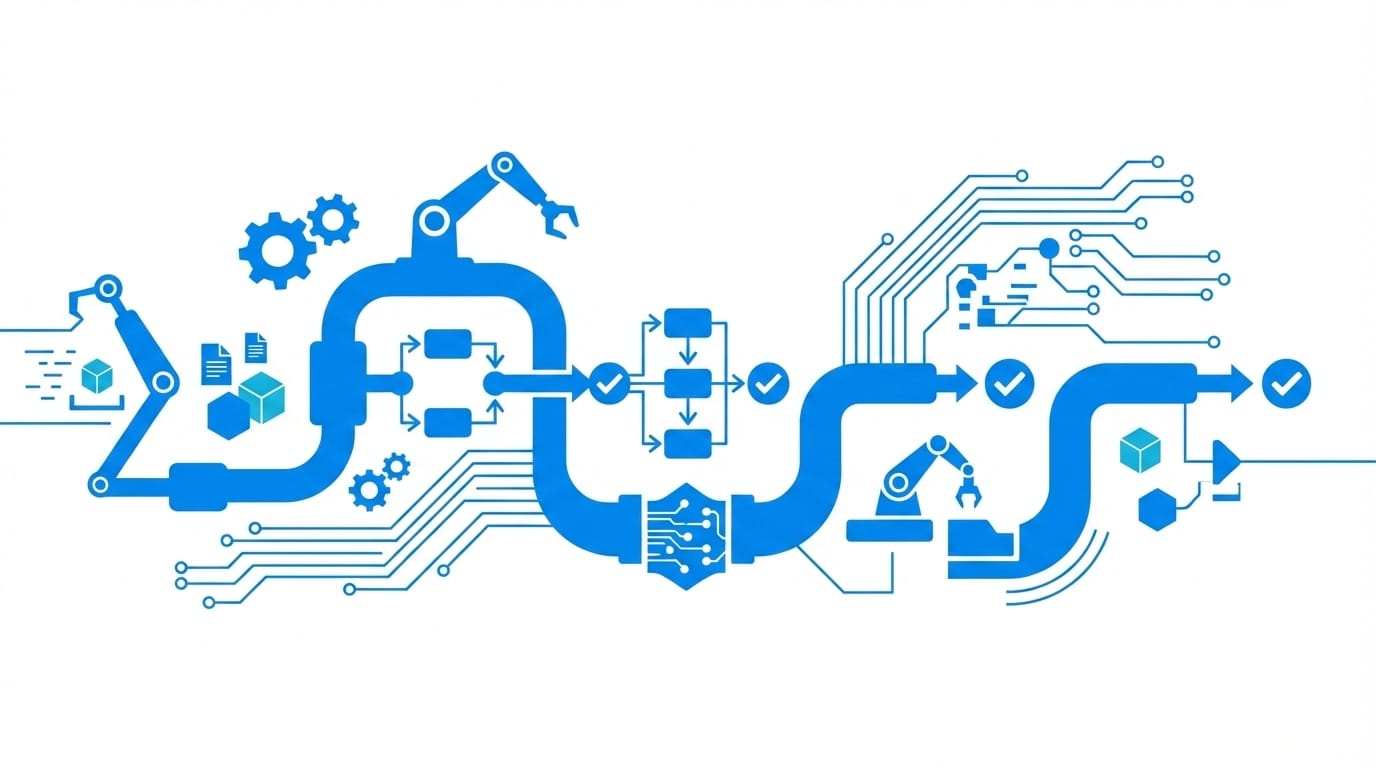
Runbook automation converts that written procedure into an automated action sequence. Instead of a human reading the runbook and executing each step, the ITSM system reads an event condition and executes the steps automatically.
The key elements of runbook automation are:
- Event trigger — the condition that initiates the runbook (e.g., a ticket matching a specific category, a CI reaching a specific state, a scheduled time window).
- Action sequence — the ordered steps the runbook executes (e.g., verify user identity, execute password reset, update Active Directory, close ticket, notify user).
- Context data — CI and user data from the CMDB and ITSM records that the runbook reads to execute the steps correctly (e.g., which domain, which server, which environment).
- Audit record — a log of every step the runbook executed, the result of each step, and any exceptions encountered.
Runbook automation is not the same as workflow automation (which manages human task sequences) or business rules (which govern data decisions). It is the automated execution of operational IT procedures in response to real-time events.
The Most Common IT Tasks That Should Be Automated
Password Resets
Password resets are the highest-volume, most automatable task in any service desk. The procedure is identical every time: verify user identity, generate or allow the user to set a new password, unlock the account if locked, confirm the reset. There is no scenario where a skilled IT agent adds value to this process. It is purely mechanical.
Server Reboots After Patch Updates
Post-patch reboots require a human to confirm the patch completed successfully, schedule a reboot in the appropriate maintenance window, execute the reboot command, and verify the server returned online. Every step is deterministic — the same conditions produce the same required actions. Runbook automation handles this end-to-end, including the verification step that confirms the server is back online before closing the ticket.
Account Unlocks
Active Directory lockouts generate service desk tickets at high frequency. The resolution — verify the user, unlock the account, optionally reset the password — follows the same steps every time. Automated account unlock runbooks handle the entire sequence in seconds.
Certificate Renewals
Certificate expiry monitoring generates alerts that someone must act on. The renewal process — request a new certificate, validate the domain, install it, update the relevant systems, document the new expiry date — is well-defined and repeatable. Runbook automation handles most or all of this sequence, depending on the certificate authority and the installation environment.
Software Provisioning
When a service desk ticket requests standard software installation, the runbook verifies the requestor’s authorization, checks license availability, pushes the installation package to the target machine, verifies installation success, and closes the ticket. No agent involvement required.
How Virima Runbook Automation Works
Virima 6.1.1 runbook automation operates on a condition-to-action model:
Define the event condition. The runbook is configured to trigger when a specific ITSM event condition is met. Examples: an incident ticket is created with category “password reset” and priority “medium,” or a patch deployment record reaches status “completed” on a CI of type “production server.”
Read CMDB context. When the trigger fires, Virima reads the CMDB for context data about the CI involved: environment (production/staging/dev), maintenance window, CI owner, related services, and any open change or incident records. This context data determines how the runbook executes — a production server reboot follows a different sequence than a dev server reboot.
Execute the action sequence. Virima executes the defined action sequence: each step runs in order, with the results of each step feeding into the next. Conditional branches allow the runbook to handle exceptions — if step 3 fails, the runbook can escalate to a human agent rather than continuing blindly.
Write results to the CMDB and ITSM record. When the runbook completes, Virima writes the results back to the CMDB (updated CI attributes, if applicable) and the ITSM record (resolution notes, ticket status, audit trail). The ticket closes automatically if the runbook completed successfully.
This architecture — event trigger, CMDB context, action sequence, result write-back — means that runbook automation is always CMDB-aware. The execution adapts to the CI’s actual state and environment, not to a generic procedure.
Connecting Runbook Automation to ITSM Workflows
Virima runbook automation integrates directly with ITSM workflows. A runbook can be invoked as a step within a broader ITSM workflow — for example, as an automated resolution step within an incident management workflow.
This integration enables hybrid automation: human-driven workflow steps (diagnosis, impact assessment, approval) combined with automated execution steps (resolution, verification, documentation). The service desk agent handles the judgment calls; the runbook handles the mechanical execution.
For example, an incident management workflow for server performance degradation might include:
- Automated triage (runbook checks CPU, memory, and disk metrics from CMDB-connected monitoring)
- Human impact assessment (agent reviews triage results and decides on response)
- Automated remediation (runbook executes approved remediation — service restart, cache clear, process kill)
- Automated verification (runbook confirms metrics returned to normal)
- Automated ticket closure and CMDB update
The agent is involved in step 2 only. All other steps are automated.
From Manual Runbook to Automated Workflow: A Practical Conversion Guide
Converting an existing manual runbook into an automated Virima workflow follows four steps:
Step 1 — Document the current steps precisely. Take an existing manual runbook and list every discrete action in order. Include conditional branches (e.g., “if the account is in Group A, do X; if Group B, do Y”). Include the data inputs each step requires (user ID, CI name, environment type).
Step 2 — Identify the trigger condition. Determine what ITSM event should initiate the runbook. For a password reset runbook, the trigger is a ticket with category “Password Reset” and a verified user identity. For a post-patch reboot runbook, the trigger is a patch deployment record reaching “completed” status.
Step 3 — Map data inputs to CMDB fields. For each step that requires context data (server name, domain, environment), identify the corresponding CMDB field. This mapping tells Virima where to read the data the runbook needs.
Step 4 — Build and test in Virima. Enter the trigger, conditions, and action sequence into the Virima runbook builder. Test against a representative set of ITSM events in a non-production environment. Verify edge cases and exception handling. Activate in production.
How Runbook Automation Reduces Service Desk Ticket Volume
Runbook automation does not just speed up ticket resolution — it reduces the effort-per-ticket so dramatically that the same team capacity handles a significantly higher ticket volume.
Consider password resets at a 500-person organization. A typical organization might see 50-100 password reset tickets per month. Each ticket takes an average of 5-10 minutes of agent time to resolve (verification, reset execution, confirmation). That is 250-1,000 agent-minutes per month on a single task category.
With runbook automation, each password reset ticket takes the same clock time (verification may still require a brief agent check) but near-zero agent execution time. The runbook executes the reset while the agent handles other tickets. Monthly agent time for password resets drops from 250-1,000 minutes to near zero.
Apply this across the top 10 highest-volume routine task categories, and the cumulative reduction in agent effort is substantial — freeing service desk capacity for complex incidents, service improvement work, and user onboarding support.
Conclusion
Runbook automation in ITSM converts the most predictable, repetitive, and manual IT tasks into automated event-triggered workflows. The service desk stops serving as the execution arm for mechanical procedures and starts focusing on work that requires human judgment.
Virima 6.1.1 delivers runbook automation that is CMDB-aware — reading CI context, adapting execution to environment and criticality, and writing results back to both the CMDB and the ITSM record. Every automated execution is auditable, repeatable, and consistent.
Schedule a Demo at virima.com to see how Virima runbook automation works in your ITSM environment.
Frequently Asked Questions
What is the difference between runbook automation and ITSM workflow automation?
ITSM workflow automation manages the sequence of tasks in a service management process — routing tickets, assigning agents, sending notifications, managing approvals. Runbook automation executes the specific IT operational procedures that resolve or respond to those tickets — the actual technical steps (password reset, server reboot, account unlock) that produce the outcome. In Virima, runbook automation is a step that can be embedded within broader ITSM workflows.
Does Virima runbook automation require coding skills?
No. Virima 6.1.1 runbook automation is configured through a no-code builder. IT operations managers and ITSM administrators can define triggers, conditions, action sequences, and exception handling without writing code. Advanced integrations with external systems may require API configuration, but the core runbook logic is no-code.
How does runbook automation handle exceptions or step failures?
Virima runbook automation supports conditional exception handling. When a step fails or returns an unexpected result, the runbook follows a defined exception path — escalating to a human agent, sending a notification, creating a new incident ticket, or halting the sequence. Exception paths are configured alongside the main action sequence in the runbook builder.
This article is based on Virima 6.1.1 capabilities. Feature availability may vary by deployment configuration.