The Inventory Gap That Every CISO’s Vulnerability Program Inherits

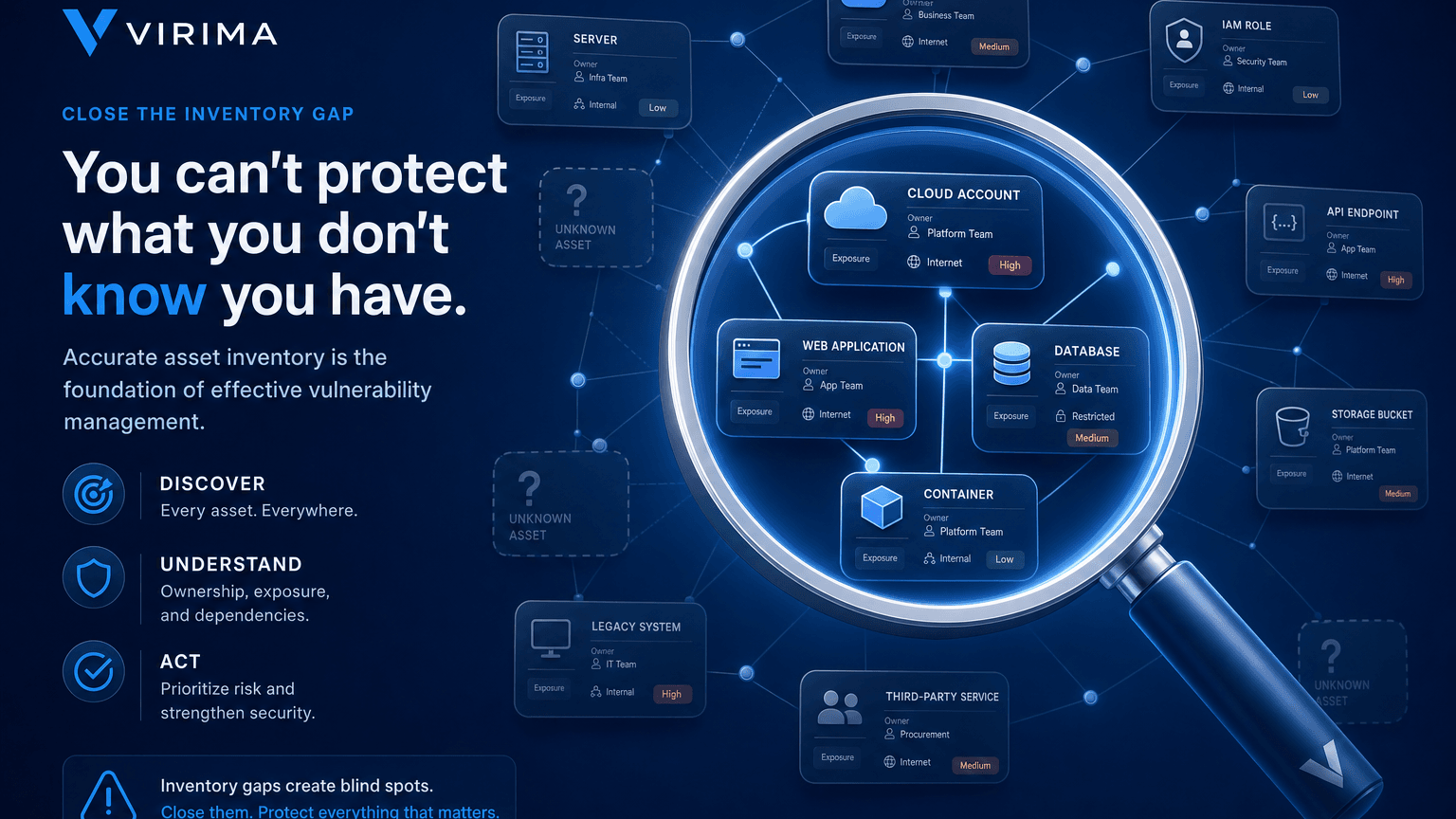
Every vulnerability management program runs on the same basic engine: something finds a weakness, something decides how urgent it is, someone fixes it. A scanner flags a CVE. A researcher reports a bug. A vendor ships a patch advisory. Each becomes an actual remediation action only once someone can answer four questions about the asset carrying the vulnerability: who owns it, how exposed is it, what depends on it, and how bad would the impact be if it is exploited today. That information lives in the asset inventory, not in the vulnerability itself. When the inventory is wrong, thin, or missing an asset entirely, the inventory gap in a CISO’s vulnerability program becomes a gap that was never the program’s own to fix.
The clearest recent proof of this sits in an unlikely place: a process document. On July 15, 2026, the Cybersecurity and Infrastructure Security Agency (CISA) published joint guidance on how organizations should handle vulnerability reports from outside security researchers. The National Security Agency (NSA), Japan’s Computer Emergency Response Team Coordination Center (JPCERT/CC), the Netherlands’ National Cyber Security Centre (NCSC-NL), and the UK’s National Cyber Security Centre (NCSC-UK) co-authored it. Most of it reads like an operations manual: publish a policy, define scope, and triage. Buried inside it is an admission that has nothing to do with process. A security team can receive a fully valid report and still have no reliable way to identify who owns the affected product, reproduce the researcher’s finding, or free up engineering time for a fix. The report did everything right. The gap was already sitting there, waiting, in whatever record was supposed to say who owned that system.
This failure shows up everywhere a vulnerability program touches an incomplete inventory — an external researcher’s report, an internal scanner’s finding, a vendor’s patch advisory. The channel changes; the failure mode doesn’t.
What is the inventory gap in a CISO vulnerability program?
It is the missing join between a finding and current asset facts: owner, exposure, dependencies, and business impact. Scanners and disclosure channels still produce tickets. Remediation stalls when those four fields are wrong, thin, or absent from the inventory the program must trust.
Three functions inherit the same inventory gap
Vulnerability remediation, coordinated disclosure response, and cyber insurance underwriting all draw on the same underlying asset record. A gap does not stay contained to whichever function noticed it first. It surfaces independently in each one, at the worst moment for each.
Vulnerability remediation
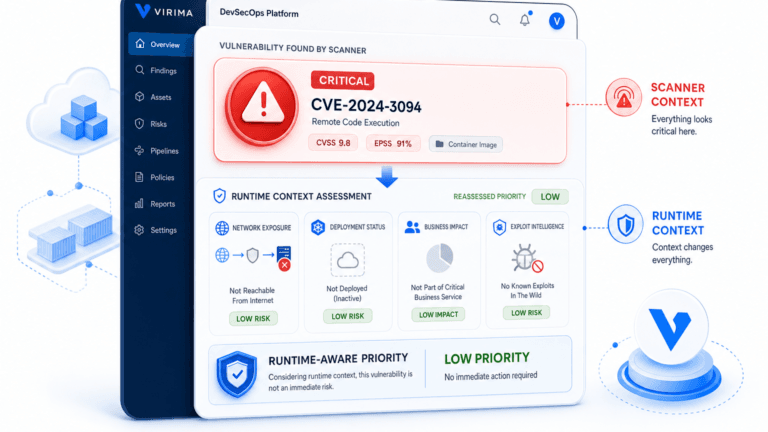
Remediation treats a CVE or researcher finding as work. The ticket only moves when someone can name the host, image, SaaS tenant, or library path, rank business impact, and assign an owner with authority to change production. Without that join, severity scores float and patch windows open against the wrong fleet. Teams already running IT discovery still fail here when discovery output never becomes owned configuration items security can query under pressure. For the mechanics of that handoff, see why IT discovery is critical for vulnerability management.
Coordinated vulnerability disclosure response
Coordinated vulnerability disclosure (CVD) programs often treat the intake channel as the hard part. CISA’s July 2026 guidance stresses a public policy, clear scope, acknowledgment, triage, fix coordination, and researcher communication. But the same guidance concedes the quieter failure: a valid report can still land with no reliable path to product ownership, reproduction, or engineering time. The mailbox works. The ownership graph does not. A mature program needs product inventories, dependency records, and release engineering access, not only a published policy page.
Cyber insurance underwriting
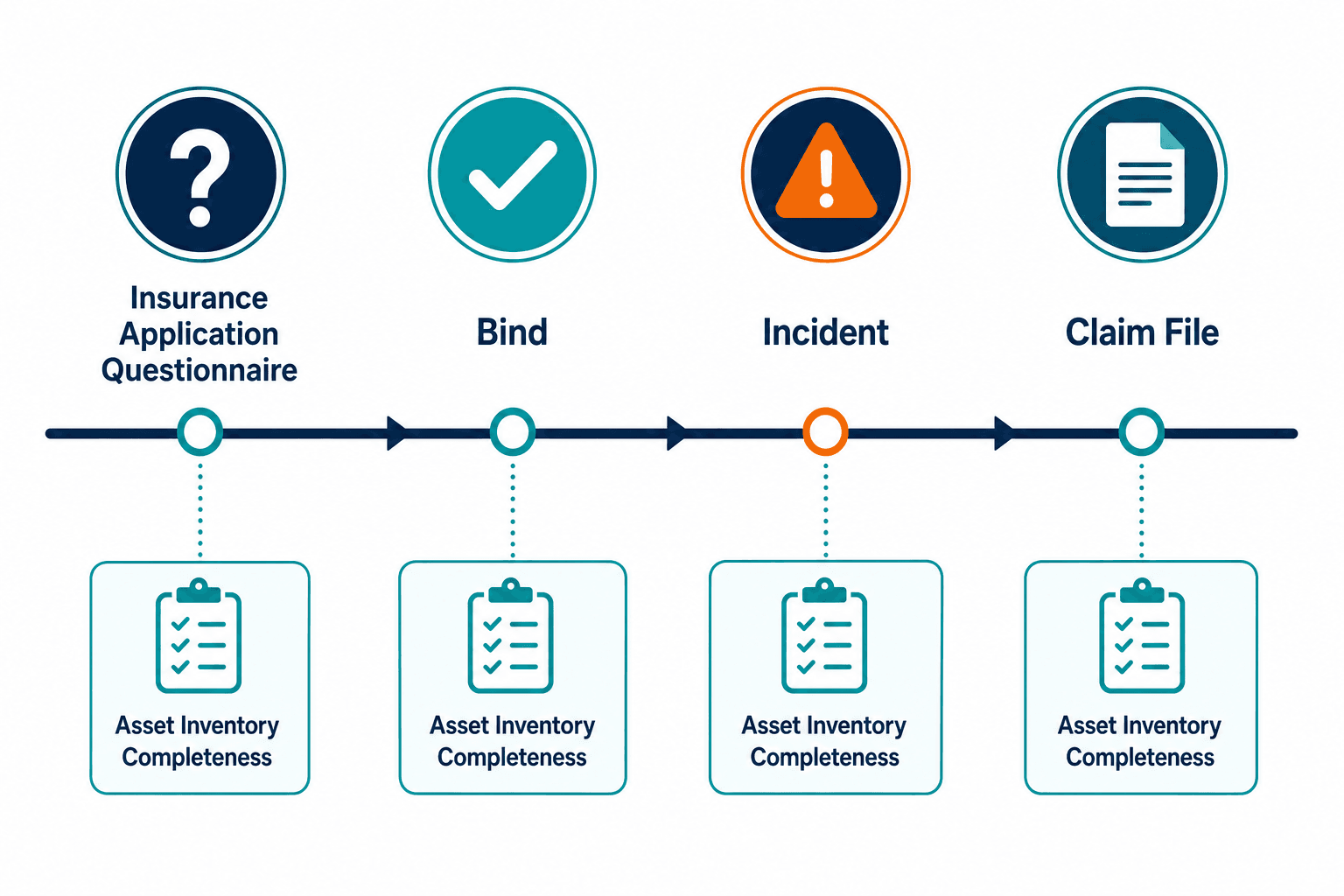
Cyber insurance prices risk from what the insured says it runs and how it protects that estate. Underwriters ask for verifiable controls, patch and vulnerability process, and evidence that protection coverage matches the asset base. Industry guidance aimed at applicants is explicit that a three-year-old asset inventory will not satisfy underwriters (Huntress). Common application packs ask whether asset discovery exists and what share of the inventory carries endpoint or equivalent controls, often with a bar near 90 percent (Trend Micro Cyber Insurance Common Application Questions). When the application inventory and the live estate disagree, the disagreement shows up later as premium friction, reduced limits, exclusions, or contested claims. The same incomplete record that blocked a patch ticket now sits under a binder.
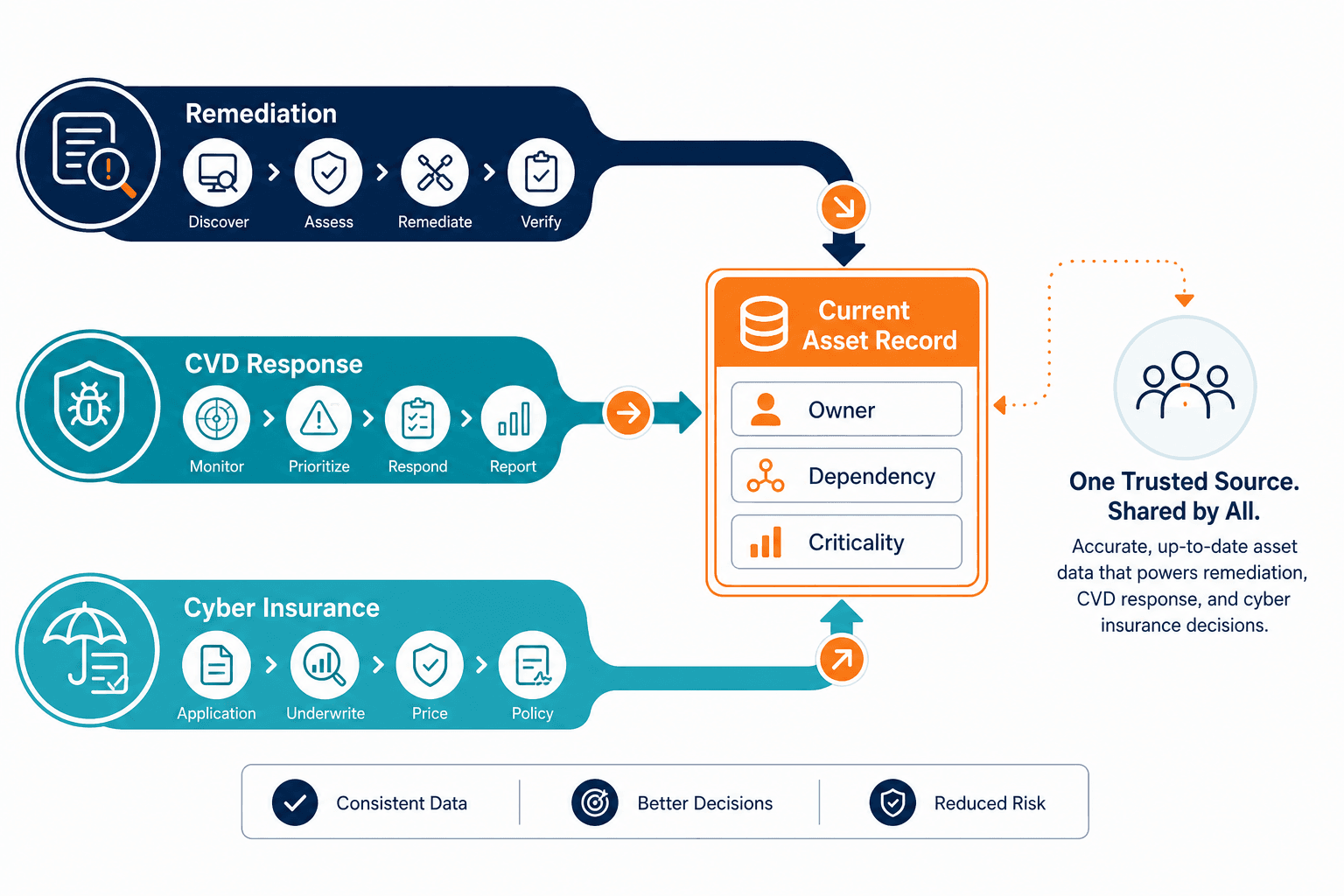
One missing owner field is not three separate problems. It is one data failure read three ways.
See how CISOs establish trusted runtime truth so findings map to owners and blast radius before the next disclosure or renewal cycle.
What happens when this exposure gets tested legally
On November 20, 2025, the U.S. Securities and Exchange Commission (SEC) dismissed all remaining claims against SolarWinds and its CISO, Timothy Brown, with prejudice, closing a case that began in October 2023. The dismissal is evidence that personal and organizational accountability for what a company knew, or claimed to know, about its security posture is not abstract — regulators were willing to test it all the way to the end.
In October 2023, the SEC charged SolarWinds and Brown personally — the first time a sitting CISO was named a primary defendant in an SEC cybersecurity fraud action, tied to allegedly misleading statements about security practices and controls around the 2020 Sunburst compromise of the Orion platform. On July 18, 2024, U.S. District Judge Paul A. Engelmayer dismissed most of the SEC’s claims at the motion-to-dismiss stage, leaving a narrower set of issues alive before the SEC agreed to dismiss the remainder with prejudice in November 2025.
The case did not ultimately stick. Two years of it happening at all is still the signal. After the dismissal, public companies still face SEC material cyber disclosure rules. Other regulators and litigants will keep reading security statements against operational reality. For a CISO, the durable lesson is that statements about coverage and control effectiveness must match an asset and ownership record the organization can produce under pressure.
What did the SEC SolarWinds case change for CISOs after dismissal?
It showed regulators will name individual security executives when disclosure and control narratives diverge from operations. Dismissal with prejudice closed that docket. Material cyber disclosure rules and multi-regulator scrutiny remain, so CISOs still need evidence trails that match claims about coverage and posture.
Where this actually gets priced: cyber insurance
Legal risk is episodic. Insurance is calendar-driven — renewals force the same questions on a schedule: what do you run, what share is protected, how fast do you patch, who owns remediation, and can you prove it.
If a claim later reveals unlisted segments or unprotected end-of-life pockets, the dispute becomes whether the priced risk matches the risk that actually failed. Inventory accuracy is both a bind-time input and a claim-time exhibit.
CISOs who treat the CMDB or asset register as an IT operations concern only discover at renewal that Finance and Risk already staked the policy on that register’s completeness. The vulnerability backlog and the insurance application are reading the same table.
What accurate asset context actually changes
The fix is not a longer checklist on the CVD policy page. It is one current record that remediation, disclosure response, legal defense preparation, and insurance evidence can all query.
That record has to answer, without a war-room archaeology project:
- What exists (hardware, software, cloud resources, and in-scope non-human identities)
- How it is connected (dependencies and service paths once service definitions are supplied)
- Who owns it (technical and business owners with authority)
- What changed (last known configuration state from scheduled discovery cycles)
- What breaks if this configuration item fails or stays unpatched (blast radius — the dependent services and systems that would be affected)
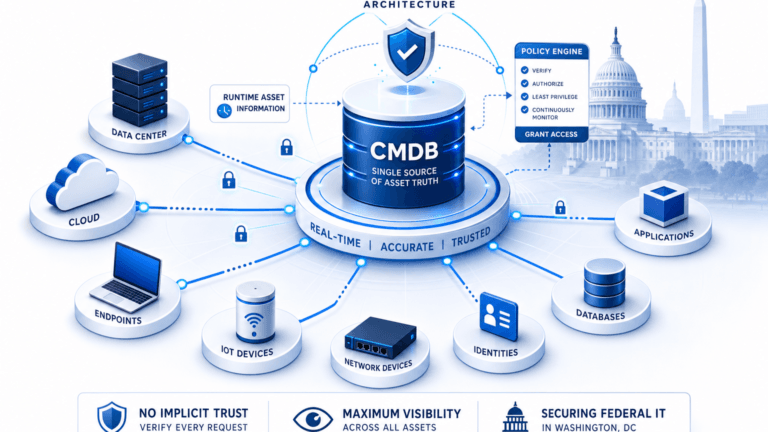
Virima’s role is discovery-sourced configuration truth. Agent-based and agentless discovery, cloud inventory across AWS and Azure, and multi-source reconciliation populate a CMDB that security and operations can share. Once teams provide service definitions (manually, by import, or via architecture tools), ViVID™ builds service maps that show which business services depend on a shared component. A CVE then surfaces affected services, not only a host name. See how that CVE-to-configuration-item link works in practice in CMDB vulnerability management: connecting CVEs to IT assets. NIST National Vulnerability Database overlays on Windows Server findings can be weighted by asset and service criticality; for a deeper walkthrough of that prioritization model, see vulnerability remediation, CMDB asset criticality, and service maps. Connections such as ServiceNow, Jira, and Ivanti stay on one path through Virima’s integrations hub so ownership and tickets meet the same configuration item identity.
That does not replace a CVD policy, a product security team, a scanner, or a broker. It removes the inherited blind spot those programs keep rediscovering. A finding becomes a routed action. A researcher report becomes a scoped engineering task. An insurance question becomes an export from the same system security already trusts.
Map owners, dependencies, and blast radius onto the same discovery-fed CMDB your vulnerability, disclosure, and insurance teams already need. See how Virima attaches runtime context before the next valid report stalls.
What asset context turns a vulnerability finding into a remediation action?
Owner, criticality, dependency path, and current configuration state on the affected item. Without those fields, scanners and disclosure inboxes produce queues. With them, teams can rank blast radius, assign engineering, and prove coverage to insurers from one maintained record.
The report that arrived on time
Return to the July 2026 guidance. The joint document assumes the hard part is the researcher relationship: policy clarity, safe harbor language, acknowledgment service levels, coordinated publication. They are also incomplete if the organization cannot answer whose product was hit, which versions share the code, and who can change production this week.
Most CISOs already live that second failure mode. The scanner ticket ages. The disclosure inbox is green. The binder was signed on last year’s inventory. The missing row is still missing.
Build the CVD program. Publish the policy. Staff the triage. Then fix the record those programs stand on: discovery-maintained assets, owners, and service context that remediation, disclosure, insurance, and accountability can all use without four separate reconstructions under pressure.
Frequently Asked Questions
Why do vulnerability tickets stall even when scanners and disclosure channels work?
Findings become work only after someone maps them to an owner, a criticality, and a blast radius on a current asset. When that join is missing, queues grow while residual risk stays live. Intake success does not equal remediation capacity.
What does CISA’s July 2026 coordinated vulnerability disclosure guidance emphasize?
CISA and partners (NSA, JPCERT/CC, NCSC-NL, NCSC-UK) published Establishing a Coordinated Vulnerability Disclosure Program to Work With Security Researchers on July 15, 2026. It stresses a public policy, clear reporting paths, triage, remediation coordination, and constructive researcher engagement for software manufacturers and online service providers.
How does Virima’s CMDB data help satisfy cyber insurance asset-inventory questions?
Cyber insurance applications increasingly ask for asset discovery, inventory completeness, and patch-process evidence — stale inventories raise premium, cut limits, or block bind. Virima’s discovery-sourced CMDB gives security teams one current export of what exists, what’s protected, and who owns it, matching what underwriters ask for instead of a reconstructed spreadsheet.
What should CISOs take from the SEC SolarWinds case after dismissal?
The SEC charged SolarWinds and CISO Timothy Brown in October 2023. Most claims were dismissed in July 2024. Remaining claims were dismissed with prejudice on November 20, 2025. The multi-year action still signals personal and disclosure accountability risk. Material cyber disclosure duties and other regulators remain active, so posture claims need evidence tied to real inventory and ownership.
How does Virima support vulnerability and disclosure programs without replacing them?
Virima supplies discovery-sourced CMDB data, ownership and relationship context, and ViVID™ service maps after service definitions are provided, so findings can be routed with blast radius and business service impact. It feeds ITSM and security workflows through a shared integrations hub rather than replacing scanners, product security process, or insurance brokers.