The Inventory Control Question Boards Bring to CIOs

The audit committee chair leans forward. She spent twenty years in supply chain before joining the board. Her question lands without drama.
“How many IT assets does this organization own, and how do you know?”
It sounds like a status check. It carries the same weight as cash position or warehouse inventory. Boards spent decades applying inventory control discipline to physical goods and financial instruments, and now apply that same board oversight of IT assets lens to technology estates.
They expect the CIO to answer with confidence, not a promise to “get back to you.” That question is the leading edge of a broader pattern: CIO inventory control board questions are becoming a fixture of audit-committee meetings, and a board-ready answer means a live, governed, explainable record of what exists, how it connects, and who owns it — what Virima calls Trusted Runtime Truth.
PwC’s board technology oversight questions treat technology risk as core fiduciary oversight, not a side briefing from the CIO or CISO. Riviera Partners’ 2026 CIO evaluation framework pushes the same shift: boards want risks eliminated proactively, not explained after the incident.
Three catalysts make the inventory question stick: AI governance failing when models and agents run on infrastructure the board cannot see; regulatory pressure under frameworks such as NIS2 and DORA, which expect demonstrable control and rarely accept a living spreadsheet as evidence; and rising hybrid and multi-cloud spend that outpaces mapped business value. The first board probe is simple: do we even know what we pay for?
The CIO who cannot answer within a credible band loses more than a slide. They lose credibility for every other initiative on their agenda.
CIO Inventory Control Board Questions: The Five Boards Actually Ask
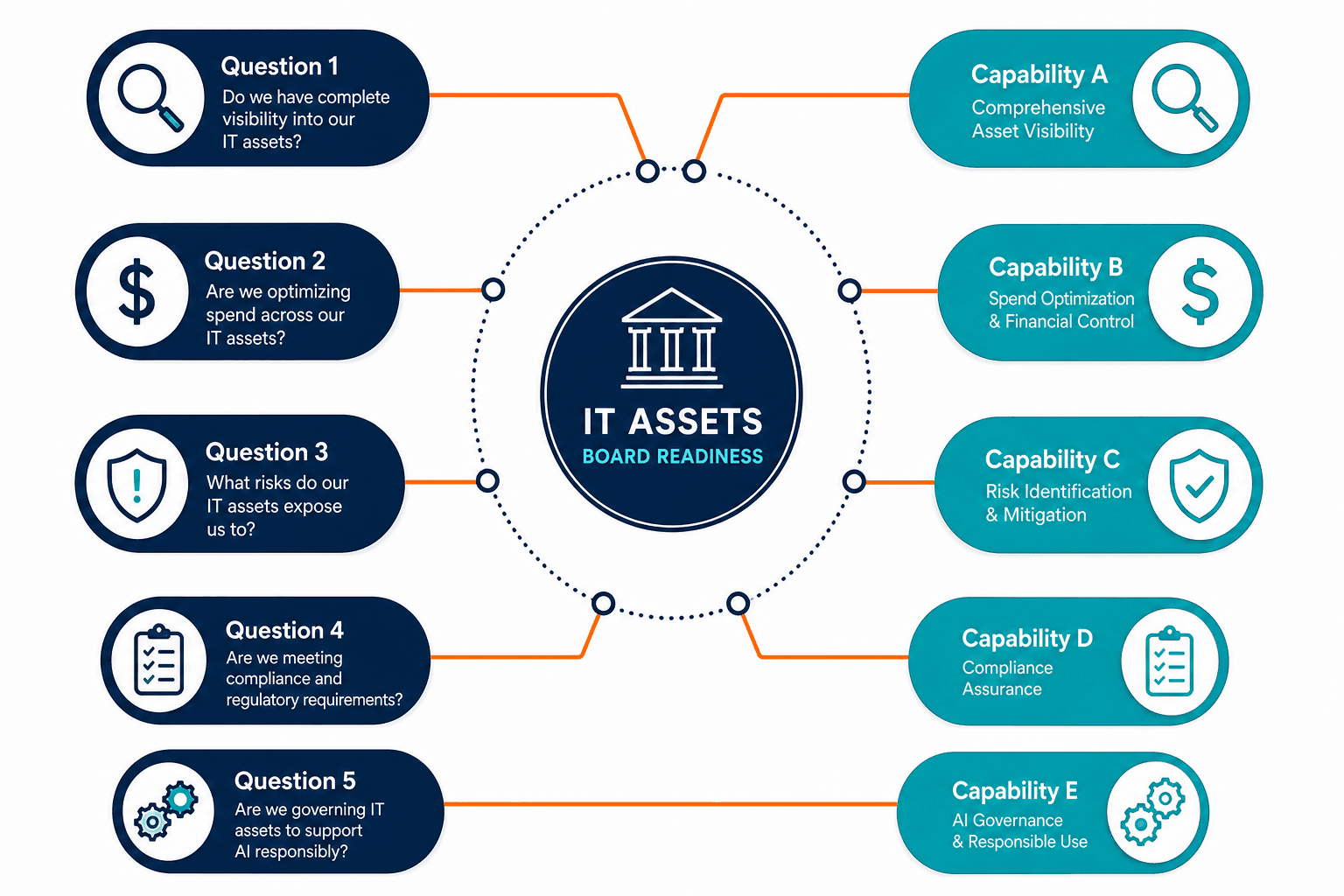
1. “What do we own, and where is it?”
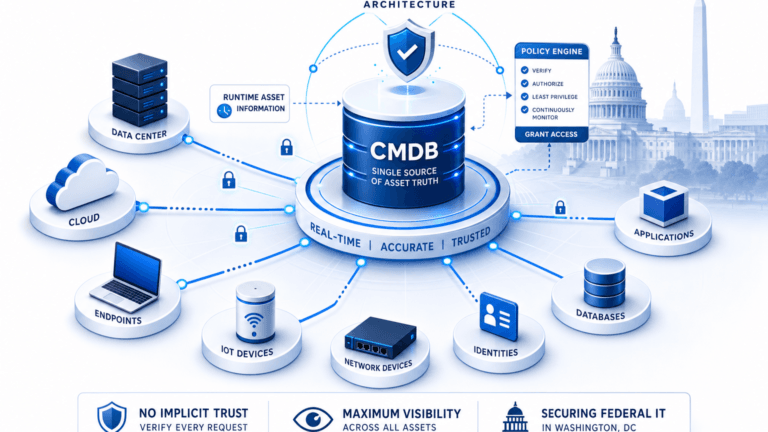
Most CIOs walk into this question carrying a number from a different team, quarter, or tool. The board wants a single, reconciled view of hardware, software, cloud resources, and endpoints across all environments. Only a number traceable to a discovery timestamp and a named population counts as an answer in the governance sense — anything else is an estimate. CISA’s BOD 23-01 made the same point for federal networks: asset visibility is the prerequisite for every control that follows.
2. “How much are we spending on assets we’re not using?”
The preparation gap here is not arithmetic — it is joined data. License shelfware, orphaned cloud instances, idle capacity, and hardware that never left staging only become answerable once license and deployment records share a key. Directors from finance or operations treat idle IT estate like excess inventory: a working-capital problem with a named owner. The CIO who cannot name that owner or number invites a follow-up next quarter.
3. “What’s our exposure from assets we don’t know about?”
This is the question that most directly exposes preparation gaps, because the honest answer requires knowing the boundary of what you do not know. Shadow IT, unauthorized SaaS, and unmanaged AI tools sit outside approved controls. The board hears “unknown asset” as “unknown risk.” Coming into the meeting with a policy document instead of an active shadow-asset detection posture leaves this question unanswerable, and unanswered risk questions rarely stay unanswered for long.
Discovery that actively surfaces unmanaged endpoints and unauthorized cloud instances, not self-reported inventories, turns this from a policy statement into an answerable exposure figure. For a closer look at how that blind spot forms, see Cyber security threat detection and mitigation using IT discovery.
4. “Can we prove compliance if audited tomorrow?”
“We are compliant” and “we can prove compliance tomorrow” are different claims, and boards in regulated industries know the difference. Preparation means ownership records, lifecycle state, change history, and a defensible inventory population available without a two-week sprint. Assurances do not survive sampling. The CIO who has to say “let me follow up” has already answered it. See Achieve simplified compliance mapping with Virima solutions for how that evidence trail is typically assembled.
5. “How does our asset data support AI governance?”
This question is still rising, and it will not reverse. Boards and audit committees are beginning to ask it before, not after, an AI incident. Agents, automated workflows, and model-driven operations need governed records of what runs where, what data paths exist, and who owns the underlying stack. The requirement is a governed, discovery-backed asset foundation the CIO can describe in structural terms, not point to as a vendor slide.
What questions do boards ask CIOs about IT assets?
Boards ask five core questions: what assets the organization owns and where they are, what is being spent on unused assets, what risk comes from unknown or shadow assets, whether compliance can be proved on demand, and whether asset data can support AI governance programs. Each requires a prepared answer, not a promise to follow up.
Why CIOs Struggle to Answer
The difficulty is structural, not motivational. Finance can answer “what is our cash position?” because the accounting function runs a daily close process. Every asset and liability flows through a system of record on a defined cadence, with named owners and an audit trail.
IT organizations were not built to an equivalent standard — they were built to operate: keep systems running, resolve tickets, manage changes. Inventory was a project deliverable, not an IT asset inventory governance control.
That asymmetry is what makes board preparation hard. A CFO reporting cash position cites a process; a CIO reporting asset count often cites the last time someone looked. The gap comes down to design, not people — and boards with finance or supply-chain backgrounds recognize it immediately.
Freshworks’ Global Cost of Complexity research attributes about 7% of annual revenue loss to organizational complexity, with tool sprawl and fragmented operational data among the named drivers — the same structural gap, since IT running on distributed data with no shared close process accumulates invisible cost the same way it accumulates invisible risk.
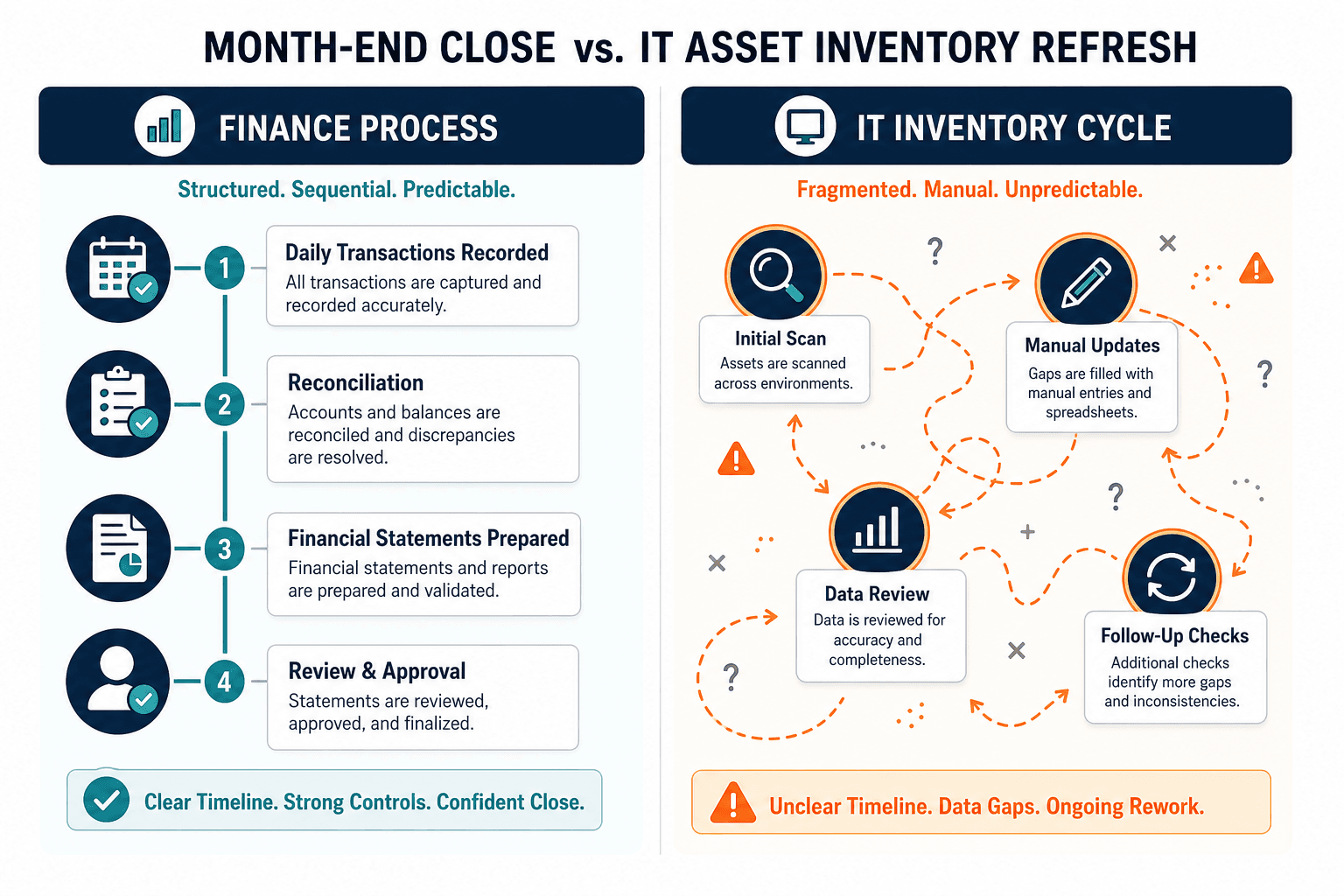
Traditional IT asset management practices were designed for slower, more static estates, not to produce board-grade evidence on demand. Closing that gap means treating inventory not as a project to complete but as a control to maintain — the same discipline the CFO applies to the balance sheet.
Why do CIOs struggle to answer board questions about IT inventory?
The difficulty is structural. IT organizations were built to operate, not to report with fiduciary precision. Finance produces a defensible position through a daily close process. IT inventory has no equivalent cadence, so the board gets the last time someone looked rather than a governed, timestamped record. Closing that gap means treating inventory as a control, not a project.
What a Board-Ready Answer Actually Looks Like
A board-ready answer is not a capability list — it’s what the CIO can demonstrate for each question, without leaving to check.
A timestamp, not a memory. Asset data must refresh on a schedule matching how the estate changes — agent-based, agentless, cloud API, and network scanning. “A scan completed last Tuesday across all environments” is a process. “Our last audit was in March” is a memory.
Dependencies, not just a headcount. Fourteen thousand servers is inventory. Knowing which few hundred support payment processing, with dependencies and owners attached, is intelligence — and it moves the conversation from IT housekeeping to business risk.
A utilization story, not a spend figure alone. License and instance records should show what was purchased, what is active, what is idle, and the reclaim plan — the same register CFOs and supply-chain directors use for other capital categories.
“I can produce that by tomorrow,” not “let me follow up.” Ownership, lifecycle state, last verified discovery signal, and change history need to be available when auditors sample the population. The absence of a scramble is itself a governance signal.
A structural answer, not a theory. Agents and automated operations operate on whatever asset and dependency data they are given, so the board wants proof the CIO’s data foundation can support safe automation in practice. A governed, discovery-backed asset and dependency record is the floor that makes that answer credible.
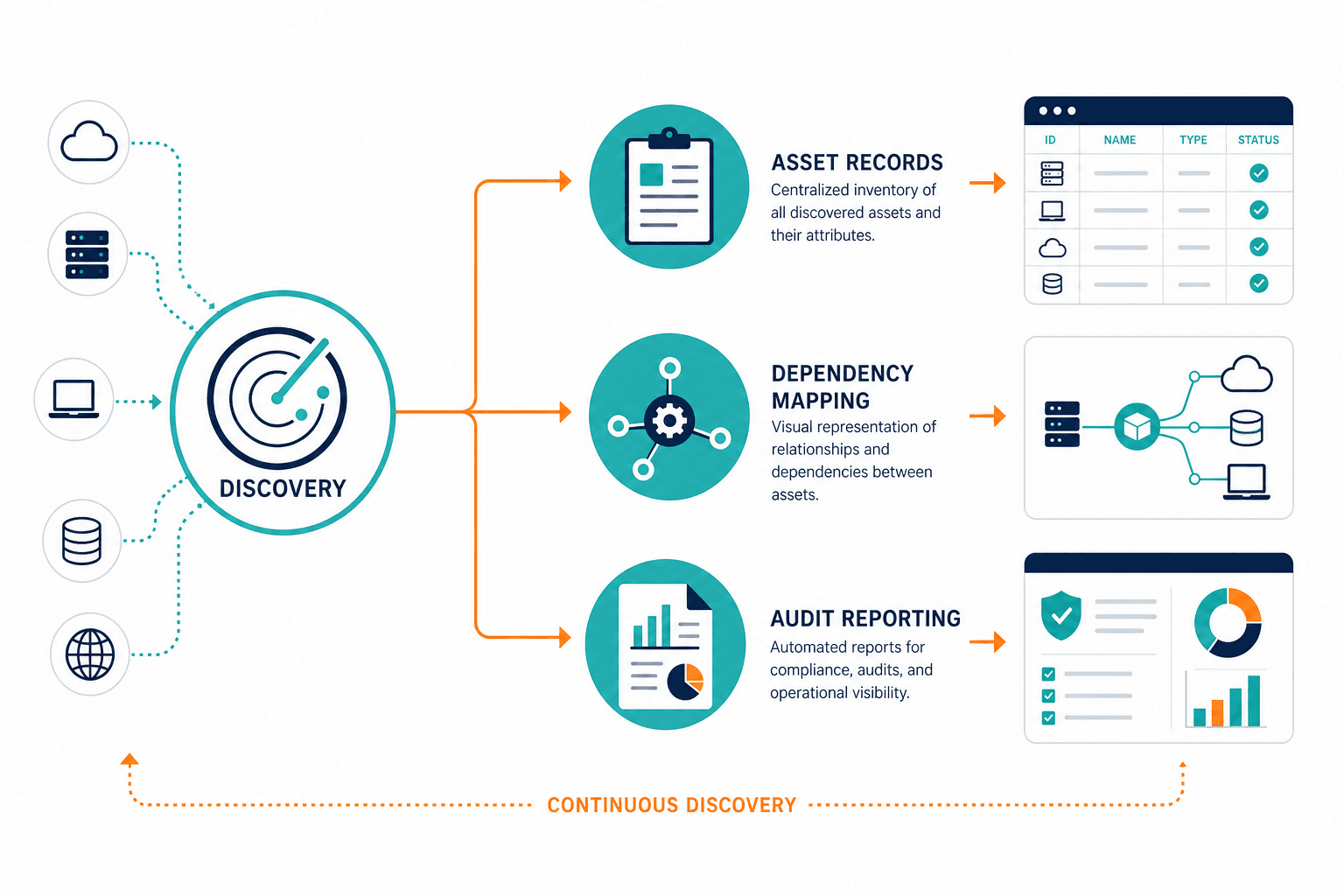
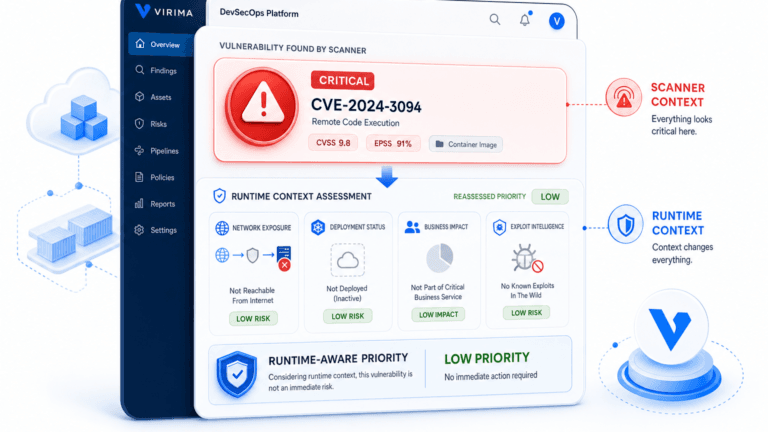
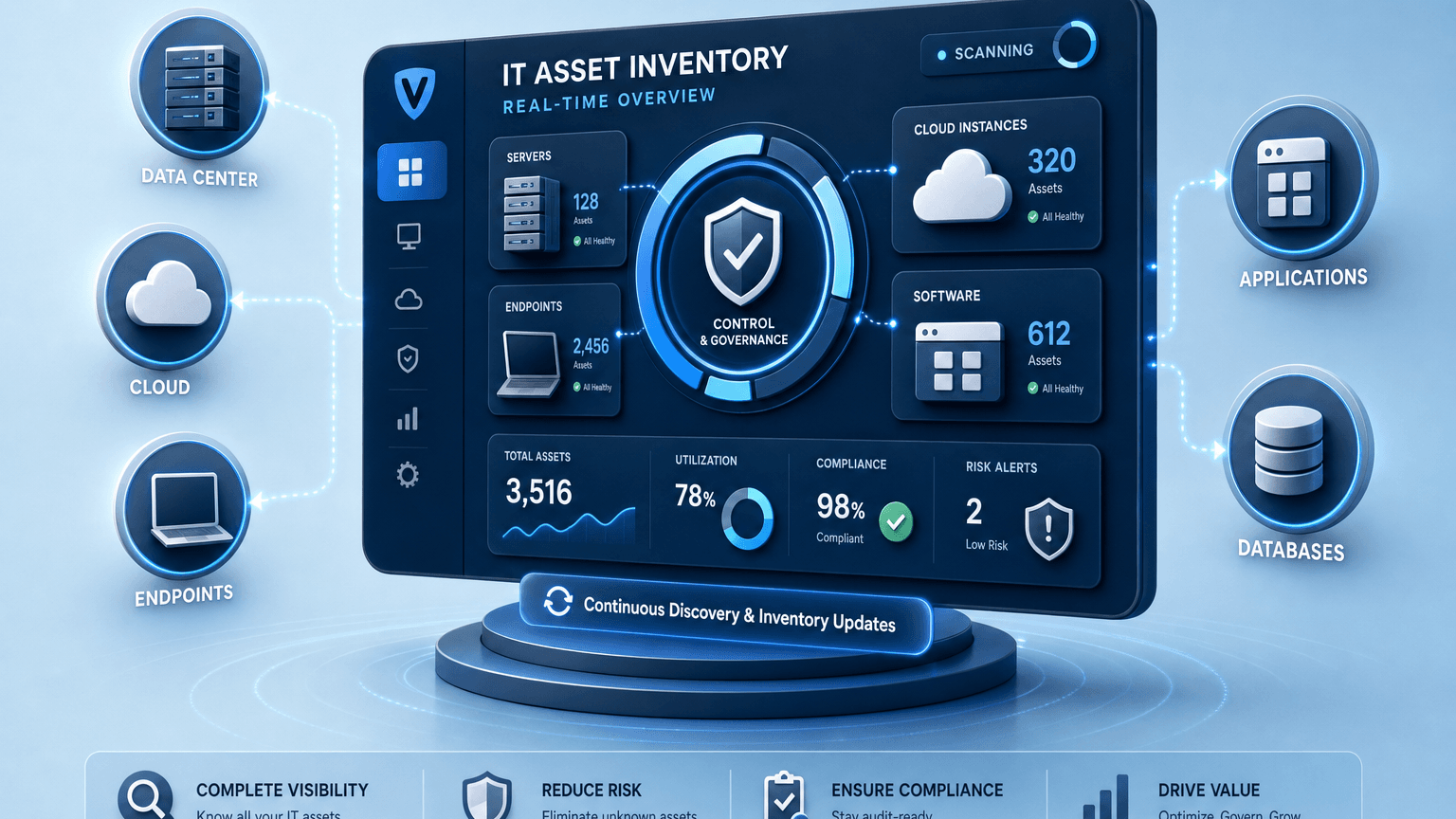
Building and maintaining that posture requires a foundation that unifies discovery, ITAM, CMDB, and service mapping on one data model. Virima’s IT asset management approach is built on that architecture: scheduled multi-source discovery across on-prem, cloud, and remote endpoints — including the unmanaged assets behind the exposure question above — keeps asset records reflecting actual environmental state, not aging manual entries.
Software metering and license reconciliation give the utilization story the CFO question requires. Once service definitions are provided, Virima’s ViVID™ service maps connect assets to named business services, so “what depends on that?” has a defensible answer. Reporting and history logs supply the audit-readiness posture. Platforms like Virima integrate with ServiceNow, Jira, Ivanti, and other ITSM platforms through a single integrations hub, so the system of engagement consumes that truth instead of maintaining a parallel inventory.
What does a board-ready IT asset inventory answer look like?
A board-ready answer means the CIO can cite a discovery timestamp when a number is challenged, answer what depends on a given asset beyond a headcount, present a utilization story not just spend figures, produce audit evidence without a two-week sprint, and describe the AI governance foundation in structural terms, not vendor slides.
From Inventory Keeping to Inventory Intelligence
The CIO who walks into the next board meeting prepared for these questions is not only better protected — they occupy a different position in the room. A defensive answer to “how many assets do we own?” signals IT is still operating on a project inventory model. A prepared answer carries a discovery timestamp, a utilization breakdown, a named owner for every significant asset class, and a structural description of AI governance readiness. That signals IT governs its technology estate with the same discipline the CFO governs the balance sheet.
Boards are not asking about inventory because they doubt the CIO’s work ethic. They are asking because asset visibility sits under every technology decision they will fund: security investment, cloud commit, M&A diligence, AI rollout, and audit confidence. The CIO who arrives with owned counts, utilization stories, exposure maps, evidence trails, and an AI-ready data floor has done more than answer the question. They have changed what it means.
That is inventory intelligence, and it is how the CIO moves from the seat that explains IT to the seat that governs it.
Frequently Asked Questions
What questions do boards ask CIOs about IT asset inventory?
Boards ask whether the organization has a complete, reconciled asset inventory; what is being spent on unused licenses and idle infrastructure; what risk shadow IT and unmanaged AI tools create; whether compliance evidence can be produced on demand; and whether asset data is accurate enough to support AI governance programs. These are governance questions, not operational checkboxes.
Why is IT asset inventory now a board-level concern?
Three converging pressures moved inventory from IT housekeeping to board accountability: AI governance mandates that require known, governed infrastructure; regulatory frameworks such as NIS2, DORA, and SOX that require demonstrable asset control with audit evidence; and rising cloud spend that boards can no longer reconcile with business value without a complete inventory as the starting point.
How does a CIO prepare for board questions about IT assets?
The CIO needs five capabilities in place before the conversation: high-frequency multi-source discovery that keeps asset data current, a single asset record tied to service and ownership context, license and utilization data joined to financial records, audit-ready evidence trails for every significant asset class, and an AI-ready data foundation with governed dependency mapping.
How does Virima’s ViVID™ service mapping answer the board’s “what depends on that” question?
Once service definitions are provided, Virima’s ViVID™ service maps connect discovered assets to named business services, showing which infrastructure supports which service and what breaks if it changes. That turns a raw asset count into a dependency answer the CIO can defend in the room, rather than a headcount with no context.
Does Virima produce audit-ready asset reports without a manual data pull?
Virima’s CMDB maintains ownership records, lifecycle state, and change history alongside discovery-sourced asset data, so reporting and history logs are available on demand rather than assembled through a manual sprint when an audit request lands.