Hypervisor Migration Reality Check: Exposing Hidden Inter-VM Dependencies Before Stack Consolidation

Gartner research vice president Julia Palmer noted in September 2025 that more than a third of enterprise workloads running on VMware will migrate to alternative platforms by 2028, as reported by The Register. Palmer highlighted that comprehensive hypervisor migrations require three or more years of methodical execution across infrastructure environments. Most discussions surrounding stack consolidation prioritize destination platform licensing, hyperconverged hardware footprints, and virtualization hypervisor feature parity. Migration execution can encounter failures when teams separate virtual machines from undocumented dependencies. Standard inventory dumps export machine names, allocated processor counts, and memory thresholds while missing active network conversations. At the upcoming Gartner IT Infrastructure, Operations & Cloud Strategies Conference (IOCS) 2026, industry sessions will examine infrastructure consolidation trade-offs. Effective virtualization wave planning requires treating hypervisor migration dependency mapping as a mandatory architectural baseline.
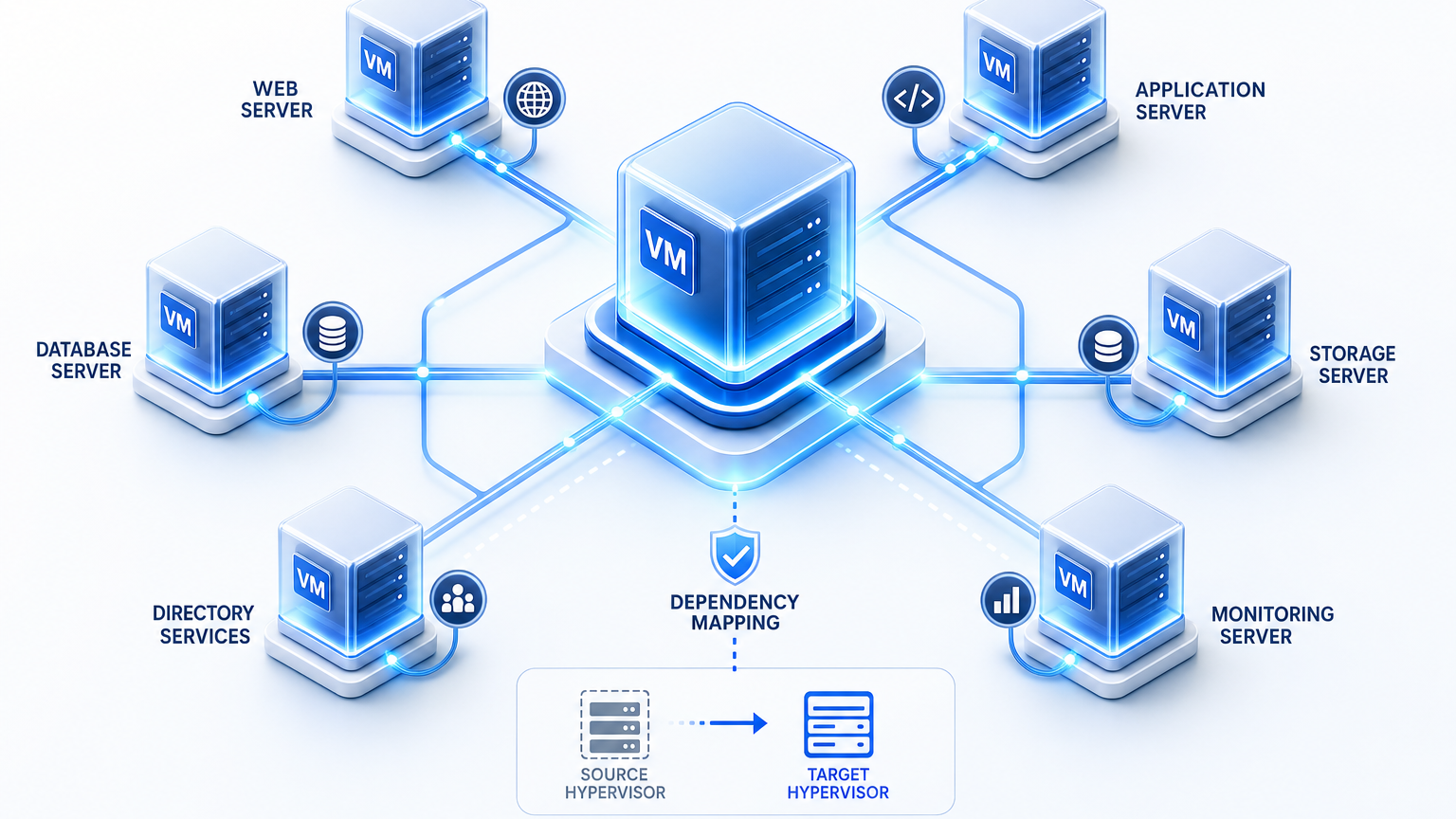
Execution teams encounter operational friction when migration waves separate virtual machines that communicate across shared infrastructure boundaries. Standard virtualization management exports treat each virtual machine as an isolated compute entity. Production enterprise workloads function across tightly coupled relationships involving shared storage volumes, common network segments, local directory services, and distributed database connections. Discovering these inter-VM links during a scheduled cutover window can disrupt the migration plan. Grouping virtual workloads into balanced cutover waves demands verifiable dependency data established before migration schedules receive operational approval.
What Breaks When VMs Move Without Their Neighbours
Virtual machines rarely operate as isolated computing islands within modern data centers. Workloads depend on shared storage layers, underlying network fabric configurations, security appliances, and identity directories. Migrating an individual virtual machine while leaving related computing resources on the legacy hypervisor can disrupt communication paths.
| Dependency Type | Where the Evidence Sits | How It Breaks at Cutover |
|---|---|---|
| Shared Storage Volumes | Clustered VMFS datastores, Raw Device Mappings (RDMs), and vSAN target attachments | Shared-disk database clusters can be disrupted if required access or locking is unavailable. |
| Port Groups and VLANs | Virtual distributed switch port configurations and trunked network interfaces | Virtual interfaces may lose gateway connectivity if target network configurations do not match requirements. |
| Hardcoded IP Addresses | Operating system hosts files, software configuration files, and DHCP bindings | Applications may continue using outdated addresses when hardcoded settings are not updated. |
| Hardware-Bound Licensing | Node-locked software licenses anchored to virtual MAC addresses or BIOS UUIDs | Applications may fail license validation if hardware-bound identifiers change during migration. |
| Infrastructure Boot Order | Service sequencing for Active Directory, Kerberos, DNS, and NTP timing infrastructure | Dependent workloads may fail to start if required authentication or name-resolution services remain offline. |
| Hypervisor Management Callers | External monitoring agents, automated backup appliances, and IT service management integrations | Operational monitoring or backup integrations may lose access to their management endpoints. |
| Asymmetric Firewall Rules | Stateful perimeter security policies, micro-segmentation profiles, and transit routing tables | Connections may fail if security policies or routing block return traffic. |
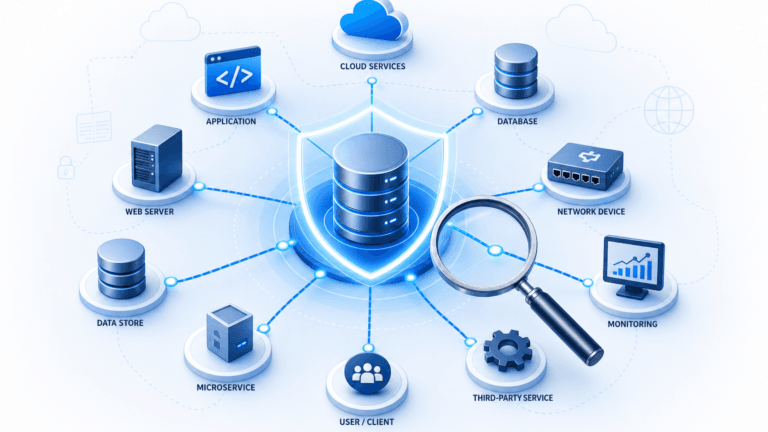
A migration wave that separates related configurations can introduce latency or application downtime. Each row represents a technical constraint that teams should assess before assigning virtual machines to maintenance windows. Infrastructure teams can use configuration management databases to document known relationships and identify dependencies requiring further validation. Documenting technical relationships between configuration items provides the architectural baseline needed to safeguard interconnected services. Reviewing dependencies between configuration items gives migration architects clear visibility into operational linkages across computing tiers.
Why Migration Plans Miss Inter-VM Links
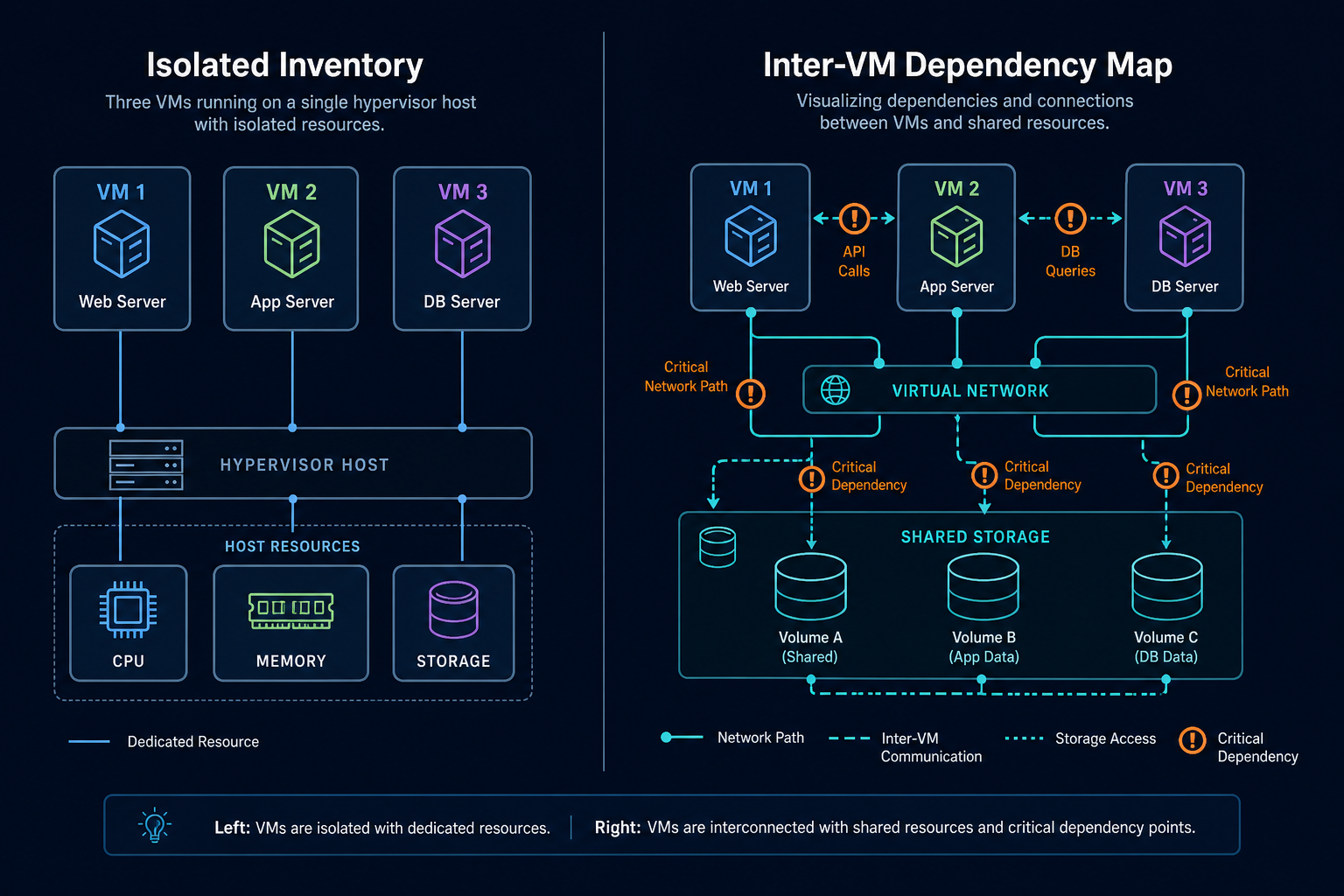
Enterprise migration teams routinely plan multi-month consolidation initiatives using static inventory exports from legacy hypervisors. Traditional hypervisor consoles provide reliable machine inventories, but they omit active communication patterns between running operating systems. Relying solely on host-level catalogs introduces blind spots that undermine wave planning.
An Inventory Lists Machines, Not Conversations
A standard management platform export displays compute host assignments, allocated storage pools, provisioned virtual processors, and configured memory. This catalog provides a static equipment count for hardware procurement and capacity sizing. However, it fails to record which application servers exchange frequent transactional data across private networks. An inventory console cannot reveal that an enterprise resource planning application on Host A queries a dedicated billing database on Host B every thirty seconds. Without transactional communication records, infrastructure planners place coupled workloads into separate execution phases.
Surveys Age Quickly Across Enterprise Estates
Project teams frequently distribute technical discovery questionnaires to business unit leaders and system administrators before scheduling consolidation projects. These discovery spreadsheets collect initial assumptions, but they deteriorate rapidly as production environments evolve. Application administrators often lack complete architectural awareness regarding secondary dependencies, including log forwarders, directory authenticators, and automated report generators. Tribal knowledge decays faster than enterprise technology stacks, leaving migration teams vulnerable to unrecorded dependencies. Teams that attempt to reconstruct complex application boundaries through manual meetings risk unexpected outages during cutover. Relying on undocumented assumptions creates blind spots that jeopardize project schedules and system availability.
Deliberate Outage Tests Introduce Unnecessary Operational Risk
Some engineering teams attempt to identify undocumented dependencies by intentionally shutting down secondary network links or staging test isolations prior to cutover. While service isolation reveals unrecorded connections, unmonitored disruption risks corrupting shared databases, breaking transactional integrity, and interrupting business operations. Controlled isolation requires comprehensive rollback scripts and active administrative supervision across every connected layer. Modern migration planning demands non-disruptive discovery mechanisms that map active transport layer bindings without injecting artificial failures. Performing scheduled discovery across the hypervisor environment allows engineering teams to identify underlying relationships safely. Implementing structured VMware and ESXi discovery uncovers active host connections, guest relationships, and storage bindings before migration teams commit to migration schedules.
Build a Dependency Record Before You Draw the Waves
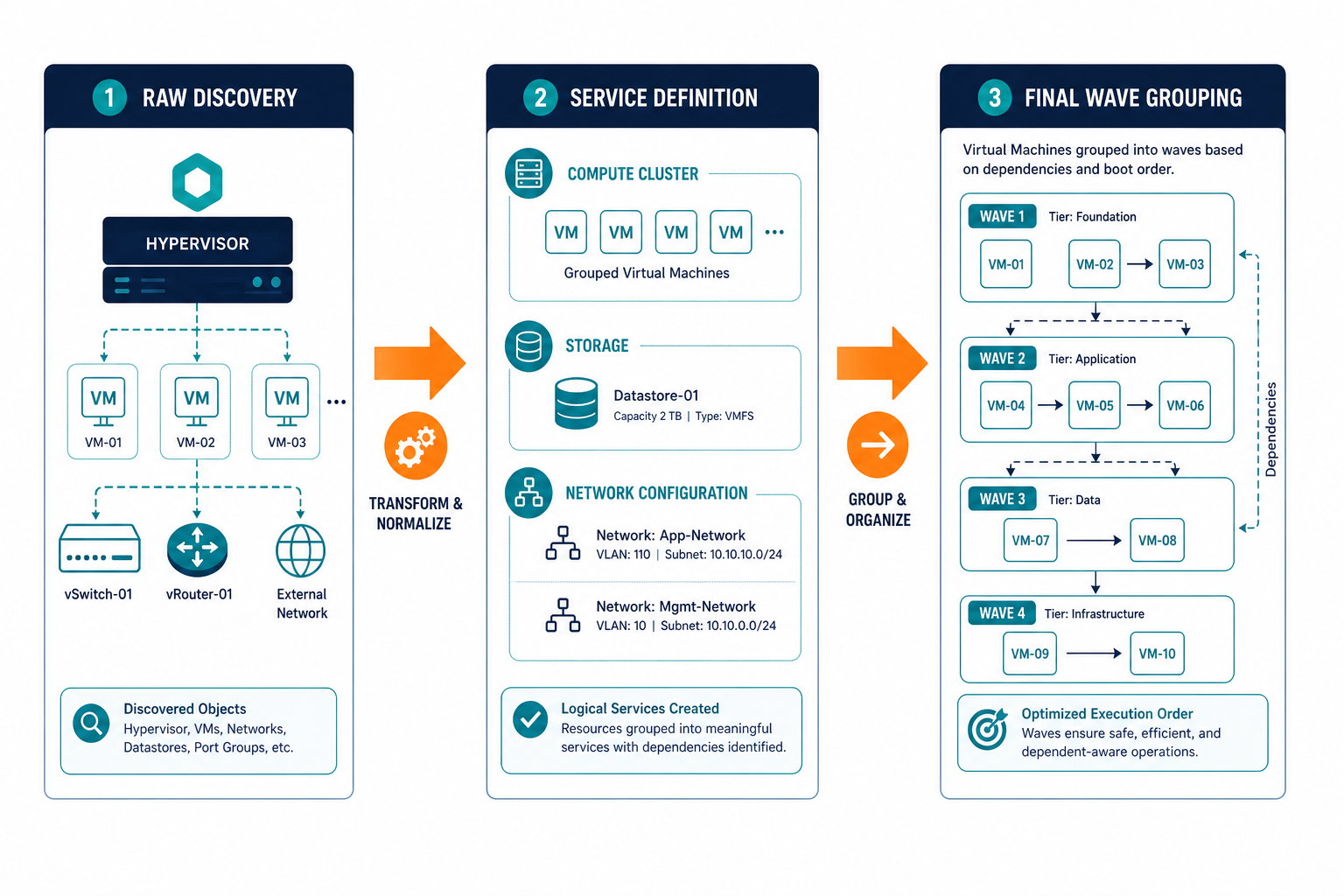
Structuring predictable migration waves requires developing an objective dependency record derived from operational environments. Modern discovery tools collect technical evidence across virtualization management consoles, hypervisor hosts, guest operating systems, and network communication layers. This structured workflow establishes a reliable baseline for virtualization consolidation planning.
Discover the Source Estate
Scheduled discovery can inventory virtualization assets across the source estate. Migration teams should review the available records alongside hypervisor management exports and confirm missing host, guest, storage, or network details with the relevant administrators. A discovery timestamp helps teams assess the freshness of that evidence before planning migration waves.
Define the Services
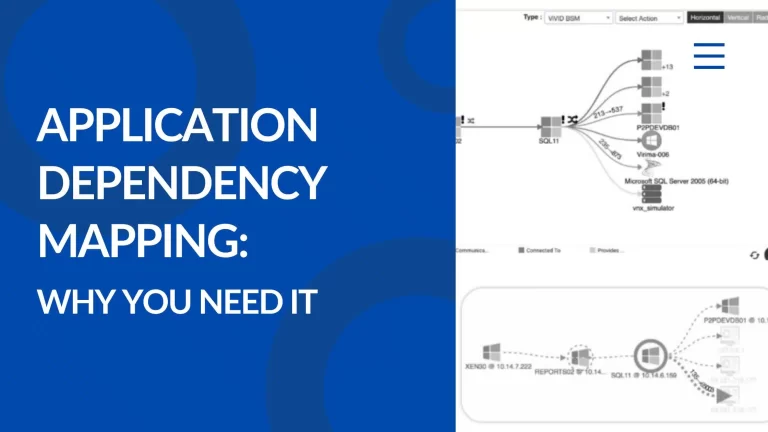
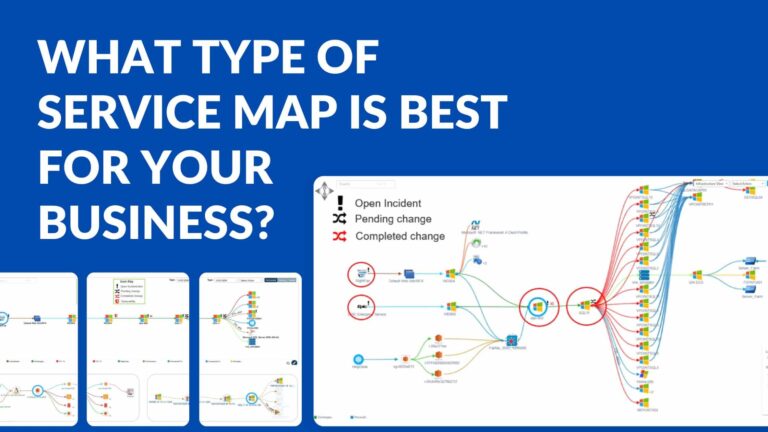
Technical records can include hardware configurations and network connection information from available sources. Infrastructure teams must contextualize these technical records by organizing virtual machines into logical business applications and shared infrastructure tiers. Human domain experts designate service boundaries and provide service definitions. ViVID™ can build dependency maps from those definitions, helping teams review relationships alongside business context.
Trace the Connections
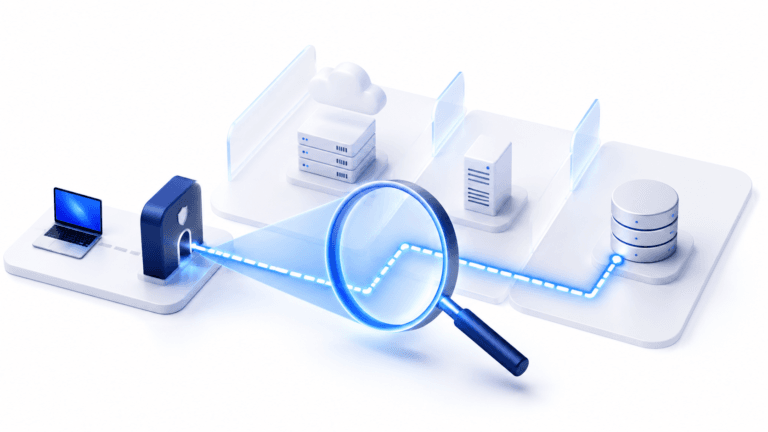
Infrastructure teams can examine available connection records, listening ports, and name-resolution settings to identify communication paths. Administrators should confirm which sources provide this evidence and whether their coverage includes the systems in scope. Application owners can help distinguish active dependencies from connections missed during a scheduled discovery cycle.
Mark the Shared Dependencies
Certain infrastructure elements support multiple business services simultaneously. Centralized storage area networks, shared identity directories, enterprise time sources, and multi-tenant database clusters function as common operational backbones. When building migration schedules, project managers should flag these shared systems as wave-sequencing boundaries. Migration teams should establish cutover protocols that maintain required access for unmigrated workloads.
Group VMs into Waves by the Chain
Virtual machines that share tight communication loops, storage pools, or latency-sensitive connections may be candidates for the same migration wave. When teams separate dependent components across waves, engineers should establish and validate the connections needed between platforms before cutover.
| Migration Wave Rule | Technical Evidence Needed | Operational Sign-off Role |
|---|---|---|
| Zero Shared Storage Severance | Datastore mount configurations and raw device mapping volume records | Storage Infrastructure Architect |
| Colocated Transactional Rings | NetFlow connection logs and TCP port communication traces | Lead Application Development Owner |
| Segmented Network Continuity | Virtual distributed switch configurations and VLAN interface bindings | Network Operations Engineer |
| Identity and Name Resolution Reach | DNS forwarder paths and directory service authentication queries | Enterprise Identity Administrator |
| Validated Cross-Wave Latency | Network ping telemetry and round-trip transport latency measurements | Infrastructure and Operations Director |
Establishing this wave structure provides operational criteria for the change advisory board. Evaluating workload relationships using ViVID™ service maps can help teams assess application dependencies throughout consolidation cycles.
What the Map Will Not Show You
Dependency mapping provides operational visibility, yet engineering leaders must acknowledge the limits of discovered records. Project managers should pair scheduled discovery with targeted administrative validation.
- A scheduled discovery run represents an operational point-in-time snapshot. Discovery cycles may miss intermittent connections, including quarterly batch routines, tax-year financial runs, and month-end archival processes that are inactive during scans.
- Static IP addresses hardcoded within compiled application binaries or legacy configuration scripts may evade detection until local name resolution environments shift.
- External software-as-a-service platforms, partner API endpoints, and unmanaged vendor environments operate outside internal hypervisor collection zones.
- Storage array internal volume mapping, physical SAN fabric zoning, and storage controller replication routines remain transparent unless the physical storage array directly exposes external management telemetry.
- Target-platform security policies, including software-defined networking firewalls, routing tables, and access control lists, require engineering design and will not be populated by source discovery tools.
- Discovered infrastructure inventories catalog virtual computing machines and physical compute nodes without asserting speculative discovery claims across unmanaged container runtimes or edge micro-appliances.
When dependency records conflict with application owner assumptions, the engineering lead should cross-reference both perspectives. Documenting the verified resolution alongside a discovery timestamp supports accountability across migration phases.
A Wave-Readiness Review Agenda
Executing a hypervisor consolidation requires structured governance meetings before committing workloads to maintenance windows. Engineering teams can conduct this wave-readiness review seven days before each scheduled migration window.
- Verify Boundary Inclusions: Confirm that each virtual machine in the application dependency chain is included in the target wave, or verify that necessary cross-platform connections are active and tested.
- Review Shared Storage Ownership: Validate that shared datastores, clustered disk volumes, and raw device attachments have storage engineers assigned for the required cutover work.
- Audit Network and Addressing Plans: Ensure that target IP ranges, DHCP reservations, DNS record updates, and firewall policies are staged within target environment consoles.
- Confirm Application and Infrastructure Owners: Verify that system administrators, application owners, and database specialists are scheduled on call with documented escalation contacts.
- Establish Objective Rollback Triggers: Define measurable operational thresholds that trigger a rollback, including elapsed cutover time limits and network connectivity failures.
- Validate Inventory Record Freshness: Review the latest discovery timestamp and investigate configuration changes since initial wave finalization.
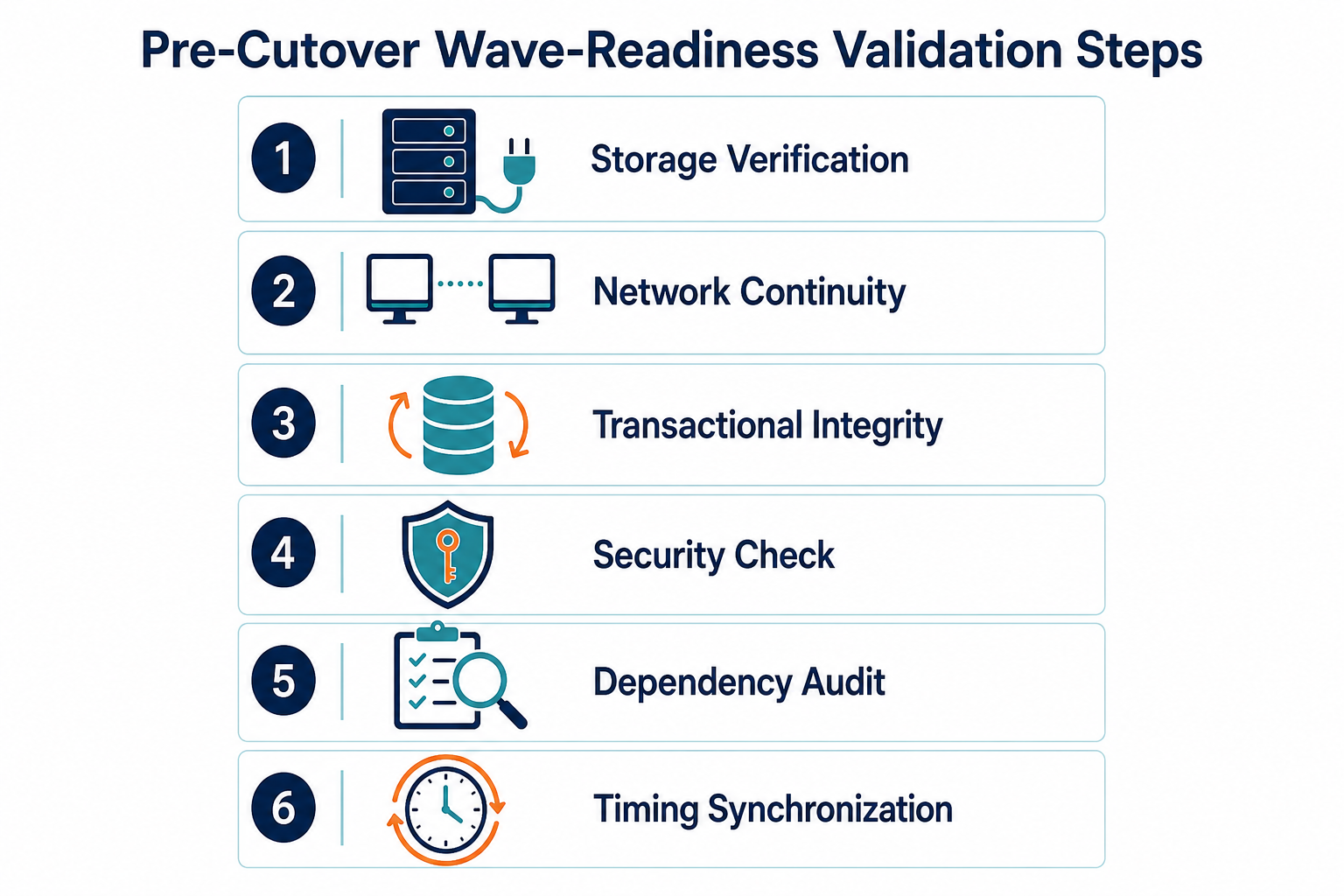
Migration managers can measure readiness by tracking the number of unverified cross-wave dependencies per schedule. Teams should investigate each unresolved dependency and confirm the necessary mitigation before approving cutover. Stale inventory records can introduce migration setbacks. Investigating why CMDBs keep failing illustrates the value of disciplined data hygiene and scheduled reconciliation cycles.
Virima Gives Migration Teams a Record of What Talks to What
Executing virtualization consolidation projects without verified dependency data introduces operational risk. Virima provides infrastructure leaders with discovery-sourced records of assets and their relationships. Teams should validate those records against the scope and timing of their migration plans.
| Operational Capability | Provided by Virima Discovery and ViVID™ | Managed by Migration and Hypervisor Tools |
|---|---|---|
| Virtual Asset Inventory | Discovery-sourced virtual machine inventories and configuration item records | Execution of physical hardware decommissioning and host hypervisor de-registration |
| Inter-VM Dependency Records | Configuration item relationships and application dependency visualization | Network packet routing reconfiguration and IP address reassignment execution |
| Service Context Alignment | ViVID™ dependency maps based on service definitions provided by the customer | Architectural design and configuration of destination hyperconverged platforms |
| Asset and Lifecycle Tracking | Asset lifecycle and warranty records, with ownership confirmed by the team | Conversion, disk format transformation, and replication of virtual disk volumes |
| Change Management Integration | Integration with supported IT service management and CMDB platforms | Cutover orchestration, virtual machine startup execution, and post-migration validation |
| Enterprise API Integration | REST API data export for external analytics, change boards, and migration tracking | Dynamic resource scheduling and performance optimization within the new hypervisor |
Virima equips technical leaders with records of assets and relationships across their infrastructure. Purpose-built migration tools handle virtual disk replication, format conversion, and system cutover. Exploring the discovery feature explains how scheduled data collection supports virtualization planning.
For Directors of Data Center Operations and VPs of IT Infrastructure, Virima provides infrastructure records that can support migration planning.
Questions to Ask Before You Approve the Cutover Plan
Before approving any migration wave schedule, infrastructure leadership must review these essential operational questions with the engineering team.
| Leadership Inquiry | What a Complete Answer Must Contain |
|---|---|
| Which virtual machines share storage arrays with workloads in this cutover wave? | A technical inventory listing all clustered VMFS volumes, vSAN datastores, and Raw Device Mappings, signed off by the storage administration team. |
| Which network connections deliberately cross the wave boundary during migration? | A verified network port matrix identifying cross-wave dependencies, accompanied by measured transport latency and validated firewall transit rules. |
| When was the underlying dependency record last verified through scheduled discovery? | A recent discovery timestamp and a review of any configuration changes since that discovery cycle. |
| Who owns the DNS redirection, IP renumbering, and certificate validation steps? | Named engineering owners for network routing, identity management, and application testing, with detailed cutover procedure runbooks. |
| What specific technical condition triggers an immediate wave rollback? | Concrete operational parameters, such as exceeded maintenance window thresholds, packet loss rates, or authentication failures, requiring an abort. |
Enterprise infrastructure consolidation requires disciplined validation across technical, architectural, and operational domains. Platform architects seeking to modernize virtualization estates can explore Trusted Runtime Truth to maintain governance, authoritative dependency intelligence, and operational resilience across hybrid IT estates. Engineering teams preparing for complex consolidation initiatives can also schedule a demo to discuss scheduled discovery and dependency mapping across enterprise virtualization environments.
Industry professionals attending the upcoming Gartner IT Infrastructure, Operations & Cloud Strategies Conference can visit Virima at Booth 645 to examine dependency mapping strategies firsthand, or review conference sessions at Gartner IOCS 2026.
Frequently Asked Questions
What is hypervisor migration dependency mapping?
Hypervisor migration dependency mapping documents relationships between virtual machines, shared storage systems, and network paths. Teams use that evidence to plan migration waves and validate connections that must remain available throughout cutover.
Which dependencies break most often when VMs move between hypervisors?
Dependencies worth checking include shared clustered storage attachments, virtual local area network configurations, hardcoded internet protocol addresses, and hardware-locked software licenses. Connections can fail when workloads move if storage access, network paths, or licensing requirements are not maintained.
How do infrastructure teams group virtual machines into migration waves?
Teams group virtual machines by reviewing network connections, shared storage volumes, and business service definitions. When connected workloads move in separate waves, teams should validate cross-platform connectivity and acceptable latency before approving the cutover plan.
Why do shared storage dependencies complicate virtualization consolidation?
Shared storage architectures can allow multiple virtual machines to access the same disk volumes. Migration teams should verify that the target platform supports the required access and clustering configuration, because disrupted storage connections can affect dependent applications.
Does Virima execute virtual machine conversions and cutover migrations?
Virima discovers infrastructure assets, maps relationships, and integrates with enterprise configuration management database platforms. Dedicated migration software or hypervisor conversion appliances handle virtual disk replication, format conversion, and target machine power-on execution during scheduled maintenance windows.