CMDB in Telecommunications: Map Network Element Relationships Before the Next Failed Change

A regional carrier opened a maintenance window on what the inventory called a spare aggregation switch. The change ticket listed two dependent circuits. Overnight traffic graphs told a different story. Customer VPNs across three metro rings dropped for forty minutes because the switch still carried production paths that never made it into the enterprise CMDB. NOC escalated. The vendor bridge started. Leadership asked a simpler question than “who approved the change.” They asked why relationship data on a critical network element was still a spreadsheet problem.
That pattern is familiar across telecommunications. OSS resource inventory, EMS exports, rack elevations, and IT asset lists each describe part of the same estate. CMDB in telecommunications is the practice of turning those fragments into configuration items with relationships that change, incident, and assurance teams can trust when scale makes tribal knowledge impossible.
What Is CMDB in Telecommunications?
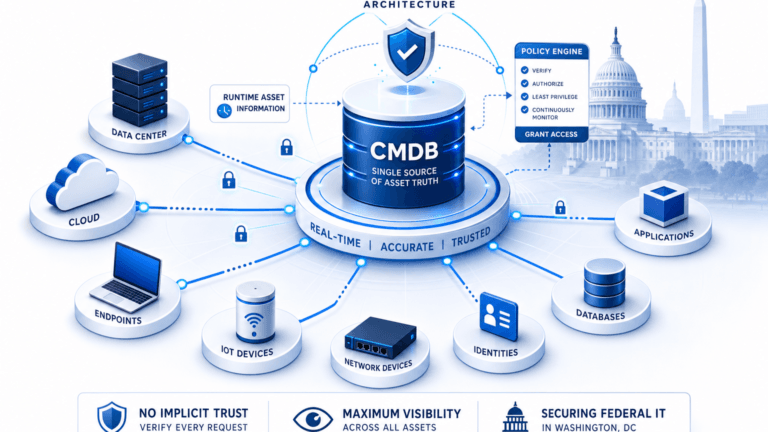
A CMDB in telecommunications is a configuration management database that stores network and IT configuration items, then records how those CIs relate: chassis to cards, ports to circuits, virtual functions to hosts, and infrastructure to named services once service definitions exist. It is not a second copy of every OSS table. It is the operational system of record for impact context when multiple inventories disagree.
NIST Special Publication 800-128 frames configuration management as keeping secure, known configurations across the system life cycle. That only works when inventory is complete enough to support baselines, change control, and monitoring. Telecom estates add multi-layer network models on top of classic IT CIs, so relationship quality matters as much as device counts.
An authoritative telecom CMDB program typically requires:
- CI classes that cover network devices, hosts, virtual infrastructure, and software-defined network functions in scope
- Relationship types that capture containment, connection, and dependency paths used in change impact work
- Discovery or feed methods that refresh CIs on a schedule operations can defend
- Ownership and location fields that survive reorgs and vendor handoffs
- Service definitions supplied by the operator before service maps can be built and maintained
The Hidden Problem
| Situation | What happens |
|---|---|
| OSS resource inventory and IT CMDB stay separate | Change boards see IT CIs while NOC works from a different network model |
| Relationships are drawn once in Visio | Blast-radius analysis drifts after every cutover |
| Virtual network functions move without CMDB updates | Incident tickets attach to hosts that no longer run the failing function |
| Port and circuit links live only in EMS tools | Enterprise change and security tools lack path context |
| Cloud and edge sites grow under separate projects | Multi-domain impact paths stop at domain boundaries |
Why Is CMDB in Telecommunications Important?
Telecommunications networks are multi-layer by design. Physical devices, logical resources, virtualized functions, and customer services all describe the same production path. When those layers live in disconnected tools, leaders still get asked for one answer: what breaks if this element changes?
Operators that consolidate inventory see measurable operational gain. TM Forum’s case study on BT describes multimillion-dollar CapEx and OpEx savings tied to network-asset reconciliation and software licensing as part of a broader inventory consolidation effort. Relationship-aware CMDB work is how IT and network operations share one impact view without waiting for another multi-year OSS rewrite.
Virtualization raises the stakes. ETSI’s NFV work describes telco cloud stacks where physical infrastructure, virtualized infrastructure, and network functions stack in layers. A CI list without relationships cannot explain which customer services sit on a host after a function migrates.
Incomplete inventory also slows breach response and prolongs service disruption. IBM’s public Cost of a Data Breach research shows multi-million-dollar average breach costs, with longer identification and containment when teams lack asset context. For carriers that process regulated customer data, unknown network paths are ungoverned paths.
Four Failure Modes When Relationships Stay Outside the CMDB
1. Change windows planned on partial dependency graphs.
Planners approve work from rack diagrams that omit logical overlays and virtual functions.
Result: Extended service disruption, emergency rollbacks, and customer SLA credits that never appeared in the risk score.
2. Incident triage without path truth.
Tickets attach to device names while the failing path runs through cards, circuits, and VNFs the CMDB never linked.
Result: Longer MTTR, wrong stakeholder pages, and repeated “we fixed the box, traffic still down” loops.
3. Assurance and capacity work on stale topology.
Capacity teams model ports that no longer carry the intended services.
Result: Overbuild in some rings, congestion in others, and capital plans that lag reality.
4. Security and audit reviews rebuilt by hand.
Control testing needs populations of devices and paths in scope. Teams export EMS dumps before each review.
Result: Findings on incomplete inventories and delayed certifications that slow network programs.
The Real Cost of Getting CMDB in Telecommunications Wrong
For network and IT operations leaders
Executives need one view of mission services across RAN, transport, core, and IT. When relationships stay trapped in domain tools, leaders cannot rank change risk or defend automation investments from a shared baseline.
For CMDB owners and configuration managers
Manual reconciliation across EMS, OSS, and cloud consoles consumes hours every week while the network keeps changing. A CMDB without discovery-fed CIs and relationships becomes a compliance artifact rather than an operations tool. See how empty discovery leaves a CMDB without discovery unable to support change and incident work.
For service assurance and NOC teams
Assurance depends on knowing which elements sit under a named service. Without current relationships, alarm correlation guesses. Customers feel the gap before dashboards do.
For change, security, and finance
Change managers need blast radius. Security needs populations. Finance needs to know which assets and licenses still support live paths. All three fail when network element relationships live outside the system of record used by enterprise workflows.
For a complementary view of multi-layer inventory and asset synchronization in carriers, see IT asset management in telecommunications.
Operators that need discovery-sourced ground truth need relationship-aware CMDB data before automation and assurance programs scale.
How Discovery and Mapping Fix Relationship Blind Spots at Scale
Carriers rarely cover RAN, transport, core, telco cloud, and enterprise IT with one scanner profile. Relationship-aware CMDB programs mix collection methods, then reconcile findings into shared CI classes so change and NOC teams stop comparing three different topology stories.
Cover hosts and network gear where agents are allowed and where they are not
Agent-based discovery deepens hardware, software, and configuration detail on managed endpoints in data centers and enterprise IT. Agentless, credential-based scanning reaches routers, switches, firewalls, and hosts where agents are blocked by policy or age. That mix is how edge sites and long-lived network platforms enter the enterprise CMDB instead of staying trapped in a single EMS export.
Normalize telco cloud and data center findings into one CI model
Virtual network functions, containerized workloads, and classic hosts change faster than quarterly inventory projects. Discovery that queries cloud APIs and on-premises infrastructure, then writes normalized CIs, keeps hybrid estates coherent. Operators stop treating provider consoles and rack lists as separate systems of truth for the same service path.
Build infrastructure maps only after service definitions exist
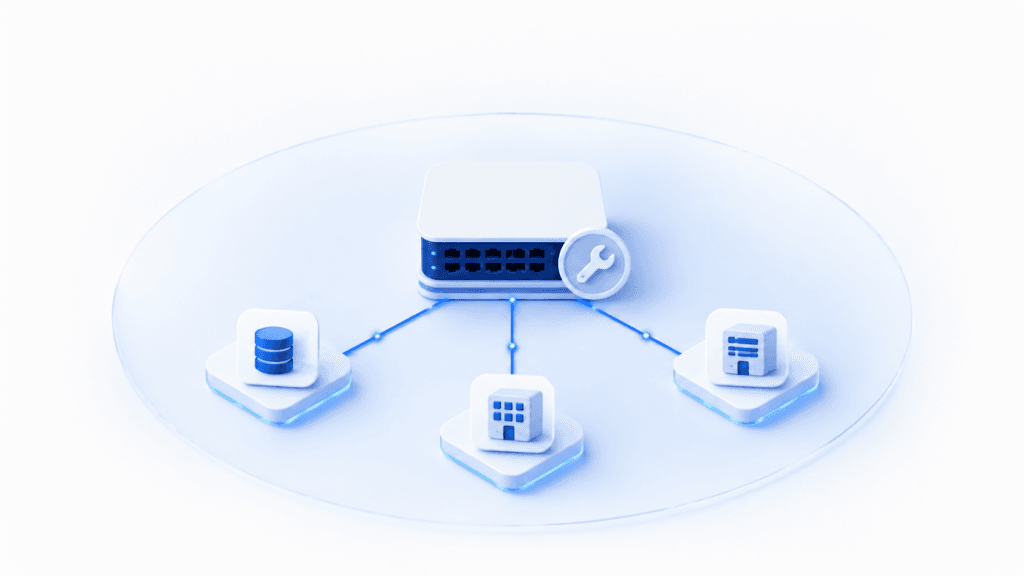
Blast-radius views need two inputs. Operators supply which applications and sites make up a named network or business service, by hand, spreadsheet import, or enterprise architecture feeds. Mapping then builds and refreshes infrastructure relationships from discovery data against those definitions. Visio drawings from the last cutover stop being the only impact model on the change board.
Spreadsheet topology vs discovery-fed CMDB
| Capability | Manual/domain lists | Discovery-fed CMDB with relationships |
|---|---|---|
| Cross-domain coverage | Stops at tool boundaries | Designed for multi-site, multi-credential scope |
| Network device and host detail | Often incomplete outside one EMS | Targeted with agent and agentless methods where allowed |
| Cloud and virtual functions | Tracked in separate consoles | Normalized into shared CI classes |
| Relationship/blast radius | Stale diagrams | Maps maintained from discovery plus service definitions |
| Change and incident context | Rebuilt under pressure | Exportable from the system of record |
| Refresh cadence | Project-driven | Scheduled high-frequency discovery cycles |
Telecommunications CMDB Examples in Practice
- Core and transport change risk. A national operator maps aggregation and core CIs so a card swap shows dependent circuits and services before the window opens.
- Telco cloud VNF moves. Virtual functions migrate across hosts. Discovery refreshes host and software CIs so incident tickets stop pointing at decommissioned hypervisors.
- Enterprise IT behind OSS. Billing, mediation, and assurance platforms sit on standard IT infrastructure. CMDB relationships connect those hosts to the network services they support once service definitions exist.
- Edge and cell-site growth. New sites add routers, power, and compute. Credential-scoped discovery brings them into the enterprise CMDB without waiting for a quarterly inventory project.
How Virima Fits a Carrier CMDB for Network Element Relationships
Telecommunications operators already run OSS resource inventory, EMS tools, and often an enterprise ITSM CMDB. The gap is not another device list. It is a discovery-fed relationship graph that change, NOC, and assurance can share when a network element sits under customer paths the ticket never listed.
Virima is positioned as that relationship layer for hybrid IT and network-adjacent infrastructure: scheduled discovery into CI records, dependency maps once service definitions exist, and sync into the ITSM tools carriers already use. It does not replace TMF-aligned resource inventory or the network OSS of record. It closes the enterprise impact view those systems rarely feed cleanly.
Relationship graph, not a second OSS inventory
- Treats the problem as containment, connection, and dependency between CIs (chassis to cards, ports to paths, hosts to virtual functions), not as a full TMF resource model clone.
- Populates and reconciles configuration items from discovery so enterprise change boards stop working only from IT asset lists while NOC works only from EMS exports.
- Keeps multi-source reconciliation, CI health signals, and lifecycle fields visible so CMDB owners can show what is stale before a maintenance window.
- Leaves specialized circuit and capacity planning systems in place; supplies the CI and relationship context ITSM and security workflows need.
Where discovery lands on a multi-domain carrier estate
- Uses agent-based collection where deep host and software detail is required in data centers and enterprise IT.
- Uses agentless credentialed scanning for routers, switches, firewalls, and locked-down platforms that will not take an agent.
- Uses API-based collection for cloud and platform inventories that already expose authoritative object lists for telco cloud and IT accounts.
- Scopes credentials and networks by domain so edge, core-adjacent IT, and contractor segments can enter the CMDB without a single global scan profile.
- Runs on scheduled high-frequency discovery cycles operators can defend to change boards (not passive continuous or event-stream discovery).
Change and incident blast radius for network elements
- Maps CI relationships so a planned card swap or host change can show downstream CIs before the window opens.
- Builds visual dependency maps only after the operator defines which applications and sites compose each named network or business service (manual entry, spreadsheet import, or architecture feeds such as Lean IX).
- Does not invent service composition; map building applies discovery-sourced infrastructure relationships against those operator-owned definitions.
- Gives NOC and change managers a shared impact path instead of Visio packs frozen at the last cutover.
Telco cloud, virtual functions, and hybrid IT under one CI model
- Normalizes findings from on-premises infrastructure and cloud APIs into shared CI classes so VNF or workload moves do not leave incident tickets on retired hypervisors.
- Tracks software and host context that EMS device views often omit when functions are software-defined.
- Supports Linux, network, cloud, and other CI types in discovery and CMDB even when vulnerability overlay is scoped separately.
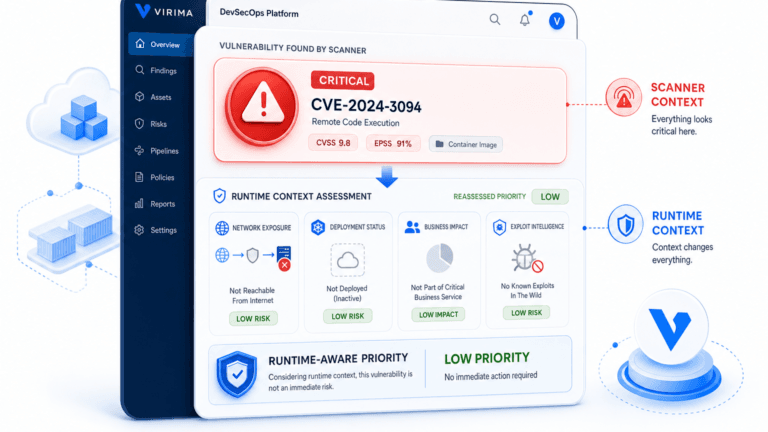
- Overlays National Vulnerability Database (NVD) CVE context on Windows Servers only for risk discussion tied to known inventory; pair dedicated scanners for broader multi-OS vulnerability management.
Feed ITSM without rip-and-replace of the service desk
- Syncs discovery-sourced CIs and relationships into ServiceNow, Jira Service Management, Ivanti, HaloITSM, Xurrent, or Hornbill through the integrations hub.
- Lets change, incident, and asset processes reference the same relationship data the CMDB holds.
- Avoids forcing carriers to abandon OSS or ITSM platforms already embedded in operations.
Vendor diligence for discovery access across a large estate
- Holds SOC 2 Type 2 and ISO/IEC 27001:2022 certifications so procurement and security have documented controls evidence when a discovery layer needs broad estate access.
- Supports operators that must evidence asset inventories and platform security controls for programs touching HIPAA, PCI-DSS, SOX, or CMMC requirements on the enterprise side.
- Does not replace the operator GRC system or telecom regulatory systems of record; supplies inventory and relationship evidence those programs consume.
What a scoped carrier pilot usually proves first
- One critical domain (for example aggregation plus dependent enterprise IT) with discovery into CMDB and relationships exportable for the next change window.
- Service definitions for a small set of revenue or safety-related services, then maps that NOC and change can open without a war-room whiteboard.
- ITSM sync so tickets stop attaching to names that do not match live CIs.
- Leadership review of Trusted Runtime Truth against the operator’s own topology pain before expanding scope.
Moving from Domain Lists to Relationship-Aware CMDB
| Old approach | New approach |
|---|---|
| Each domain owns a spreadsheet or EMS export of “its” elements | Enterprise discovery scope with credential and network boundaries defined on purpose |
| One-time topology projects before a cutover | Recurring discovery cycles with CMDB reconciliation |
| Service maps drawn once in Visio | Service definitions maintained, infrastructure relationships refreshed from discovery |
| Change impact rebuilt under deadline | Relationship fields exportable from the CMDB year-round |
How relationship accuracy compounds across the operator
Establish a shared CI baseline across domains.
Run discovery against agreed networks, cloud accounts, and IT segments. Reconcile into the CMDB. Tag ownership to the domain and system owner of record so RAN, transport, core, and enterprise IT stop arguing from different lists.
Connect change, incident, and vulnerability work to the same graph.
Tickets, windows, and scans reference the same CIs and relationships. NOC, change managers, and security stop rebuilding impact context from EMS dumps the night before a review.
Use dependency context to sequence modernization and assurance.
Complete inventory and path data help leaders prioritize upgrades, segmentation, and control testing where customer services and capital plans actually depend on the estate.
A practical path for carrier CMDB programs
- Agree scope and credentials with network and IT owners. Include edge, contractor, and cloud segments leadership is willing to cover in the first wave.
- Match collection method to each segment. Agents where deep host inventory is required. Agentless where policy blocks agents on network gear. API-based collection where cloud inventories are authoritative.
- Reconcile and clean the CMDB. Deduplicate CIs, assign owners, and retire orphans left from old OSS exports.
- Define critical customer and network services first. Import or enter the services that matter for revenue and safety systems, then generate infrastructure maps against those definitions.
- Put discovery on a defendable schedule. Treat refresh as an operating control for change boards and auditors, not a one-time topology project.
From Fragmented Topology to Defensible Network Truth
Network element relationships at telecom scale go stale quietly when they stay outside the CMDB. CMDB in telecommunications makes those relationships visible across domains, feeds change and incident work, and gives leaders a baseline they can defend.
If your operator still runs on domain lists and stale diagrams, start with a scoped discovery assessment on the networks and accounts that matter most. Schedule a demo to see Virima discovery, CMDB, and service mapping for telecommunications inventory programs.
FAQ
What is CMDB in telecommunications?
It is a configuration management database that holds network and IT configuration items plus their relationships, so change, incident, and assurance teams can see impact paths across multi-layer telecom estates.
Why do telecom operators need relationship data in the CMDB?
Device lists alone cannot show blast radius. Carriers run physical, logical, virtual, and service layers. Relationship-aware CIs connect those layers for change windows, NOC triage, and audit populations.
How do teams track network elements at scale?
They combine agent, agentless, and API-based discovery across agreed scopes, reconcile results into the CMDB, maintain relationships, assign owners, and repeat discovery on a schedule so topology cannot freeze after one project.
Does service mapping invent network services automatically?
No. Operators provide service definitions manually, by import, or via architecture tools. Mapping then builds and refreshes infrastructure dependency views from discovery data against those definitions.
Can a telecom CMDB feed ServiceNow or other ITSM tools?
Yes. Discovery-sourced configuration items and relationships can sync into common ITSM platforms so change, incident, and asset workflows share one inventory without forcing a rip-and-replace of the service desk.