The Agent Control Plane Dilemma: Tracking Non-Human Identities, APIs, and Inter-Agent Dependencies

The growth of autonomous systems across enterprise environments creates a distinct coordination challenge for technology leaders. On Tuesday, December 8, 2026, Broadcom will present a session at the Gartner IT Infrastructure, Operations and Cloud Strategies Conference (IOCS) examining intelligent control planes that orchestrate agents with
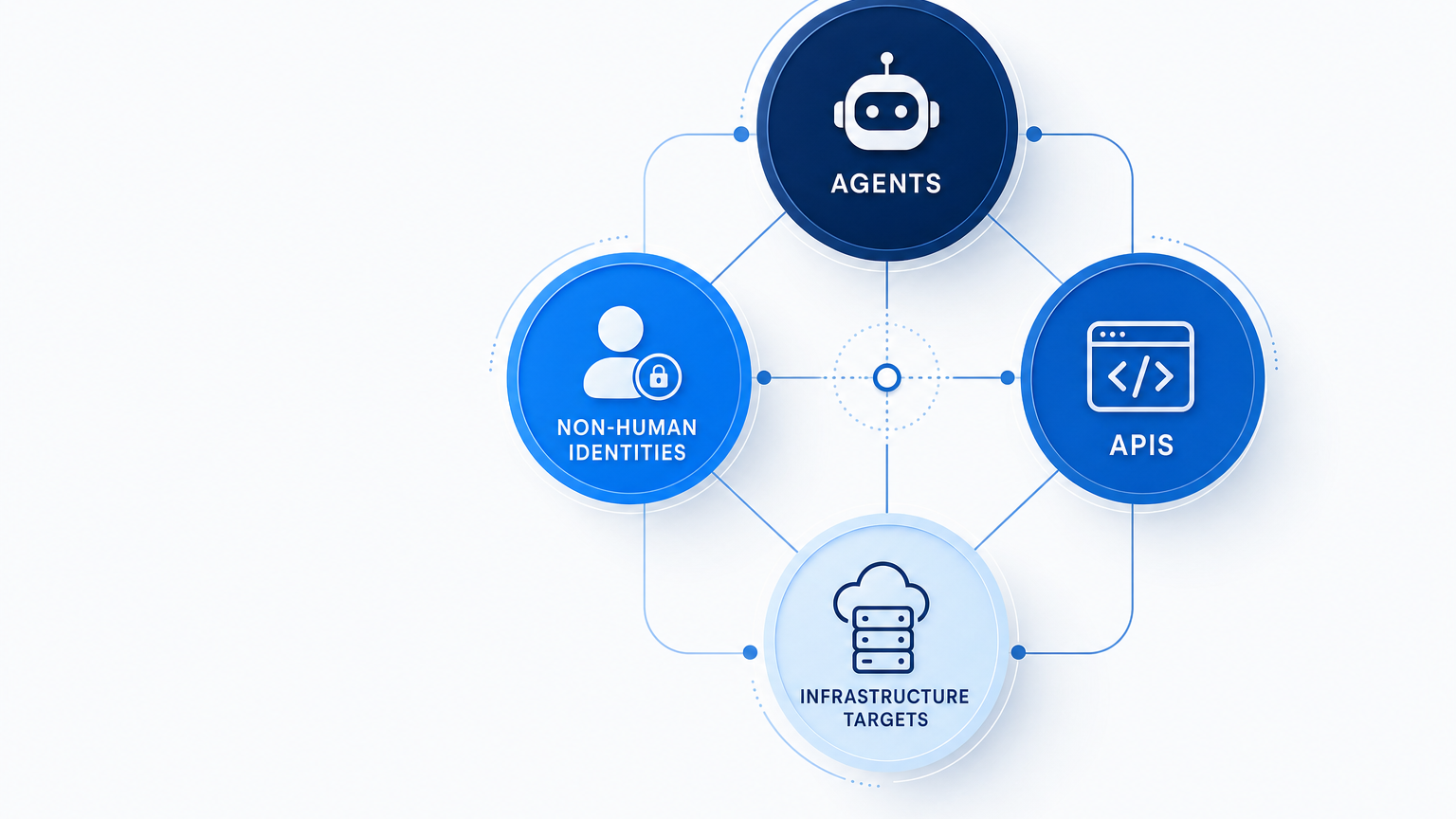
enterprise IT workflows. While operational discussions often focus on runtime execution, an underlying architectural dilemma remains unaddressed. A modern agent control plane topology requires an accurate inventory of four distinct layers: software agents, non-human identities, invoked application programming interfaces (APIs), and the underlying infrastructure targets they modify.
In the May 2026 IDC Worldwide Identity and Access Management Security Survey, 42% cited inventory or ownership gaps among their non-human identity challenges. GuidePoint Security sponsored the report presenting the survey findings. When an automated agent executes a configuration change, operational teams must be able to verify which identity was utilized, what systems were reached, and whether competing workflows target the same infrastructure.
Four Lists an Agent Control Plane Depends On
An agent control plane functions as the orchestration and governance framework that directs automated software agents across enterprise environments. It evaluates triggers, assigns execution permissions, and monitors task completion across disparate operational domains. However, an orchestration layer can only govern the components that it explicitly tracks.
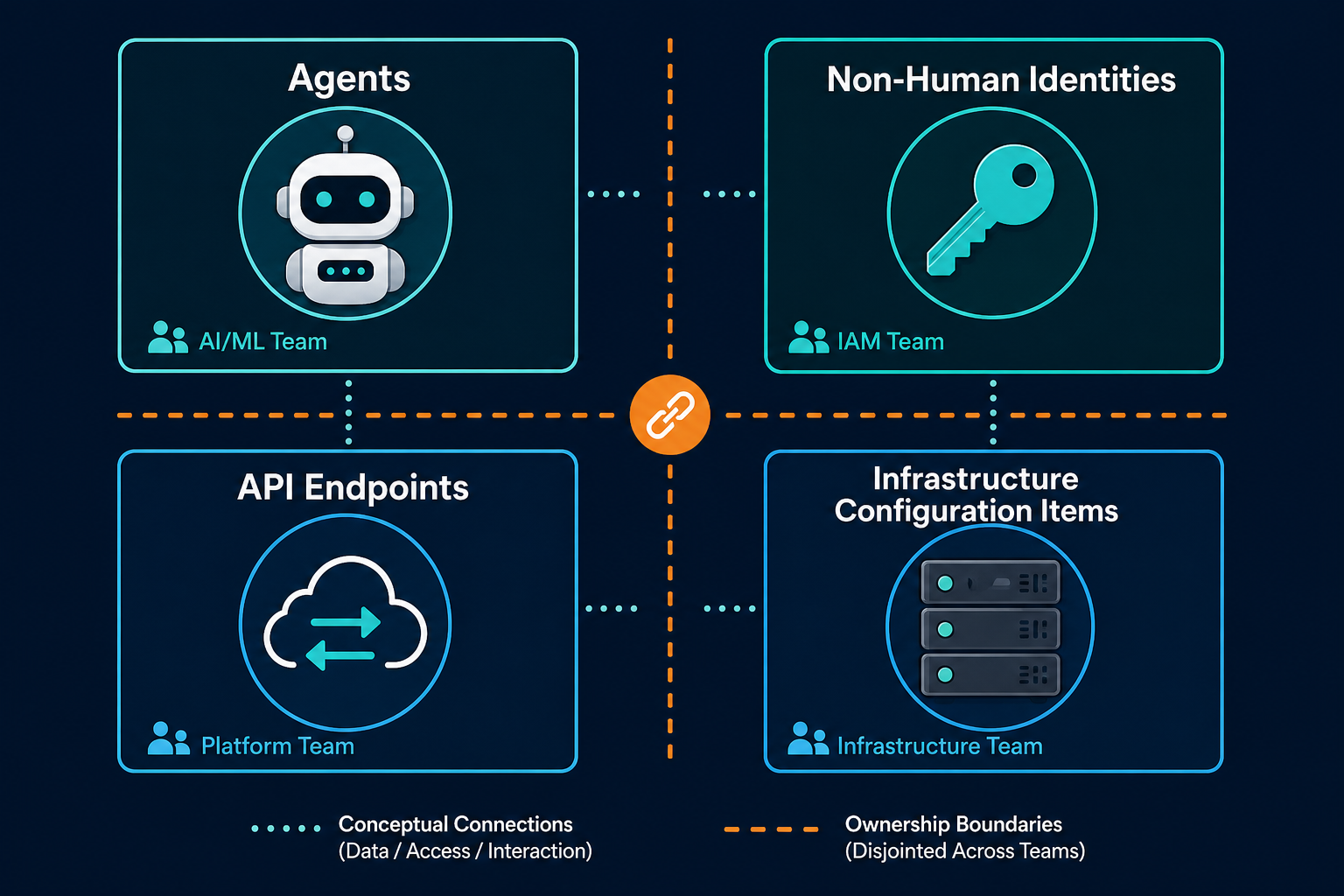
To establish operational governance, an enterprise control plane depends on four separate lists that currently reside in disconnected operational repositories across different teams.
| List | What It Holds | Where It Usually Lives Today | Primary Operational Owner |
|---|---|---|---|
| Agents | Agent name, functional purpose, model version, system sponsor | Agent registry, AI development platform | Platform Engineering Team |
| Non-Human Identities | Service accounts, API keys, OAuth tokens, certificates | Identity provider, secrets manager, Active Directory | Identity and Security Operations |
| APIs and Tools | Invoked endpoints, automation scripts, external tools definitions | API gateway catalog, developer portal | DevOps and Application Teams |
| Infrastructure Targets | Virtual machines, cloud compute, databases, business services | Configuration management database (CMDB), service maps | Infrastructure and Operations |
As highlighted in KuppingerCole European Identity and Cloud research on agentic identity strategies, establishing an inventory of system sponsors, machine identities, and operational permissions is an essential prerequisite for governance.
While identity platforms catalogue credentials and developer registries track custom prompts, neither system maintains visibility into physical and virtual compute estates.
The agent control plane topology represents the joins between these four operational layers rather than an isolated fifth list. Establishing these linkages is vital to prevent ungoverned
machine execution, as detailed in analysis of agent sprawl across hybrid infrastructure.
Where the Joins Between Agents, Identities, and Targets Break
The operational failure of autonomous agent governance rarely stems from logic errors within model prompts. Instead, breakdowns occur where the linkages between identity records, developer registries, and physical infrastructure configuration items fracture.
| Join Type | The Operational Question It Answers | Where It Resides Today | Can Estate Discovery Populate It? |
|---|---|---|---|
| Agent to Identity | Which specific account did this agent utilize? | Agent registry, identity management system | No. Estate Discovery tracks machine credentials, not agent runtimes. |
| Identity to API or Tool | What systems or endpoints can that account invoke? | Identity provider, API gateway configuration | Partially. Target systems appear as CIs, while scopes reside in identity tools. |
| Identity to Target | What infrastructure components does that account touch? | Disconnected operational teams or unmaintained sheets | Yes. Discovery scans reveal service accounts and active CI relationships. |
| Agent to Agent | Which upstream agent delegated this task? | Orchestration execution logs and audit traces | No. Internal agent execution paths remain within the platform. |
Which Identity Did the Agent Use to Execute the Task?
When an autonomous agent initiates an administrative command, incident responders must immediately identify the credential responsible for the session. In many organizations, platform developers provision shared service accounts across multiple functional bots to simplify role-based access management.
When five automated workers utilize an identical service account string, the directory service logs record successful authentication without distinguishing individual agent origin. Pinpointing the responsible process requires querying internal platform audit logs to reconcile timestamps against active execution threads.
What Specific Infrastructure Did That Identity Reach?
Locating an active account name does not explain the physical scope of infrastructure exposed to it. Directory tools display group memberships, but they cannot show the underlying servers, database instances, and shared network storage mounted by those groups.
Resolving operational reach requires joining credential records against configuration item dependency relationships mapped within the enterprise estate. Discovery data reveals the actual hardware and software components linked to that account rather than theoretical permission ceilings.
Who Else Acts on the Same Target?
Multiple enterprise departments frequently deploy autonomous workflows targeting identical operational infrastructure without mutual visibility. An IT service management bot may initiate an automated reboot to clear a memory leak on a production database host.
Concurrently, a SecOps containment agent may attempt to apply strict firewall rules to isolate the same server due to suspicious network egress. Simultaneously, an automated application delivery pipeline agent may deploy new software packages to that directory. Because each orchestration engine operates in a functional silo, none of the individual control planes recognize that three competing automation loops are acting on the identical configuration item.
Which Agent Called Which in the Execution Chain?
Complex enterprise workflows increasingly rely on multi-agent execution chains, where a supervisory planning agent delegates tasks to specialized sub-agents. These inter-agent remote procedure calls and message bus exchanges exist exclusively within the runtime memory of the agent orchestrator.
Enterprise infrastructure records can document the compute host executing the agent container, but they cannot observe the programmatic delegation sequence occurring inside the framework. Without direct ingestion of orchestrator telemetry, an infrastructure topology remains an inventory of static components rather than a dynamic map of machine interactions.
What Estate Discovery Can Contribute, and What It Cannot
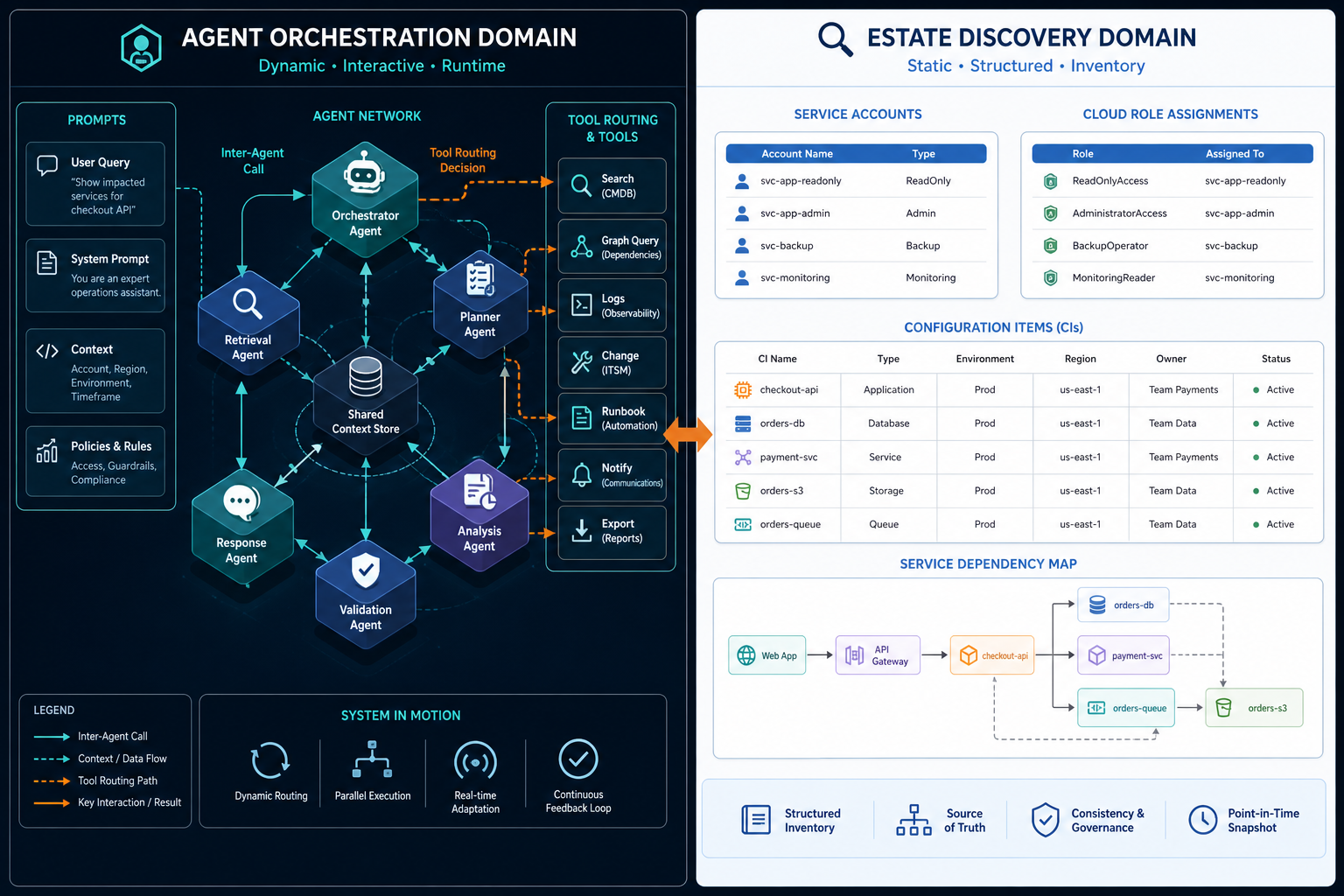
Establishing an effective control plane requires recognizing the boundary between runtime agent orchestration and infrastructure discovery. Automated scanning tools provide the baseline operational facts of the physical and virtual estate, but they do not replace specialized identity governance and prompt engineering frameworks.
Discovery of the enterprise estate directly provides:
- Inventory of service accounts discovered across Active Directory domains, including creation dates, group memberships, and last logon timestamps.
- Cloud role assignments and service principals mapped across Amazon Web Services (AWS) and Microsoft Azure subscriptions.
- Digital certificate inventories and cryptographic bindings discovered across web servers, load balancers, and internal hosts.
- Identification of systems utilizing API-based authentication mechanisms, recorded as configuration items alongside their direct network dependencies.
- Infrastructure dependency maps and business service models constructed from discovery telemetry and team-defined service boundaries.
- Data lineage tracking that records discovery sources and timestamped verification cycles per the multi-source reconciliation process.
Conversely, enterprise infrastructure discovery cannot supply:
- Discovery or cataloguing of custom prompt templates, foundation model weights, or private agent instructions.
- Visibility into programmatic inter-agent delegation chains or internal message bus conversations.
- Management of secret vaults, OAuth authorization scopes, or credential rotation workflows.
- Detection of local client-side assistants operating entirely within user desktop browsers or email applications.
- Telemetry or execution logging originating from closed third-party Software-as-a-Service platforms.
Infrastructure discovery establishes the operational context of the estate on scheduled discovery cycles configured by engineering teams. It does not monitor runtime agent thoughts, but it documents the exact systems those agents possess the capability to alter. Detailed operational methods are outlined in the documentation on enterprise IT discovery capabilities.
A Control Plane Inventory Schema Your Team Can Adopt
Technology organizations preparing for autonomous operations require a consistent data schema to track automation footprints. Rather than waiting for universal industry specifications, engineering leaders can implement a unified inventory model across platform teams, security engineers, and infrastructure managers.
| Field Name | Core Operational Question | Primary Source System | Can Estate Discovery Populate It? |
|---|---|---|---|
| Agent Identity and Sponsor | Who is functionally responsible for this agent? | Agent registry, enterprise tool portal | No. Governance metadata must be declared by the development team. |
| Assigned Runtime Account | Which directory credential executes the commands? | Identity provider, secrets management vault | Yes. Discovered service account records populate the credential name. |
| Credential Type and Rotation | How is authentication secured and refreshed? | Secrets vault, cloud key management service | No. Rotation lifecycle remains within dedicated security tools. |
| Invoked APIs and Tooling | Which system interfaces can the agent access? | API gateway configuration, developer manifests | Partially. Target endpoints appear as discovered CIs in the estate. |
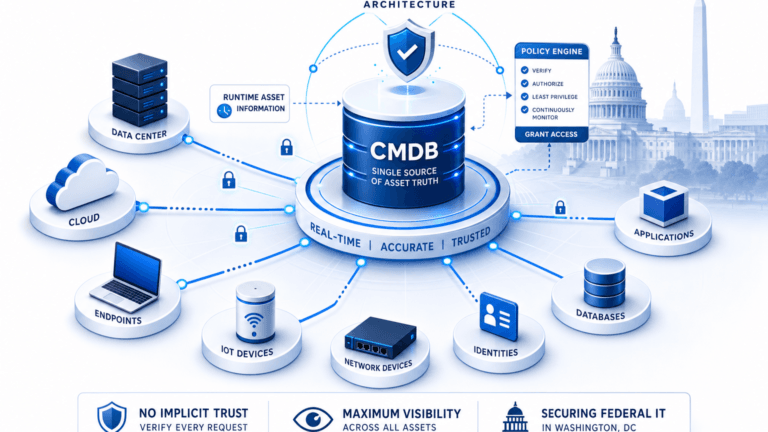
| Target Configuration Items | What specific servers, databases, or services are modified? | Central CMDB and runtime service topology | Yes. Discovery engines map physical hosts, clusters, and business services. |
| Shared Target Stakeholders | Which other automation workflows target this asset? | Cross-referenced configuration management database records | Yes. Derived by cross-referencing asset identifiers across active workflows. |
| Active and Scheduled Changes | What concurrent maintenance windows impact the target? | Change enablement modules, ITSM change records | Yes. Service maps display active change overlays and scheduled maintenance. |
| Designated Escalation Contact | Who must be alerted if unexpected behavior occurs? | Asset management ownership records, registry | Yes. Asset ownership records link infrastructure to responsible teams. |
Engineering teams can evaluate inventory maturity by calculating the percentage of production agents with verified links to a valid credential, an assigned infrastructure target, and a designated human owner. Establishing these baseline linkages ensures automated systems do not operate against unmonitored infrastructure. Broader context on preparing infrastructure data models is available in the guide to CMDB alignment for autonomous systems.
Where Virima Fits Under an Agent Control Plane
Managing the infrastructure footprint of automated workflows requires regular alignment between operational platforms and physical reality. Virima provides the authoritative infrastructure layer that anchors autonomous control planes to verified enterprise assets.
| Control Plane Prerequisite | What Virima Directly Delivers | Where Dedicated Systems Take Over |
|---|---|---|
| Service Accounts and Host Bindings | Discovery records from Active Directory scans linked directly to host CIs | Secrets storage, permission scoping, automated password rotation |
| Cloud Workload Permissions | Discovered role assignments across Amazon Web Services and Microsoft Azure | Cloud security posture management and IAM policy enforcement |
| Infrastructure Targets and Blast Radius | Dynamic CMDB records and ViVID™ service maps built from discovery data | Model selection, agent task routing, prompt evaluation |
| Operational Asset Ownership | Hardware and software ownership assignments managed within ITAM modules | On-call paging schedules, incident escalation policies |
| Programmatic Estate Verification | Bidirectional REST APIs providing JSON payloads for GET, POST, and PATCH queries | Core reasoning algorithms and agent decision loops |
| Central Operational Alignment | Certified bidirectional synchronization across enterprise ITSM platforms | Incident ticketing workflows and manual task approval queues |
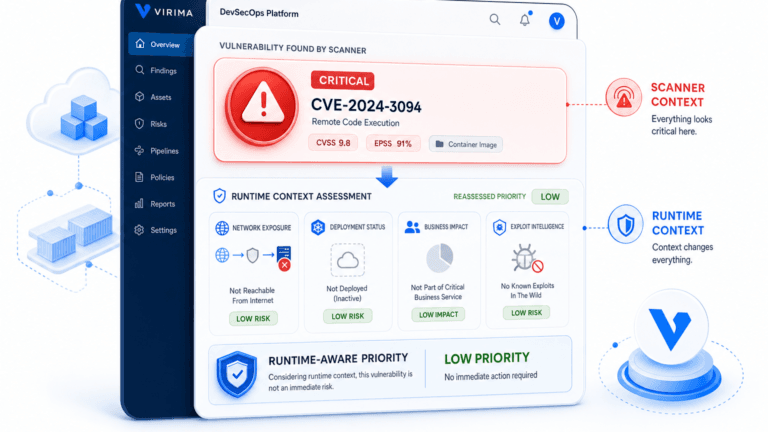
Virima discovers configuration items, service accounts, and dependency relationships through scheduled discovery cycles operating on user-defined frequencies. The platform does not invent runtime agent registries or parse natural language prompts. Instead, it provides the ground-truth map of enterprise hardware, cloud workloads, and business services that automated agents ultimately touch.
Operational dependencies and service impact boundaries can be examined on the ViVID™ service mapping overview. Enterprise platforms coordinate these operational details using the Virima unified integrations ecosystem, which exchanges discovered configuration records with external platforms including ServiceNow, Jira Service Management, Ivanti, HaloITSM, Xurrent, Hornbill, and TeamDynamix without creating proprietary data islands.
The primary operational friction facing Directors of Infrastructure is that development, security, and operations groups deploy automated tools independently. Each functional unit introduces specialized assistants that execute scripts against shared production clusters. Without an authoritative data layer connecting machine identities to underlying components, infrastructure managers cannot assess cumulative operational risk. Selecting appropriate data architectures is explored further in the review of CMDB topology models for automated IT environments.
To inspect enterprise infrastructure truth before deploying autonomous workflows, organizations can evaluate discovery capabilities through the Trusted Runtime Truth overview.
Coordinating Multi-Team Visibility Across Shared Targets
Governing autonomous agents requires cross-functional coordination between the departments that create automation and the teams that maintain shared computing environments. When multiple departments deploy autonomous assistants without shared visibility, operational conflicts inevitably arise on underlying hosts.
| Functional Department | Representative Agent Tasks | Required Operational Declarations | Shared Infrastructure Assets |
|---|---|---|---|
| IT Operations | Automated service restarts, disk cleanup, patch deployment | Account identity, runtime schedule, approved runbook catalog | Application servers, hypervisor hosts, core network gear |
| Security Operations | Endpoint isolation, log extraction, credential revocation | Account identity, detection rule trigger, containment boundary | Authentication servers, database clusters, firewalls |
| DevOps and Engineering | Database schema migration, microservice deployment, scaling | Account identity, deployment pipeline ID, target environments | Container clusters, cloud storage buckets, load balancers |
Cross-functional governance succeeds when every department registers automated tasks against unified configuration item records. If an operations assistant and a security tool possess operational authority over the same virtual machine, the infrastructure architecture must define an explicit operational priority before automated changes occur.
Technology leaders evaluating enterprise infrastructure architectures can review these deployment strategies with the Virima technical team at Booth 645 during the Gartner IOCS 2026 Conference in Las Vegas.
What is agent control plane topology?
Agent control plane topology represents the mapped relationships between software agents, non-human identities, invoked application programming interfaces, and the physical or cloud infrastructure targets those automated agents possess permission to modify.
What causes non-human identity sprawl in agentic IT?
Non-human identity sprawl occurs when development, operations, and security teams independently provision service accounts, tokens, and access keys for autonomous agents without central tracking of credential lifecycles or underlying host relationships.
Can a configuration management database directly discover AI agents?
A configuration management database discovers underlying physical hosts, virtual machines, cloud instances, and directory service accounts utilized by agents, but it does not catalogue prompt templates, model weights, or internal agent reasoning frameworks.
How are inter-agent dependencies tracked across systems?
Inter-agent execution calls and task delegation sequences are tracked exclusively through runtime execution logs and message telemetry maintained by the agent orchestration platform, rather than through infrastructure layer discovery scans.
How do orchestration control planes consume infrastructure data from
Virima?
Orchestration engines query discovered asset details, service dependencies, and ownership mappings using Virima bidirectional REST APIs or through automated data synchronization across integrated enterprise IT service management platforms.