Virima vs BMC Helix Discovery: The 2026 Comparison IT Leaders Need Before They Buy

When your CMDB is unreliable, every decision downstream from it carries hidden risk. According to Gartner, 80% of CMDB implementations fail to deliver business value because of poor data quality and a lack of process ownership. That failure rate has not improved meaningfully even as IT environments have grown more complex with hybrid cloud, containerized workloads, and AI-driven operations becoming standard expectations rather than aspirations.
The question that matters for any IT leader evaluating discovery tools is not simply “does it find my assets?” The real question is: does it give your organization trusted runtime truth about what exists, how everything is connected, what changed, what will break, and who owns it? That is the standard against which any comparison of Virima and BMC Helix Discovery should be measured.
Both platforms perform IT discovery. Both populate a CMDB. They differ considerably in how they approach CMDB accuracy, service mapping depth, ITAM, ITSM integration breadth, and total cost of ownership. This guide gives IT leaders and operations teams a direct comparison across all of those dimensions.
What Is BMC Helix Discovery?
BMC Helix Discovery is a cloud-native, agentless discovery and dependency mapping platform built to provide visibility across cloud and on-premises IT environments. It uses a SaaS-hosted discovery engine paired with an on-premises component called the Outpost, a dedicated Windows server installed inside a data center that receives scan instructions and executes them using securely stored credentials.
The platform identifies IT assets, application relationships, and service dependencies. Its continuous discovery model keeps data relatively current between scan cycles. A key differentiating feature is data origin tracking, which logs the exact command, output, and timestamp behind every discovered data point, allowing teams to verify the source of any record without digging through log files.
BMC Helix Discovery feeds into BMC Helix CMDB, which is a separate product in the BMC portfolio. Organizations evaluating Discovery should factor in the additional licensing cost if they do not already hold a BMC Helix CMDB contract. Entry-level pricing for BMC Helix Discovery starts at $50,000 per year for the Starter Bundle.
What Is Virima?
Virima is a discovery-first IT operations platform built on the premise that trusted runtime truth is the prerequisite for everything that follows: reliable CMDB data, accurate service maps, defensible change decisions, and AI workflows that do not act on stale inventory. Our IT discovery engine supports both agent-based and agentless methods, covering on-premises endpoints, cloud environments across AWS, Azure, and GCP, virtual machines, network devices, and full software inventory.
Beyond discovery, Virima includes a built-in CMDB with multi-source reconciliation (merging CI data from discovery, cloud connectors, and third-party imports into one authoritative record), CI health scoring (measuring data freshness, completeness, and source confidence for every configuration item), and change impact analysis.
It also includes ViVID service mapping for application-to-infrastructure dependency visualization and IT asset management with full hardware lifecycle tracking, software license reconciliation, and end-of-life flagging. These modules are not add-ons. They are part of a single governed data platform designed to give IT teams one authoritative source of operational truth.
Virima integrates natively with ServiceNow, Jira, Ivanti, HaloITSM, Xurrent, and Hornbill. It is purpose-built for mid-to-large enterprises that need operational ground truth without the $50,000-plus price floor or the vendor lock-in that comes with suite-dependent platforms.
Side-by-Side Comparison
| Capability | Virima | BMC Helix Discovery |
|---|---|---|
| Discovery Methods | Agent-based and agentless (scheduled scans) | Agentless continuous discovery via Outpost |
| Cloud Coverage | AWS, Azure, multi-cloud | AWS, Azure, GCP, multi-cloud |
| CMDB | Built-in with multi-source reconciliation, health scoring, and CI lifecycle management | Syncs to BMC Helix CMDB (separate licensed product) |
| Service Mapping | ViVID™: policy-driven change governance | SAAM (Start Anywhere Application Modeling) |
| IT Asset Management | Full lifecycle ITAM, license compliance, EOL/EOS tracking, contract management | Not included; discovery-focused only |
| ITSM Integrations | ServiceNow, Jira, Ivanti, HaloITSM, Xurrent, Hornbill | BMC Helix ITSM (native); limited third-party connectors |
| Deployment Model | SaaS | SaaS or on-premises |
| Storage Limit | No disclosed cap | Storage limits apply; check BMC documentation for current caps. |
| Entry Price | Transparent, lower entry point | $50,000/year (Starter Bundle) |
| Ideal Fit | Mid-to-large enterprises on non-BMC ITSM stacks needing a unified runtime truth layer | Large enterprises deeply invested in the BMC Helix ecosystem |
Discovery Methods and Coverage
Both tools take an agentless approach to discovery, but the mechanics differ in ways that matter at scale. BMC Helix Discovery operates through its Outpost component. The Outpost sits inside your data center or cloud environment, receives scan instructions from the SaaS-hosted engine, and executes them using credentials stored securely in the platform. The continuous discovery model means the Outpost queries the environment on a rolling basis, keeping data relatively fresh between scan cycles without requiring manual re-runs.
Virima supports both agent-based and agentless discovery, giving teams the flexibility to match the discovery method to the segment of the environment being scanned. Agent-based discovery delivers deeper hardware, software, and patch-level detail from managed endpoints. Agentless scanning covers network devices, cloud resources, and environments where agent deployment is restricted. Both methods feed the same CMDB, with multi-source reconciliation resolving duplicate or conflicting records into a single authoritative CI.
The distinction worth calling out for 2026 IT environments is not only coverage breadth. It is the quality of what gets captured and how that data supports operational decisions downstream. A discovery layer that surfaces raw inventory without ownership context, change history, or impact visibility leaves teams doing manual analysis before they can act on anything. Discovery that builds toward trusted runtime truth closes that gap from the moment data enters the system.
CMDB Integration and Data Quality
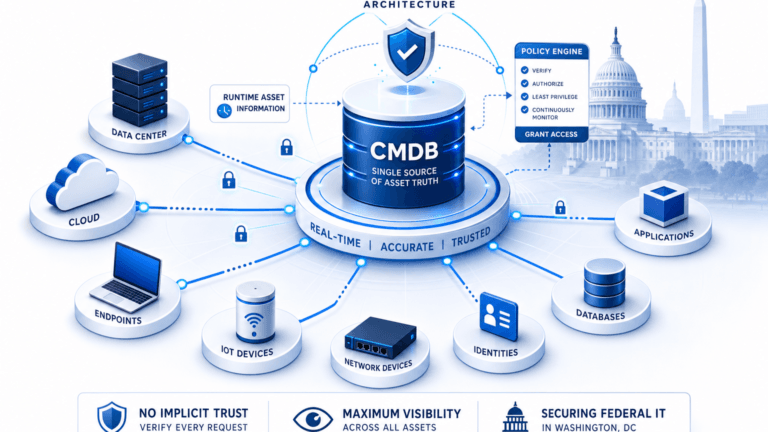
This is where Virima and BMC Helix Discovery diverge most significantly. BMC Helix Discovery is a discovery and dependency mapping tool. It does not include a CMDB. It feeds into BMC Helix CMDB, a separate product that requires its own licensing. Organizations already running BMC Helix CMDB get a well-integrated experience. Those that are not face the cost and configuration overhead of adding another BMC module before they can close the loop between discovery output and a governed CI record.
Virima’s CMDB is built into the platform and is not an add-on. Discovered CIs populate directly into a CMDB with health scoring, CI lifecycle management, change impact analysis showing downstream effects before a change is approved, and multi-source reconciliation that merges CI data from multiple discovery sources into one authoritative record. The architecture matters because the most common reason CMDB projects fail is the gap between the discovery tool and the CMDB, where data models diverge and reconciliation logic does not keep up with how fast the environment changes.
When discovery and CMDB operate as separate tools with separate data pipelines, that blind spot does not shrink. It just becomes better documented. For IT leaders building the operational data foundation that modern change governance and AI-driven workflows depend on, a single governed platform is the architecture that closes those gaps.
Service Mapping and Dependency Visibility
BMC Helix Discovery includes Start Anywhere Application Modeling, or SAAM, which lets teams initiate application dependency mapping from any point within an application’s architecture. This is useful for environments where the full application boundary is unclear at the outset. The resulting dependency map feeds into BMC Helix CMDB for service blueprint modeling and downstream use in ITSM workflows.
Virima’s ViVID service mapping works differently. Service composition, meaning which applications and infrastructure components make up each named business service, must be defined by the team through manual input, spreadsheet import, or integration with tools like Lean IX. Once those service definitions are in place, Virima automatically builds and maintains the application-to-infrastructure dependency map as the underlying environment changes. The maps stay current without manual maintenance because they draw continuously from discovery-sourced CI data rather than a one-time dependency trace.
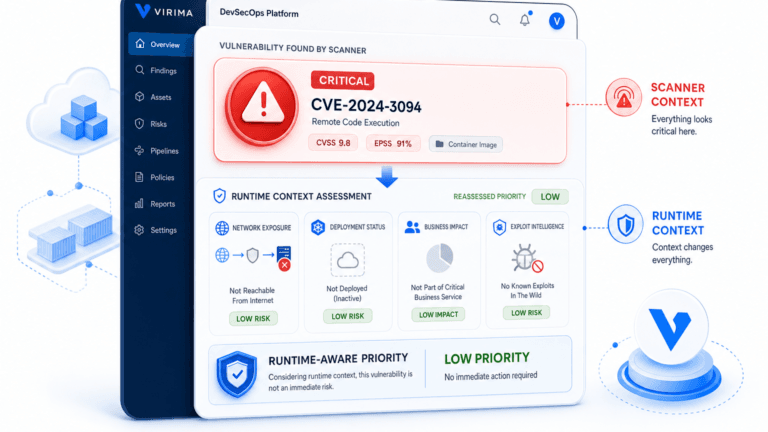
For organizations using service maps to support incident triage, change impact assessment, and AI-driven operations, the quality of the underlying data is the deciding factor. A service map built on continuously reconciled, discovery-sourced CIs will support blast radius analysis more reliably than one that requires periodic re-tracing to remain accurate. The EMA ServiceOps 2025 report covers how CMDB maturity and discovery accuracy directly shape AI-readiness in IT operations, including the specific correlation between stale service maps and unplanned outage frequency.
IT Asset Management
BMC Helix Discovery is a discovery and dependency mapping product. It does not include a full IT asset management module. Organizations that need software license compliance, hardware lifecycle tracking, EOL and EOS flagging, and asset financial management must either license BMC’s separate ITAM product or add a third-party tool to fill the gap. For organizations evaluating total cost, this is a meaningful addition.
Virima includes IT asset management as a native module within the same platform. Hardware asset lifecycle tracking from procurement through disposal, software license reconciliation against actual installs, compliance reporting for audit readiness, end-of-life and end-of-support tracking, and contract and warranty management are all included. This architectural choice is not incidental. Asset visibility and CMDB accuracy are the same problem approached from different angles. When the same discovery engine that populates your CMDB also drives your ITAM, the data inconsistency that typically appears when two separate tools describe the same physical or virtual asset does not accumulate.
Deployment and Time to Value
BMC Helix Discovery’s Starter Bundle includes a remote onboarding workshop and setup for one development and one production instance, with up to two Outpost scanners. Configuration requires defining network scanning scope, setting up secure credential storage, and integrating with BMC Helix CMDB. For organizations new to the BMC ecosystem, the learning curve is significant. Professional services are a standard expectation at deployment, and the $50,000 Starter Bundle reflects that: a portion of the cost covers onboarding and setup rather than pure product access.
Virima is SaaS-deployed with a faster path to first scan. The platform does not require a multi-month professional services engagement before discovery begins. For IT leaders who have been through a failed or delayed CMDB implementation before, the operational and political cost of a lengthy deployment is not a trivial concern. For a head-to-head look at how Virima, BMC, and Device42 compare on deployment and discovery scope, our three-way comparison covers each tool in detail.
Pricing and Total Cost of Ownership
BMC Helix Discovery starts at $50,000 per year for the Starter Bundle. That covers discovery of data center endpoints hosted in one public cloud provider, one development and one production instance, and up to two Outpost scanners. Enterprise pricing is negotiated, with total contract values for large deployments typically exceeding $100,000 annually once BMC Helix CMDB licensing is added.
Virima operates at a lower entry point, with pricing that does not require a separate CMDB license, a separate ITAM license, or a professional services engagement before the first scan runs. For IT leaders who are accountable to a CFO or board for technology ROI, the total cost of ownership calculation tilts clearly toward Virima when all the necessary BMC modules are included in the comparison.
Cost is one dimension. The other is what the investment actually covers. A higher-cost tool that requires separate licenses to close gaps in asset visibility and CMDB accuracy does not simplify your operational data architecture. It fragments it.
Who Should Choose BMC Helix Discovery?
BMC Helix Discovery is the stronger fit for large enterprises already deeply embedded in the BMC Helix ecosystem. If your ITSM, CMDB, and service management tooling all run on BMC Helix, the native integration between Discovery and the rest of the portfolio reduces the complexity of building a unified operational data layer. Organizations that require on-premises deployment for regulatory or data residency reasons, or that already hold BMC contracts that include Discovery licensing, have a reasonable basis for staying in the ecosystem.
The case weakens quickly for any organization running a non-BMC ITSM stack, building net-new discovery capability without existing BMC licensing, or operating with a mid-market budget where a $50,000 floor is a material constraint. At those conditions, the entry cost and ecosystem dependency create a risk-reward imbalance that is hard to justify on the merits of discovery capability alone.
For a full comparison of the Virima vs BMC Helix suite — Helix ITSM, Helix CMDB, deployment cost, and pricing — see Virima vs BMC Helix.
Who Should Choose Virima?
Virima is the right fit for mid-to-large enterprises that need trusted runtime truth across discovery, CMDB, service mapping, and ITAM from a single platform, without locking into a single vendor ecosystem. Organizations running ServiceNow, Jira, Ivanti, HaloITSM, Xurrent, or Hornbill get native bi-directional integration out of the box. There is no custom connector build required to close the loop between what Virima discovers and what your ITSM sees.
If your IT operations strategy is moving toward agentic AI and policy-driven change governance, you need a discovery foundation built for that future. Virima’s architecture today – continuous CMDB accuracy, multi-source reconciliation, and discovery-maintained service maps – is the operational data layer that supports where IT operations is heading.
For teams starting from scratch or rebuilding after a failed CMDB project, our guide on how to build a CMDB with discovery as the foundation walks through the approach we recommend.
Why Your Discovery Foundation Determines Everything That Follows
The choice between Virima and BMC Helix Discovery is not a feature checklist decision. It is a strategic question about what operational data foundation your IT organization needs to support the work ahead, whether that is incident management today or AI-driven change governance in the next 18 months.
BMC Helix Discovery serves large enterprises already committed to the BMC ecosystem. Virima serves organizations that need discovery, CMDB, service mapping, and ITAM working as a single governed data layer, with ITSM integration with ServiceNow, Jira Service Management, Ivanti, HaloITSM, Xurrent, Hornbill, and TeamDynamix, at a cost that does not require a $50,000 floor before you see value from the investment.
If you are evaluating both, the best starting point is a live discovery session in your own environment. Schedule a demo today, and we will show you the runtime truth your environment surfaces in under 60 minutes.