Top 5 ITOM solutions to boost your business needs

Your IT setup is getting harder to manage. You have cloud systems, old servers, and new apps all running at once. Spreadsheets and memory alone can’t keep track of it all anymore. That’s why you need IT operations management software. These tools help you see what you have and fix problems faster.
But here’s the challenge. There are dozens of ITOM tools out there. How do you pick the right one? We looked at five solid options that solve the main problem. They show you what’s in your IT environment and how everything connects.
What is ITOM?
ITOM stands for IT Operations Management. It includes the tools and steps you use to find, watch, and manage your IT systems. Think of servers, networks, apps, and cloud resources. ITOM tracks all of these plus how they depend on each other.
Now, you might wonder how ITOM differs from ITSM. Here’s a simple way to think about it. ITSM focuses on helping end users with services like help desks. ITOM, on the other hand, focuses on the technology behind those services. The goal is straightforward. Know what you have. Understand how it connects. Fix issues quickly when they happen.
1. Virima: Clear visibility and useful dependency maps
Virima takes a different approach to ITOM. Most tools add discovery as an extra feature on top of a help desk. Virima does the opposite. It starts with IT discovery and service mapping. Then it connects to your existing ITSM tools.
Full discovery across mixed environments
Virima’s discovery engine scans everything in your setup. This includes physical servers, virtual machines, and cloud resources. Right now, it works with AWS and Azure. It also finds network devices and installed software.
The scans run on a schedule you set. By default, Virima uses agentless methods like WMI, SSH, SNMP, and REST APIs. This means you don’t need to install anything on most devices. However, you can also add agents for Windows, macOS, and Linux. These work well for laptops that travel or remote workers.
As a result, you get a near real-time picture of your IT assets. When someone adds a new server in AWS, Virima finds it on the next scan. When someone installs unapproved software, you’ll know about it. Your CMDB stays accurate without manual updates.
ViVID: Service maps that actually help during outages
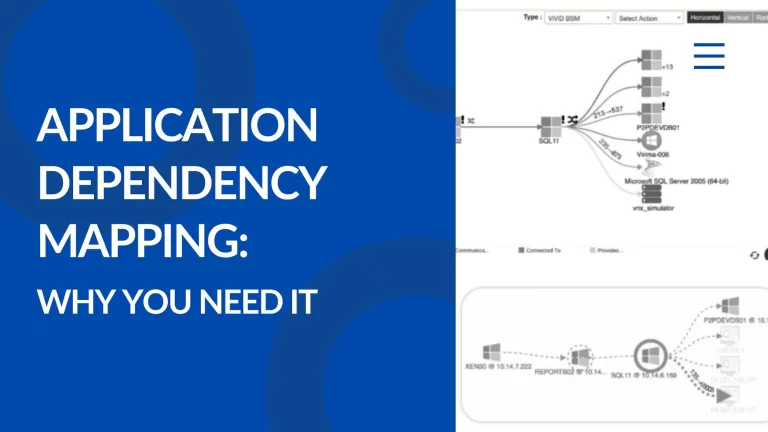
Virima’s service mapping tool is called ViVID. It stands for Virima Visual Impact Display. This tool shows you how your assets and services connect to each other. It’s not just a pretty picture. It’s real information you can act on.
Here’s an example. A network switch fails at 2 AM. Your on-call engineer opens ViVID. They instantly see which apps and services depend on that switch. No guessing. No scrambling to figure out what’s affected. The maps are easy to filter and share with your team.
Additionally, ViVID can show extra data on top of your maps. It pulls in incidents and changes from your ITSM platform. It also shows known vulnerabilities from the NIST database. You can even add alerts from tools like SolarWinds, Nagios, or LogicMonitor.
For change management, ViVID is especially helpful. Before you make a change, you can see what depends on that asset. Your change board can review real data instead of outdated diagrams.
Works with the ITSM tools you already use
Virima connects to many popular ITSM platforms. These include ServiceNow, Jira Service Management, HaloITSM, and Ivanti. It also works with Cherwell, Xurrent, and Hornbill.
The connection goes both ways. Virima sends discovered assets to your ITSM’s CMDB. At the same time, your ITSM sends ticket data back to Virima’s maps. This two-way sync keeps everything aligned.
Here’s why this matters. Most companies already have an ITSM tool they like. Virima doesn’t ask you to replace it. Instead, it makes your existing tools stronger.
Vulnerability info through NIST NVD
Virima connects to the NIST National Vulnerability Database. When Virima discovers your assets, it checks them against known security issues. You’ll see which assets have CVEs (known vulnerabilities) and CPEs (product identifiers).
This helps you prioritize fixes. You can focus on the assets that matter most to your business. You’re not just sorting by how severe a vulnerability sounds. You’re sorting by real business impact.
Autonomic Social Discovery: Your team helps keep data clean
Virima has a feature called Autonomic Social Discovery. It lets your team members help maintain CMDB accuracy. App owners, sysadmins, and help desk staff can all pitch in.
Here’s how it works. Someone notices that a relationship in the CMDB is wrong. They flag it. Virima routes that feedback to the right person. Over time, your data gets better because people who use the assets help keep records accurate.
What you get from Virima
Faster problem solving. Good dependency maps cut down on guesswork. When your CMDB shows reality, your team finds root causes faster.
Fewer failed changes. Your change board can review accurate service maps before approving changes. Fewer surprises mean fewer weekend emergencies.
Money back from unused licenses. Virima’s IT Asset Management features find software you’re paying for but not using. You can reclaim those licenses or cancel them.
Audit-ready records. Discovery runs on your schedule. Your asset inventory stays current. When auditors ask what’s running in your environment, you have the answer.
2. ServiceNow ITOM: Big scale for big companies
ServiceNow is a major player in the ITSM world. Its ITOM module adds discovery, service mapping, and event management. If you already use ServiceNow for ITSM, the ITOM add-on keeps everything in one place.
Where ServiceNow ITOM works well
ServiceNow’s main strength is bringing everything together. You can run ITSM, ITOM, ITAM, security ops, and HR services on one platform. Everything shares the same data model. If your company wants one vendor for all IT management, ServiceNow fits that goal.
ServiceNow also handles large scale well. Many Fortune 500 companies run their global IT on ServiceNow. If you need enterprise-grade power, it delivers.
Where Virima can help ServiceNow users
Many ServiceNow customers add Virima to their setup. They find that Virima’s discovery and mapping tools work better for their needs. Often, Virima costs less too.
Better discovery. Virima’s agentless scans catch assets that ServiceNow might miss. This is especially true in mixed environments with old systems, IoT devices, or multiple clouds.
Easier service maps. ViVID creates cleaner, more filterable maps than ServiceNow’s built-in option. You can share views with people who don’t have ServiceNow licenses.
Faster results. ServiceNow ITOM projects can take 6 to 12 months to set up fully. Virima can start scanning within hours. Your data flows to ServiceNow’s CMDB much sooner.
Lower cost. ServiceNow prices its ITOM module separately from ITSM. This can raise your bill a lot. Virima guarantees at least 50% savings compared to ServiceNow Discovery.
The two systems work together smoothly. Virima handles discovery and mapping. ServiceNow manages tickets and workflows. Both stay in sync.
3. ManageEngine: Many tools at lower prices
ManageEngine sells a wide range of IT tools. These cover network monitoring, app performance, server management, and more. If you want to build your ITOM setup piece by piece, ManageEngine offers budget-friendly options.
What ManageEngine does well
ManageEngine’s products usually cost less than big platforms like ServiceNow. They’re also fairly easy to set up. Mid-sized IT teams can manage them without dedicated platform experts.
The product line covers a lot of ground. OpManager handles network monitoring. Applications Manager tracks app performance. ServiceDesk Plus provides ITSM features. Analytics Plus creates reports. You can buy what you need now and add more later.
Things to consider
ManageEngine takes a modular approach. Each tool has its own data structure. Making them all work together takes some effort. If you need strong service mapping and dependency views, you might need to add a separate tool like Virima.
4. Jira Service Management: Great for dev-focused teams
Jira Service Management started as a help desk tool. Now it’s a solid ITSM platform. It works especially well if your company already uses Jira for software projects. Dev teams and ops teams can work closely together.
Where JSM shines
JSM fits teams that value speed over heavy processes. Its incident, problem, and change workflows are good. Opsgenie integration handles on-call schedules and alerts. Confluence gives you a built-in knowledge base.
For tech companies, startups, and SaaS businesses, JSM feels natural. It speaks the language of developers and engineers.
Where JSM needs help: Discovery and CMDB
Out of the box, JSM’s asset management is basic. It doesn’t offer deep discovery. It can’t auto-populate a CMDB. It doesn’t create visual dependency maps. Mature IT teams need more.
This is where Virima fills the gap.
Auto-discovery. Virima scans your environment and fills JSM’s asset database. No more manual imports or stale data.
Dependency maps with ViVID. JSM doesn’t show service dependencies natively. Virima’s ViVID integration adds those views right inside JSM. You get the same quality that ServiceNow customers pay much more for.
Impact analysis for changes. Before you approve a change in JSM, you can see what depends on that asset. This turns change management from paperwork into real risk control.
Vulnerability context. Virima’s NVD connection shows known security issues alongside your asset data. You can prioritize fixes based on business impact.
If you love JSM’s agile style but need enterprise-grade discovery, Virima is a strong partner.
5. Ivanti: Strong on endpoint management
Ivanti offers tools for endpoint management, ITSM, and security. The company grew by buying other companies like LANDESK, HEAT Software, and Cherwell. This gives them broad coverage but sometimes a mixed feel.
Where Ivanti works best
Ivanti excels at managing endpoints. This means desktops, laptops, and mobile devices at scale. If you have a large workforce spread across many locations, Ivanti handles device lifecycle, patching, and security well.
Ivanti Neurons is their cloud platform. It adds automation and self-healing features powered by machine learning.
Virima service mapping for Ivanti
Ivanti and Virima have teamed up. Together, they offer Ivanti Neurons for Service Mapping. This is an Ivanti-branded product powered by Virima’s technology. You get Virima’s discovery and ViVID maps right inside the Ivanti platform.
Ivanti Neurons for ITSM customers get full access to ViVID. The service maps connect to Ivanti’s workflows. You can analyze impact for incidents and changes. You also see vulnerability data from NIST NVD.
If you run Ivanti Neurons or Ivanti Service Manager, this partnership adds strong ITOM features. You get a seamless, fully supported experience.
How to evaluate ITOM solutions
Picking an ITOM tool is about fit, not just features. Here’s what to look at.
Discovery depth and accuracy
Can the tool find everything in your environment? Test it on your real systems, not a demo setup. Check how it handles different situations.
- Mixed systems: Windows, Linux, network gear, cloud, containers
- Old or unusual devices
- Cloud resources from multiple providers
- Trade-offs between agentless and agent-based scanning
CMDB and service mapping quality
Discovery only helps if the data is organized well. Ask these questions.
- Does it map relationships between assets automatically?
- Can you see dependencies without drawing diagrams by hand?
- Does the CMDB stay current between scans?
- Can non-technical people understand the maps?
Integration with your current tools
Your ITOM solution must work with your ITSM, monitoring, and security tools. Check these points.
- Does it sync both ways with your ITSM platform?
- Can it send data to your monitoring and alerting systems?
- Does it connect to vulnerability databases for risk context?
Total cost of ownership
The sticker price isn’t the full cost. Factor in these items.
- Setup and configuration time
- Ongoing admin work
- Training for your team
- Licensing model: per asset, per user, or per device
Time to value
How soon will you get useful data? Some tools take 6 to 12 months to set up fully. Others show itom service mapping incident and change management processes value in weeks. If your team is struggling with bad CMDB data or slow incident response, speed matters.
Making your choice
The ITOM market has real options. ServiceNow offers one platform for everything. ManageEngine provides affordable pieces you can mix. Jira Service Management fits agile, dev-focused teams. Ivanti leads in endpoint management.
Virima takes a different path. It treats discovery and service mapping as the foundation. Then it connects to whatever ITSM platform you already use. For teams that want mapping integration, it service delivery management integration, seamless integration, and accurate visibility without replacing their tools, Virima delivers faster.
Your best choice depends on your current setup, your team’s skills, and your biggest pain point. Start with the problem that hurts most. Maybe it’s a slow incident response. Maybe it’s failed changes. Maybe it’s audit prep. Evaluate tools against that specific need.
Ready to see how Virima works in your environment? Schedule a demo, and we’ll show you what’s actually running in your infrastructure.