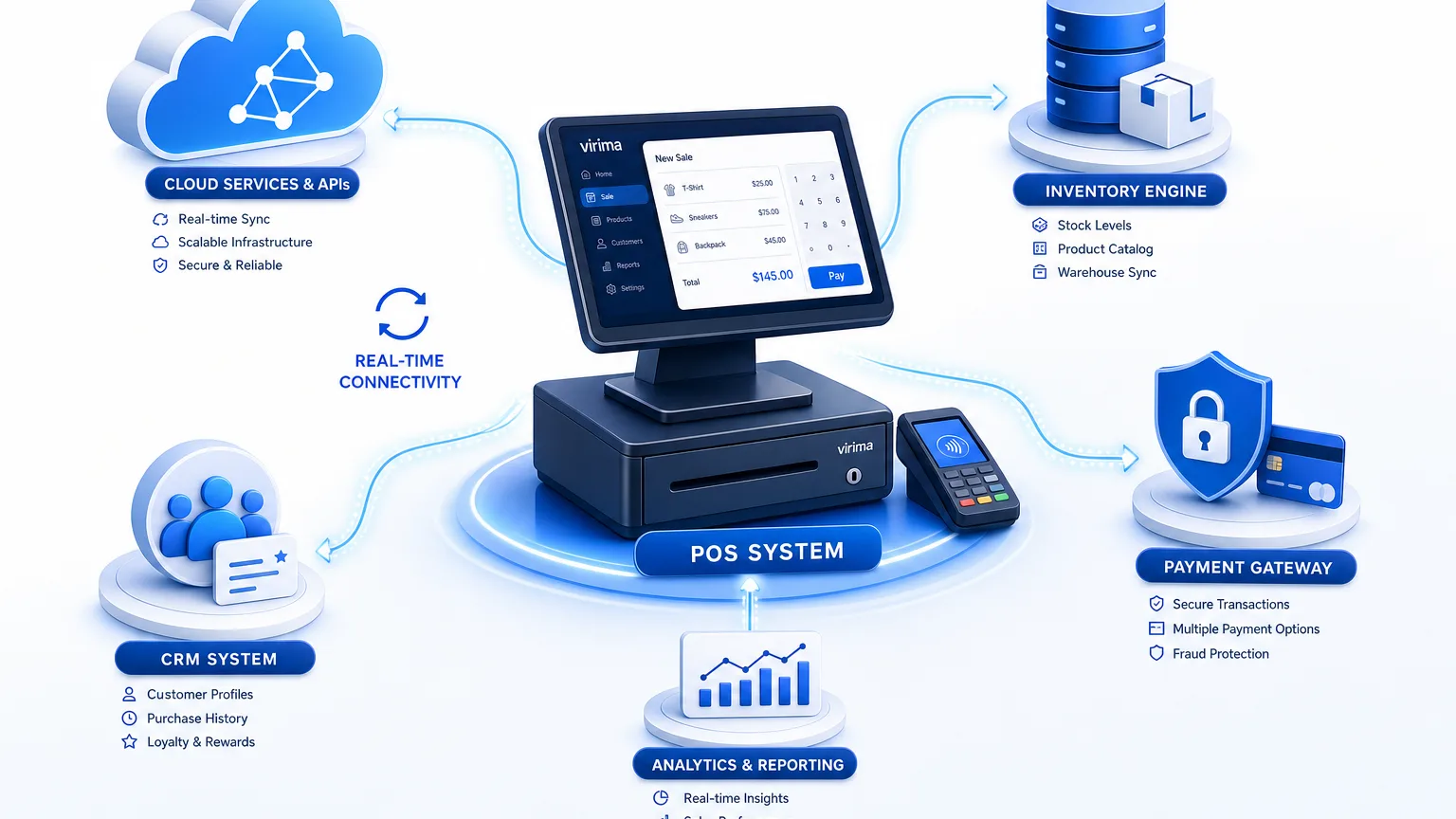
Retail POS Tracking: Mapping Backend System Dependencies

When a retail store register freezes during Black Friday or a flash-sale checkout portal times out online, revenue drops instantly. Point of sale (POS) systems are no longer standalone cash drawers. They are front-end terminals connected to a complex mesh of cloud APIs, inventory engines, payment gateways, and loyalty databases.
Modern retail and e-commerce brands operate highly converged IT environments. In-store POS terminals share real-time backend dependencies with enterprise resource planning (ERP) platforms, centralized warehouse management systems (WMS), and cloud-hosted customer relationship management (CRM) tools.
When retail IT directors and store systems managers rely on static asset spreadsheets or isolated monitoring dashboards, unmapped backend infrastructure changes lead to severe checkout failures. Retail POS tracking is the practice of continuously mapping every point-of-sale terminal to the backend systems it depends on — payment gateways, inventory engines, and databases — to complete a transaction, and sustaining that visibility across omnichannel retail operations requires continuous automated discovery and a CMDB that never goes stale.
Why is tracking POS systems and backend dependencies complex for retail IT teams?
Retail POS environments rely on tightly coupled infrastructure spanning physical store terminals, local store gateways, payment processors, and cloud inventory microservices. Lacking dynamic service dependency maps, unannounced database patches or network latency spikes cause register lockups and abandoned checkouts during peak sales periods.
The hidden complexity of omnichannel retail infrastructure
Modern retail IT architectures must reconcile physical store operations with digital e-commerce channels. When a customer purchases an item in-store or opts for Buy Online, Pick Up In Store (BOPIS), the transaction triggers simultaneous data exchanges across multiple application layers.
68% of retail IT leaders cite data silos between store and backend systems as their biggest integration challenge, according to Swell’s 2025 POS System Integration Statistics report. This distributed architecture creates three primary operational vulnerabilities:
1. The store-level peripheral and gateway visibility gap
While corporate IT maintains central cloud environments, physical retail stores deploy local store servers, barcode scanners, payment PIN pads, and receipt printers.
When store technicians replace local networking hardware or update terminal software locally without central logging, configuration baselines drift. When an unmapped local gateway server fails due to age, store staff cannot process transactions, causing long register lines and lost sales revenue.
2. High-blast-radius infrastructure changes
To prepare for peak holiday volumes, retail engineering teams perform frequent software updates, database optimizations, and security patches.
Without discovery-sourced dependency context, the kind ViVID™ service maps provide, change advisory boards (CABs) review maintenance tickets in isolation. A database administrator updating an index on an internal reporting server may not realize that the server hosts the live inventory lookup service used by store POS registers. That single update can trigger widespread checkout delays across hundreds of retail locations.
3. Multi-vendor hardware and firmware drift
Retail POS estates rarely run on a single vendor stack. A single chain can mix payment terminals, self-checkout kiosks, handheld scanners, and receipt printers from different manufacturers, each on its own firmware release cycle.
Without a current CMDB that tracks firmware versions and patch levels alongside network location, security and operations teams cannot tell which terminals still run an outdated payment application or an unsupported operating system. That blind spot turns a routine vendor firmware update into a discovery exercise instead of a scheduled change.
How does automated discovery unify retail POS tracking across stores and cloud hubs?
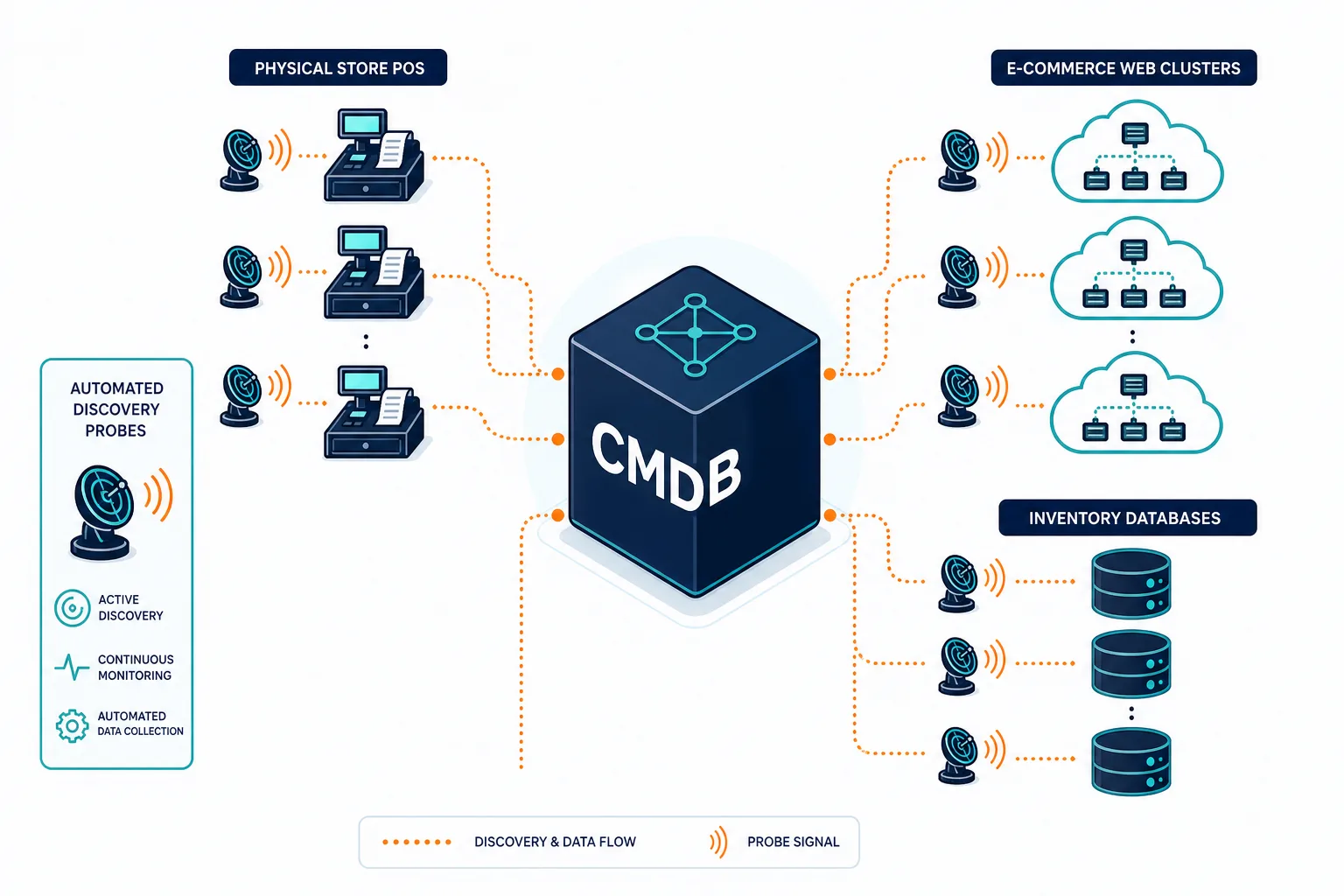
Automated discovery deploys agentless probes and lightweight collectors across store subnets, regional datacenters, and cloud environments. It continuously inventories physical POS hardware, operating systems, payment middleware, and database links into a centralized CMDB.
Deploying automated discovery across distributed retail networks
Retailers operate under strict Payment Card Industry Data Security Standard (PCI-DSS) regulations requiring strict network isolation between cardholder data environments (CDE), store Wi-Fi, and corporate administrative networks.
To establish complete inventory visibility without violating PCI compliance or introducing network latency on active register lanes, retail organizations roll out a multi-tiered discovery framework.
Retail POS software adoption keeps climbing: the global market is on track to grow from $5.5 billion in 2026 to $12.8 billion by 2033, according to market research cited by OpenPR. That growth curve means more subnets, more cloud connectors, and more field devices for discovery to reach, not fewer.
Discovery architecture for retail environments
- Store Subnet Gateway Probes: Situated within local store management subnets, lightweight gateway probes perform agentless WMI, SSH, and SNMP discovery across store servers, POS terminals, and network switches without inspecting cardholder data streams.
- Central Cloud API Connectors: Direct API integrations continuously monitor cloud-hosted e-commerce clusters, payment gateway microservices, and inventory databases across AWS and Azure environments.
- Field Device Light Agents: Installed on mobile POS tablets and inventory handheld devices, lightweight agents capture device configurations locally and sync with the central CMDB whenever connected to secure store networks.
Consolidating these multi-location discovery inputs into a single source of truth is what lets a CAB reviewer check blast radius on a maintenance ticket in minutes instead of pulling three separate spreadsheets. See IT discovery tool best practices for a deeper implementation walkthrough, and visit the Virima integrations hub to see how automated discovery connects with enterprise service desk platforms.
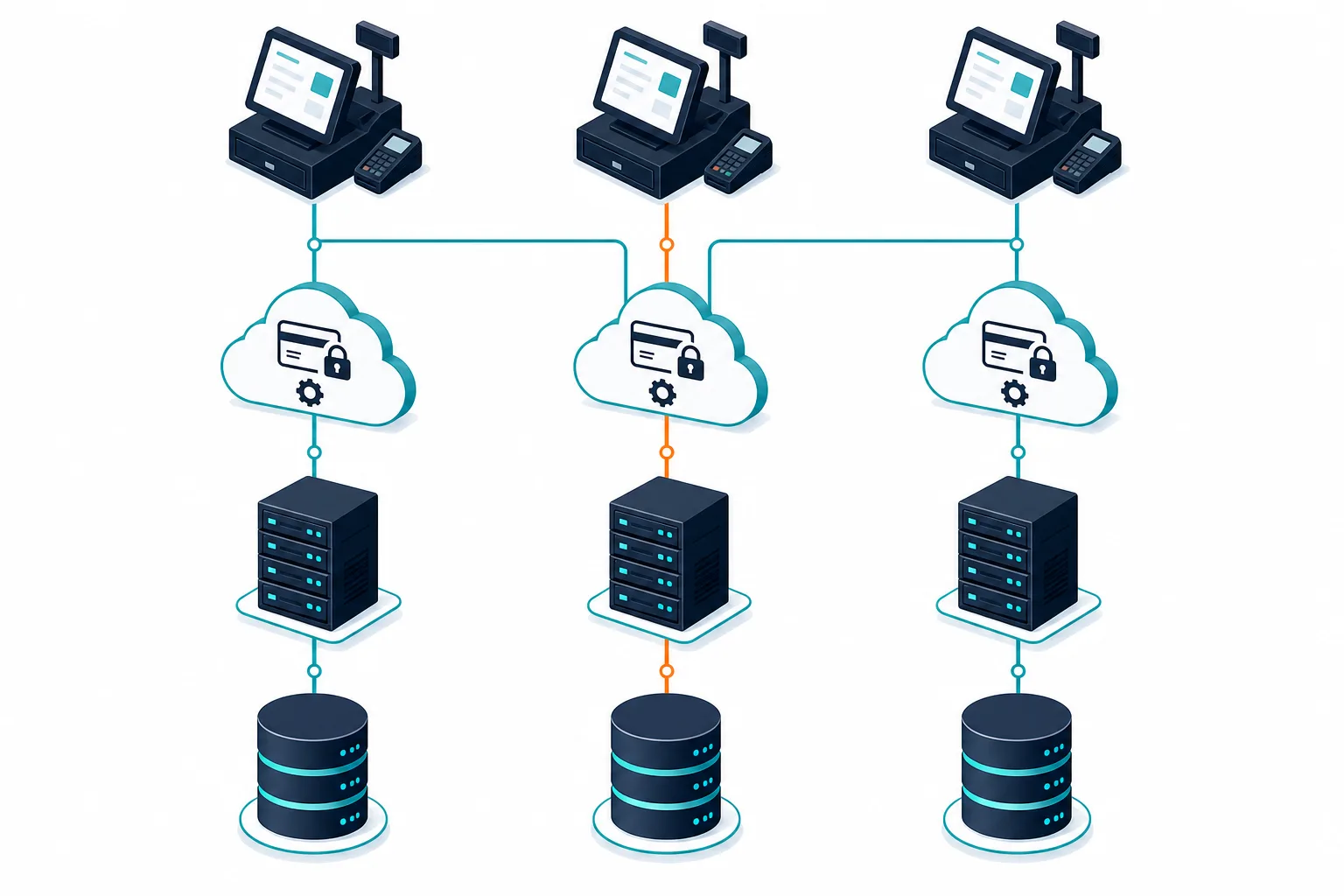
Dynamic service dependency mapping: visualizing checkout dependencies and impact
Knowing that a server exists in a regional data center is helpful; knowing that the server hosts the primary real-time pricing engine connecting physical POS terminals to e-commerce promotions is essential.
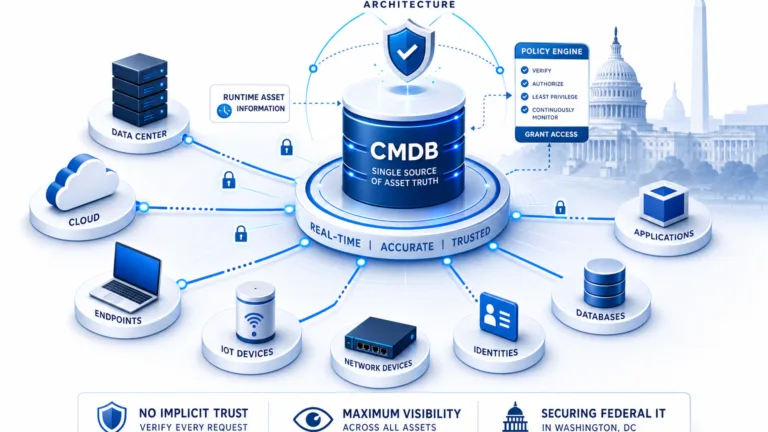
Dynamic service dependency mapping converts flat configuration item (CI) lists into interactive dependency maps. By analyzing active network connections, process dependencies, and API endpoints, ViVID™ service maps visualize the full retail transaction path.
Accelerating incident triage and reducing MTTR during peak seasons
When a register slowdown occurs during peak shopping hours, store support technicians must isolate the root cause immediately. Peak-season outages carry outsized stakes. Gartner data cited in a 2025 downtime cost analysis puts retail e-commerce losses at $1 million to $2 million per hour during high-traffic periods, so shaving even ten minutes off diagnosis time carries real revenue weight. See what that math looks like against your own store estate with the Cherwell Discovery and Dependency Mapping (DDM).
With dynamic service dependency mapping, a service desk technician responding to a POS latency alert views the complete infrastructure dependency tree instantly. If the map shows that a degraded database connection pool on a secondary server is delaying price verification calls, technicians immediately re-route traffic, cutting diagnostic time and restoring register throughput. That same discipline underlies the gains covered in Virima’s guide to reducing MTTR with ticketing and service mapping.
To learn how retail IT teams eliminate data decay and maintain operational control, see how store systems leads establish Trusted Runtime Truth.
Best practices for retail IT systems governance
Maintaining continuous checkout uptime across physical and digital channels requires pairing automated discovery tools with disciplined IT service management workflows. Payment disruptions carry their own price tag. Businesses that process card payments lose an estimated $44 billion in sales annually to payment outages industry-wide, according to a Payments Dive analysis of payment-outage costs. Continuous asset audits and dependency-aware change reviews are designed to shrink that number.
Leading retail IT organizations follow four core operational practices:
- Map high-volume transaction paths first. Begin service mapping initiatives by modeling core in-store POS checkouts, e-commerce payment rails, and BOPIS inventory feeds before expanding to back-office systems.
- Enforce pre-change blast radius reviews. Require CABs to inspect service dependency maps before approving maintenance windows on central inventory or payment databases.
- Automate PCI-DSS asset audits. Maintain continuous tracking of server configurations, patch levels, and network access controls to streamline annual PCI compliance reporting.
- Integrate CMDB data with retail ITSM workflows. Connect central CMDB data directly to service desk platforms like ServiceNow, Jira Service Management, or Ivanti. Support technicians get instant service context the moment they open a store incident ticket.
When evaluating POS software upgrades or preparing for holiday shopping traffic peaks, testing automated discovery capabilities ensures your organization maintains complete checkout availability.
What are the primary financial benefits of automated POS and backend tracking in retail?
Automated tracking prevents costly checkout outages during peak sales events, accelerates incident recovery times, eliminates unbudgeted software license compliance penalties, and shortens annual PCI-DSS audit preparation.
Securing high-availability omnichannel retail operations
As retail brands adopt self-checkout kiosks, mobile POS terminals, and AI-driven inventory forecasting, underlying technology dependencies will become increasingly complex. Relying on static spreadsheets or disconnected monitoring tools to manage mission-critical retail infrastructure creates unacceptable revenue and brand risks.
By pairing continuous multi-site discovery with dynamic service dependency mapping, retail and e-commerce IT organizations turn every change review and incident ticket into a decision backed by current data instead of a guess — the difference between a scheduled maintenance window and a checkout outage. For the broader operational picture beyond POS tracking specifically, see Virima’s guide to ITOM in retail and e-commerce.
Frequently Asked Questions
How does automated discovery preserve PCI-DSS compliance across store POS networks?
Automated discovery uses read-only, non-intrusive scanning protocols placed in management subnets outside cardholder data environments. Configuration metadata is encrypted in transit and at rest, preserving PCI-DSS isolation while maintaining full store asset visibility.
Can dynamic service mapping track dependencies across physical store registers and cloud e-commerce platforms?
Yes. Advanced service mapping platforms correlate API traffic, process connections, and database queries across physical store POS registers, local store servers, and cloud-hosted e-commerce microservices into a single unified dependency map.
How does Virima help retail IT teams reduce MTTR during peak season register outages?
Virima’s dynamic service mapping links physical CIs directly to retail business functions. When a register slowdown occurs, support technicians immediately see the exact database, switch, or API endpoint causing the bottleneck, accelerating diagnostic and resolution workflows.