NIS2 Compliance Checklist: What Audit Day Actually Requires

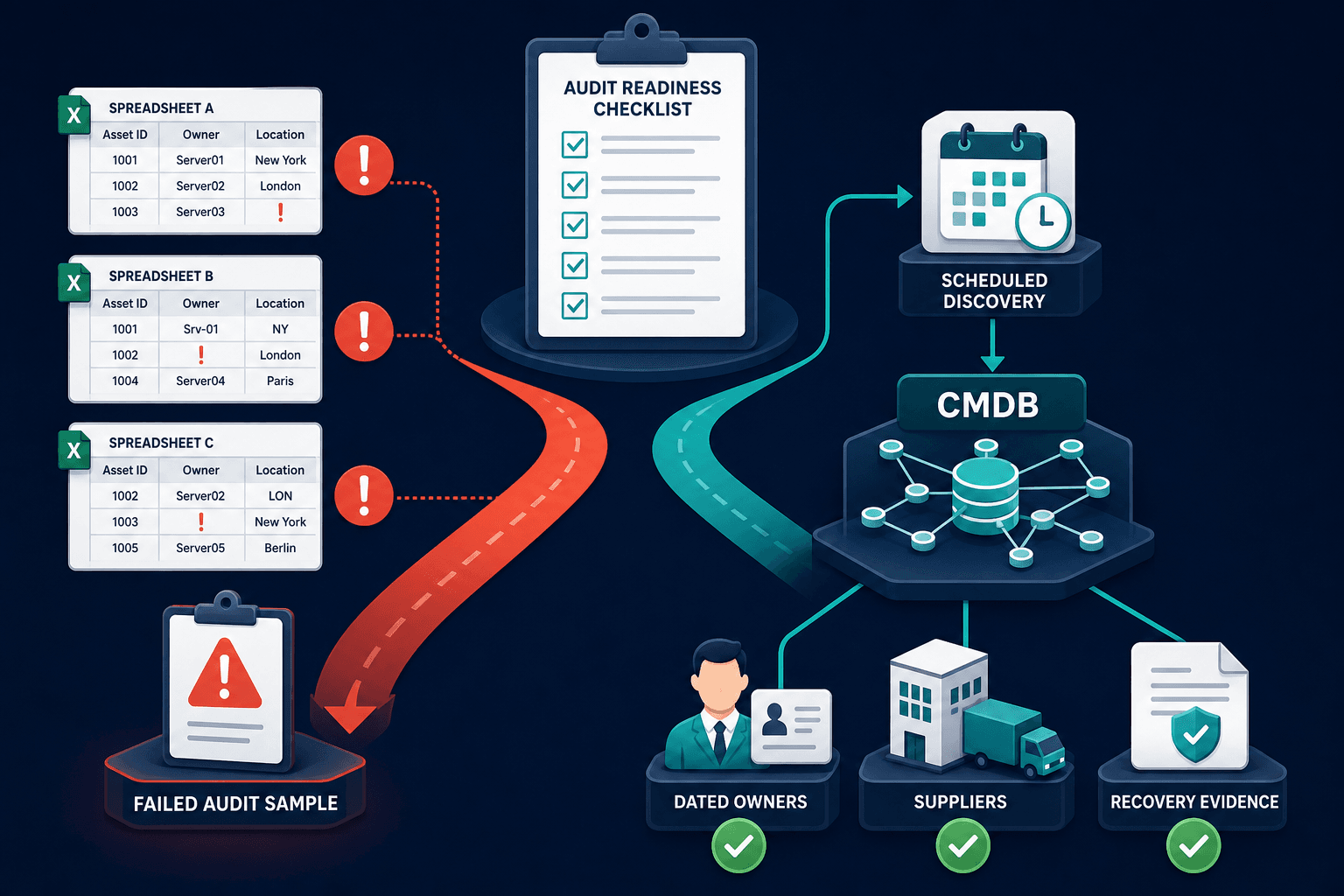
The readiness workshop was going well until the auditor asked for one file. Not the policy pack. Not the training attendance sheet. The current overview of relevant IT assets, with owners, last update dates, and how those assets map to services the firm must keep running. Three spreadsheets came back. One from finance for hardware cost. One from the help desk for ticketed endpoints. One from a cloud admin for subscriptions. Serial numbers did not match. Owners disagreed. Two decommissioned hosts still sat in the production tab.
That is the moment a polished NIS2 compliance checklist stops being a document exercise and becomes an evidence problem. National rules vary by Member State, yet the operational ask is consistent: show that risk measures, accountability, reporting, and continuity rest on inventory and dependency data you can defend. Teams that treat the checklist as a static PDF will feel that pressure first on audit day, not during planning discussions.
In July 2026, the European Commission referred Ireland, Spain, France, and the Netherlands to the Court of Justice for failing to fully transpose the NIS2 Directive (Commission press release, July 2026). That followed formal notices in late 2024 and reasoned opinions in 2025.
What NIS2 actually requires, in plain terms
The NIS2 Directive expands cybersecurity obligations across essential entities in 18 critical sectors listed in Annex I and Annex II. Size thresholds commonly bring in organisations with 50 or more staff or turnover and balance-sheet totals above €10 million, with tighter rules for essential entities and certain digital providers. Member States transpose the Directive into national law, so your competent authority and CSIRT contacts are local. The substance still clusters into four practical pillars: risk management measures, corporate accountability, reporting obligations, and business continuity.
Article 21-style minimum measures cover ten areas:
- Risk analysis and security policies
- Incident handling
- Business continuity and crisis management
- Supply chain security
- Secure acquisition and development
- Effectiveness evaluation
- Cyber hygiene and training
- Cryptography
- Human resources security
- Access control and asset security
ENISA’s NIS2 Technical Implementation Guidance helps technical teams turn those measures into concrete controls. None of that guidance treats a stale spreadsheet as sufficient proof that asset security or supply chain security is under control.
| Checklist line item | What an auditor often asks for |
|---|---|
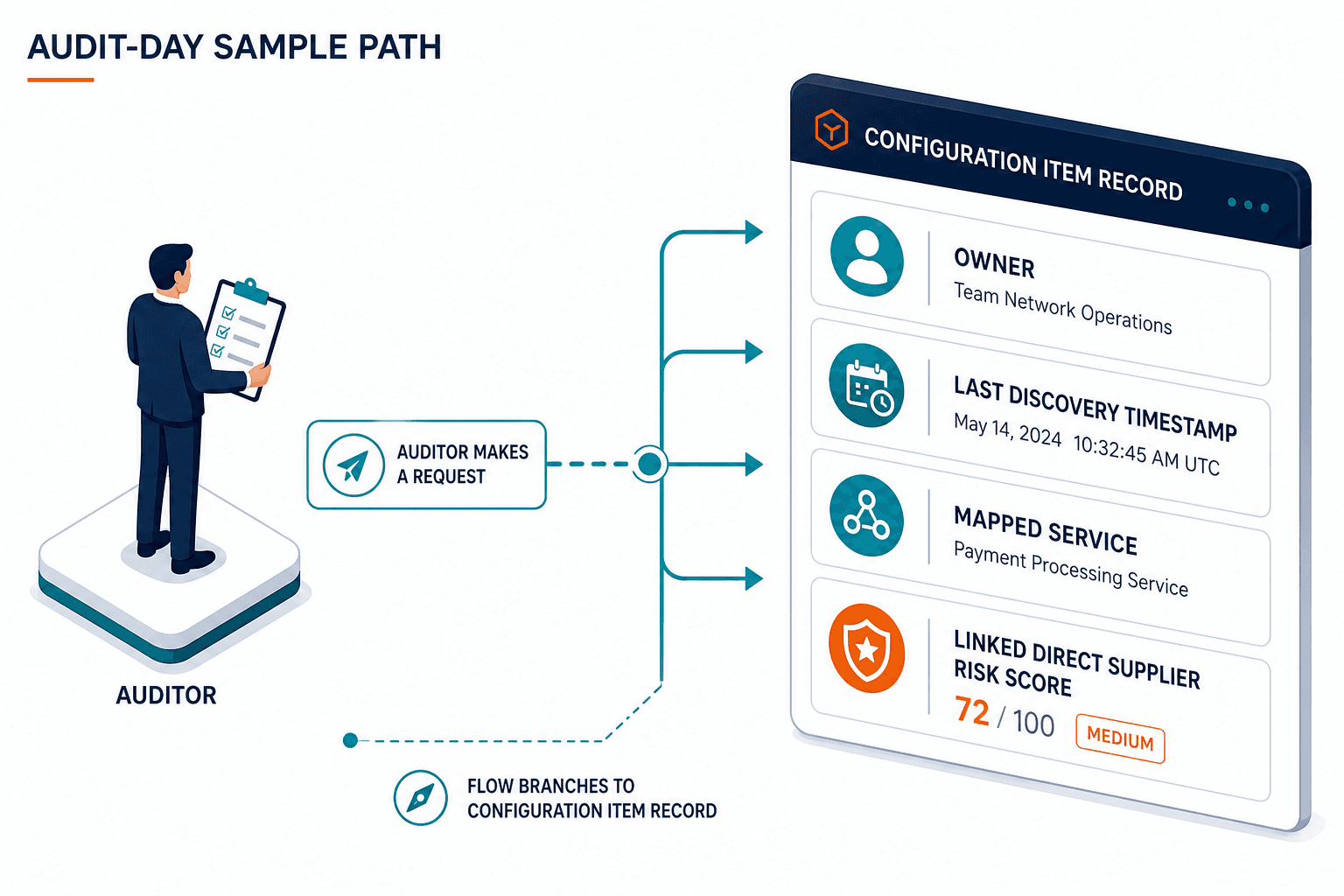
| Asset inventory exists | Last discovery or reconciliation timestamp, owner, and status for sampled configuration items |
| Supply chain security assessed | Which direct suppliers touch which systems, and when risk was last re-scored |
| Incident handling plan | Who decides significant, who pages CSIRT, and which systems the plan assumes still exist |
| Business continuity plan | Recovery steps tested against mapped dependencies, not an org chart alone |
| Management approval | Dated approval of measures plus training evidence for the management body |
The gap between the left column and the right column is why many programmes look complete in a binder and thin in a sampling exercise.
The NIS2 compliance checklist
This checklist follows the four requirement areas and ten minimum measures summarised on the NIS2 Directive’s own requirements page, restructured into items your team can check off and evidence. Use it as an internal readiness list. Confirm final obligations with your national transposition and legal counsel.
Risk management measures
- Documented risk analysis and information-system security policy, reviewed on a set cycle
- Cryptography and encryption policy defined and applied where relevant
- Incident-handling plan drafted, tested, and dated
- Secure procurement and development practices, with a vulnerability handling and disclosure process
- Cybersecurity training running for all staff, refreshed on a fixed cadence, with attendance logged
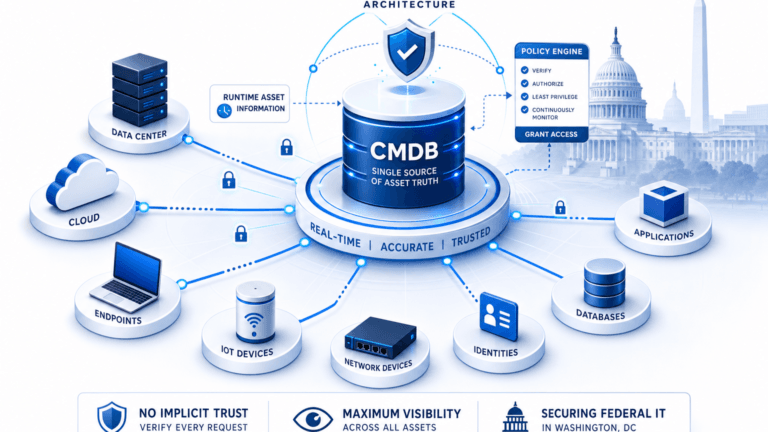
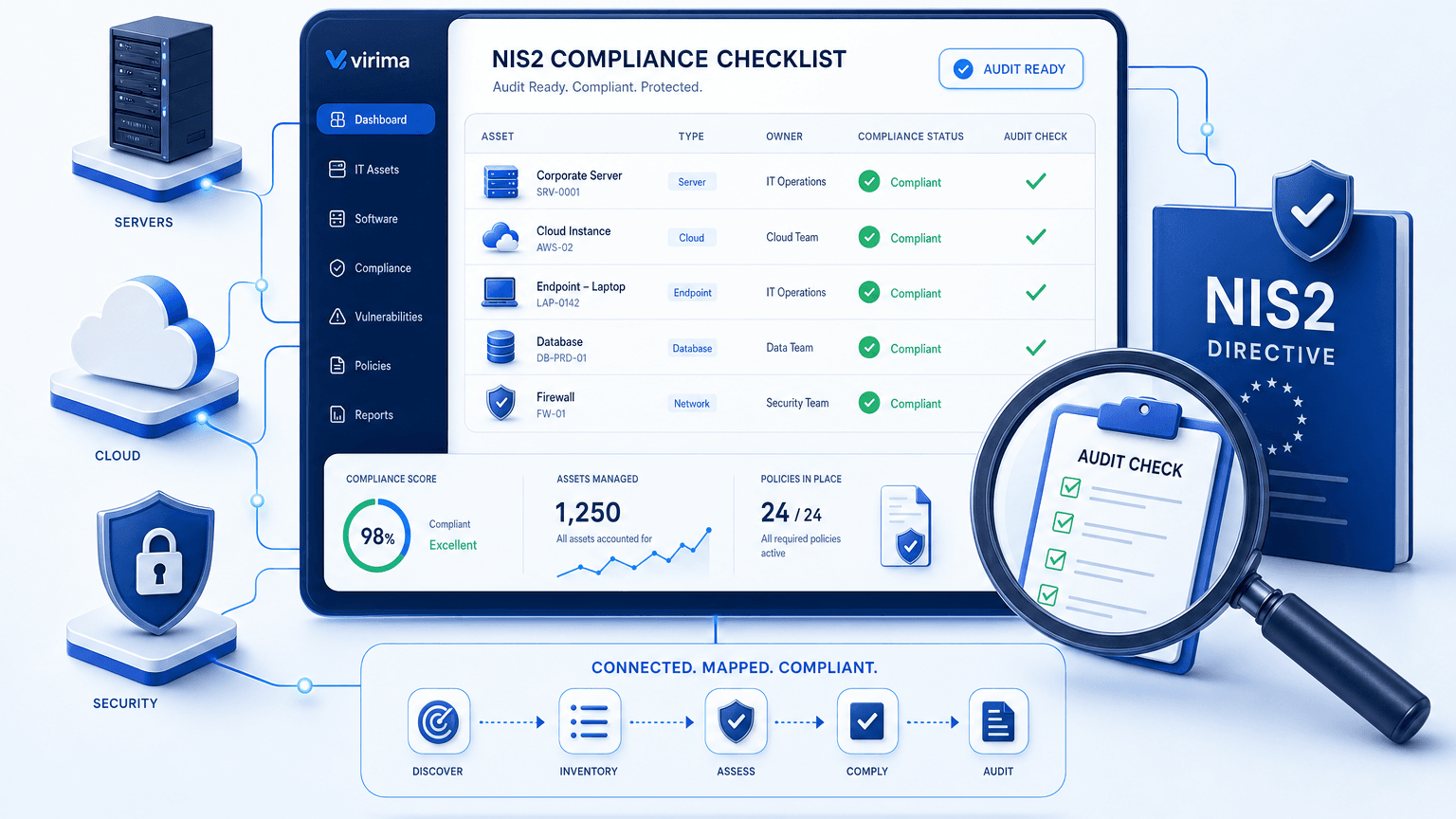
- Current, owned overview of every relevant IT asset, not a spreadsheet nobody has updated this quarter, backed by a discovery-sourced CMDB where records carry source and freshness
- Access policies defined for anyone handling sensitive or critical data
- Multi-factor authentication or equivalent strong authentication in place; encrypted internal emergency communications where appropriate
- Supply chain security assessed per direct supplier, scaled to each supplier’s actual risk to your services
Corporate accountability
- Management body has formally approved the cybersecurity risk-management measures
- Management body has completed cybersecurity training, with evidence on file
- A named person or role owns NIS2 compliance end to end
- Management understands the penalty exposure: Article 34 sets fines of up to €10 million or 2% of global annual turnover for essential entities (whichever is higher), lower tiers for important entities, and allows enforcement action against management bodies for non-compliance
Reporting obligations
- Early-warning template pre-drafted for the 24-hour deadline
- Follow-up notification ready for the 72-hour mark, with a final report due within one month of the incident
- On-call coverage confirmed for detecting and escalating incidents outside business hours
- Written criteria for what counts as a significant incident
- Contact details confirmed for your national CSIRT or competent authority
Business continuity
- Recovery plan tested against actual system dependencies, not assumed ones
- Crisis response team named, with roles defined in advance
- Backup restoration tested within a defined window (state your own cycle)
Checking boxes is the fast half. Producing dated evidence for asset overview and supplier-to-system linkage is where most programmes stall.
The NIS2 asset inventory and supply-chain layer checklists underweight
Two lines on almost every public checklist decide whether the rest of the programme can be defended: the overview of relevant assets, and supply chain security for direct suppliers. Both sound like forms. Both behave like living data problems.
Assets change weekly through cloud provisioning, contractor laptops, SaaS sprawl, and decommission work that never reaches the register. Suppliers change risk when they add subprocessors, shift hosting regions, or suffer their own incidents. A quarterly spreadsheet capture cannot keep pace with either pattern.
Teams learn this when an auditor samples ten hosts and three no longer match production. Discovery-sourced inventory updates on a known schedule. Records can show source, owner, and freshness. That is a different evidence class from a static export nobody trusts after the first cloud sprint.
| Dimension | Manual asset tracking | Discovery-sourced tracking |
|---|---|---|
| Update frequency | Project sprints and audit scrambles | High-frequency scheduled discovery cycles with visible freshness |
| Ownership tagging | Free text that drifts after role changes | Owners tied to configuration items and reviewed as exceptions |
| Audit evidence | Screenshots and conflicting exports | Sampleable records with source and last-seen context |
| Supply-chain visibility | Vendor list in a contract folder | Supplier risk joined to systems and services those vendors touch |
Why supply chain security needs dependency mapping under NIS2
Supply chain security under NIS2 is not only a questionnaire score. You need to know which direct suppliers sit on the path of essential services. That requires dependency mapping across the IT estate once service definitions are supplied. Those maps then need to stay current as infrastructure changes. Without that join, a low-risk SaaS vendor can still sit on the only identity path for a critical process, and nobody sees it until an outage or a sampling question. Service maps, after definitions exist, such as ViVID™ service maps, sit in that infrastructure layer under compliance evidence. They do not replace your GRC platform or national reporting channel. Blog post on how dependency mapping supports supply-chain risk visibility
Connecting asset context to risk and runtime truth
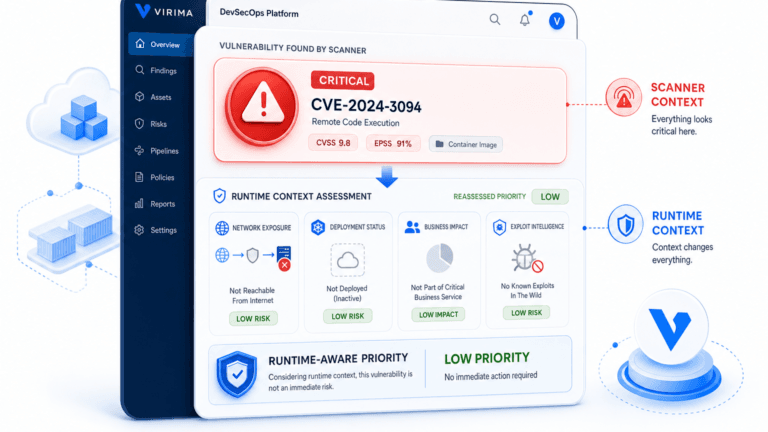
Asset-level security context feeding a risk register is the same idea applied to prioritisation: findings without owners and service impact become noise. The compliance programme still owns policy and reporting. The inventory layer decides whether those policies describe the estate you actually run.
When that shared picture has to be trusted under incident clocks and board questions, start from Trusted Runtime Truth: what exists, how it connects, what changed, what breaks, and who owns it.
Where compliance programmes break down
1. Inventory reconciled only at audit time
Teams clean the register in the two weeks before the visit. Cloud and contractor assets drift for the rest of the year.
The result: CMDB and reality diverge for months between checks, and samples fail on ordinary hosts.
2. Continuity plan untested against actual dependencies
The plan lists applications and call trees. It never walks the infrastructure path a restore actually needs.
The result: recovery assumptions fail on the one dependency nobody mapped when the primary site is down.
3. Supply-chain risk assessed once at onboarding
Procurement scores the vendor at contract start. Nobody re-scores when the vendor’s hosting model or subprocessor list changes.
The result: a supplier’s exposure shifts and the risk register still shows last year’s rating.
4. Incident criteria exist on paper without estate context
The significant-incident definition is clear in the policy. On-call staff still spend the first hour rebuilding what is affected from chat threads.
The result: the 24-hour early warning clock burns while inventory questions remain open.
Continuity work improves when a business continuity plan is tied to live dependency data instead of assumed topology. NIS2 does not invent that need. It makes the gap visible under shorter reporting clocks and management liability.
Making the checklist audit-ready
Audit-ready means your NIS2 compliance checklist can produce, on request, a coherent story from policy to sample. Three mechanisms matter under the desk you already use for tickets and GRC.
- Discovery-sourced CMDB as the asset overview authority. Agent, agentless, and API paths inventory hybrid estates on a known cadence. This is scheduled discovery, not continuous or real-time event streaming. Freshness and source fields turn “we maintain an inventory” into something an auditor can sample.
- Service and dependency maps after definitions exist. Service composition is supplied manually, by import, or through architecture feeds. Maps then show what a configuration item supports so change, incident, and continuity work share one picture. For map depth after definitions are in place, use dependency mapping across the IT estate as the shared picture under tickets and continuity plans.
- Cybersecurity Asset Management (CSAM) context on the same inventory. CSAM adds security-relevant attributes and prioritisation context to discovered assets. It does not replace your GRC tool, SIEM, or national reporting channel. It strengthens the asset security and risk inputs those tools need. Data breach prevention: Reduce risks with asset discovery
Keep the ITSM and GRC platforms as systems of engagement. Keep discovery as the authority that refreshes what those platforms display about the estate. When those roles blur, teams rebuild shadow spreadsheets within a quarter, and the NIS2 compliance checklist becomes theatre again. Partner platforms such as ServiceNow, Jira Service Management, and Ivanti stay systems of engagement. Connect discovery through one hub across all integrations rather than a chain of one-off partner pages.
NIS2 checklist in practice
These are composite patterns, not named customer claims.
- Change manager before CAB. A network change looks low risk on the ticket, but the map shows shared identity and payment hops the free-text field missed. The board delays one window instead of owning an outage that would have triggered significant-incident criteria.
- CMDB owner on audit sample day. The auditor picks ten production configuration items; discovery freshness and owners are already on record. The sample closes without a week of spreadsheet archaeology.
- SecOps lead during early warning prep. An endpoint alert needs business context before the 24-hour clock. Ownership and service linkage shorten the path from symptom to who must act, while the ticketing system stays the system of record.
No badge replaces a test of configuration truth on your estate. Run a discovery baseline on one essential service before you freeze the next compliance statement of work. Make freshness, ownership, and supplier-to-system joins acceptance criteria, not a year-two cleanup theme.
Moving from checklist PDF to evidence you can defend
Market templates measure success by a filed policy and an approval date. An audit-ready programme measures success by sample pass rates, freshness, and restore tests. Each checklist line mapped to an owner and a system, supply chain treated as a live join instead of a contract folder, and discovery funded as part of compliance ops rather than a pre-visit scramble.
Getting started
Turn your NIS2 compliance checklist into evidence with five moves:
- Score one essential service: what the register claims versus what discovery finds.
- List direct suppliers on that path and the date of the last risk score.
- Confirm CSIRT contacts, significant-incident criteria, and on-call coverage against that same service map.
- Set a drift review cadence after the first cleanup, with owners for exceptions.
- Give platform, CMDB, security, and compliance leads the same estate picture in the tools they already open.
Close the gap between checklist and audit day
A NIS2 compliance checklist is useful only when each line maps to evidence you can produce under time pressure. Market templates cover policy, training, and reporting well. They underweight the asset overview, and supply-chain joins that make the rest of the programme true. Fix the shared inventory and dependency layer under the tools you already run. Then the checklist can survive sampling, early-warning clocks, and management accountability.
Turn this into your working audit-readiness sheet: score one essential service against every item above before your next compliance review. For a deeper path on how inventory supports readiness work, see how Virima’s IT Asset Management module supports audit readiness. When you’re ready to walk one critical service map against this list, schedule a demo.
Frequently Asked Questions
What is the NIS2 compliance checklist?
It is a practical list of risk, accountability, reporting, and continuity items entities use to prepare for NIS2-style obligations. Strong lists pair each item with sampleable evidence such as owned assets, supplier joins, and tested recovery paths.
Who needs to follow the NIS2 requirements checklist?
Essential entities in the Directive’s 18 sectors, subject to size thresholds and national transposition. Confirm your classification and deadlines with your Member State competent authority and legal counsel before you treat any template as final.
How does Virima’s CMDB support NIS2 asset inventory requirements?
Virima’s CMDB discovers IT assets through agentless, agent-based, and API scanning, then records owner, status, and last-discovery timestamp on each configuration item. That gives compliance teams a sampleable, dated record instead of a manually reconciled spreadsheet: it supports the NIS2 asset-overview requirement but doesn’t replace your GRC platform’s compliance certification or reporting workflow.
How fast do you have to report an incident under NIS2?
Significant incidents generally require an early warning within 24 hours, a follow-up notification within 72 hours, and a final report within one month of the incident, followed by any further notifications on the national timeline. Exact deadlines and criteria follow your transposed law and competent authority guidance in each Member State.
Does Virima map suppliers to the systems they support for NIS2 supply chain security?
Virima’s ViVID™ service maps show which configuration items and services an asset supports, once service definitions exist. Joined with supplier context, that lets teams see which direct suppliers sit on the path of an essential service- the join NIS2 supply chain security requires, though risk scoring itself still runs through your GRC or vendor-risk tool.