ITAM for Logistics: Managing Scanners, Telematics, and Licenses

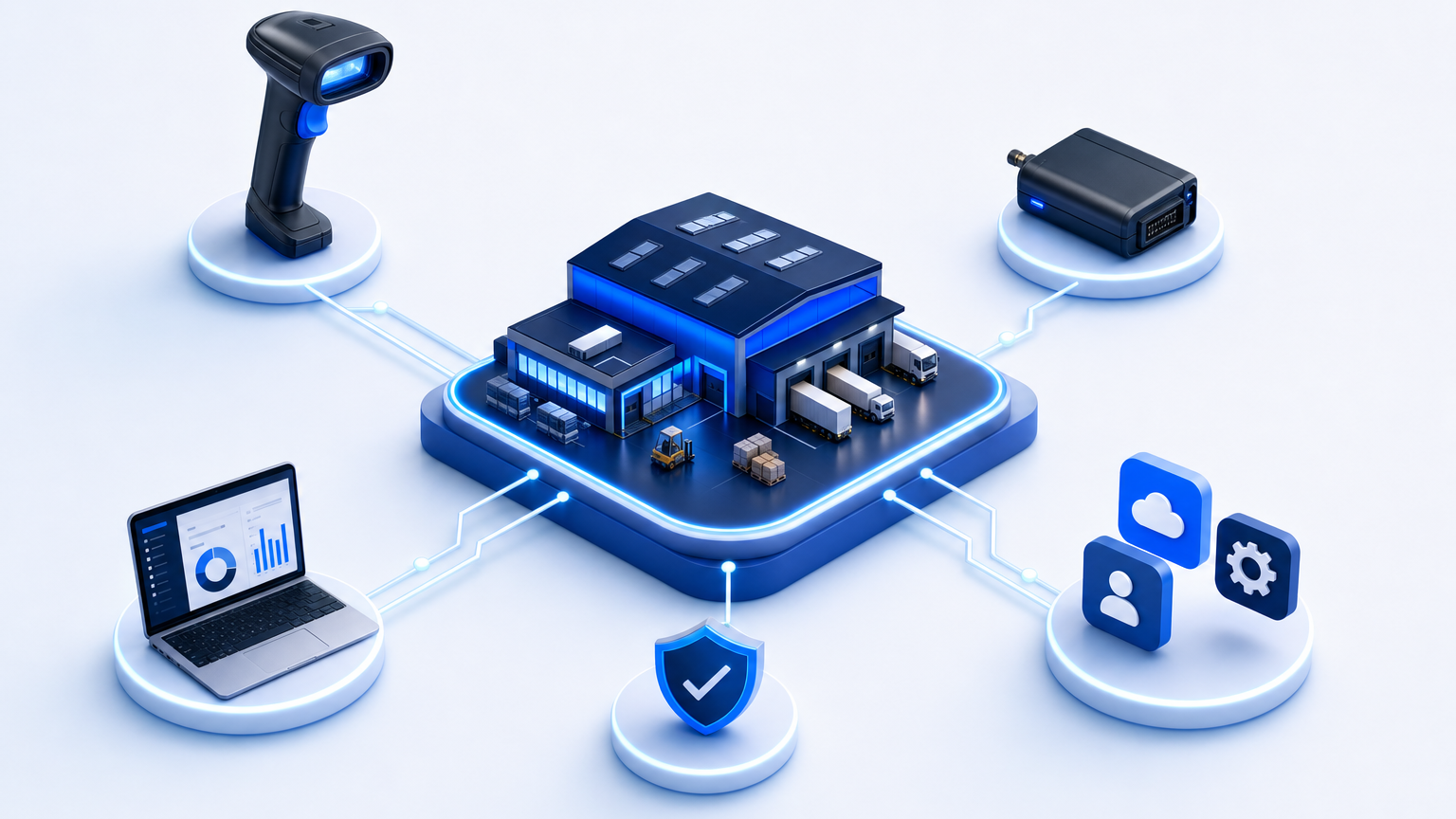
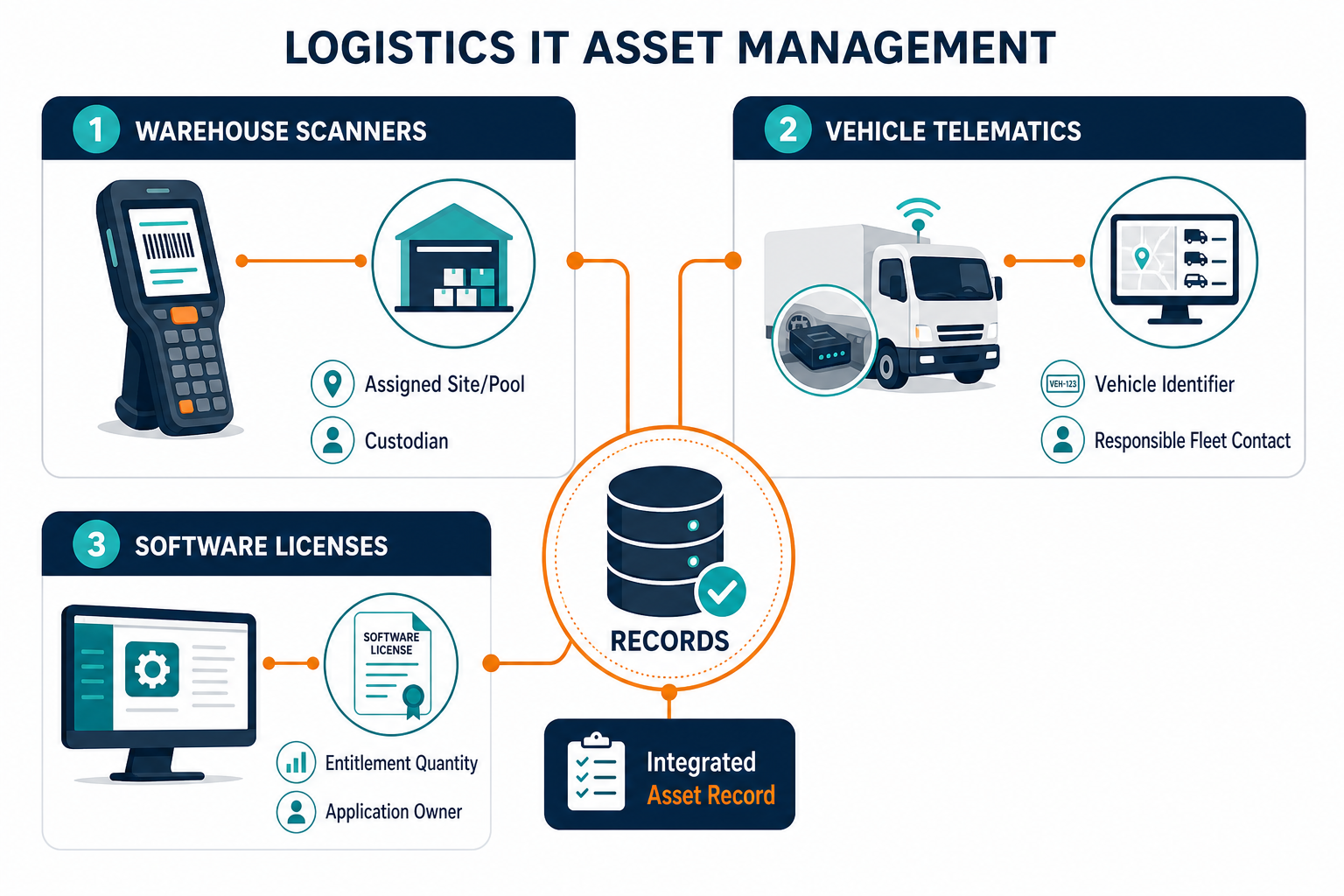
A scanner that moves from one warehouse to another can vanish from the original site’s equipment list. A telematics unit can stay on a billing contract after its vehicle is sold. A software renewal can arrive before anyone knows how many shared terminals still use it. ITAM for logistics is the practice of tracking scanners, telematics hardware, and software licenses as one connected asset record — not three separate ones, which is how most ITAM guidance treats them.
Purchase records show what was acquired. Site and fleet teams hold the information about how those assets are actually used. ITAM for logistics connects the two so IT teams can confirm ownership, verify assignments, review software entitlements, and make informed repair, renewal, and retirement decisions — instead of guessing at them.
What does ITAM for logistics cover?
IT asset management, or ITAM, manages technology assets from planning and procurement through use and retirement, combining technical, financial, contractual, and ownership information so teams can make decisions about those assets.
For a logistics operation, that scope includes:
- Handheld scanners and mobile computers used across warehouse shifts.
- Workstations, printers, switches, access points, and servers supporting facilities.
- Telematics hardware assigned to vehicles.
- Warehouse and transportation applications.
- Device-management subscriptions and software licenses.
- Contracts, warranties, and support dates for technology equipment.
The asset register should answer more than how many devices were purchased. It should show where each asset is assigned, who is responsible for it, and which records support that information. The National Institute of Standards and Technology’s IT asset management guide describes the value of connecting physical and virtual asset information so teams understand what exists and how it’s used.
A warehouse management system records goods, stock locations, and order activity — a different purpose than an ITAM record, which tracks the technology that supports that work. A scanner reads a pallet label during receiving; the warehouse system logs the goods movement, while the ITAM record identifies the scanner and its assigned site. A closer look at IT asset management versus inventory management explains how the two practices address different records and decisions.
Why logistics assets are difficult to track
Logistics technology rarely stays with one team for its entire working life. Devices move between locations, contracts sit with procurement, and application access shifts with shift patterns and service demand. That turnover compounds a problem most IT teams already carry: 83% of enterprises cannot accurately see at least one-fifth of their IT assets (Gartner, 2024) — a blind spot that grows faster across warehouses, vehicles, and shifts than in a single-site office, because scanners and telematics units change hands without a records handoff.
Shared equipment changes hands frequently. A handheld scanner may be assigned to a warehouse rather than an individual, with several workers using it during a shift before returning it to a shared charging area — practical for operations, but it leaves an employee-based register with an incomplete picture of responsibility.
Fleet and IT teams own different information. Fleet operations may know which vehicle carries a telematics unit, while IT or procurement holds the device agreement, support details, and renewal date. Kept separately, a vehicle change can leave the technology record incomplete, so the teams need an agreed handoff when a unit moves, is returned, or is removed.
Software terms vary by agreement. One warehouse application may be licensed by device; another by named users, concurrent access, or site. A count of installations helps with device-based agreements; others require account records or confirmation from the application owner. Either way, the asset, its owner, and the evidence used to manage it need a dependable link.
Build a useful logistics IT asset register
The register is the foundation for lifecycle decisions, and its fields should reflect the way logistics equipment is assigned, maintained, and retired.
Use a durable identifier — a serial number or internal asset tag — to distinguish each physical device, or a cloud instance ID for cloud resources. A hostname can change or be reused, so it shouldn’t be the sole matching key. At minimum, capture:
- Asset type, manufacturer, model, and serial number.
- Assigned site, vehicle, team, or shared pool.
- Responsible owner or custodian.
- Purchase, lease, or provider information.
- Lifecycle status and support dates.
- Source of the information and last confirmation date.
For a fuller breakdown, see what fields an IT asset register should include. The asset owner is accountable for decisions about the record; a custodian may be responsible for the equipment’s day-to-day handling.
An asset’s first record may come from a purchase order, but its status should change as the device is deployed, transferred, repaired, or retired. A scanner awaiting repair should remain distinguishable from a spare ready for use, and a telematics unit returned to a provider should carry a different status than one still assigned to a vehicle. These distinctions make lifecycle reports more useful and help teams investigate discrepancies without treating every missing field as a lost asset. The broader stages of IT asset lifecycle management provide a framework for maintaining those records from planning through disposal.
Manage warehouse scanners across shifts and sites
Scanners are mobile, shared, and sometimes held outside the facility for repair, so their records need to follow those movements without creating unnecessary work for warehouse teams.
Assign devices to the right level
For a dedicated device, an individual assignment may make sense; for a shared pool, a site or team assignment stays accurate longer. Name a custodian who can confirm the pool during a review and who knows where spares are held and how equipment is checked out. Record the device’s serial number, model, assigned location, operating status, and warranty or support information when it affects repair decisions.
Document transfers between facilities
A transfer can be as simple as one warehouse sending spare scanners to another — without a handoff record, the purchasing or inventory record may continue to show the original site. Agree on a transfer record containing the serial number, sending site, receiving site, date, and receiving custodian, and have both locations confirm it. When a site sends a batch of devices, check identifiers rather than recording only the quantity: a count confirms how many units moved, while the identifiers establish which records need updating.
Separate repairs, spares, and retirement
Devices awaiting repair should carry the provider or team holding them, the date sent, and whether a replacement was issued. Spares need a clear location and custodian so a scanner stored for peak demand can actually be found. When a device is retired, confirm whether it must be returned, disposed of, or retained under an internal policy, and close the record once the responsible team confirms the action.
Connect telematics hardware to vehicles and contracts
Telematics equipment has a different lifecycle than a warehouse scanner — it may be installed in a vehicle, supported by a provider, and billed under a service agreement. That equipment is multiplying: the commercial telematics market is projected to surpass $84 billion by 2032 as fleets add more connected, asset-tracking hardware (ABI Research, 2024). More devices in the field means more technology records that need a clear, confirmed owner — not just a vehicle association.
Link each device to its vehicle
Record the telematics device identifier alongside the associated vehicle identifier, including installation status, responsible fleet contact, provider, and contract reference. Fleet operations should confirm the vehicle association, since that team manages vehicle assignments and changes, while ITAM retains the technology record and the evidence the owner supplies. Common practice in fleet logistics: confirm whether a provider owns or leases the hardware, since that affects who handles a transfer or removal.
Review the hardware and service separately
A vehicle sale or replacement can trigger several tasks — the device may need to move to another vehicle, return to the provider, or be deactivated — while the service subscription may require a separate decision under its own contract. Removing the device does not automatically end the billed service; the agreement must be checked separately. A practical review asks:
- Is the device assigned to a current vehicle?
- Who owns the equipment and who supports it?
- Does the associated service remain active?
- Who confirms a transfer, return, or removal?
- Which contract or provider record supports that decision?
Reconcile software licenses across logistics operations
Software can support a warehouse, a dispatch team, or an entire fleet, and the license position depends on what the agreement permits and how the organization actually uses the product.
Read the contract before choosing which usage records to compare — an entitlement may be based on named users, devices, sites, concurrent users, or another unit. The gap between what’s licensed and what’s deployed is common and expensive. A 2024 IDC analysis of software asset management practices found that enterprise organizations routinely discover a 15-30% gap between licensed entitlements and actual deployments during formal audits. Logistics operations that license by device, by site, or by named user carry that same exposure every time a warehouse terminal changes hands or a seasonal worker’s account goes unreviewed.
A device count is useful when the agreement is device-based; a named-user agreement requires account assignments and a review of who still needs access. Record the publisher, product, entitlement quantity, contract reference, renewal date, and accountable application owner, and keep the underlying purchase and agreement documents available for review.
Logistics operations may add temporary users or activate spare devices during a busy period. Afterward, the application owner should confirm which assignments remain necessary, and for shared terminals, establish whether the contract counts devices, users, or another measure rather than assuming one shared workstation equals one entitlement. Flexera’s 2024 State of ITAM Report found that organizations with incomplete technology intelligence keep paying for it in true-ups, rush purchases, and delayed renewals. Some agreements allow reassignment of unused licenses; others do not. Record the decision and the evidence either way.
Combine discovery with operational records
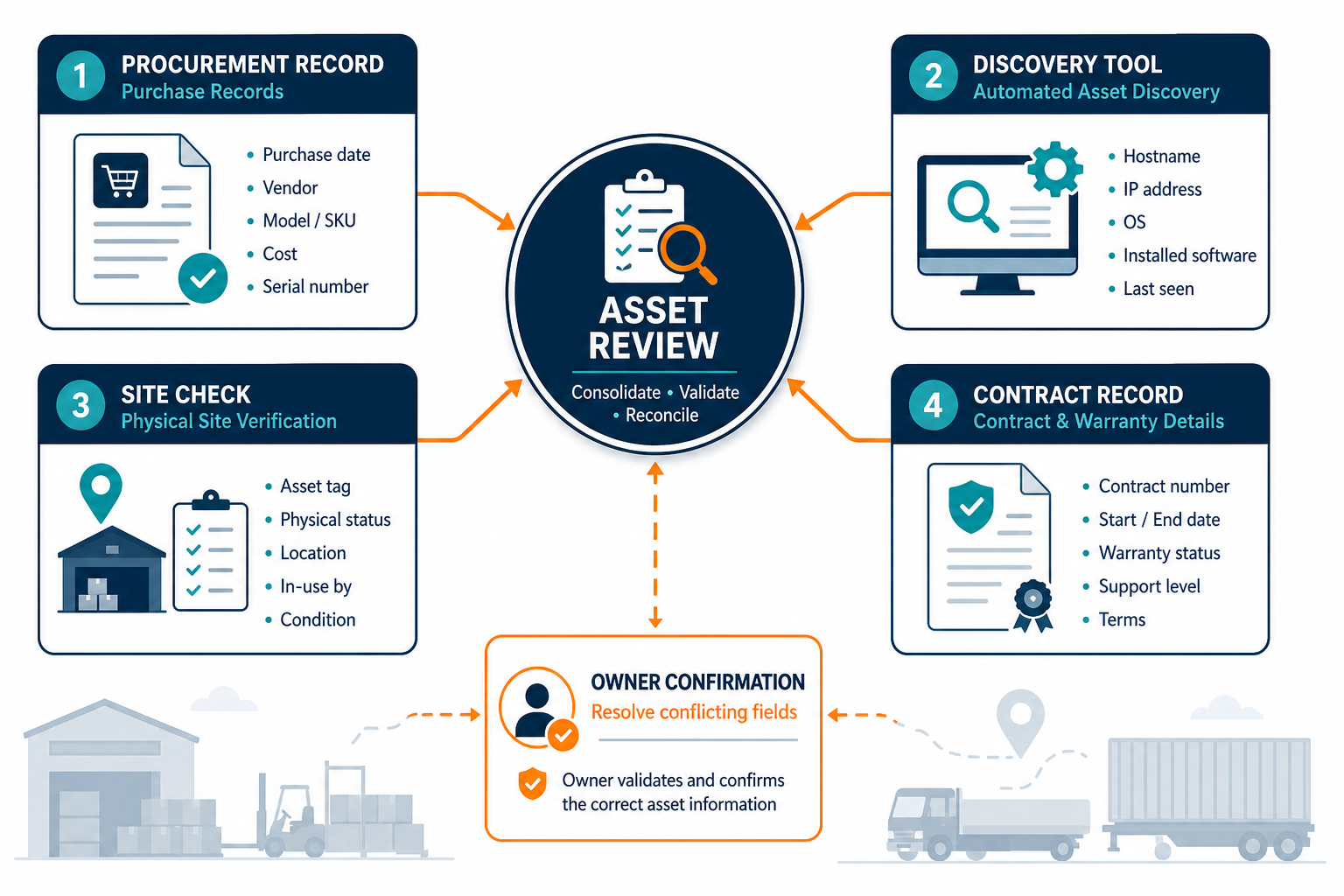
No single source contains every field a logistics asset needs. Purchasing records establish acquisition; site checks and management tools contribute later assignment details. Scheduled discovery can contribute hardware attributes or installed software information for supported, reachable assets — but coverage depends on network reach, permissions, compatibility, and whether the device is available during the discovery cycle. An offline scanner or provider-managed telematics unit may need a physical check, device-management record, or provider report instead, each with an owner who knows what it covers and when it was last checked.
Suppose a purchase record lists a scanner at one facility while a transfer confirmation places it at another. Match the records by serial number, let the receiving-site custodian confirm the current assignment, and note the source and date for the next reviewer. A missing discovery result also needs investigation — the device may be offline, outside the approved scope, or with a repair provider.
Trusted Runtime Truth brings discovery-sourced information about assets and their relationships into these decisions, alongside the fleet and procurement records teams already keep.
Assign ownership and run a review cycle
A register stays useful when teams know who updates it and when, with ownership following the information each team can actually verify. The IT asset manager maintains the register and coordinates exception reviews. Site custodians confirm scanner pools, transfers, and physical checks. Fleet operations confirms vehicle associations and telematics changes. Procurement maintains contract references, supplier contacts, and renewal dates. Application owners verify software assignments and business need. Document the handoff between teams — for example, fleet operations notifies the asset owner when a vehicle is sold, while procurement checks the provider agreement.
Pilot this with one warehouse or fleet group: compare the purchase list, site records, contracts, and available discovery results, and work through mismatches with the people responsible for each source — recording whether an item needs a transfer update, ownership confirmation, or repair follow-up. Once the fields and handoffs work, extend them to other locations, letting local teams add details they need while keeping identifiers and lifecycle statuses consistent.
From there, a useful review just needs measures with a clear owner and follow-up action: asset records without a confirmed owner, scanner pools with overdue physical checks, devices under repair beyond the expected return date, telematics units awaiting vehicle-assignment confirmation, contracts approaching renewal without an application-owner review, and retired equipment awaiting return or disposal confirmation. Review exceptions on a schedule the responsible teams can maintain, and close one once its owner records the evidence and decision.
How Virima supports ITAM for logistics
Virima supports hardware asset lifecycle tracking, software license management, and records for contracts and warranties. Its discovery capabilities can contribute information about supported, reachable infrastructure on a configured schedule, working alongside the fleet, procurement, and site records your teams already keep rather than replacing them.
Teams can use Virima IT asset management to maintain technology lifecycle information alongside the evidence supplied by procurement, site, fleet, and application owners. For warehouse scanners and telematics equipment, coverage depends on the device and available collection method — site checks and provider records remain important for assets outside discovery scope. The goal is a record that helps the responsible team make its next decision: transfer a scanner, confirm a subscription, renew support, or retire a device.
Start with the records your teams need most
Choose a scanner pool, a fleet group, or an application approaching renewal. Identify its owner, compare the available records, and document the discrepancies. Use that first review to agree on identifiers, lifecycle statuses, and handoffs, then repeat the process across other sites and asset groups.
See how Virima’s IT asset management brings scanner, telematics, and license records into one place for your logistics technology estate.
Frequently Asked Questions
What is ITAM for logistics?
ITAM for logistics is the management of technology assets used across warehouses, fleets, and offices. It covers equipment, software, ownership, contracts, and lifecycle decisions from acquisition through retirement.
How should a warehouse track shared scanners?
Give each scanner a durable identifier and assign it to a site, team, or shared pool. Name a custodian who can confirm transfers, physical checks, repairs, and retirement.
What should a telematics asset management record include?
Record the device identifier, associated vehicle identifier, provider, responsible owner, contract reference, and current status. Fleet operations should confirm vehicle assignments and notify the asset owner when they change.
Can Virima discover every warehouse device?
Discovery depends on configured scope, network reach, permissions, and device compatibility. Teams should confirm coverage for their equipment and use suitable site or provider records for assets outside that coverage.
How does Virima help manage logistics software licenses?
Virima supports software license management and can compare license information with relevant installation records. Application owners and procurement should confirm the contract metric and provide additional evidence where an agreement requires it.