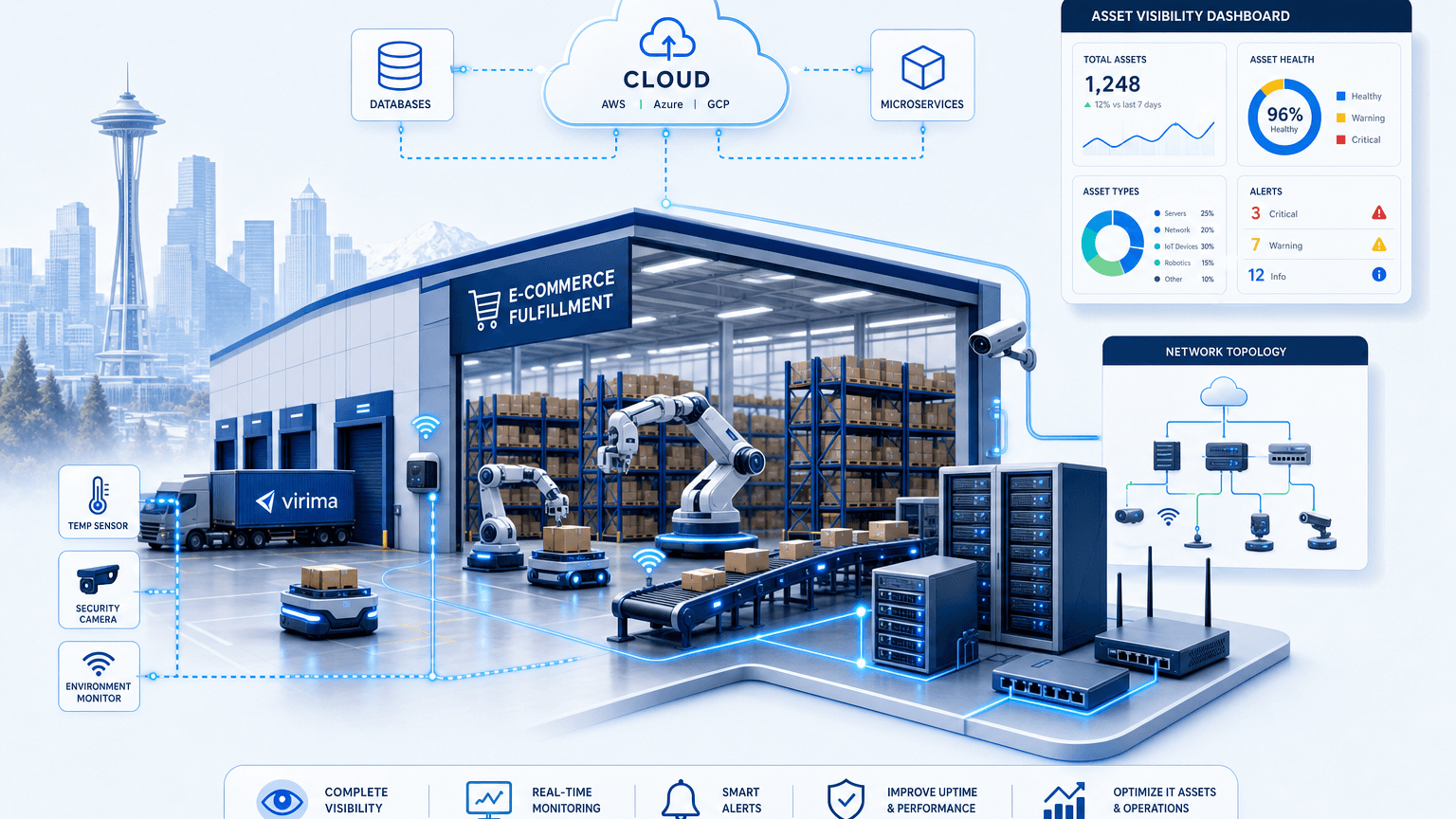
IT Asset Visibility for E-Commerce Fulfillment in Seattle: Why Peak Season Exposes What Inventory Missed

In 2025, high-profile retail cyber incidents tied to the Scattered Spider cluster disrupted major UK brands, including Marks & Spencer, Co-op, and Harrods, after attackers abused IT helpdesk and vendor-adjacent trust paths rather than a single locked-down store system. Public reporting on those events, including BBC coverage of the M&S impact, shows how quickly commerce operations suffer when teams cannot see every connection that can reach production systems.
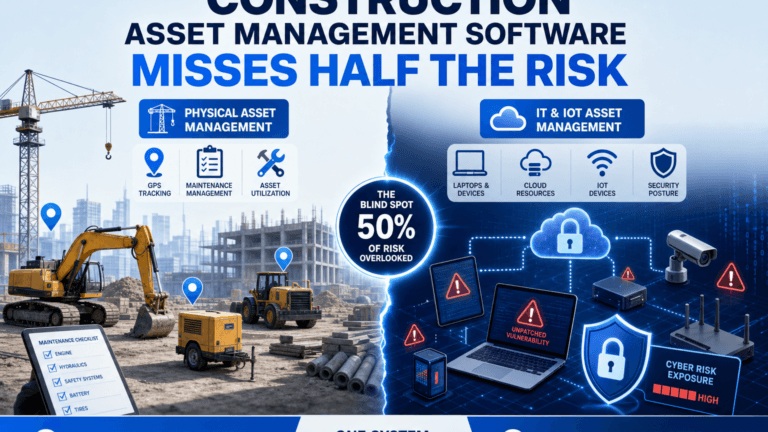
This was not a Seattle company, and it was not a fulfillment-center outage on the Kent Valley floor. But it exposes exactly what IT asset visibility for e-commerce fulfillment in Seattle has to solve: infrastructure connected to the business that IT could not fully list, classify, or explain under pressure. In e-commerce and fulfillment estates that mix cloud-hosted storefronts, warehouse execution systems, robotics controllers, conveyor PLCs, handheld scanners, and multi-site networks, that same gap shows up with a different cast of devices.
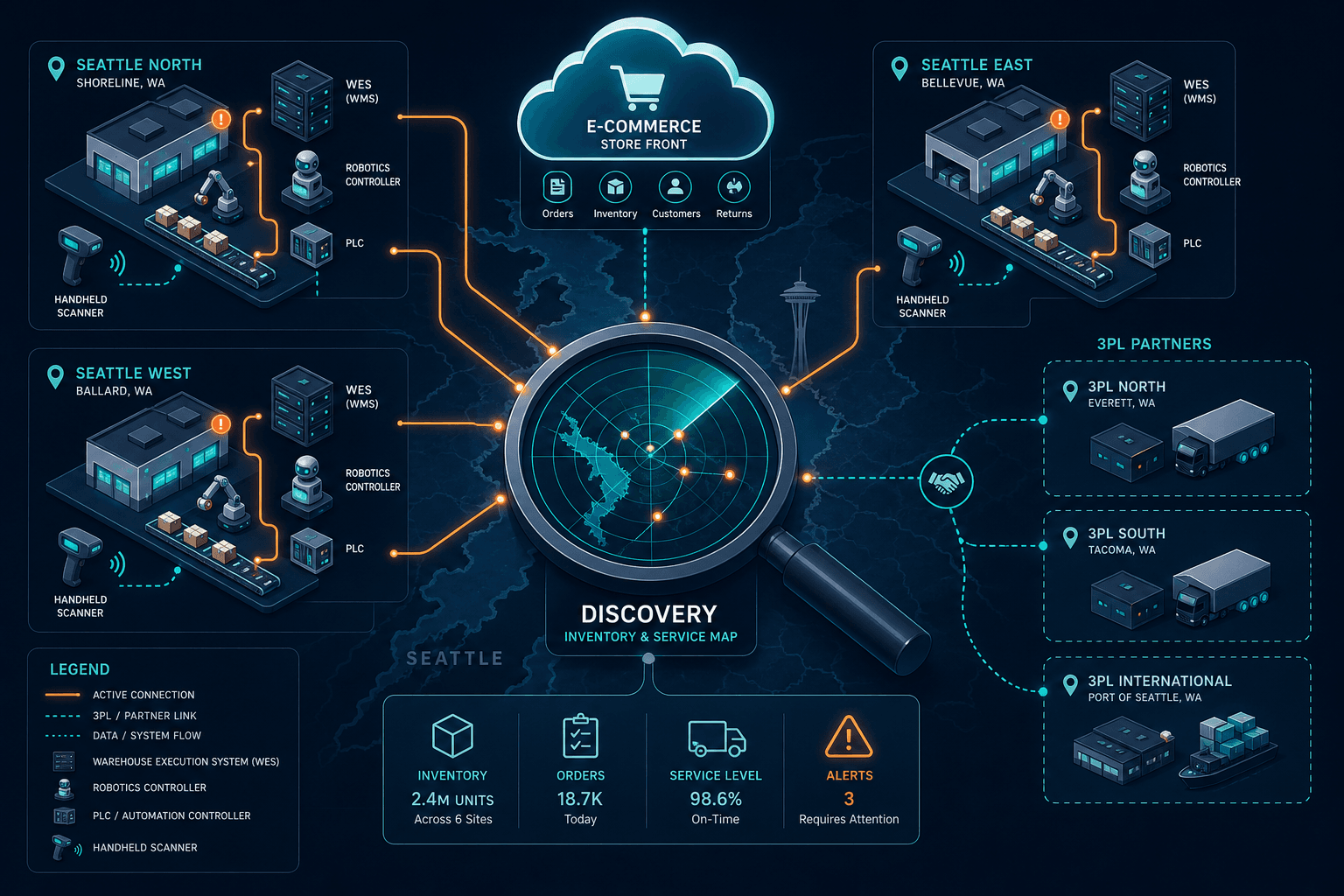
For Seattle operators running sites across Seattle, Tacoma, and Kent Valley alongside public cloud accounts, the count of things IT does not formally know about multiplies fast. That gap surfaces across four recurring areas: warehouse IoT and OT devices, shadow cloud infrastructure, incomplete multi-site inventory, and untracked vendor connections. Closing it means moving past a spreadsheet toward discovery that runs on a schedule, coverage that extends to unmanaged devices, and dependency maps that show blast radius, the three mechanisms this article walks through.
What is IT asset visibility for e-commerce fulfillment in Seattle?
IT asset visibility for e-commerce and fulfillment operations is the ability to identify, inventory, and frequently monitor every IT asset connected to the business, from cloud-hosted platform infrastructure and warehouse network hardware to robotics controllers, handheld scanners, and IoT sensors on the floor. It also covers how those systems depend on each other once service definitions exist.
“Asset visibility” is an overloaded phrase in this industry. Virima’s domain is the IT and OT-connected infrastructure that runs the operation. It is not merchandise inventory and not physical goods tracking in motion.
| Category | What it tracks | Example tools | Virima coverage? |
|---|---|---|---|
| IT asset visibility (Virima’s domain) | Servers, network devices, cloud resources, robotics controllers, handheld scanners, software, configuration | Discovery, CMDB | Yes |
| Inventory/merchandise visibility | SKU counts, stock levels, order status | WMS, ERP | No (different vendor category) |
| Physical asset tracking in motion | GPS/RFID location of pallets, containers, vehicles | GPS/RFID platforms | No (different vendor category) |
The hidden challenge
| E-commerce/fulfillment scenario | Without asset visibility | With asset visibility |
|---|---|---|
| New fulfillment center opens | Robotics, conveyor controllers, and warehouse network gear go live without formal IT onboarding | Discovery scans the new site range early; devices are cataloged into the CMDB before go-live gaps harden |
| Engineering spins up cloud infrastructure | Seasonal AWS resources sit unmonitored and unpatched outside central review | Cloud discovery surfaces new AWS and Azure resources for classification on the next cycle |
| Peak season scaling | Temporary devices and rushed network gear enter under time pressure with weak documentation | Scheduled discovery catches new devices within days regardless of how they were added |
| 3PL or vendor integration | Partner connections for order data exchange never get a full reachability inventory | Discovery and service maps show which internal systems the vendor path can touch |
Why asset visibility matters for e-commerce and fulfillment
Warehouse automation is no longer a pilot program. Industry market coverage notes that Amazon surpassed one million robots in active operation in 2025. DHL Supply Chain reached its own milestone earlier, passing 500 million robotic picks with Locus Robotics autonomous mobile robots across more than 35 sites in June 2024. That figure is now over two years old, but it still illustrates the device density these floors already carried before the more recent scaling captured above. Every robot, controller, and coordinating sensor is an IT-connected asset. Most attack-surface programs were built for laptops and servers, not that density of floor equipment.
The exposure shows up in security research as well. A Trend Micro global study of more than 2,000 cybersecurity leaders found that 74% had experienced security incidents tied to unmanaged IT assets. That exposure is growing alongside rising IoT device counts across modern environments.
Four common visibility gaps
- Warehouse IoT and OT visibility gaps. Robotics controllers, conveyor PLCs, and environmental sensors are often deployed by operations or facilities teams and may not support standard security agents, so firmware ages in place, SIEM coverage stays thin, and compromised floor devices become easy lateral-movement footholds. This is a well-known pattern: organizations that treat warehouse IoT as “operations gear” keep rediscovering the same visibility gap when security reviews expose that ORDR-discovered IoT and OT assets often lack the operational context needed for incident response. Consequence: Uncontrolled device populations with no documented relationships to critical services.
- Shadow cloud infrastructure from engineering. Platform teams provision seasonal microservices or experiments without routing every resource through central IT. Consequence: Unmonitored cloud resources accumulate drift and unpatched exposure nobody owns end-to-end.
- Incomplete CMDB coverage across multi-site fulfillment. Each fulfillment center launches under time pressure, often with different regional teams and weak central records. This fragmentation has downstream consequences that extend beyond simple inventory gaps: the disconnect between regional deployments and centralized CMDB accuracy directly undermines change management and incident response, leaving IT unable to answer confidently what is running at Tacoma, slowing every incident and change review. Consequence: IT cannot answer what is running at Tacoma with confidence, which slows every incident and change review.
- Untracked vendor and 3PL connections. Carriers and logistics partners connect systems for data exchange without a durable map of internal reach. Consequence: A partner-side compromise becomes a path into the business with an unknown blast radius.
Enterprise teams that treat warehouse IoT as “operations gear” keep rediscovering the same inventory gap under peak pressure.
What happens when you lack asset visibility
For SecOps leaders
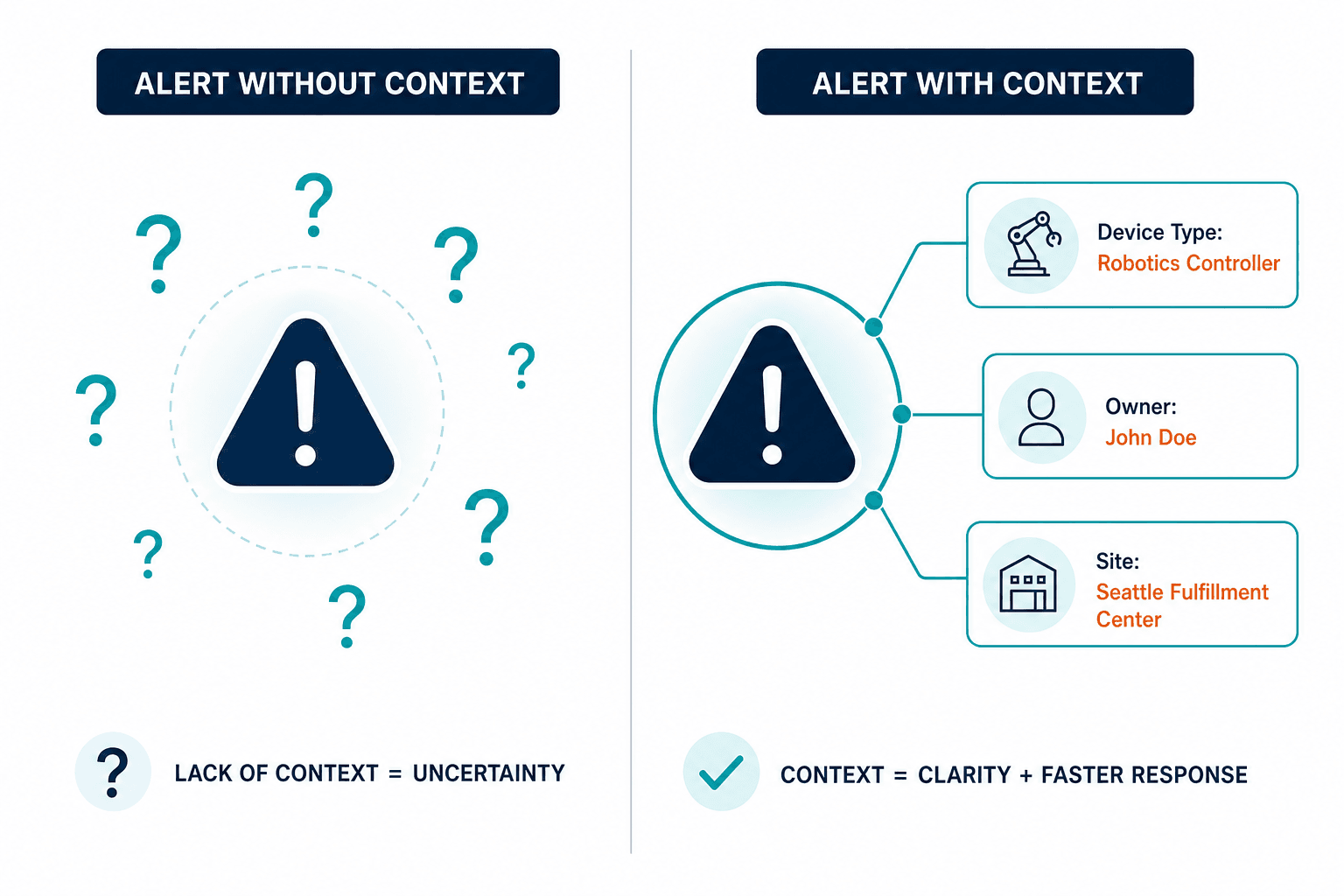
Visibility gaps keep SecOps reactive. When a SIEM alert fires from an unfamiliar device on the warehouse network, analysts cannot immediately tell a legitimate robotics controller from a compromised endpoint, so triage stretches from minutes into hours. Vulnerability programs only scan listed assets, so IoT and OT gear deployed outside IT processes never enters scope. Peak season adds temporary devices and rushed changes that bypass normal review exactly when downtime hurts most. Establishing trusted runtime truth across platform and floor estates is how those alerts stop arriving as orphan IPs.
For CTOs and VPs of engineering
CTOs carry reliability and technical-debt accountability across hybrid stacks. Configuration drift accumulates between on-prem warehouse networks and multi-cloud platform hosting when nothing reconciles both on a defensible schedule. Each new warehouse execution integration adds another undocumented dependency, which slows root-cause work. As new fulfillment centers and regions come online, the gap between planned architecture and live reality grows with the footprint.
For fulfillment operations managers
Operations depends on IT infrastructure to keep the floor moving. Independent research summarized by SupplyChainBrain on MultiSensor AI data estimates a typical unplanned stoppage in high-throughput distribution environments costs between $12,000 and $24,000. That figure counts labor stand-down, recovery time, and lost throughput, before any SLA exposure. When a warehouse execution issue cascades into a conveyor stoppage, teams need upstream dependencies immediately, not hours of elimination. New facility launches stay manual and error-prone without a repeatable way to onboard site infrastructure.
How IT asset discovery and service mapping fix this
Closing the gap means moving from site spreadsheets to discovery-driven inventory and dependency context. Three mechanisms map to verified platform capabilities.
- High-frequency scheduled discovery closes multi-site and hybrid gaps. Agent-based and agentless discovery covers on-premises servers, network devices, endpoints, and cloud instances on AWS and Azure. It runs on configurable schedules rather than annual cleanups, so new and retired assets appear within days, not at the next peak postmortem. For SecOps, refreshed inventory enriches triage with device class, owner, and site. For engineering leaders, the same cadence covers warehouse ranges and cloud accounts under one estate policy. IT discovery is the mechanism behind that multi-site cadence.
- Cybersecurity Asset Management (CSAM) locates unmanaged and IoT/OT devices. Traditional inventories miss devices that lack standard agents, which is exactly where many robotics controllers, conveyor PLCs, and warehouse sensors sit. CSAM is designed to locate unmanaged devices, rogue access points, guest machines, and IoT/OT equipment alongside conventional IT assets, then support prioritization with vulnerability context where applicable. NIST NVD CVE overlay detail on ViVID™ maps is specific to Windows Servers and should not be read as full multi-OS vulnerability coverage. See Cybersecurity Asset Management for detect-and-flag scope, not firmware management.
- ViVID™ service maps close the loop on vendor and 3PL blast radius. Discovery and CSAM findings mean little if nobody can see what a compromised or misconfigured device can actually reach. ViVID™ service maps turn the raw inventory from the first two mechanisms into visual dependency context, so a 3PL data-exchange connection, a warehouse execution integration, or a cloud storefront resource shows up connected to the rest of the estate. That is what turns “we found an unlisted device” into “here is what it can reach and who owns it,” the same vendor-adjacent trust path that turned a helpdesk compromise into a multi-brand retail incident in the case cited above. To understand how automated service mapping builds and maintains these dependency chains at scale, explore how application dependency mapping enables continuous visibility across your entire estate.
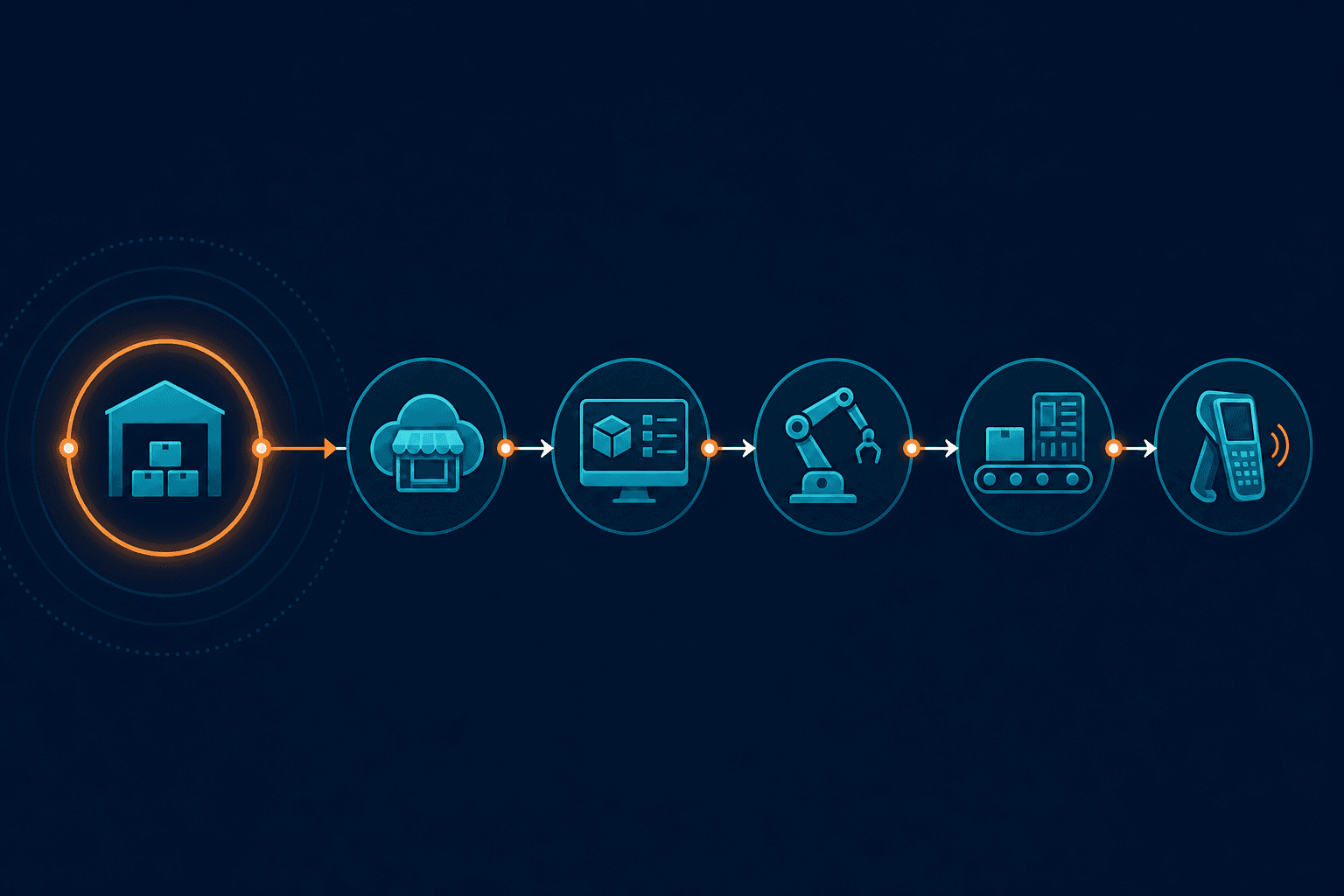
Seattle’s e-commerce and fulfillment estates will keep growing before peak season tests them again. IT asset visibility for e-commerce fulfillment in Seattle means closing that gap now, not after the next SIEM alert arrives with no owner attached. Done right, it turns discovery, CSAM, and service maps from three separate projects into one current picture that SecOps, engineering, and operations can all work from.
See how Virima discovery, CSAM, and ViVID™ service maps give Seattle fulfillment SecOps one current picture of warehouse IoT, multi-site networks, and cloud platform assets before peak season multiplies the gaps. Book a free trial today.
Frequently asked questions
Does Virima track warehouse robotics and IoT devices, or only traditional IT hardware?
Both categories matter. Virima discovery and Cybersecurity Asset Management capabilities are positioned to locate unmanaged devices, including IoT/OT equipment such as robotics controllers and sensors, alongside servers, network gear, and cloud resources for inventory and relationship context.
What is the difference between IT asset visibility and inventory or merchandise visibility?
IT asset visibility covers infrastructure such as servers, networks, cloud resources, and robotics controllers. Merchandise visibility covers stock levels and SKUs inside WMS or ERP systems. They are separate categories and separate vendor problems.
Can Virima discover assets across multiple fulfillment centers simultaneously?
Yes. Virima discovery runs on a scheduled cadence across every configured site and cloud environment in scope, using agent-based and agentless methods, so multi-site operations get a centralized, current inventory instead of per-location manual tracking.
How does service mapping help during a peak-season outage?
After service definitions exist, ViVID™ service mapping shows dependency chains across platform, order management, warehouse execution, and floor equipment. When something fails, teams see downstream impact sooner than manual troubleshooting allows.
Does Virima discovery cover cloud-hosted e-commerce platforms, not just warehouse hardware?
Yes. Virima includes cloud discovery for AWS and Azure alongside on-premises warehouse network infrastructure, so platform and physical operations can sit in the same reconciled inventory and CMDB workflow for operators.