Top 8 Intelligent IT Solutions for Enterprise IT Teams in 2026

Your IT environment moves faster than your tools can keep up. Assets sprawl across hybrid cloud infrastructure, dependencies shift without warning, and AI agents need accurate data to act safely. Intelligent IT solutions close that gap by combining discovery, data accuracy, integration, and analytics into a system your team can actually rely on. Traditional IT management tools were built for a simpler era. They depend on manual updates, siloed systems, and periodic audits that struggle to match the pace of modern enterprise IT.
According to Gartner, 40% of enterprise applications will be integrated with task-specific AI agents by 2026, up from less than 5% in 2025. That shift puts real pressure on IT teams. Your tools must not only manage complexity but also feed AI systems with trusted, discovery-driven data. The eight categories below cover what enterprise teams are investing in right now to stay ahead.
| What are intelligent IT solutions? They are software platforms that combine discovery, data accuracy, automation, and analytics to give IT teams a clear, current view of their infrastructure. They reduce manual effort, improve decision-making, and create the data foundation AI agents need to act safely inside enterprise environments. |
1. Discovery-Driven CMDB
A CMDB is the backbone of every intelligent IT environment, but a CMDB is only as good as the data inside it. A discovery-driven CMDB pulls configuration item (CI) data directly from your infrastructure through high-frequency discovery cycles, so your records reflect what actually exists, not what someone last updated six months ago.
Virima’s CMDB delivers Trusted Runtime Truth. Rather than scanning everything around the clock, it monitors the confidence of each record and refreshes data on demand as that confidence degrades. Each CI carries source attribution, a confidence score, and a clear link back to the discovery source that created it. Your IT team and your AI agents can query the CMDB and trust what they find, which is the difference between safe automation and costly errors.
Why it matters: Stale CMDB data causes misrouted incidents, failed changes, and AI agents acting on outdated records. Discovery-driven CMDBs address this at the source.
Best for: IT Directors, Configuration Managers, SREs, and any team deploying AI agents into IT workflows.
If you are planning a CMDB implementation, starting with a discovery-driven foundation cuts downstream rework significantly.
2. IT Asset Management
You cannot govern what you cannot see. Effective IT asset management gives your team a complete inventory of hardware and software assets across the enterprise. ITAM solutions track procurement, usage, lifecycle status, and ownership, so you avoid overspending on unused licenses and catch end-of-life assets before they become security risks.
Intelligent ITAM platforms pull live asset data from discovery sources, cross-reference it against procurement records, and flag discrepancies as they appear. This is especially valuable in hybrid environments where cloud, on-premises, and remote assets all need consistent governance.
Why it matters: Ghost assets inflate costs and skew change impact analysis. Smart ITAM surfaces and retires them through high-frequency discovery cycles, so your data stays current without manual effort.
Best for: IT Asset Managers, Finance and IT Ops teams, GRC and compliance leaders, and organizations preparing for software audits.
3. ViVID™ Service Mapping and Dependency Visualization
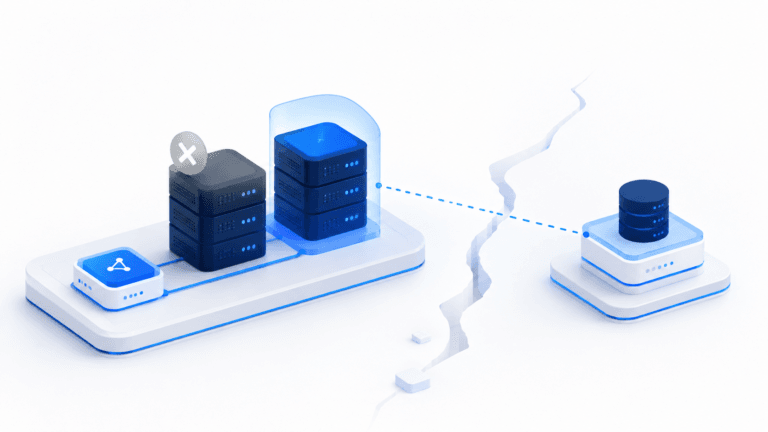
IT teams need to know more than what exists. They need to understand how everything connects. ViVID™ Service Mapping builds dynamic dependency maps that show how applications, servers, network devices, and services relate to one another. When something breaks, your team sees the impact scope immediately instead of guessing.
Here is how it works in practice: your team provides service definitions by manual entry, spreadsheet import, or integration with tools such as LeanIX. Once those definitions exist, Virima builds the service maps from discovery-sourced data. The result is a live, explainable picture of your environment.
Why it matters: Change failure rates drop when teams can visualize dependencies before a change window opens. Service mapping turns that visibility into a repeatable process.
Best for: SREs, Change Managers, and teams running complex hybrid or multi-cloud environments.
4. IT Operations Management
Understanding ITOM vs. ITSM matters when you evaluate tools. ITSM handles service requests and incident workflows. ITOM handles infrastructure performance, availability, and the operational health of the systems those services run on. Intelligent ITOM platforms bring both into a single operational view.
Virima’s IT operations management software is built on exactly this model, unifying infrastructure monitoring with the discovery-driven CMDB context that makes alerts actionable instead of noisy.
Modern ITOM solutions monitor infrastructure events, correlate alerts, and route incidents to the right team with full context. When paired with a discovery-driven CMDB, ITOM tools gain the CI context they need to prioritize incidents by business impact, not just technical severity.
Why it matters: Alert noise without context wastes engineering time. Intelligent ITOM reduces mean time to resolution (MTTR) by giving responders the full picture quickly.
Best for: IT Operations teams, NOC teams, and infrastructure engineers managing large, hybrid environments.
According to Avasant’s Intelligent ITOps 2025-2026 RadarView, organizations are increasingly choosing intelligent ITOps services to accelerate the shift from reactive to proactive operations. That acceleration depends on accurate CI data feeding every event correlation and remediation workflow.
| What makes a CMDB intelligent? An intelligent CMDB does more than store records. It refreshes CI data through high-frequency discovery cycles, assigns confidence scores to each record, and traces every data point back to its discovery source. This gives IT teams and AI agents a trusted, explainable foundation for every operational decision, from change management to AI-driven remediation. |
5. Change Risk Intelligence
Every change your team deploys carries risk. Change risk intelligence solutions analyze the relationships between CIs, historical change outcomes, and current infrastructure state to score the risk of a proposed change before it reaches production. This gives your Change Advisory Board (CAB) defensible data instead of gut feel.
Virima surfaces change risk intelligence by combining discovery-sourced ViVID™ service maps with historical incident data. When your team can see which services a change touches and what broke the last time a similar change ran, approval decisions become faster and more consistent.
Why it matters: Change-related outages account for a significant share of unplanned downtime in enterprise IT. Risk scoring before the change window reduces that exposure without slowing delivery velocity.
Best for: Change Managers, CAB members, and IT Directors who own SLA commitments.
6. Agentic IT Automation
Agentic IT is the next step past rules-based automation. Agentic AI systems can plan, reason, and execute multi-step IT tasks with minimal human direction. They can remediate incidents, run diagnostics, and trigger change workflows, but they work safely only when they have access to trusted, current infrastructure data.
This is where the data foundation matters most. A discovery-driven CMDB is a prerequisite for safe agentic IT automation, not an optional add-on. An AI agent that acts on stale CI data can trigger changes against systems that no longer exist or miss dependencies that ripple across production services.
Why it matters: According to Gartner’s Top Strategic Technology Trends for 2026, agentic AI sits at the top of the list of strategic priorities. Teams that build a trusted data foundation now will be positioned to deploy safely. Teams that skip this step risk costly rollbacks.
Best for: IT Directors, infrastructure teams, and platform owners evaluating AI-driven automation.
| How does agentic AI benefit IT operations? Agentic AI automates multi-step IT tasks including incident remediation, change execution, and configuration drift correction. It works most effectively when backed by a discovery-sourced CMDB that gives each agent a live, explainable view of the environment. Without accurate CI data, agents make decisions on stale information, which increases the risk of unintended outages. |
| See how Virima delivers a discovery-driven CMDB and Trusted Runtime Truth your AI agents can act on. Request a demo. |
7. ITSM Integration Platforms
No intelligent IT solution works in isolation. ITSM platforms handle the service delivery workflows that sit on top of your operational infrastructure. They manage incident routing, change requests, problem records, and service catalogs. Intelligent ITSM platforms connect all of this to the CMDB and discovery layer so that every ticket carries full CI context.
Virima integrates with leading ITSM platforms including ServiceNow, Ivanti, Halo, Jira Service Management, and Xurrent. These integrations allow CI data to flow into incident and change records, so service desk teams get the context they need from the moment a ticket opens.
Why it matters: ITSM without CMDB context is just a ticketing system. Intelligent ITSM integration makes every workflow smarter by anchoring it to accurate infrastructure data.
Best for: Service Desk Managers, ITSM Consultants, and organizations standardizing on ITIL-aligned workflows.
8. Non-Human Identity Security
Non-human identities (NHIs) include service accounts, API keys, machine credentials, and IoT device certificates. They far outnumber human user accounts in most enterprise environments. Modern platforms now include NHI security capabilities that discover, inventory, and govern these identities before they become attack vectors.
The challenge with NHIs is visibility. Many organizations do not know how many machine identities they have, which systems those identities can access, or when credentials were last rotated. A discovery-driven NHI approach closes that gap by treating machine identities with the same rigor as user accounts.
Why it matters: Attackers increasingly target service accounts and API keys because they often carry elevated privileges and are rarely monitored. A discovery-driven inventory of NHIs gives your security team the visibility to act before a breach occurs.
Best for: Security Engineers, CISOs, GRC leaders, and compliance teams managing SOC 2 or ISO 27001 frameworks.
| What role does service mapping play in intelligent IT solutions? Service mapping shows how infrastructure components connect to the services they support. ViVID™ Service Mapping builds dynamic service maps from discovery-sourced CI data. When a server goes down, teams immediately see which services are affected and which teams own each component. That visibility cuts time to resolution and reduces impact during incidents. |
Intelligent IT Solutions Compared at a Glance
| Solution Category | Primary Use Case | Who Needs It Most | Key Outcome |
|---|---|---|---|
| Discovery-Driven CMDB | Single source of truth for all CI data | IT Directors, Config Managers, SREs | Trusted, explainable infrastructure records |
| IT Asset Management | Full hardware and software inventory | IT Asset Managers, Finance IT, GRC | Cut ghost assets and license waste |
| Service Mapping | Dependency visualization and impact scope | SREs, Change Managers | Faster incident resolution and safer changes |
| IT Operations Mgmt | Infrastructure health and event correlation | NOC teams, IT Ops Engineers | Reduced MTTR and proactive alerting |
| Change Risk Intelligence | Risk scoring before production changes | Change Managers, IT Directors, CAB | Fewer change-related outages |
| Agentic IT Automation | Multi-step IT task execution by AI agents | IT Directors, Infra Engineers | Safer AI-driven remediation |
| ITSM Integration | Service workflows anchored to CMDB data | Service Desk Managers, ITSM Leads | Full CI context on every ticket |
| NHI Security | Governance of machine identities and API keys | Security Engineers, CISOs, GRC | Reduced exposure from unmanaged credentials |
Build the Data Foundation That Lets Your IT Team Move Faster and Act Safely
Intelligent IT solutions are not a single product. They form a stack of capabilities, each playing a specific role in giving your team the visibility, accuracy, and automation needed to run a modern enterprise IT environment. A discovery-driven CMDB sits at the foundation. Service mapping, ITAM, ITOM, change risk intelligence, and agentic automation build on top of it.
The organizations that invest in this foundation now will be positioned to deploy AI faster, resolve incidents sooner, and govern change more confidently than those who wait.
| Ready to build that foundation? See Virima in action with a walkthrough tailored to your environment. Request a demo. |
Intelligent IT Solutions: Frequently Asked Questions
Why do traditional IT management tools fall short in modern environments?
Traditional tools rely on manual data entry and periodic audits. By the time someone updates a spreadsheet, the environment has already changed. Modern enterprise IT moves too fast for manual processes to keep up. Intelligent IT solutions use high-frequency discovery cycles to keep data current without waiting on human input for every update.
How do intelligent IT solutions handle data accuracy?
The best solutions refresh CI data through recurring discovery cycles and assign confidence scores to each record. When a record’s confidence score drops below a threshold, the system triggers a targeted refresh rather than waiting for the next scheduled scan. This keeps data current and gives IT teams and AI agents a reliable foundation for decisions.
What is the difference between ITSM and ITOM?
ITSM covers service delivery, including incidents, requests, changes, and problems. ITOM covers infrastructure operations, including availability, performance, event correlation, and remediation. Both work better together. When ITOM shares CI and event data with ITSM, service desk teams get immediate context on every ticket instead of starting from scratch.
How does Virima fit into an intelligent IT strategy?
Virima provides the data foundation that makes the rest of your IT stack smarter. Its discovery-driven CMDB delivers Trusted Runtime Truth across assets, services, dependencies, ownership, and change history. Virima connects to ServiceNow, Ivanti, Halo, Jira Service Management, and Xurrent, so the data flows where your teams already work.
What should I look for when evaluating intelligent IT solutions?
Look for five things: discovery-driven data sourcing rather than manual imports alone, confidence scoring on CI data, bidirectional integration with your existing ITSM platforms, service dependency visualization, and a clear roadmap for agentic AI readiness. Tools that check all five boxes will serve your team well as IT environments grow more complex.