Can Shared Explainable Runtime Records Improve IT Ops KPIs?

A shared record can support better decisions during incidents and changes, though its effect on IT operations key performance indicators (KPIs) depends on coverage, adoption, and surrounding workflows.
A major incident can expose gaps between the systems your teams rely on: infrastructure, service desk, and change teams may each see the affected service differently, delaying decisions about ownership, impact, and recovery.
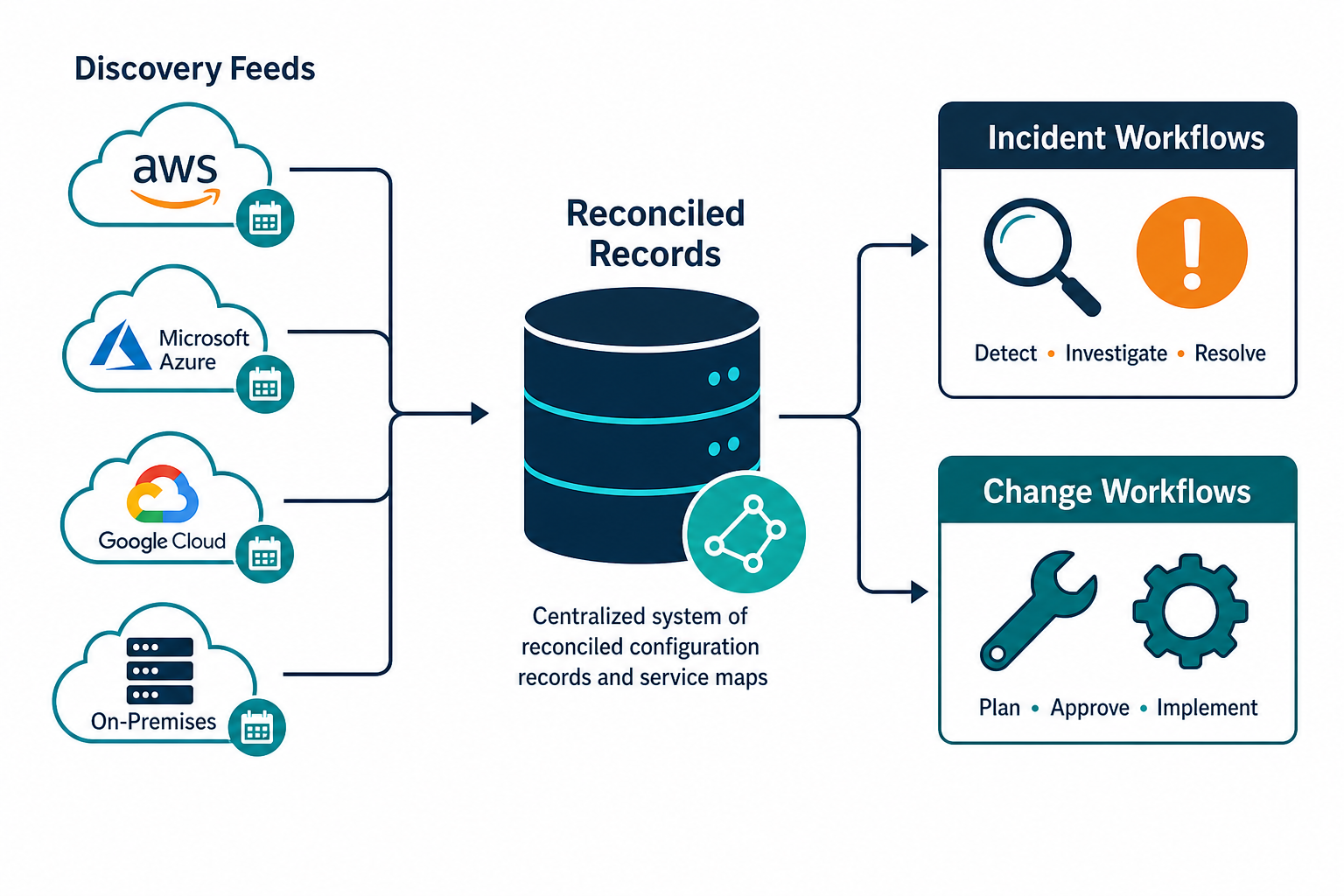
For a VP of IT, that confusion also makes operational results harder to explain and investments harder to defend. Virima’s Trusted Runtime Truth connects discovery-sourced records with service dependencies and ownership, helping teams investigate what exists, how it connects, what changed, who owns it, and what could break.
See how Trusted Runtime Truth supports decisions across incident and change workflows.
Where a shared record can change operational decisions
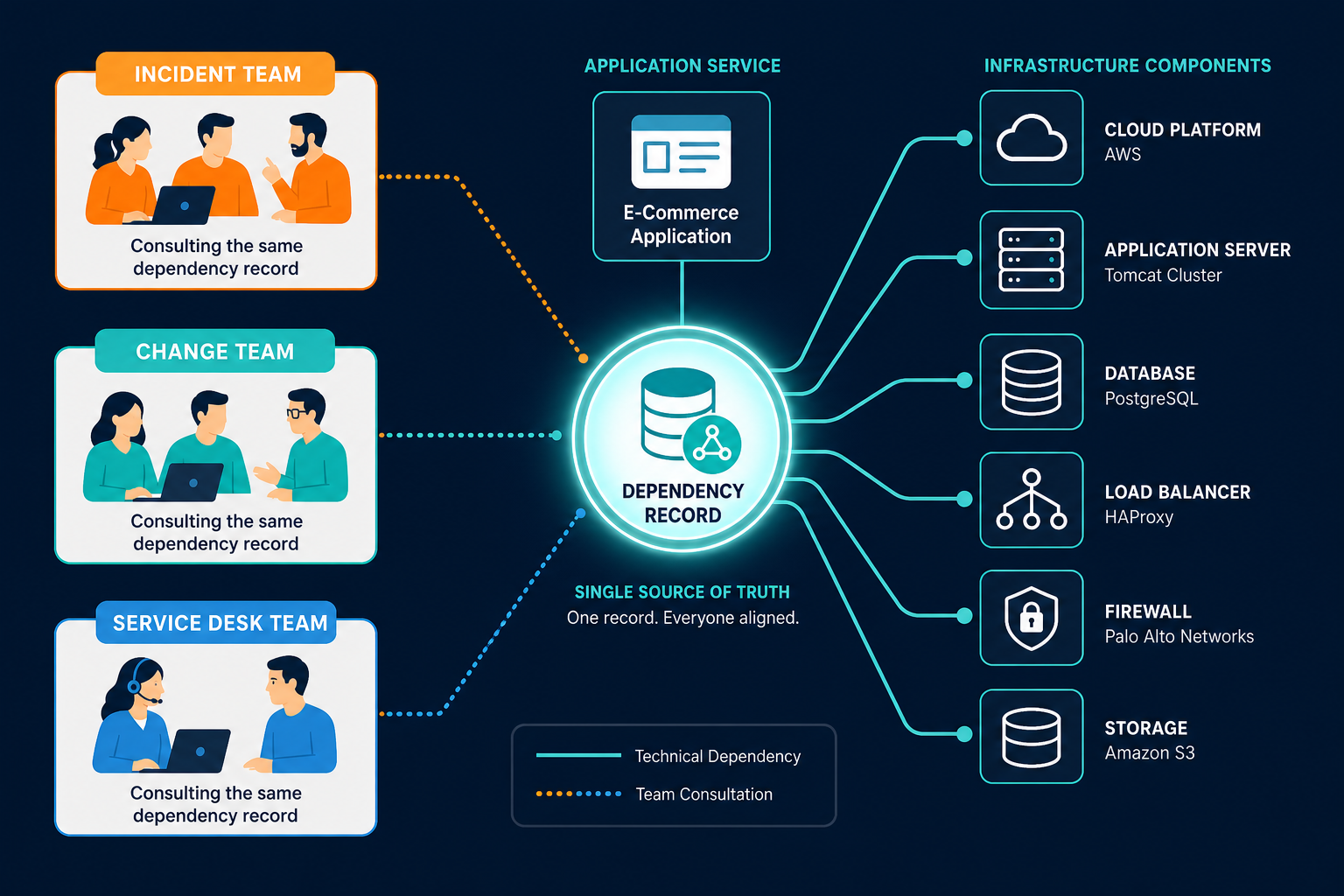
A shared record gives teams a common starting point for an incident or planned change, bringing configuration items, relationships, and available ownership information into a view that teams can inspect.
During an incident, responders can use the record to identify affected services and involve the appropriate owners. Before a change, reviewers can examine known dependencies and discuss possible impact.
In its 2025 outage analysis, Uptime Institute reported that IT and networking issues accounted for 23% of impactful outages in 2024, based on surveys, member information, and publicly reported outages; a finding about outage causes, not the effect of any product.
A service map can help reviewers examine a proposed database change against known application dependencies, and the service owner can confirm whether those relationships reflect the intended service; investigating any gap in discovery coverage before approval.
Teams also need to understand the basis for a record; which source supplied an attribute, when discovery last refreshed it, and who resolves a disagreement; as an evaluation requirement, not a promise that every detail appears in one product view.
Responders still need monitoring evidence, technical investigation, and a clear incident process; a dependency record helps direct that work and gives teams a common reference for their decisions.
What should a change reviewer do with a disputed dependency?
A change reviewer should record the disputed dependency and assign it to an owner for investigation. The change plan can then identify affected services that require further confirmation. Until the dispute is resolved, reviewers should account for the uncertainty in approval and rollback decisions.
Which IT operations KPIs should you measure?
Choose measures that reflect the decisions your teams want to improve, paired with a check on whether supporting information was available.
| Operational measure | How a shared record may help | What to check alongside it |
|---|---|---|
| Mean time to restore service | Responders can inspect affected services and known owners during triage. | Whether incident records identify the affected service and relevant configuration item. |
| Change failure rate | Reviewers can inspect known dependencies before approving a change. | Whether change reviews include a documented impact assessment. |
| Service availability | Teams can connect infrastructure issues to the services that rely on them. | Whether critical service maps have an owner and a recent review. |
| Time spent reconciling records | Teams can investigate conflicts against a shared asset record. | Hours spent resolving record conflicts, including source and ownership disputes. |
For mean time to restore service, agree on the start and end timestamps, define which incidents qualify, then review the median alongside the mean. Incomplete data is a common reason this measure drifts; see how CMDB automation relates to MTTR.
For change failure rate, define which implemented changes count as failures, including your incident or rollback criteria, and keep the definition stable during the evaluation. See how dependency mapping affects failed-change metrics.
DORA’s software delivery guidance recommends assessing results per application or service, since its change fail rate covers only deployments needing immediate intervention; enterprise change measures often cover more infrastructure work, so define scope separately.
Staffing, incident severity, testing, and change volume can affect results; review them before attributing any KPI movement to the shared record.
Establish a record teams can trust
Start with services whose outages or changes carry significant business impact, and assign owners who can validate service definitions and investigate gaps in the supporting records.
Virima discovers assets through scheduled cycles and reconciles information from multiple sources into its CMDB; CMDB data quality depends on discovery scope, credentials, and schedule, not just reconciliation. Assign an owner to investigate failed jobs and unresolved conflicts, and use durable identifiers (a hardware serial number or cloud instance ID matches better than a hostname) when connecting records across sources. Unreconciled records can quietly distort those KPIs; see why CMDB accuracy affects IT metrics.
Virima builds ViVID™ service maps once customers provide service definitions, whether entered manually, imported, or supplied through supported service management integrations. Review the map with the service owner before using it for a change decision; a missing relationship should prompt investigation, not an assumption that no dependency exists.
How fresh should an operational record be?
The acceptable age of an operational record depends on the service and the decision. A critical service with frequent infrastructure changes may need a shorter review interval than a stable system. Set a freshness threshold with the service owner, then investigate records that exceed it.
Teams also need a way to use the record during existing work; agreeing where responders find service information, how they report suspected errors, and who corrects disputed records so they don’t stay unresolved.
Test the operational impact before expanding
Select services with named owners, usable incident history, and enough change activity for a meaningful review; the evaluation should show whether teams use the information, not just whether outcomes change.
- Establish a baseline. Record restoration times, change outcomes, and hours spent reconciling asset information for the selected services, and keep the measurement period and definitions visible to everyone involved.
- Check coverage before the pilot begins. Review discovery results, service definitions, owners, and dependency maps with the responsible teams, and document missing data and the latest successful discovery cycle.
- Use the record during incident and change work. Ask incident leads to consult it during triage and change reviewers to inspect relevant dependencies before approval, and capture cases where information was missing or influenced a decision.
- Review outcomes alongside operational exceptions. Compare the same measures over a later period, examining incident severity, staffing, and change volume before drawing conclusions.
Google Cloud’s 2023 DORA report findings associated high-quality documentation with 25% higher team performance than low-quality documentation; a finding about documentation and team performance across software delivery practices, not the effect of a shared runtime record on incident or change KPIs.
A before-and-after comparison can support a business case, but review individual decisions to understand where the record helped or failed.
What should teams do when pilot activity is too low?
A pilot with few incidents or changes needs a longer observation period before teams interpret outcome trends. Review individual decisions in the meantime, including cases where information was missing. Record the number of qualifying events so leaders can judge how much confidence to place in the results.
Decide whether the record supports better decisions
Ask the evaluation team to demonstrate a known service and its dependencies, review the latest successful discovery cycle and any coverage gaps, then examine a recent incident or proposed change against the available record. The exercise shows whether teams can find relevant evidence and identify an owner when needed.
Frequently Asked Questions
Which IT operations KPIs can a shared record support?
A shared record can support incident restoration, change failure, service availability, and reconciliation measures. The outcome depends on record quality, workflow adoption, and other operational factors. Establish a baseline before attributing a change in performance to the record.
How does service mapping help incident response?
Service maps show known relationships between a defined service and its supporting components. Responders can use those relationships to investigate potential impact and identify relevant teams. They should also check coverage and the age of the underlying discovery data.
How should teams measure change failure rate?
Define the changes included in the measurement period and agree on what constitutes a failure. Divide failed changes by implemented changes within that scope. Keep the definition stable and review the result alongside service impact.
How does Virima build ViVID™ service maps?
Customers provide service definitions manually, through imports, or through supported integrations. Virima then builds maps using those definitions and discovered relationships. Teams should review service definitions and discovery coverage as their environments change.
Can Virima guarantee a lower restoration time?
Restoration time depends on incident severity, team response, monitoring, and other factors. Virima supplies discovery-sourced records and service maps that can support investigation. Teams should measure their own results against a defined baseline.