HIPAA Compliance via CMDB: Chicago Health Systems and the 2026 Enforcement Data

Whether a healthcare organization is a large multi-hospital system or a small standalone provider doesn’t determine whether OCR penalizes a HIPAA violation. It determines how much attention the violation gets before OCR looks. Across nearly every Risk Analysis Initiative settlement OCR has announced since 2024, the underlying finding is the same one, regardless of the organization’s size: nobody had completed the risk analysis the HIPAA Security Rule requires, until an incident forced the question.
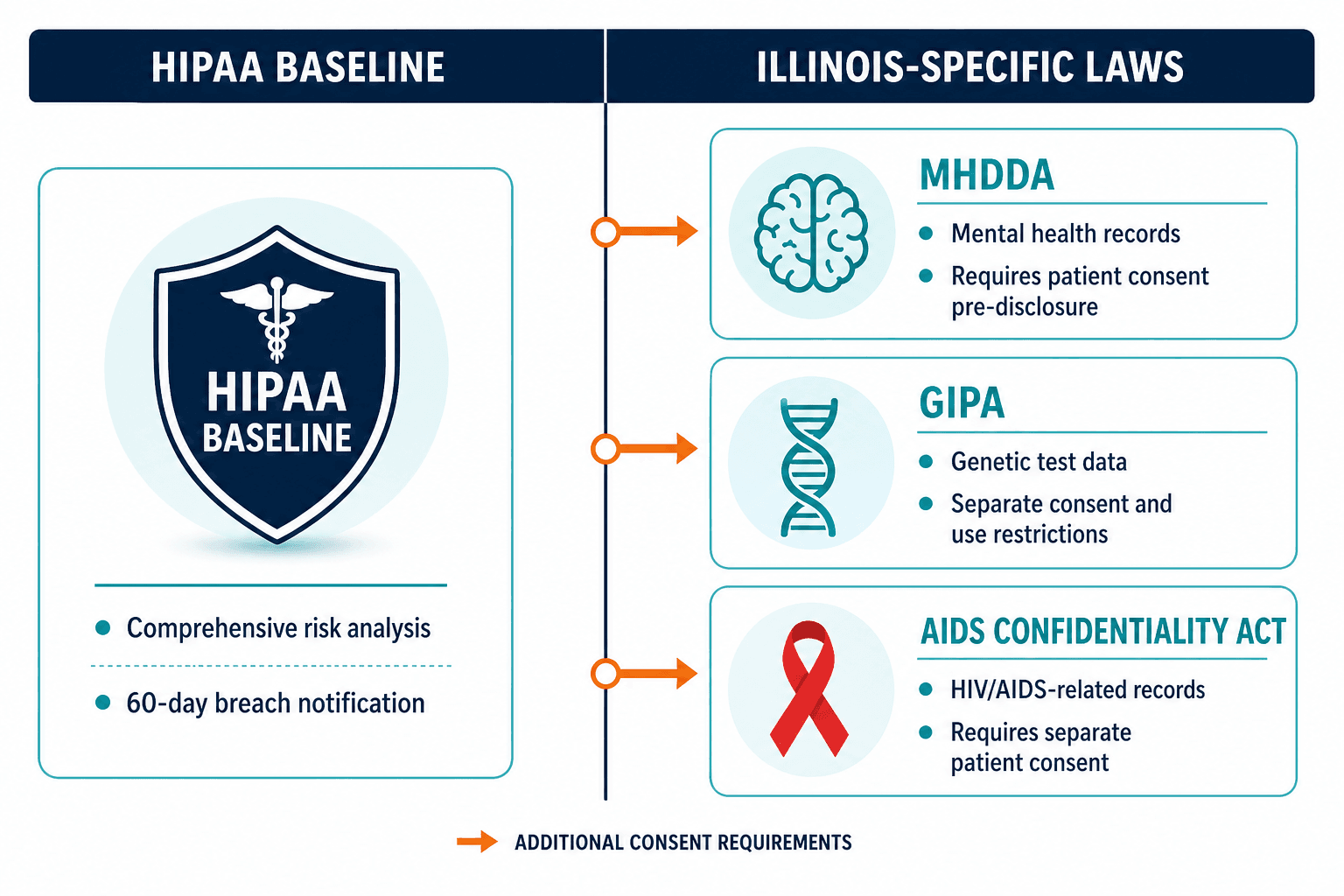
Top of the World Ranch Treatment Center, an Illinois substance use disorder treatment provider, settled with OCR in February 2026 after a workforce member’s email account was compromised in a phishing attack, giving an attacker unauthorized access to electronic protected health information. The breach mechanism was ordinary, phishing remains one of the most common entry points into healthcare systems. What OCR found afterward was the actual violation: the organization had never conducted an accurate and thorough risk analysis to identify the risks and vulnerabilities to its ePHI in the first place.
That finding, no risk analysis completed, is the same one OCR has attached to a dozen separate settlements since 2024 under its Risk Analysis Initiative, an enforcement effort the agency confirmed in January 2026 would expand to cover risk management as well: proof not just that risks were identified, but that the organization acted on them, with documentation.
Chicago carries that same enforcement exposure at a scale most cities don’t. Advocate Health, formed by the 2022 merger of Advocate Aurora Health and Atrium Health, operates ten hospitals across the Chicago area alone, as part of a combined system spanning eight states with $34.79 billion in 2024 operating revenue. Northwestern Medicine operates 11 hospitals across the Chicago area and Northern Illinois, anchored by the 943-bed Northwestern Memorial Hospital.
Rush University Medical Center and University of Chicago Medicine add two more major academic systems to the same metro area, alongside Cook County Health, one of the country’s largest public safety-net systems. That density of large, independently-operated health systems is exactly the environment where a risk analysis depends on an asset inventory that has to be current, not remembered. That density of large, independently-operated health systems is exactly the environment where HIPAA compliance depends on CMDB-based visibility into an asset inventory that has to be current, not remembered.
Illinois layers more than HIPAA on top of that footprint
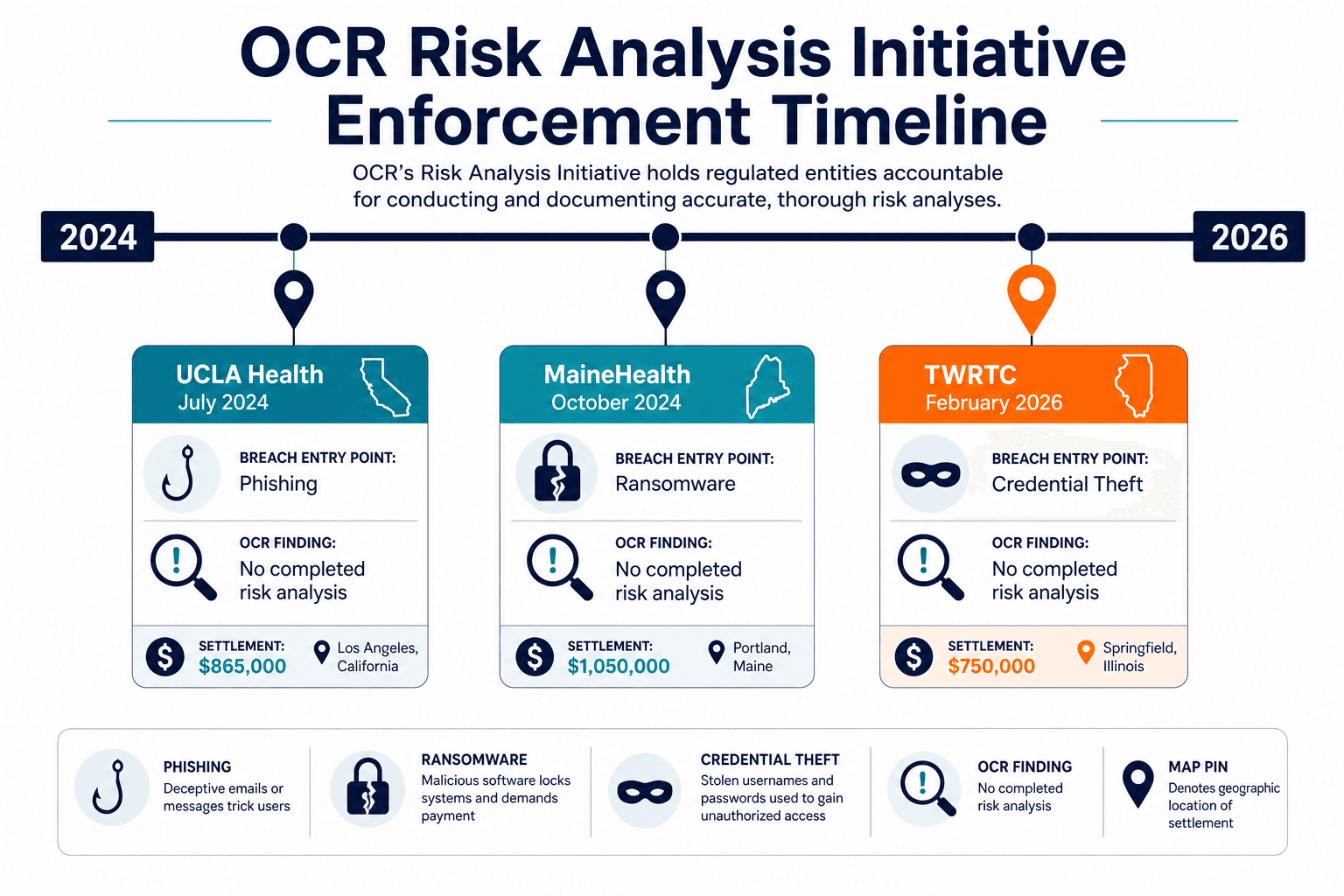
The HIPAA Security Rule sets the federal floor: a comprehensive risk analysis, an ongoing risk management program, breach notification within 60 days. Illinois adds category-specific consent requirements that reach further than HIPAA’s general treatment-sharing rules.
The Mental Health and Developmental Disabilities Confidentiality Act generally requires patient consent before mental health treatment records are disclosed, including in many cases between two providers treating the same patient, a stricter standard than HIPAA’s default permission for internal clinical sharing. The Genetic Information Privacy Act imposes separate consent and use restrictions on genetic test data. The AIDS Confidentiality Act does the same for HIV and AIDS-related records.
These are consent and use-restriction laws. They govern who may disclose a specific category of record, and under what conditions, not what infrastructure exists or how it’s inventoried. A configuration management database doesn’t determine whether a disclosure was properly consented to, that’s a policy and access-control question, sitting with the electronic health record’s own permission structure, not with asset discovery.
Where a CMDB enters this chain is one layer earlier: before anyone can review whether a specific interface carries mental health, genetic, or HIV-related data and whether it was properly consented to, someone has to know that interface exists at all. An integration between a behavioral health module and a general referral system that never made it into a formal inventory doesn’t get reviewed for MHDDA compliance, because nobody’s compliance checklist includes a system nobody documented.
What Illinois’s layered consent rules add is stakes: a health system with behavioral health, genetic testing, and HIV care integrated into a broader clinical operation is running more categories of specially-protected data through infrastructure that has to be discovered before it can be governed.
The same finding, regardless of geography
The TWRTC settlement’s finding, no completed risk analysis, is one instance of a pattern that recurs across OCR’s 2025-2026 enforcement record everywhere else too. BayCare Health System’s $800,000 settlement cited insufficient access controls and failure to review system activity records after an employee’s credentials weren’t revoked on termination. Comstar’s $75,000 settlement, following a ransomware attack affecting 585,000 individuals, cited the absence of a completed risk analysis entirely.
Vision Upright MRI’s settlement cited the same gap, alongside a missed 60-day breach notification deadline. In each case, OCR’s finding traces back to the same starting point: an entity cannot complete an adequate risk analysis without first knowing where electronic protected health information exists and how it moves through its systems.
What an accurate asset map actually does, and doesn’t do
A CMDB’s role in risk analysis is discovery: identifying the servers, applications, and network-connected systems that exist across a health system’s footprint, and mapping how they connect to and depend on each other. For an organization the size of Advocate Health’s Chicago-area operation or Northwestern Medicine’s 11-hospital network, that inventory is a moving target between annual reviews, new sites open, systems get integrated after acquisitions, legacy servers get replaced.
A CMDB kept current through scheduled discovery, rather than reconstructed from memory during an audit, is what lets a risk analysis start from what’s actually running rather than what was documented at the last review cycle.
What it does not do is classify the content of what flows through a given connection, or manage who is allowed to access it. Whether an interface carries a mental health record protected under Illinois’s confidentiality act, a genetic test result, or routine billing data is a data-classification question. Whether a specific clinician should be permitted to view that record is an access-control question, enforced by the electronic health record’s own permission structure. Virima’s discovery and ViVID service mapping identify that a connection exists and what depends on it; they do not identify what’s moving across it or who’s authorized to see it. For Illinois’s layered consent requirements specifically, that means a CMDB surfaces the interfaces a compliance team needs to review, undocumented integrations that never made it into a formal inventory, systems that outlived the acquisition that brought them in, but the review of what each interface carries and whether the right consent was captured still has to happen on top of that inventory, not in place of it.
The starting point that scale doesn’t change
Every settlement referenced here, in Illinois and elsewhere, traces back to the same finding: an organization couldn’t show it knew where its regulated data lived before something went wrong. At the scale Chicago’s major health systems operate, ten hospitals under one system, an 11-hospital academic network, a public safety-net system carrying its own layered obligations, that starting point doesn’t get easier to maintain. It gets harder, and it has to be discovered continuously rather than assembled once a year.