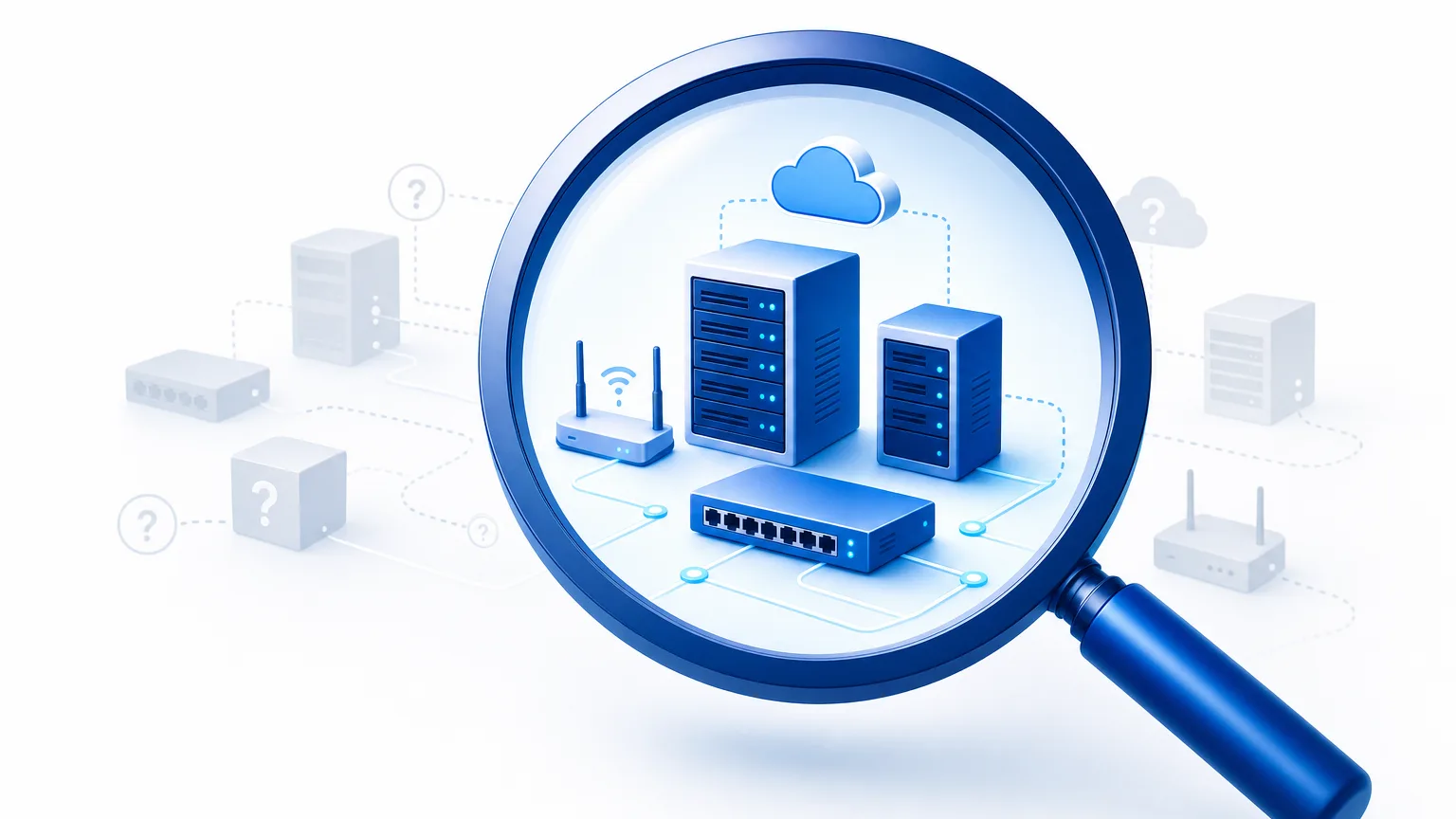
How to Find Shadow Servers and Unknown Network Devices

Three weeks before a SOX sample, a PCI scope freeze, or a data-center cutover, the inventory still looks complete on paper. Then a network engineer notices a MAC address that never entered the configuration management database (CMDB). A hypervisor host still runs a forgotten SQL instance on a VLAN nobody owns. A branch switch still routes traffic for a lab subnet that never received a ticket. Auditors and migration planners do not grade intent. They grade what you can prove exists on the wire.
This guide answers how to find shadow servers and unknown network devices before an audit or migration, not Shadow SaaS tracking or a CISO vulnerability brief. The focus is infrastructure that still answers on the network: servers, appliances, switches, and other devices discovery can miss. Shadow IT usually refers to unsanctioned SaaS or cloud apps employees adopt without IT’s knowledge; shadow servers and unknown network devices are physical or virtual infrastructure still running on the network itself — a different risk with a different fix.
Why audits and migrations expose inventory debt first
Audits and migrations force a hard question the daily ticket queue never asks. Which systems can touch regulated data, customer traffic, or the cutover path? Spreadsheets and CMDB exports answer with what was last recorded. Discovery answers with what still responds. When those two disagree, shadow servers and unknown network devices become findings, blockers, or outage risk.
Where these gaps come from
Shadow servers often start as temporary work. A contractor leaves a build host on a spare subnet. A team clones a VM for a proof of concept and never retires it. A cloud account spins up an instance outside the approved landing zone. That kind of quiet addition is how unknown network devices start too — as local convenience rather than approved procurement. A small switch extends a closet. A wireless bridge joins a warehouse. An IoT gateway joins a plant network without a change record. Real scans turn up this debt fast once they run against the full range: one healthcare network audit uncovered 607 CMDB gaps after agentless discovery finally covered every segment.
Why the pressure keeps building
Traditional CMDB discovery often reaches only servers, virtual machines, and managed laptops. A runZero review of CMDB asset-management limits points to that narrow reach as the reason. Contractor boxes, IoT gateways, and unmanaged switches keep slipping past inventory tools built for a smaller device mix.
CISA Binding Operational Directive 23-01 keeps public attention on accurate asset visibility for federal networks. Commercial enterprises feel the same pressure under different labels. Examiners, insurers, and migration partners all ask for a current list of what sits in scope. If you only reconcile after the request lands, you discover debt when the calendar is shortest.
IBM’s Cost of a Data Breach Report keeps the financial stakes high when unmanaged systems sit in the path of an incident. Unknown hosts are not only audit noise. They are often the edge that never received the same hardening, logging, or ownership discipline as named production.
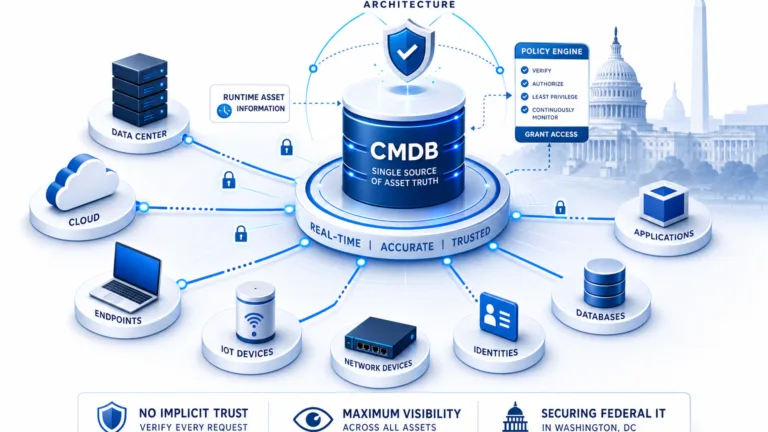
When partial inventories still drive audit samples and cutover plans, start with Trusted Runtime Truth. Pressure-test whether discovery scope matches the estate you must defend.
Why do shadow servers and unknown network devices show up right before audits or migrations?
Audits and cutovers force a complete inventory of systems that can touch regulated data or the migration path. Spreadsheets lag while temporary hosts and local network gear keep joining. Discovery on agreed ranges surfaces those devices before the sample or freeze date, instead of during the finding window.
Write the hunt as a scope map, not a tool brand
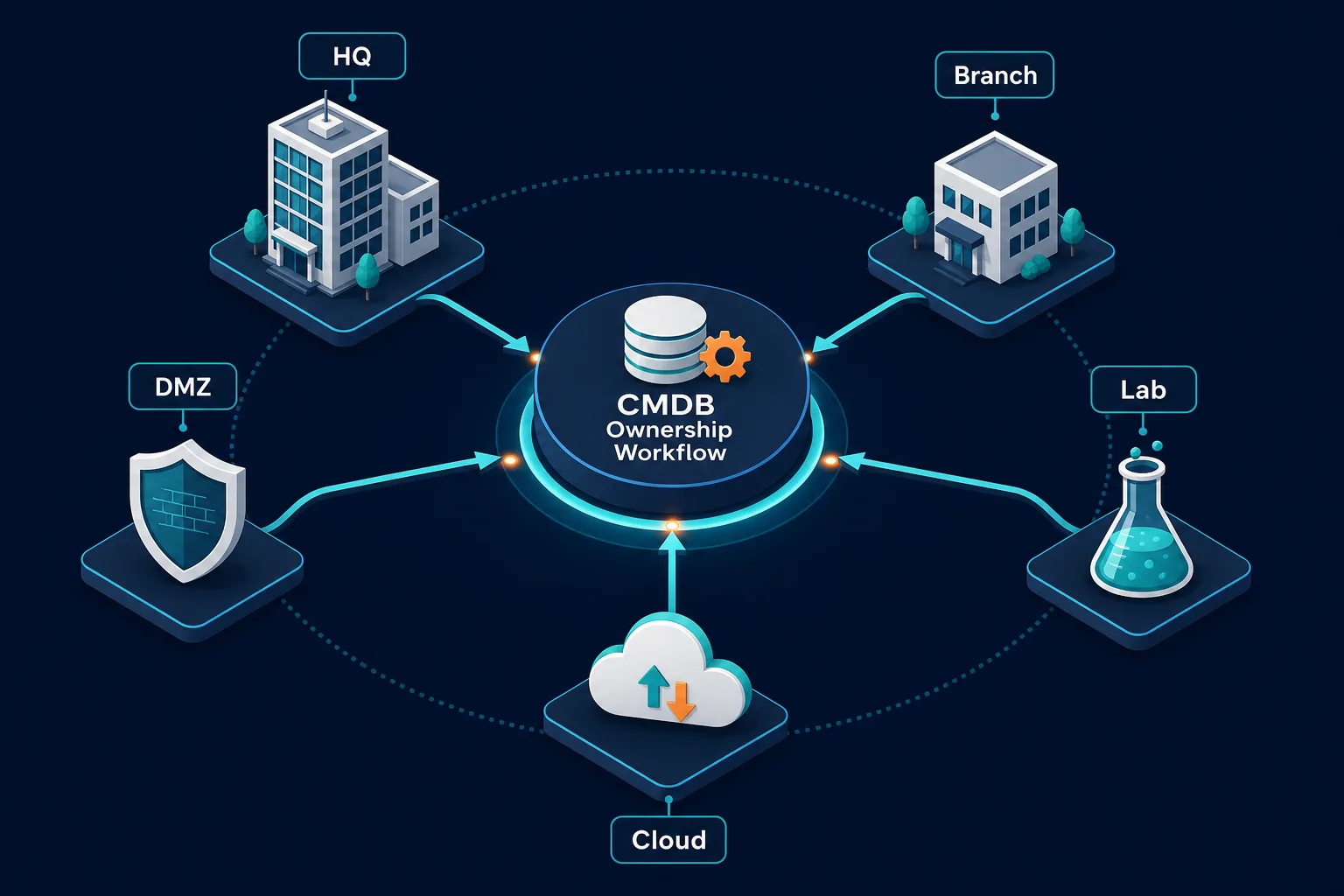
Teams that find shadow servers and unknown network devices on purpose start with a written scope map. Name HQ ranges, campus ranges, branch networks, DMZ segments, lab VLANs, and cloud accounts that can host servers. Name which methods are allowed on each range.
Use agents where endpoints accept them. Use credentialed agentless methods where agents are blocked. Use API inventory for AWS and Azure. Use network device collection for switches, routers, and firewalls that define trust boundaries.
| Discovery method | Best for | Constraint |
|---|---|---|
| Agent-based | Managed Windows, macOS, and Linux hosts | Requires an installed agent; misses unmanaged endpoints |
| Agentless (credentialed) | Servers and hosts where agents are blocked or unwanted | Needs valid credentials on the target range |
| API-based | AWS and Azure cloud instances | Covers only what the connected cloud account exposes |
| Network device collection | Switches, routers, and firewalls that define trust boundaries | Requires read access to network device configs |
Matching method to range is what prevents the largest class of shadow-server and unknown-device misses — a range scanned with the wrong method looks “covered” on a status report while still hiding hosts.
Cadence matters as much as method. A single pre-audit sweep catches some debt and misses anything that joined after the scan window. High-frequency discovery cycles keep last-seen data close enough to trust when the freeze date moves. They do not require continuous passive packet capture on every segment.
That capability may not sit in the enterprise stack. They do mean scheduled passes short enough that a month-old blind spot counts as a defect before migration week.
Ownership is the third row on the map. Every unknown device needs a workflow owner, not only a ticket comment. Security may want the host quarantined. Network may want the switch port shut. Application owners may claim the server after the fact.
Without a named reconcile path, discoveries pile up as unlabeled noise and the CMDB stays incomplete.
Internal teams evaluating platform fit should review how Virima IT discovery combines agent-based and agentless methods on a shared schedule. Pair discovery-sourced CMDB truth with dedicated EDR, SIEM, and vulnerability platforms. Do not force one tool to own every security job if the risk model says otherwise.
How to discover unknown devices and shadow servers before migration
Start with what the network already shows
Compare DHCP leases, switch MAC tables, hypervisor inventories, and cloud instance lists against the CMDB. Devices that answer on the network but lack a configuration item (CI) are your first shadow and unknown queue. This step finds hosts that never entered procurement and devices that entered as local hardware without a ticket.
Prefer discovery evidence over static imports
When a scanner reports a host and a spreadsheet denies it, treat existence and last-seen as discovery-led facts. Business metadata such as cost center and service name can still come from owners. Multi-source reconciliation should weight recent evidence over imports nobody revalidates. That rule is how you find shadow servers and unknown network devices without letting politics freeze the list. Left unresolved, these hosts turn into what one CI lifecycle review calls ghost servers that quietly corrupt CMDB data long after the original owner has moved on.
Open ownership workflows for every unknown
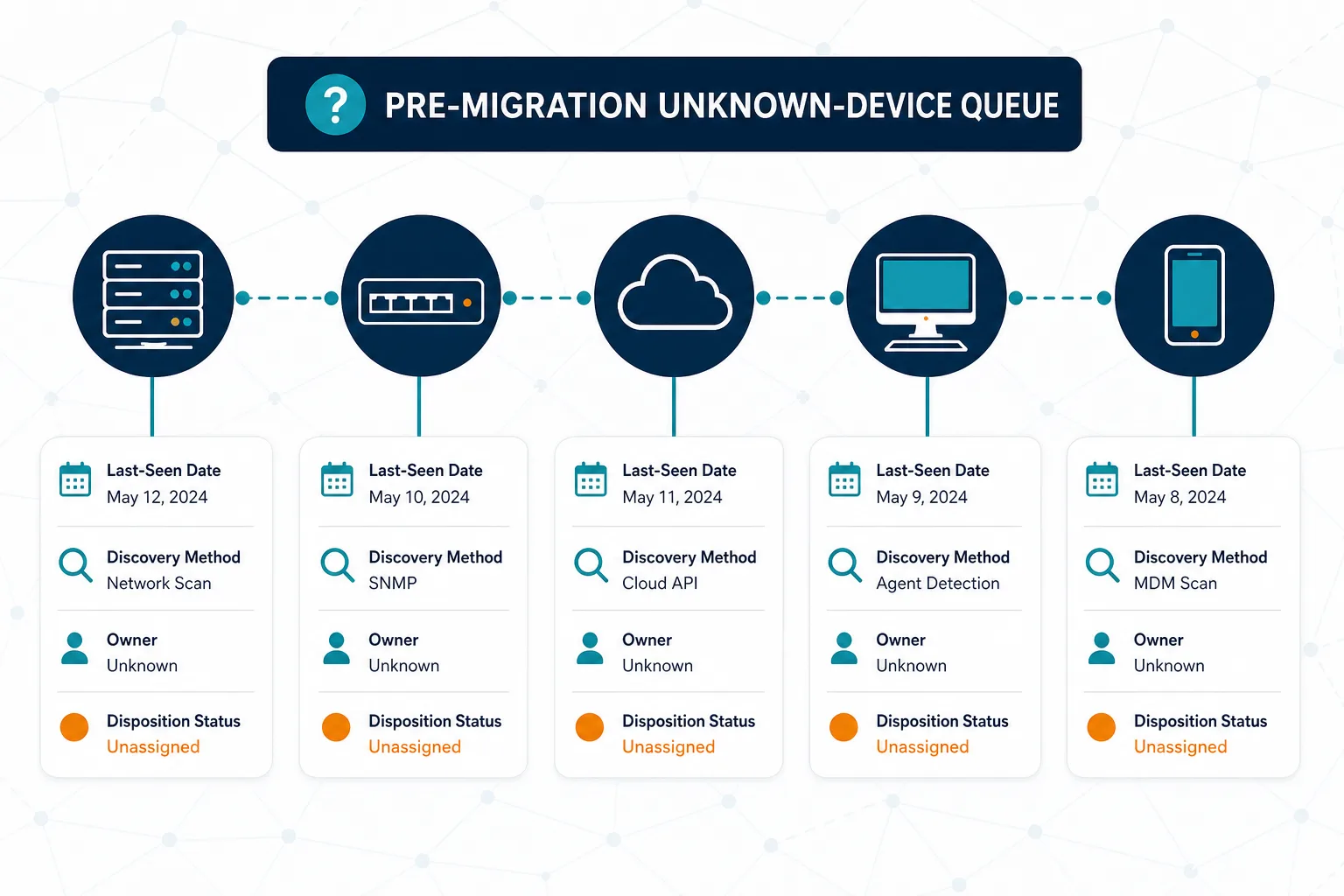
Unknown is a temporary state. Route each new device to a named operator with a deadline before the audit sample or migration freeze. Retired hosts need decommission evidence. Active hosts need owners, criticality, and service links. Leaving unknowns unlabeled guarantees the same list reappears on the next exam.
This is not a rare edge case. One Virima review found that 12% of devices had no owner assigned at discovery time — the exact gap that resurfaces at audit or migration time if it stays open.
Attach service context only after definitions exist
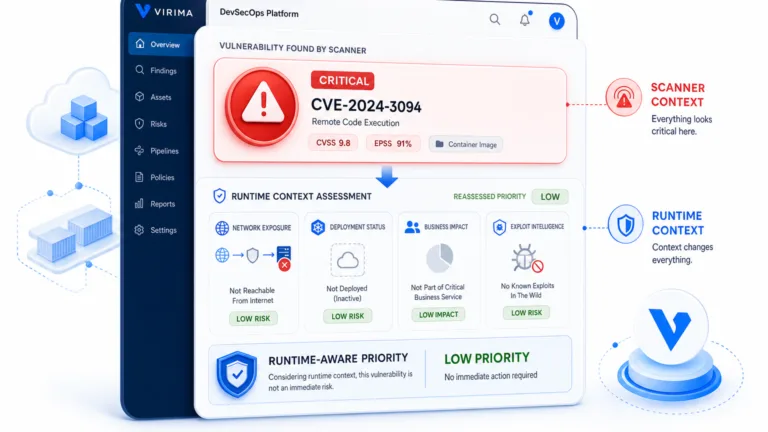
A flat host list will not tell a migration owner whether a forgotten server still supports a crown-jewel path. Once service definitions exist, ViVID™ service maps can show installed-on and runs-on links. Virima builds those maps from defined services rather than inventing service composition automatically. Maps stay honest only while infrastructure CIs stay discovery-fresh.
Windows Server NIST NVD overlays on service maps can weight exposure by asset and business criticality where that product path applies. They do not replace a full multi-OS vulnerability management program. Use them after you know the host exists and which services it supports.
How do teams find shadow servers and unknown network devices before a migration freeze?
Write ranges and allowed methods first. Run high-frequency discovery cycles against that map. Reconcile DHCP, MAC, hypervisor, and cloud lists into the CMDB. Open ownership workflows for every unknown before the freeze date so cutover plans stop guessing about hosts still on the wire.
What good looks like before the sample or cutover
A readiness checklist for leaders
Leaders can score readiness with a short checklist:
- Every range that can touch audit scope or migration traffic has a named discovery method and a recent successful cycle.
- Unknown devices open ownership workflows instead of remaining unlabeled.
- CMDB health tracks completeness and staleness so executives see inventory debt as a metric.
- Service maps for key services stay tied to infrastructure CIs that discovery still confirms.
How Virima supports this control
Virima approaches this as Trusted Runtime Truth for the operational estate. Leaders need what exists, how it is connected, what changed, and who owns it. That picture should be sourced from discovery rather than from the last spreadsheet edit.
Automated discovery refreshes CIs while the CMDB holds relationships and health signals. Once services are defined, ViVID™ service maps give leaders a shared blast-radius view before weekend changes. Integrations can push that truth into ServiceNow, Jira Service Management, Ivanti, HaloITSM, Xurrent, and Hornbill workflows. Tickets stop inventing separate asset lists. Partner connections sit on the Virima integrations hub.
See how discovery helps you find shadow servers and unknown network devices before audit samples and migration freezes, with ownership workflows that keep the CMDB honest.
What proves inventory is ready for an audit or migration?
Scoped ranges show recent last-seen cycles. Unknown devices have named owners or closed decommission evidence. Staleness appears on CMDB health views. Service maps for in-scope services stay attached to infrastructure CIs that discovery still confirms before the freeze.
When those conditions hold, the question of how to find shadow servers and unknown network devices becomes a managed control instead of a pre-audit scramble. Discovery-sourced CMDB records give auditors and migration planners a shared runtime picture before the sample window or cutover night.
If your teams still reconcile DHCP and CMDB exports by hand three weeks before every exam, request a Virima demo. Validate whether your discovery cadence can cover the ranges you already run.
Frequently Asked Questions
What counts as a shadow server before an audit?
Shadow servers before an audit typically show up as hosts that answer on in-scope networks or cloud accounts but lack a current CMDB record, owner, or approved change path. Contractor-build boxes, forgotten clones, and unapproved cloud instances are common examples before sample windows.
How are unknown network devices different from shadow servers?
Unknown network devices are switches, access points, bridges, and similar gear that extend or route traffic without inventory ownership. Shadow servers are compute hosts. Both break audit and migration confidence when they sit on paths that carry regulated or cutover traffic.
Is one pre-migration network scan enough?
A single late scan finds some debt and misses devices that join after the window. High-frequency discovery cycles on a written scope map keep last-seen data current enough for freeze dates that move. Treat month-old blind spots as defects before cutover week.
Does Virima replace vulnerability scanners for unknown hosts?
Discovery-sourced CMDB inventory shows what exists, how it connects, and who owns it. Dedicated vulnerability platforms cover broader multi-OS scanning. Many teams run both and reconcile ownership at the inventory layer before audit or migration work.
How does Virima help find shadow servers and unknown network devices?
Virima runs agent-based and agentless discovery on agreed ranges. It populates a CMDB with multi-source reconciliation that weights recent evidence. It builds ViVID™ service maps after services are defined so migration and audit owners see hosts in service context, not only as a flat list.