CMDB Automation Across Minneapolis Retail HQ, Stores, and Carriers

Minneapolis-St. Paul concentrates one of the country’s densest clusters of retail and distribution headquarters: Target, Best Buy, C.H. Robinson, General Mills, and Cargill all run their operations from the same metro. Together they generate enormous freight, inventory, and point-of-sale volume. Each depends on an IT estate spanning corporate offices, distribution centers, warehouse systems, and thousands of individual store or carrier connections.
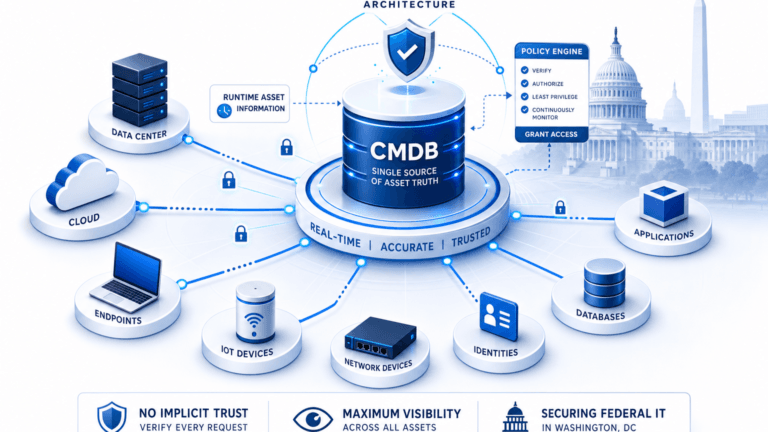
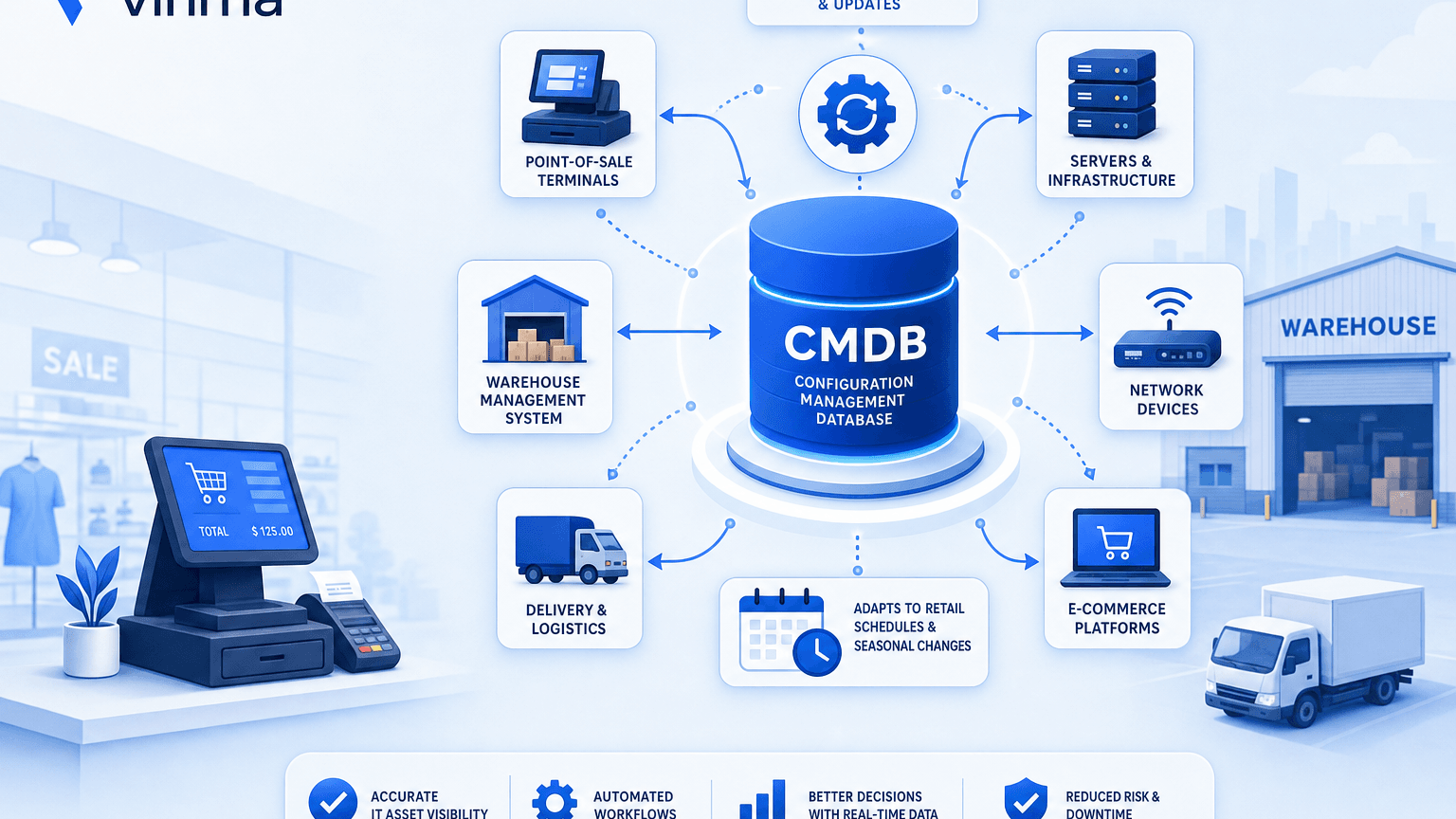
A configuration management database (CMDB) is the record meant to keep track of all of it: every server, application, point-of-sale terminal, and warehouse management system, along with how each one connects to the others. Retail and distribution environments make that record unusually hard to keep current.
Store systems get added, replaced, and decommissioned on a retail calendar, not an IT calendar. Seasonal peaks bring temporary infrastructure online for a few months a year. Warehouse management and transportation systems connect to networks of carriers and vendors that a single company doesn’t fully control. Manually maintaining an accurate inventory across that much churn isn’t realistic. That’s why automation — not a one-time inventory project — is the only version of a CMDB that stays useful.
Why this metro specifically
The Twin Cities story here is headquarters density, not a single brand case study. Metropolitan Council regional planning materials have long grouped logistics (C.H. Robinson), retail (Target, Best Buy), and food (General Mills and peers) as core metro strengths. Fortune 500 lists for Minnesota still place multiple of those headquarters in Minneapolis-St. Paul. Greater MSP markets the same corporate concentration to employers and talent.
That concentration means large IT estates for stores, DCs, carriers, and corporate platforms sit in one labor market and one partner graph. CMDB automation is not a boutique problem for one chain. It is how multi-site retail and distribution operations in this metro keep inventory honest when store counts, peak seasons, and carrier links keep moving.
What a CMDB has to track in retail and distribution
A CMDB holds configuration items: the systems, devices, applications, and relationships that operations need to change, secure, and recover safely. In this vertical the mix is wider than a campus data center list.
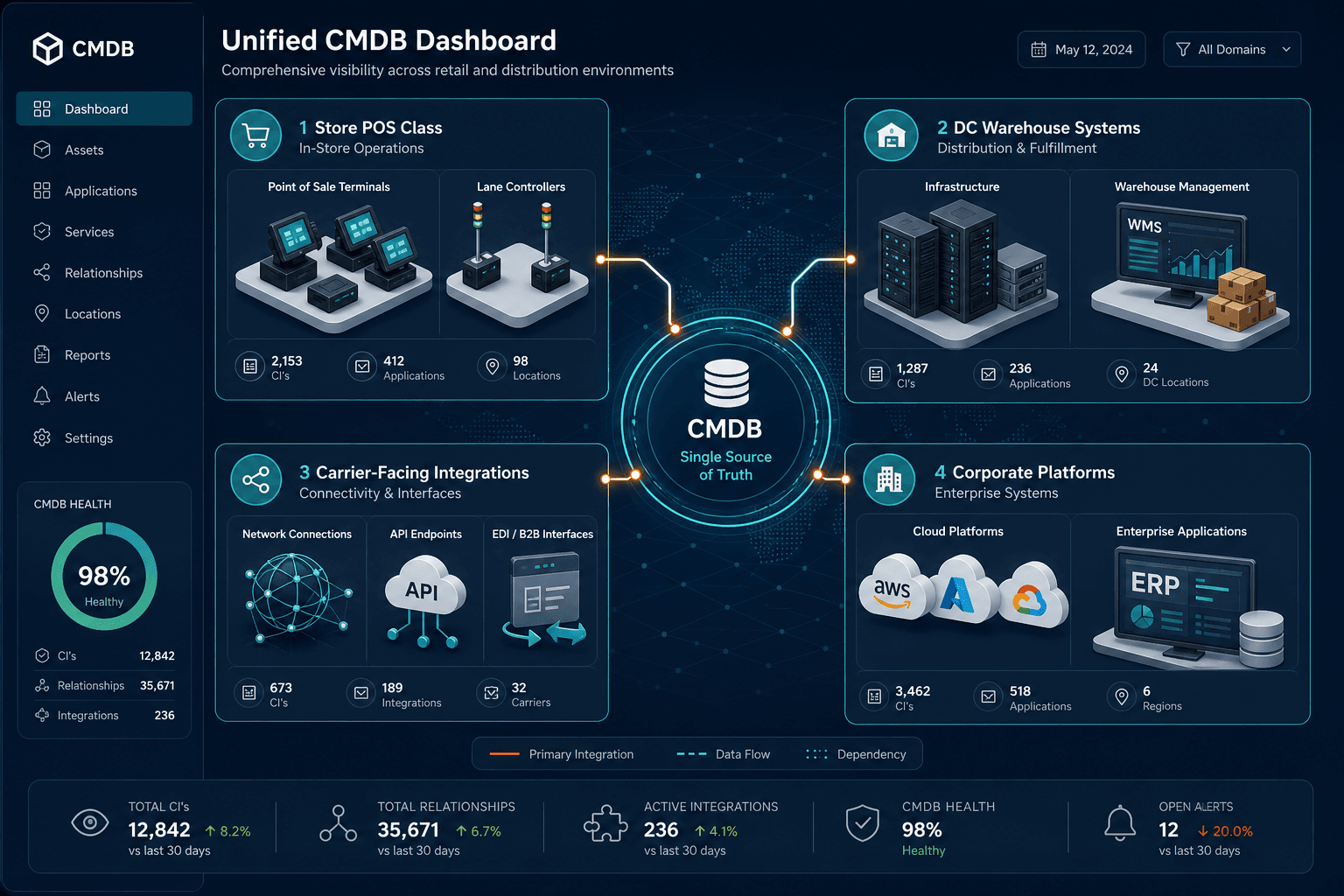
Point-of-sale terminals, lane controllers, store servers, and payment-adjacent devices appear across hundreds or thousands of locations. Warehouse management systems, yard systems, and transportation management platforms sit in distribution centers. Carrier-facing interfaces and vendor portals connect outward. Corporate ERP, e-commerce, identity, and analytics stacks sit above all of it. Each object is a configuration item when it can break checkout, inventory truth, shipment execution, or cardholder data scope.
A generic enterprise CMDB that only models servers and cloud accounts under-describes the estate. Retail and distribution need store, DC, and integration classes in the same record, with owners and relationships that survive remodel seasons and carrier swaps.
Why a manually maintained CMDB fails here
Retail calendars drive device life cycles. Remodels, new formats, and store closures add and retire systems on merchandising timelines. IT ticket queues built for quarterly change windows do not match that pace, so spreadsheets lag reality within weeks.
Seasonal peaks make the lag worse. Holiday and back-to-school capacity often stands up temporary servers, network gear, overflow workstations, and short-lived integrations. When peak ends, some of that kit stays powered and unowned. Manual CMDB owners rarely get a clean “peak off” signal for every temporary object.
Warehouse and transportation systems add a third failure mode. They connect to carriers and vendors the company does not fully control. Interface endpoints, certificates, and partner IDs change on someone else’s calendar. If discovery only walks corporate subnets, those edges never enter the CMDB until an outage forces a war room.
Where the gaps cause damage
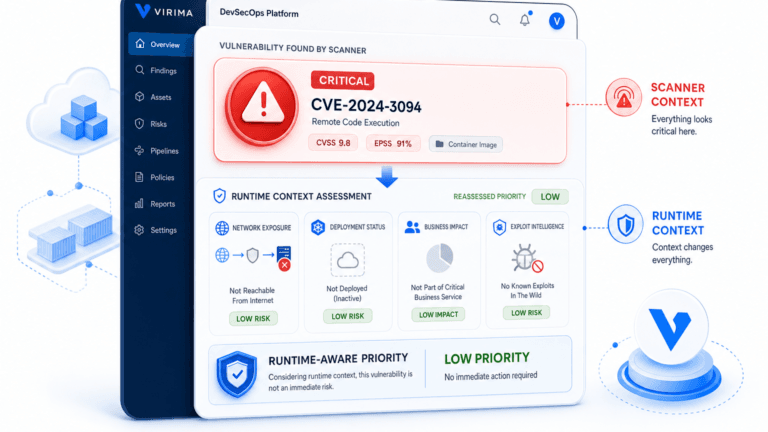
A decommissioned point-of-sale terminal that never left the network still answers probes, still holds credentials, and still expands PCI scope until someone proves it is gone. A seasonal box left running after peak still needs patches and still appears in vulnerability scans without a clear owner. A warehouse management integration nobody documented becomes untouchable change work: teams freeze releases because blast radius is unknown.
Incident response slows the same way. When checkout or DC throughput drops, responders need current relationships from store devices through mid-tier apps into corporate services. Change impact analysis without those links turns into conference calls and tribal maps. Mean time to restore stretches while people rebuild inventory by hand.
Why do retail IT estates break manual CMDB maintenance?
Store systems change on retail remodel and season calendars, peak capacity appears for only part of the year, and warehouse or carrier integrations sit outside fully controlled networks. Manual updates cannot match that churn, so configuration records drift from production within weeks.
The compliance layer: PCI DSS at retail scale
Card-accepting retail and many distribution handoff points fall under PCI DSS. Requirement language around a current inventory of in-scope system components is not optional reading for teams that run thousands of payment-adjacent endpoints. Neither is the expectation to confirm scope at least annually and after significant change. Public explainers such as Basis Theory on Requirement 12 walk the inventory and scope-confirmation expectations that map to 12.5.1 and 12.5.2 style controls, and the PCI Security Standards Council document library remains the canonical standards home for the underlying language.
Scale is the Twin Cities-relevant twist. A headquarters that designs store technology for a national fleet is not inventorying dozens of servers. It is accounting for device classes and connected systems across large store and DC footprints. Significant change is constant: new payment firmware, lane refreshes, seasonal labs, carrier EDI cuts. An annual spreadsheet exercise cannot reconfirm scope after each of those events. Get scope wrong and the cost shows up as an expanded assessment, a compensating-control scramble, or a finding that has to be remediated before the next audit closes. Automated discovery feeding a governed CMDB is how inventory evidence stays close enough to production for assessors and for internal security.
Virima’s PCI DSS guidance starts from the same rule: you cannot evidence or protect what you cannot name.
See what trusted runtime truth requires when store and DC inventories change every week.
What automated discovery looks like for this vertical
Automation here means scheduled, multi-source IT discovery that treats high turnover as normal. API and agentless collection against store, DC, and corporate environments should run on high-frequency cycles teams can defend, not a once-a-year floor walk.
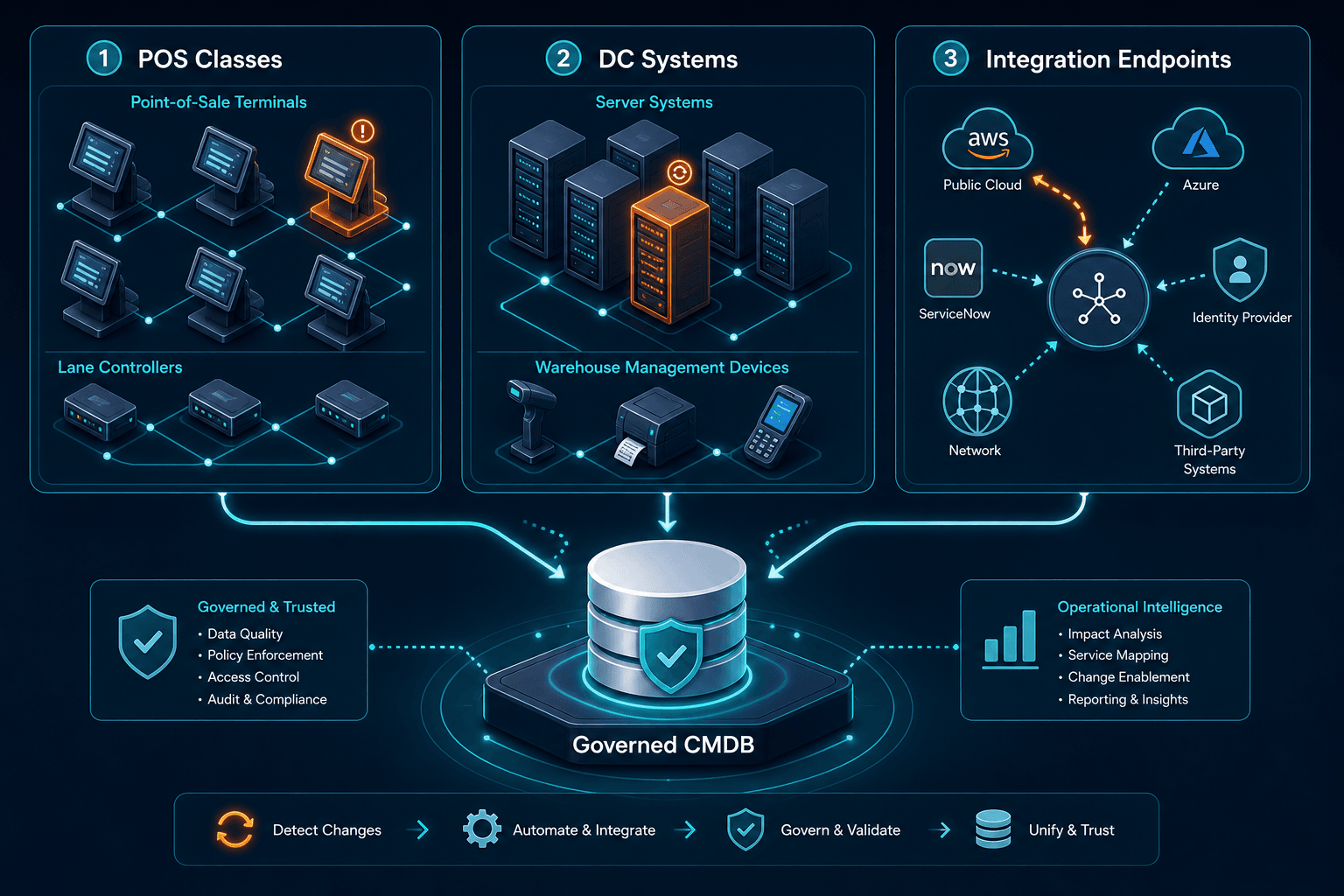
Store point-of-sale environments work best as defined asset classes and patterns, not thousands of one-off spreadsheet rows with no standard model. Discovery should classify lane gear, controllers, and store servers against a standard pattern, then flag drift when a location no longer matches it. Temporary peak infrastructure needs the same class tags plus end dates or environment labels so cleanup after peak is a query, not a scavenger hunt.
Warehouse and transportation visibility should reach systems and integration endpoints the company operates or hosts, without pretending to scan a carrier’s private network. Certificates, interface servers, partner gateways, and the corporate systems behind them still belong in the CMDB. Once teams define checkout, inventory, and fulfillment as business services, ViVID™ service maps can show blast radius from a store class or DC integration into customer-facing paths.
How does CMDB automation support PCI inventory in retail?
Scheduled discovery keeps in-scope system components and connected systems current as stores, payment devices, and seasonal capacity change. That inventory feeds scope confirmation after significant change instead of waiting for an annual spreadsheet rebuild across thousands of endpoints.
Where a platform fits
Platforms that combine multi-source discovery, a governed CMDB, and service mapping after service definitions are supplied turn that model into operations. Virima discovers and reconciles IT and cloud assets on scheduled discovery cycles, maintains configuration item relationships, and builds ViVID™ service maps once teams define the services that matter, so store, DC, and corporate objects show up as owned inventory instead of tribal lists. ITAM views can pull from the same discovery-sourced records for lifecycle and ownership. Integrations with ITSM platforms such as ServiceNow, Jira Service Management, Ivanti, HaloITSM, Xurrent, and Hornbill keep that inventory inside change and incident workflows through integrations.
The platform gives retail and distribution IT a runtime picture they can trust when the next remodel wave or peak season hits.
Automation is the only CMDB that survives a retail calendar
Manual inventory maintenance was never built for remodel seasons, temporary peak capacity, and carrier-facing change. In Minneapolis-St. Paul’s retail and distribution headquarters corridor, that is the normal operating rhythm, not an edge case.
Teams that keep discovery on a fixed schedule, classify store and warehouse systems as first-class configuration items, and map services after they define them give change, security, and audit the same current picture — the same picture an assessor, an incident responder, and a store operations lead can all work from without reconciling three different spreadsheets first.
Request a demo and walk retail and distribution configuration items against a discovery-fed CMDB.
Frequently Asked Questions
Why is Minneapolis-St. Paul a useful lens for retail CMDB automation?
The metro concentrates major retail, logistics, and consumer-goods headquarters, which means large multi-site IT estates for stores, distribution centers, and carrier connections sit in one region. That density makes store-calendar churn and PCI-scale inventory a shared operational pattern, not a niche edge case.
What configuration items matter most in retail and distribution CMDBs?
Beyond corporate servers and cloud accounts, teams need point-of-sale and store systems, warehouse and transportation platforms, carrier-facing integration endpoints, and the relationships that tie those objects to checkout, inventory, and fulfillment services.
How do seasonal peaks create CMDB drift?
Peak seasons stand up temporary infrastructure and short-lived connections that often lack clear end dates in manual records. When volume drops, leftover systems stay powered, unpatched, and unowned unless scheduled discovery and class tags force a cleanup view.
Which PCI DSS expectations hit retail inventory hardest?
Maintaining a current inventory of in-scope system components and reconfirming scope at least annually and after significant change becomes difficult when thousands of payment-adjacent endpoints and frequent store changes redefine the environment continuously.
Does Virima’s CMDB integrate with ServiceNow, Jira Service Management, or other ITSM platforms already used in retail IT operations?
Yes. Virima integrates directly with ServiceNow, Jira Service Management, Ivanti, HaloITSM, Xurrent, and Hornbill to bring discovery-sourced CMDB data into the change and incident workflows retail IT teams already run. Virima complements these ITSM platforms rather than replacing them, enriching their records with current store, DC, and carrier-facing configuration data.
How does Virima help retail and distribution CMDB teams?
Virima runs scheduled discovery across IT and cloud environments, reconciles configuration items into a governed CMDB, and builds ViVID™ service maps after teams define services. That gives operations and security a shared, current view of store, DC, and corporate dependencies without relying on one-time inventory projects.