Virima REST API: Connecting Your CMDB to Any Platform

Why REST API Integration Matters for Asset Management
IT tool sprawl is one of the most common reasons CMDB data goes stale. According to Gartner, by 2026 more than 80 percent of enterprises will have deployed generative AI APIs or models as part of their technology stack, signaling that API-driven integration is now an expected capability in enterprise software.
That same API dependency applies to IT asset management: if your CMDB cannot connect to the tools around it, every disconnected system creates a gap in your asset data. Without reliable REST API asset management integrations, teams typically face duplicate CI records from disconnected sources, stale hardware data in ITSM tickets, and change requests that go out with inaccurate dependency information.
| REST API asset management integrations matter because they remove the manual data-entry burden from IT teams. When your CMDB connects to endpoint management, cloud platforms, and ITSM tools via API, CI records update as your environment changes. That keeps tickets accurate, change assessments trustworthy, and audits less painful. |
These are not edge cases. They are common outcomes when asset data lives in silos and no integration layer bridges the gap between systems.
How Virima’s REST API Works
Virima’s REST API lets external tools read and write CMDB data through standard HTTP calls. It supports GET requests to pull CI records, relationships, and service maps, and POST or PATCH requests to push new asset data or update existing records. Token-based authentication keeps your CI data secure without complex configuration.
The API follows REST conventions, which means any platform with HTTP capability can connect. Whether your team is building a custom integration with an internal monitoring tool, connecting a third-party discovery source, or feeding CI data into an AI workflow, the same API layer handles the connection.
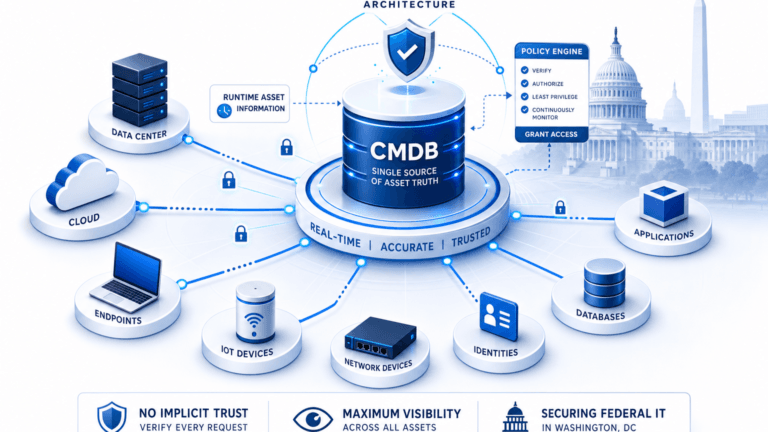
Virima also exposes relationship data through the API. An external system can query not just which assets exist, but how they connect: which server supports which application, which application depends on which database, and which services sit downstream of a specific CI.
This makes Virima’s REST API more than a simple data export mechanism. It gives external systems access to the full operational context stored in your CMDB, including dependency maps, CI health scores, and change history.
Which Platforms Connect to Virima via REST API
Virima’s integration library covers the platforms IT teams most commonly need to connect. These fall into several categories.
ITSM Platforms
For service management, Virima connects bidirectionally to ServiceNow, Jira Service Management, Ivanti, Halo, Xurrent, Hornbill, TeamDynamix, and Cherwell. Bidirectional sync means CI data flows both ways: discovery-sourced asset records push into your ITSM, and incident or change data from your ITSM can enrich CI records in Virima. The result is that tickets reflect accurate asset context and your CMDB reflects operational activity. See the full list on the Virima integrations directory.
Cloud Platforms
Virima uses API-based discovery connectors for AWS and Azure. These connectors pull cloud resource data, including compute instances, storage volumes, and container workloads, into your CMDB without requiring agents on cloud infrastructure. This closes one of the most common gaps in hybrid CMDB data: cloud assets that never make it into the asset record.
Endpoint and Device Management
Virima integrates with Microsoft Intune and SCCM to correlate managed endpoint data with discovered CI records. If Intune tracks a device, Virima can map that device’s management status, patch level, and assigned user alongside its CMDB record. For teams using Jira Service Management, this endpoint context flows directly into ticket enrichment, giving agents accurate device data without manual lookups.
Containers and Orchestration
For container environments, Virima connects to Kubernetes, Docker, AWS EKS, Azure AKS, and OpenShift. Container workloads change frequently. REST API asset management integrations that track container lifecycles help keep CMDB data current even as deployments shift.
Security and Identity
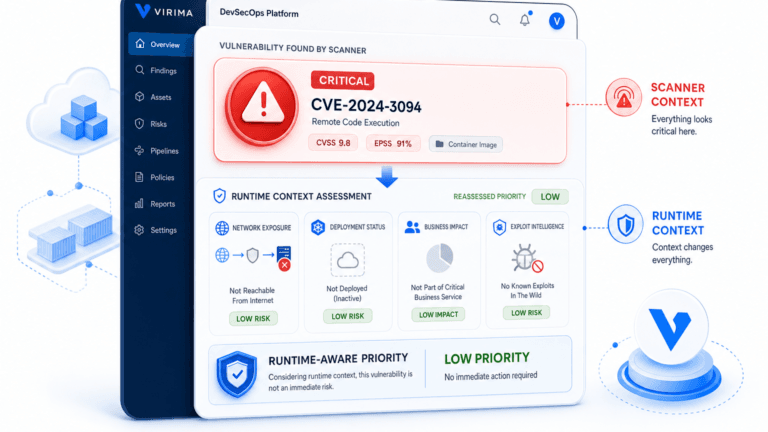
Virima integrates with CyberArk for privileged access management, Infoblox for IP address management, and NIST NVD for vulnerability enrichment. These connections let you see not just what an asset is, but what vulnerabilities it carries and what privileged accounts have access.
Network Infrastructure
Virima connects to network platforms including Aruba, Cisco Meraki, Juniper, and NetApp. Network device discovery surfaces the routers, switches, and storage systems that host-level scanning can miss.

What REST API Connects That Discovery Alone Cannot
Virima’s discovery engine finds assets across your hybrid environment. But discovery alone has limits. Some platforms do not expose their data via network scanning. Some data, including warranty status, license entitlements, and identity associations, does not come from a device scan at all.
REST API asset management integrations fill those gaps. Virima’s integration with Dell and Lenovo pulls warranty data directly from vendor APIs and attaches it to the corresponding hardware CI. Integrations with Okta, Microsoft AD, and Microsoft Entra associate identity and access data with the assets those identities touch.
Integrations with LogicMonitor and SolarWinds bring event management context into the CI record. The result is a CMDB that holds more than discovery data. It holds the full operational context for each asset: what it is, what it runs, who has access to it, what it supports, what vulnerabilities it carries, and what its support status is.
This is what Virima means by trusted runtime truth. Your CI records reflect the actual state of your environment, not a snapshot from the last manual update.
| See how Virima delivers live, explainable runtime truth across your full IT estate. Explore Trusted Runtime Truth |
Bidirectional Sync vs. One-Way Data Push
- Not every REST API asset management integration works the same way. Understanding the difference between bidirectional sync and one-way data push helps you configure integrations correctly for each platform.
- Virima’s ITSM integrations typically support bidirectional sync. When an incident is created in Jira Service Management or Ivanti, Virima can attach the relevant CI record, including its service dependencies and recent changes. When a CI changes status in Virima, that update can propagate to open tickets in your ITSM platform.
- One-way integrations are appropriate for source-of-record systems. If Dell’s warranty API is the authoritative source for hardware support status, Virima pulls that data in but does not write back to Dell’s system. The same applies to NIST NVD vulnerability data: Virima reads it and enriches your CIs, but does not push CMDB data back to NIST.
- Understanding which integrations are bidirectional and which are one-way helps your team set accurate expectations about how your CMDB behaves when source data changes.
ViVID Service Maps and API-Sourced Relationship Data
One of the strongest arguments for REST API asset management integrations is what happens to your service maps when your CMDB is well-connected. Virima’s ViVID™ service maps build dependency maps from the CI relationship data in your CMDB. When that CMDB includes cloud instances pulled from Azure, containers pulled from Kubernetes, and network devices pulled from Cisco Meraki, your service maps can show the full dependency path across all three layers.
Change teams use these maps before approving requests. Incident responders use them to trace the impact path from a failing CI to the affected business service. The accuracy of those maps depends directly on the completeness of your CMDB, and REST API integration is often what fills the gaps that discovery alone cannot reach.
Using Virima’s REST API for Custom Integrations
Virima’s REST API is not limited to the integrations listed in the catalog. If your environment includes a custom internal monitoring tool, a proprietary asset database, or a niche network scanner, your team can connect it to Virima using the same REST API layer.
The API uses standard token-based authentication and follows REST conventions, so any developer familiar with HTTP-based integrations can build a connector. The available endpoints cover CI records, relationship data, asset lifecycle fields, and service context.
This flexibility supports the integration engine positioning: Virima does not lock your CMDB into a fixed set of connections. Your team can extend the platform to include the tools specific to your environment, whether those tools are commercial platforms or internally developed systems.
Frequently Asked Questions
What is a REST API asset management integration?
A REST API asset management integration connects your CMDB to an external IT platform through a standard HTTP-based API. It lets you push and pull asset data between systems without manual data entry. Virima’s REST API exposes CI records, relationship data, and service context so other platforms can read and write asset information directly.
How does Virima’s REST API keep CMDB data accurate?
Virima’s REST API pulls data from connected platforms, including cloud providers, endpoint management tools, and ITSM systems, and reconciles it with CI records in your CMDB. When an asset changes in a connected system, the integration updates the corresponding CI record. That keeps your CMDB current without manual updates or duplicate data entry.
Which ITSM platforms does Virima integrate with via REST API?
Virima integrates bidirectionally with ServiceNow, Jira Service Management, Ivanti, Halo, Xurrent, Hornbill. These integrations push discovered CI data and service relationships into your ITSM platform and pull operational context back into Virima’s CMDB, keeping both systems accurate.
Can Virima’s REST API connect to tools not listed in the integration catalog?
Yes. Virima’s REST API uses standard HTTP conventions and token-based authentication, so your team can build custom connectors for internal tools, proprietary databases, or niche monitoring platforms. Any system with HTTP capability can integrate with Virima using the open REST API.
How does Virima handle data conflicts when multiple sources provide the same CI data?
Virima’s multi-source reconciliation layer resolves conflicts based on configurable source priority rules. When two connected platforms report different data for the same CI, the reconciliation logic determines which source is authoritative and maintains an audit record of the discrepancy for review.
A Well-Connected CMDB Is an Accurate CMDB
A CMDB that stays accurate is one that connects to every system keeping your environment running. Virima’s CMDB platform gives your asset records the connections they need: discovery-sourced CI data, cloud and container context, ITSM bidirectional sync, and open API access for custom platforms.
When your CMDB reflects your actual IT environment, your teams can resolve incidents faster, approve changes with confidence, and prepare for audits without scrambling for accurate data. REST API asset management integrations are what make that possible.
| Schedule a demo and see how REST API integration keeps your asset data accurate across every platform your team relies on. |