AI Agents in ITSM: Why the Data Layer Determines Whether They Work

AI agents are arriving in IT service management at speed. They are being deployed to triage incidents, route tickets, fulfill service requests, assess change risk, and deflect issues before they reach a human analyst. The promise is significant: faster resolution, reduced analyst load, and a service desk that handles routine work without waiting for available staff.
The promise is real. So is the risk. AI agents in ITSM are only as reliable as the CMDB records they reason against — and in most organizations, those records carry stale data, unresolved conflicts, and missing context that no agent framework can compensate for.
According to a ManageEngine survey, 59% of respondents believe AI agents will replace humans in the IT workforce. The organizations moving fastest will hit the data problem first. The ones that build the data layer right before deploying will be the ones with agents that actually work in production.
What AI Agents in ITSM Are Being Asked to Do
Modern ITSM agent deployments cover a wide range of workflow types. Incident triage agents assess incoming alerts, classify severity, and route tickets to the right team or initiate automated remediation. Change management agents evaluate change requests against current dependency maps and flag conflict or risk before approval. Service request agents fulfill common requests — access grants, software installs, password resets — without analyst involvement.
Each of these workflows depends on configuration data. The incident triage agent needs to know what CI is affected and what service it belongs to. The change management agent needs a live picture of what connects to what. The service request agent needs accurate ownership records to route approvals correctly. In every case, the quality of the outcome traces directly to the quality of the configuration data the agent operates against. TechTarget’s analysis of AI in ITSM puts it plainly: the extent to which AI can enhance ITSM varies widely depending on the data infrastructure supporting it.
The Data Problem Sitting Under Every ITSM Agent
Most ITSM platforms hold configuration data that was either imported from another source, manually entered by a team member, or last refreshed by a discovery scan that ran weeks or months ago. The agent does not know the data is stale. It treats the record as current and acts accordingly.
This creates a specific class of failure that differs from traditional automation failures. A rule-based automation fails visibly when a condition is not met. An AI agent reasoning against incorrect data may succeed in completing its task while doing the wrong thing entirely — reassigning a ticket to a team that no longer owns the affected service, initiating a change against a CI that has been decommissioned, or clearing an incident without recognizing the downstream dependency it triggered.
The failures are harder to detect precisely because the agent appeared to work.
Three Data Gaps That Break AI Agents in ITSM
1. Stale CI Records
A configuration item record that has not been refreshed by authoritative IT discovery is, at best, a historical document. When an agent reasons against it, it reasons against the environment as it existed when the record was last written — not the environment as it exists now. Hardware gets swapped. Services get migrated. Software versions change. None of that appears in a CI record that is not continuously refreshed from discovery.
Understanding what makes a configuration item authoritative — where its attributes come from, when they were last verified, and which source takes precedence when two sources disagree — is the foundational question every ITSM agent deployment has to answer before going into production.
2. No Live Dependency or Blast Radius Context
An incident agent that resolves a failing server without knowing that server is the only datastore for a business-critical application has not resolved the incident. It has removed the most visible symptom while leaving the underlying service disruption unaddressed. The agent did not fail to act — it failed to act in context.
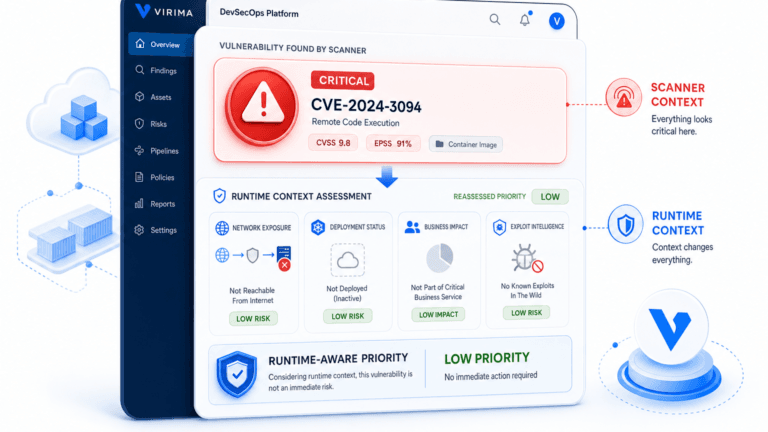
ViVID service mapping gives agents the dependency layer they need: not just which CI is affected, but which services depend on it, which teams own those services, and what the blast radius of any remediation action looks like before it executes. Without this layer, agents act on isolated CI records instead of on a connected picture of how the environment actually works.
3. Missing Ownership and Change History
Change management agents need to know who owns the affected CI before routing an approval. Incident response agents need change history to determine whether a recent modification caused the current issue. Service request agents need accurate team assignments to route fulfillment tasks to the right group.
All of this requires ownership and history metadata at the CI level — metadata that most CMDB implementations do not maintain consistently, because it was never populated by authoritative discovery in the first place. The answer is not a better agent. The answer is a CMDB built from discovery-sourced data with full attribute source tracking and lifecycle tracking from the start.
What Trusted Runtime Truth Looks Like for ITSM Agents
Trusted Runtime Truth is the set of properties that make configuration data reliable enough for autonomous action. It is not a product category — it is a standard that the data layer must meet before agents operate against it.
The standard covers five dimensions:
- Freshness. The record reflects the current state of the CI, validated by the most recent authoritative discovery scan.
- Source Tracking. Every attribute carries a source label. When two sources disagree, a defined reconciliation rule determines which one wins.
- Dependency context. The CI record connects to live service maps showing upstream and downstream relationships, ownership, and change impact.
- Governance metadata. The record carries policy constraints — who can act on it, under what approval conditions, and what audit trail the action produces.
- Explainability. Any agent action taken against the CI can be traced back to the specific data points that informed the decision.
An ITSM agent operating against data that meets this standard makes decisions that IT leaders can verify, audit, and defend. An agent operating against standard CMDB records makes decisions that are fast but often opaque.
How Virima Provides the Foundation for AI-Driven ITSM
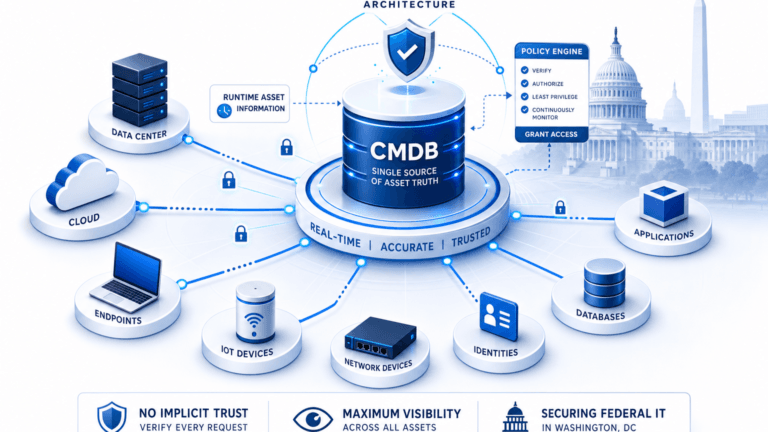
Virima delivers the Trusted Runtime Truth layer that ITSM agents need before they act. Multi-source IT discovery runs across the full on-prem, cloud, and hybrid estate, populating a reconciled CMDB with attribute-level authority and full source traceability. CMDB health scoring surfaces staleness and gaps before agents encounter them at decision time.
ViVID service maps connect every CI to the services it supports, keeping the dependency picture current as infrastructure changes. IT asset management records carry verified ownership, contract status, and end-of-life data — the context that change management and request fulfillment agents need to route and act correctly. Governance metadata is built into every CI record: role-based access, change approval workflows, and audit trails that make agent decisions explainable after the fact.
Virima integrates directly with ServiceNow and every major ITSM platform, feeding the configuration data layer your agents act on with live, governed runtime truth — without disrupting the workflows your teams already operate in. The EMA report on CMDB maturity and ServiceOps readiness documents exactly why this foundation matters before agents scale.
What to Check Before You Deploy ITSM Agents
Before an agent goes into production against your ITSM workflows, the following questions deserve direct answers:
- Is your CMDB populated from authoritative multi-source discovery, or primarily from imports and manual entry?
- Do your CI records carry source source tracking for individual attributes?
- Does your CMDB include live dependency context, or static diagrams that AI in it service management were itsm ai agents accurate at the time they were drawn?
- Does every CI record include verified ownership with an audit trail?
If the answer to any of these is uncertain, the agent will encounter that uncertainty at decision time — and act on it anyway. The right path is not to delay AI adoption. It is to build the CMDB correctly so the agents you deploy have data they can actually rely on.
Ready to see what Trusted Runtime Truth looks like for your ITSM environment? Schedule a Demo today!