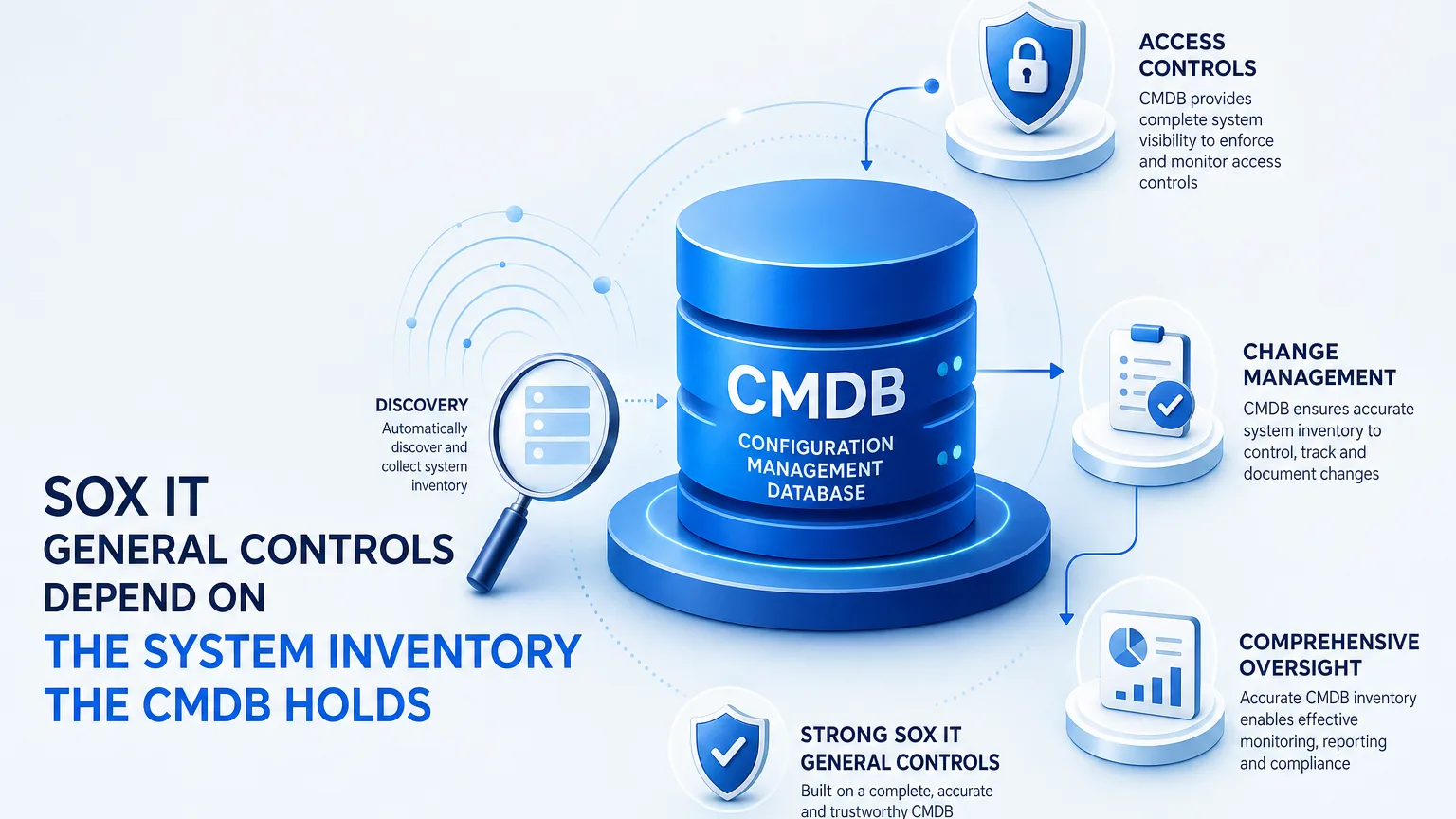
SOX IT General Controls Depend on the System Inventory the CMDB Holds

Access reviews and change tickets look clean until the auditor asks a simple question: which systems sit in scope for financial reporting, and how do you know that list is complete?
Most SOX programs treat SOX IT general controls (ITGC) as a testing problem. Sample user access. Sample change tickets. Sign off. The weaker link is earlier. Access and change controls only test the population they are given. That population comes from the authoritative system inventory. When that inventory lives in a maintained CMDB, fed by discovery rather than last year’s binder, ITGC sampling has a defensible base. When it does not, every clean sample still sits on incomplete scope.
What ITGC Must Prove for SOX
Under the Sarbanes-Oxley Act, management must maintain internal control over financial reporting. Auditors evaluate that control environment under PCAOB AS 2201, which treats IT general controls as part of the foundation for automated application controls and financial data integrity.
In practice, ITGC work clusters around a few domains:
- Access controls (who can log in, elevate, or administer systems that affect financial data)
- Change management (how code, config, and infrastructure changes are requested, approved, tested, and released)
- Computer operations (jobs, backups, batch processing that touch reporting)
- Program development (when new systems enter the financial stack)
Access and change get the bulk of sample testing. Both assume you already know which systems matter.
That list is a CMDB problem before it is a sampling problem.
How a CMDB Feeds ITGC
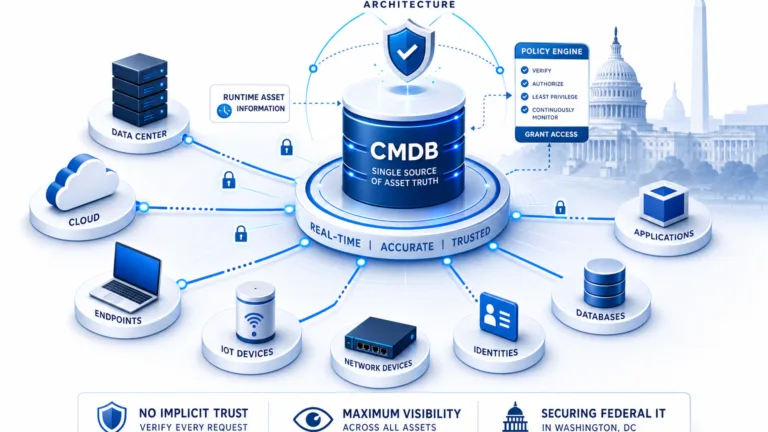
A configuration management database holds configuration items (CIs), relationships, owners, environments, and lifecycle state. For SOX ITGC, those records feed the control program in four direct ways.
1. In-scope system population
Access testing and change testing need a complete list of systems that create, process, store, or report financial data, plus supporting infrastructure on that path. The CMDB is where that population should live as tagged CIs, not as a one-time spreadsheet export.
2. Access review scope
User access reviews and privileged access workflows answer who has what on which system. The CMDB answers which systems belong in the review. Owner fields on CIs map certifiers to the right assets. Missing CIs mean missing reviews.
3. Change impact and change population
Change ITGC samples production changes on in-scope systems. CI relationships show what a change touches downstream. Without that map, impact analysis stays tied to ticket text instead of dependency truth.
4. Evidence that scope stayed current
When systems are introduced, changed, or retired, CMDB lifecycle data supports why something entered or left the SOX-relevant set. Decommissioned CIs that still appear in production discovery are a signal the population is wrong.
GRC platforms still hold control matrices, test plans, and issues. IGA and PAM still enforce and certify identities. ITSM change modules still run the change workflow. Auditors still design samples. Those layers consume the system list. The CMDB is where that list should be authoritative.
The Inventory Problem Auditors Keep Hitting
ITGC testing is only as strong as the population you test against.
Teams often build that population from:
- Last year’s walkthrough binder
- A CMDB that has not been refreshed from discovery
- Cloud console exports that miss linked on-prem hops
- App owner spreadsheets that stop at “known” systems
Shadow instances, forgotten DR peers, side databases, and temporary integrations stay off the list. Privileged access on those systems never enters the sample. Changes on those systems never enter the change control population.
The control design can be sound. The scope is still wrong.
That gap sits in inventory accuracy and CMDB freshness first.
Why Access Controls Need CMDB-Backed Inventory
User access reviews (UARs) and privileged access management (PAM) workflows answer: who has what on which system?
They do not answer: which systems should be in the review at all?
A review that covers the ERP, the consolidation tool, and the main data warehouse still fails if a reporting extract server, a middleware hop, or a cloud identity path into the same data is missing from scope.
Common failure patterns:
- Orphan systems with admin accounts nobody reviews
- Shared service accounts tied to decommissioned hosts that still exist in production
- Environment drift (dev/test clones of finance apps with production-like data and weak access discipline)
- Identity sprawl across directories where the app list IAM uses is not the list GRC uses
Access tooling improves certification quality on systems already in scope. The CMDB is what keeps scope complete: every CI that can store, process, transmit, or transform data used in financial reporting, with ownership and environment tags auditors can follow.
Why Change Controls Need the Same CMDB Record
Change management ITGC testing samples changes against in-scope production systems. The control story covers request, approval, segregation of duties, testing evidence, and deployment.
Auditors still ask:
- How do you know this change hit an in-scope system?
- How do you know related systems were considered for impact?
- How do you know emergency changes did not bypass the same population rules?
If the CMDB cannot show what the system is, what it connects to, and who owns it, impact analysis becomes a narrative exercise.
Incomplete inventory shows up as:
- Changes executed on systems never tagged as SOX-relevant
- Partial impact lists that miss downstream reporting paths
- Post-implementation reviews that cannot reconcile “what changed” to “what exists”
Change process maturity does not fix a population that omits half the stack. Relationship-rich CMDB data is what links the change ticket to the systems ITGC cares about.
What Incomplete Scope Costs the SOX Cycle
SOX programs burn months on evidence packs. The expensive moment is when testing finds exceptions that should have been caught in population design, not only sample errors.
Consequences compound:
- Rework: expand scope mid-cycle, re-pull samples, re-interview owners
- Opinion risk: ITGC deficiencies can cascade into reliance on application controls
- Operating drag: freeze windows, manual workarounds, and audit fatigue for the same gaps next year
- False comfort: green dashboards on access and change while unlisted systems stay dark
Hybrid estates make this worse. Finance data moves across on-prem ERP, cloud analytics, integration platforms, and identity providers. A static inventory from a prior fiscal year does not track that motion.
Inventory hygiene is part of whether ITGC testing is representative.
Inventory First, Then Access and Change Samples
A workable order of operations looks like this.
1. Define SOX-relevant system criteria
Cover systems that create, process, store, or report financial data, plus supporting infrastructure that can alter integrity or availability of that path.
2. Build the population from discovery, not memory
Use scheduled discovery across data centers and cloud accounts so configuration items reflect what is running, not what a spreadsheet recalls.
3. Reconcile into one authoritative CMDB record
Merge multi-source signals into a single CI where possible. Resolve duplicates. Attach owners, environment, and business service context.
4. Tag and maintain in-scope flags
SOX relevance should be an attribute on the CI, reviewed when systems are introduced, changed, or retired, not only at audit kickoff.
5. Feed access and change processes from that list
Access review scopes, privileged account inventories, and change impact checks should pull from the same CMDB population GRC and internal audit use.
6. Then sample and test
Only after the population is defensible do UAR samples and change samples represent the control environment you claim to test.
If discovery, CMDB reconciliation, and in-scope tagging are skipped, sampling still runs against an incomplete population. Exceptions show up as “system not in scope” and “owner unknown” after evidence collection has already started.
Discovery-Sourced CMDB Data for Access and Change Populations
Access and change ITGC improve when the CMDB stays aligned to runtime systems. That alignment comes from discovery into CI records, relationship maps, ownership, and lifecycle state, then handoff into the tools that run reviews and changes.
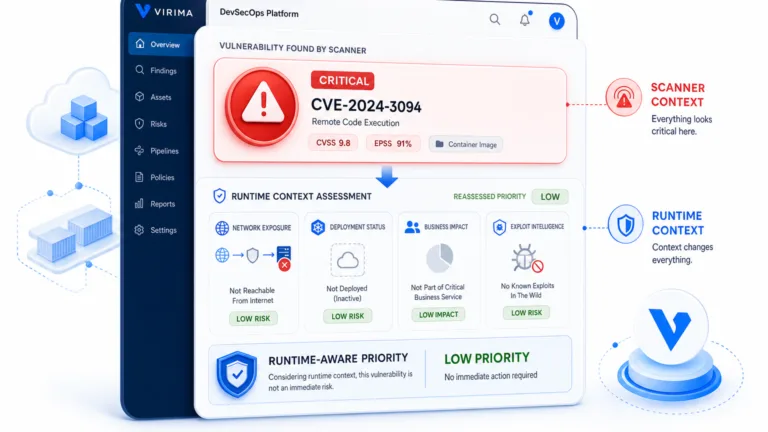
Virima supplies discovery-sourced configuration data into the CMDB layer: agent and agentless discovery, cloud and network coverage, CI relationships, health signals, and service maps once service definitions are provided.
For teams under SOX pressure, that CMDB feed supports ITGC populations in concrete ways:
- Authoritative inventory of hosts, apps, and infrastructure that access and change scopes can reference
- Relationship context so change impact starts from CI dependencies, not a flat asset list
- Ownership and lifecycle visibility so reviews and decommissions stay tied to real CIs
- Integration paths into common ITSM and CMDB platforms (ServiceNow, Jira Service Management, Ivanti, HaloITSM, Xurrent, and Hornbill) so the same inventory can feed operational workflows. Full list: Virima integrations
Discovery runs on a schedule. It is not continuous event-stream sync. The output is a maintained, explainable system inventory. GRC matrices, IGA/PAM certifications, ITSM change tickets, and auditor samples still run in their own systems. They draw stronger conclusions when the CMDB population they inherit matches what is running.
When findings keep tracing to systems missing from scope or owners missing from the CI record, the gap sits in how the inventory is built and maintained.
When you want that inventory tied to discovery rather than annual spreadsheet rebuilds, request a demo.
What a Right CMDB Inventory Saves in the ITGC Cycle
A defensible system inventory does not replace control testing. It reduces waste around testing.
Teams typically recover:
- Fewer mid-audit scope expansions when populations match what discovery shows
- Faster access review cycles because system and owner lists are not rebuilt by hand
- Stronger change evidence when impact views start from CI relationships
- Cleaner handoffs between infrastructure, IAM, GRC, and external audit on one shared list
- Less repeat deficiency language year over year on incomplete IT inventories
The measurable win is audit cycle time and exception volume tied to population errors.
Put CMDB Inventory Before Samples
SOX IT general controls for access and change only hold if the authoritative system inventory is complete enough to define the test population. That inventory belongs in the CMDB, kept current with discovery, tagged for SOX relevance, and reused by access reviews and change impact.
PCAOB-aligned audits will keep pressing on general controls over access and program changes. Those tests inherit whatever gaps sit in the CMDB and discovery layer underneath.
Build inventory from what is running. Reconcile it into one CMDB record set. Tag SOX relevance. Point access reviews and change impact at that list. Then test.
Ready to ground SOX-relevant system lists in discovery-sourced CMDB data? See Trusted Runtime Truth or book a demo.
Frequently Asked Questions
How does a CMDB feed SOX IT general controls?
The CMDB holds the system inventory, relationships, owners, and lifecycle state that define ITGC populations. Access reviews and change samples pull from that list. GRC, IGA/PAM, and ITSM still run the controls; they depend on CMDB completeness for scope.
Why do SOX ITGC access tests fail even when user access reviews look complete?
Reviews can be complete against an incomplete system population. If in-scope hosts, apps, or privileged paths never enter the CMDB inventory, access on those systems is never certified. The failure is often scope design, not only reviewer diligence.
How does change management ITGC depend on the CMDB?
Change samples and impact analysis need a reliable list of production systems and dependencies. CI relationships and ownership in the CMDB connect tickets to in-scope systems and downstream reporting paths.
What should be true about the system inventory before ITGC sampling starts?
The population should reflect discovered runtime systems in the CMDB, not only last year’s binder. CIs need owners, environment tags, and a maintained SOX-relevant flag. Access and change processes should draw from that same list.
Where does discovery fit in SOX ITGC readiness?
Discovery keeps CMDB configuration items aligned to what is running across data centers and cloud. That refreshed inventory is what access scopes and change impact use. Without it, ITGC populations drift from the live estate.