Software Asset Management vs. Hardware Asset Management

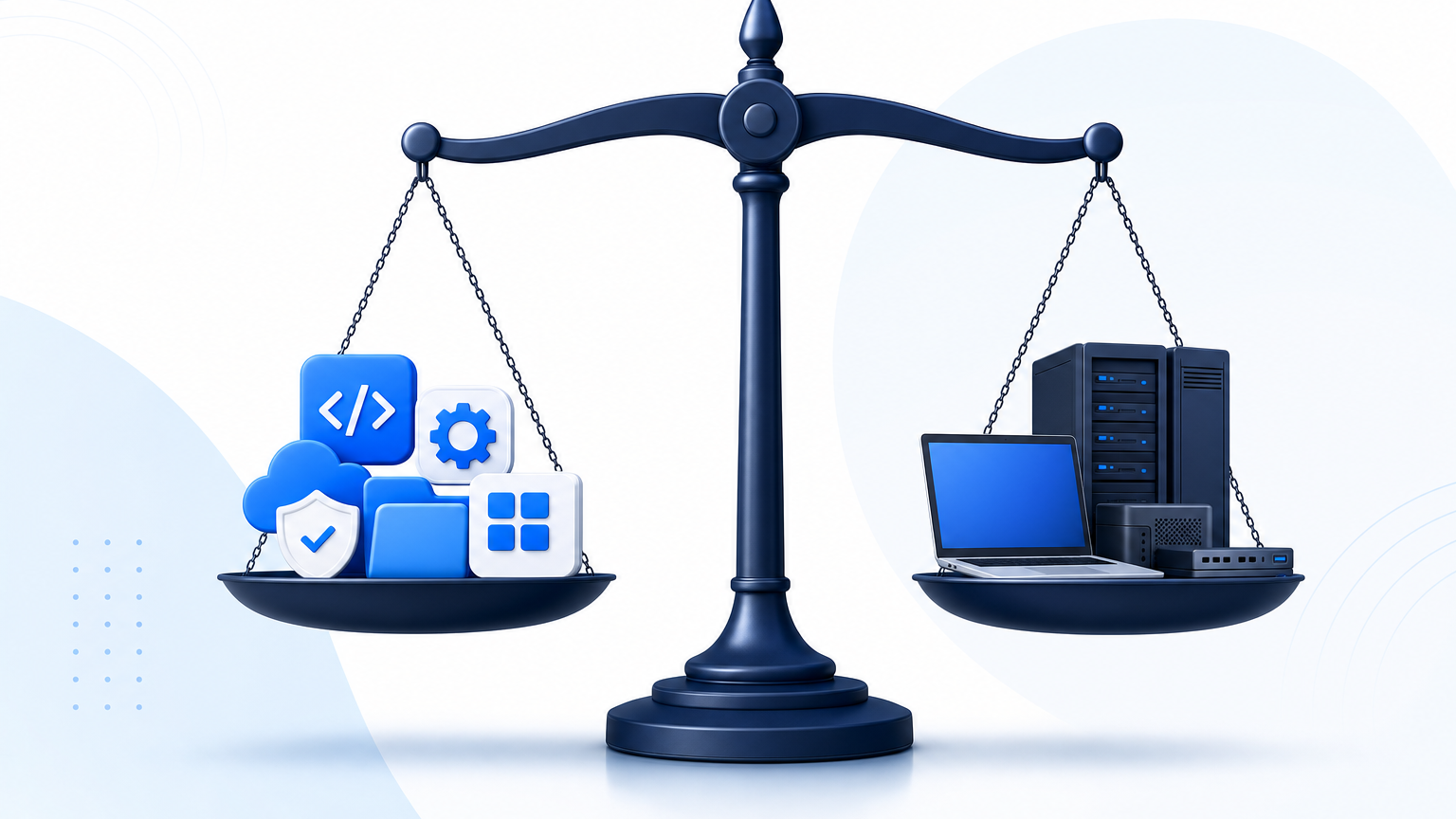
An audit notice arrives, and one team can list every license, install, and device across the environment within the hour. Another team has a contract for 500 software seats but cannot say how many copies are installed, who’s using them, or on which device, while a storage closet holds laptops nobody has logged into for months. That gap costs money twice: once for licenses purchased but never used, and again in audit fines for installs nobody tracked. Software asset management tracks installs, entitlements, and contracts to control that license position and cost. Hardware asset management tracks physical devices from purchase to disposal, and IT asset management (ITAM) combines both disciplines in one practice.
In Flexera’s 2026 State of ITAM survey, 48% of organizations were audited in the past year, and 78% of ITAM teams named an accurate software inventory their top priority. This guide covers definitions, a side-by-side comparison, the lifecycle stages, a four-step software asset management process, SaaS considerations, ownership, and audit preparation.
What is software asset management? SAM vs HAM defined
Software asset management (SAM)
Flexera describes SAM as an initiative that helps organizations maximize the value of their software investments, governing and automating the software lifecycle from acquisition to retirement. In Virima’s ITAM guide, SAM covers licenses: what is owned versus what is deployed.
Hardware asset management (HAM)
Flexera describes HAM as discovering, inventorying, and managing hardware assets to keep physical IT equipment performing efficiently. The hardware asset management guide follows each device through five stages: specify, acquire, deploy, service, and retire.
IT asset management (ITAM)
The ITAM guide defines it as the set of business processes that govern the full lifecycle of every hardware, software, and cloud asset an organization owns.
SAM and HAM are two disciplines inside ITAM. Virima’s post on software license management places license management inside SAM, and SAM inside ITAM.
Side-by-side comparison of SAM and HAM
The table compares the two disciplines across six dimensions, from what each one tracks to how an asset retires.
| Dimension | Software asset management | Hardware asset management |
|---|---|---|
| What it tracks | Installs, entitlements, usage, and contracts | Servers, laptops, network equipment, and mobile devices |
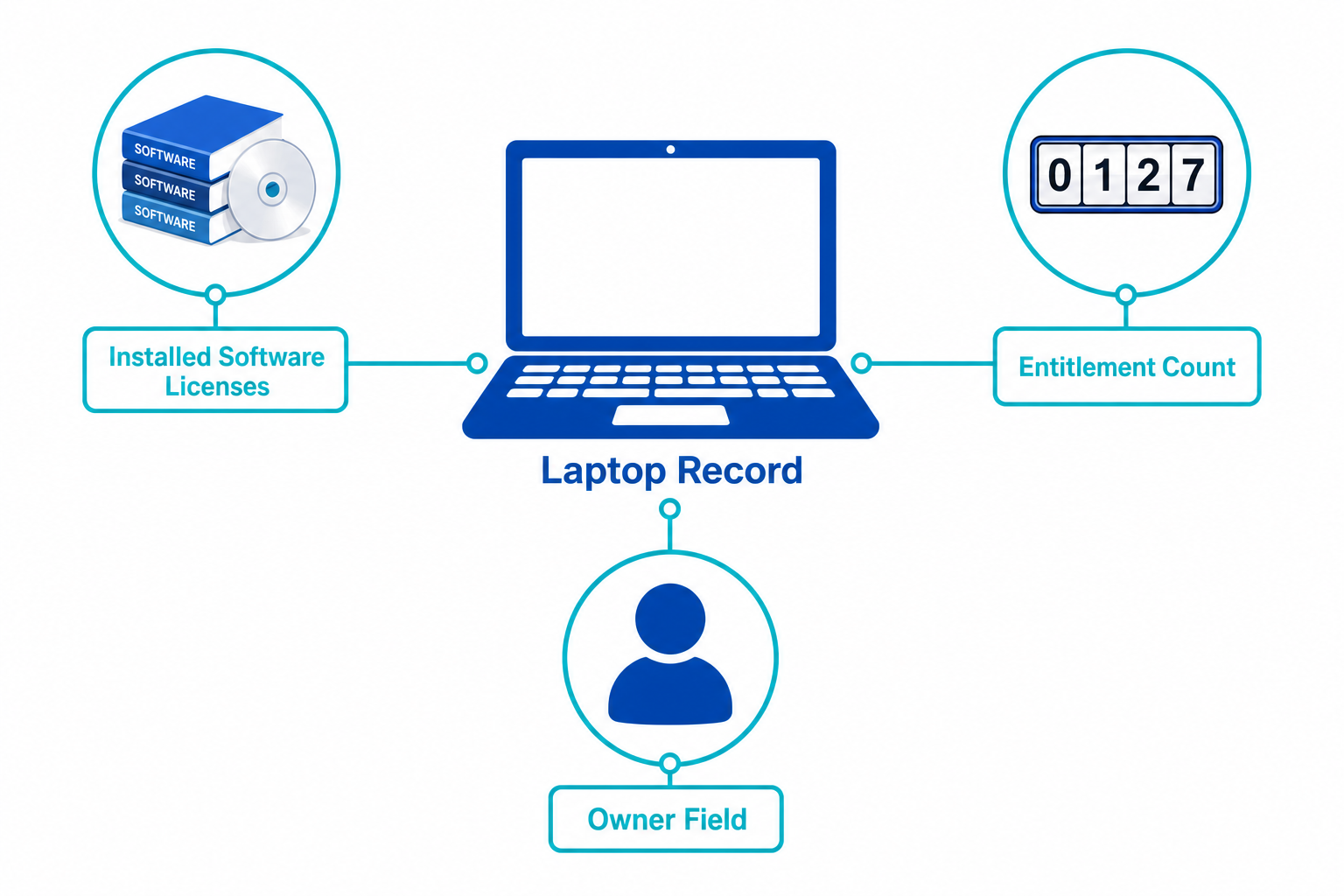
| Key records | License entitlements against installs, by device and owner | Model, serial number, location, owner, and warranty status |
| Lifecycle | Acquire, deploy, monitor usage, retire, and reclaim licenses | Specify, acquire, deploy, service, and retire |
| Main cost question | Which licenses are owned, used, and unused | Which devices are in service, underused, or due for replacement |
| Main risk | License position that differs from what is deployed | Untracked or unsupported devices and unsafe disposal |
| Retirement step | Reclaim the license for reuse | Erase data, then return, sell, or donate the device |
Hardware assets carry the software that creates entitlement questions, so the two disciplines share one inventory. A device record and the licenses installed on it belong in the same system.
Each discipline catches a different kind of problem early. HAM records make, model, serial number, warranty status, location, and assigned user, so lapsing warranties and end-of-life hardware surface ahead of time. SAM compares what the organization owns with what is deployed, and the ITAM guide notes that under-licensing creates compliance exposure the moment an audit happens.
Reliable reconciliation depends on the deployment side coming from discovery. A manual count of installed software ages quickly, and the comparison inherits that age.
How ITAM works: six stages both disciplines follow
Virima’s ITAM guide describes six stages that apply to hardware and software alike.
- Request and procurement: a need is identified, and an asset is acquired to meet it.
- Discovery and registration: an asset enters the record after a validation check. Automated discovery is more reliable than manual entry, and the guide advises a validation step so stale or duplicate entries meet a rule or a human review.
- Assignment and classification: owner, cost center, and criticality are set, so the asset has an accountable owner from day one.
- Maintenance and lifecycle tracking: warranty status, patch level, and upcoming end of life are flagged in advance.
- Reconciliation: the record is checked against physical and deployed reality, which catches an asset that was moved, decommissioned, or replaced without the record updating.
- Retirement and disposition: the asset is decommissioned, which triggers separate obligations for data destruction and disposal.
For SAM, reconciliation compares entitlements with installs. For HAM, it compares devices with the asset register.
What is the difference between SAM and HAM?
SAM tracks software installs, entitlements, and contracts to control license position and cost. HAM tracks physical devices from purchase to disposal, including warranty and location. Both sit inside ITAM and share one inventory.
The hardware lifecycle in five stages
The hardware asset management guide divides a device’s life into five stages.
- Specify: plan hardware based on business demand and technical needs, then set the budget and the acquisition approach.
- Acquire: turn priorities into a hardware plan and budget, weighing options such as leasing or upgrading against buying outright.
- Deploy: record the device as a configuration item, assign it to users, and bring it into production through change management.
- Service: handle planned and unplanned maintenance, upgrades, patches, and depreciation tracking.
- Retire: decommission the device, erase company data, dispose of it by returning, selling, or donating it, and update the records.
Retirement can be triggered by an employee departure, a security risk, or an audit concern. Decommissioning follows your change management process, and the asset’s status is updated in your ITSM system or hardware asset register. Confirm that all company data is erased before disposal, using specialized tools where needed.
The SAM process: discover, normalize, reconcile, optimize
The process runs in four steps, and a named owner maintains the output of each one.
- Discover: find installed software, versions, and usage data on a schedule. Virima IT Discovery lists installed versions, usage data, and license counts as the software footprint. The output is an inventory by device.
- Normalize: give each product one name and version across sources, so entitlements and installs can be compared. Virima normalizes OS and software titles so vendor support status can join discovery records. The output is a normalized product list.
- Reconcile: compare entitlements with installs, by device and owner. Virima’s ITAM features track license entitlements against actual software installs, down to the device and its owner. This comparison is license reconciliation, and its output is a report of gaps and surplus licenses.
- Optimize: reclaim unused licenses and check for reusable ones before buying more. The Windows Discovery Agent records software usage for metering reports that help reclaim underutilized licenses. Flexera’s 2026 survey found that license reuse delivered measurable savings for 43% of organizations.
Run the cycle on a schedule that matches how often your estate changes. Virima’s ITAM page describes the entitlement comparison as running on high-frequency discovery cycles.
Optimization is where software asset management spends most of its effort. In Flexera’s 2026 survey, optimizing software spend is the top SAM priority, ahead of all others by more than 19 percentage points. Nearly one-third of total ITAM time goes to software optimization. The share of respondents reporting increased wasted spend in the past year was 59% for AI software and 44% for public cloud software.
See how Virima reconciles entitlements against installs across your entire software estate before your next audit lands.
SaaS management considerations
SaaS subscriptions are bought and renewed outside the install path, so tracking them draws on different data sources. Flexera’s SaaS discovery methods page lists five:
- Single sign-on platforms: they reveal known applications and user login activity.
- API connectors: they integrate with vendor portals for subscription and user assignment data.
- Financial records: keyword searches in spend data, such as expense reports, uncover shadow SaaS.
- Cloud access security brokers: they analyze network traffic.
- Browser extensions: they track SaaS usage in the browser, and Flexera describes them as the most complete view.
In Flexera’s 2026 survey of 512 professionals, SaaS visibility rose from 50% to 66%. In the same survey, 43% of respondents reported increased wasted spend on SaaS in the past year. More organizations are also negotiating SaaS contract terms, up 14 percentage points from 2025.
How does SaaS visibility compare to on-premises software visibility?
Visibility varies sharply by category: on-premises software reaches 78% visibility, cloud instances 74%, SaaS 66%, and cloud licenses or BYOL just 43%, per Flexera’s 2026 survey. The categories hardest to track are often the ones growing fastest.
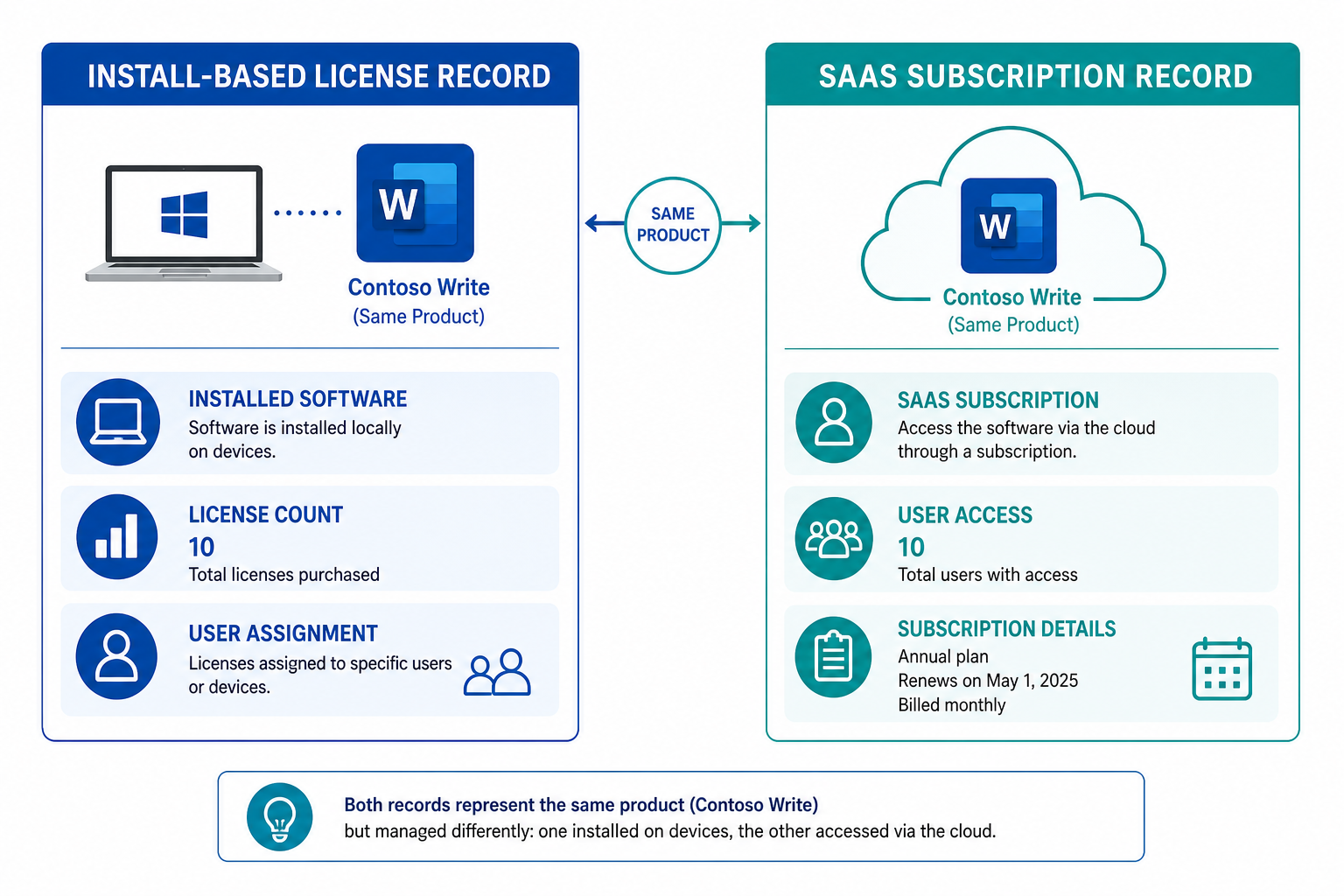
When you evaluate a tool, ask which of the five methods it supports. Also check whether SaaS records appear beside install-based records for the same product.
Who owns SAM and HAM?
The IT asset manager is the single accountable owner for both disciplines day-to-day; the other four roles below consume or feed that record rather than own it.
- IT asset manager: owns the discipline day-to-day, maintains the record, runs reconciliation, and flags license or warranty risk before it becomes an incident or an audit finding.
- Procurement: controls what enters the record, since purchasing decisions either feed accurate data or create gaps.
- Finance: uses the record for budget planning and depreciation.
- IT operations and service desk: consume asset data during incidents.
- Security: uses the record to scope vulnerability exposure and prioritize patching by asset criticality.
Small IT teams often combine these duties in one generalist role, while enterprises usually spread them across dedicated staff.
Challenges and best practices for SAM and HAM
Shadow IT, including unsanctioned software, personal devices, and unauthorized cloud subscriptions, accumulates where procurement-based tracking has gaps; discovery of what is actually running closes them. Infrastructure sprawl compounds the problem, since on-premises, cloud, and SaaS environments produce data in different formats and on different schedules that have to be combined before anyone sees one picture. Licensing models differ too: some are based on users, others on cores or subscriptions, and poor tracking leads to buying too many or too few licenses, which adds cost or triggers audit fines. Disposal without a documented process leaves data destruction unverified.
Three practices address these gaps directly: link asset records to the service desk, so tagging tickets with the assets involved gives technicians context and shortens investigations; track financial data such as cost, warranty, and contract terms in the same record as configuration and ownership; and set proactive lifecycle alerts that flag end-of-life assets months ahead, turning them into a planning input instead of an outage-time decision. The hardware asset management guide adds nine device-specific practices, from establishing a complete asset inventory to responsible decommissioning and disposal.
How SAM, HAM, and the CMDB fit together
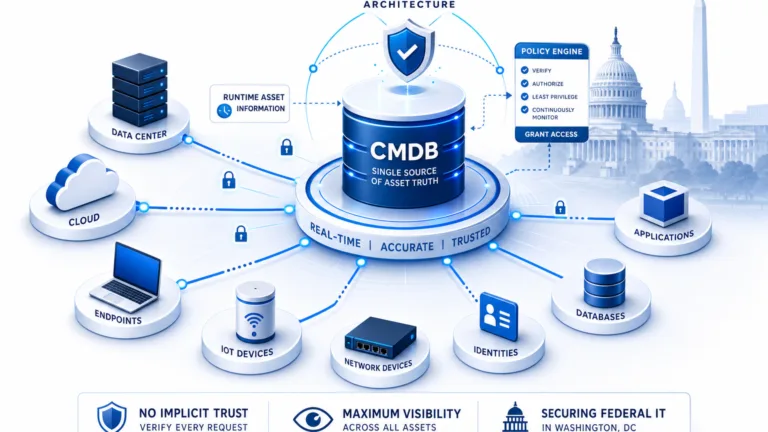
Virima’s ITAM guide describes the overlap between ITAM and the CMDB as intentional. The CMDB records what exists and how it connects, while ITAM tracks ownership, cost, and lifecycle stage for the same assets.
A server’s CMDB entry can hold patch level, uptime, and dependencies besides purchase date, warranty, and owner. In the Virima CMDB, each configuration item carries a source, a freshness timestamp, and an owner.
How do SAM, HAM, and the CMDB work together?
The CMDB records what exists and how each item connects, while SAM and HAM track ownership, cost, entitlements, and lifecycle stage for the same assets. Sharing one discovery source keeps all three views consistent.
Benefits of running SAM and HAM together
The ITAM guide lists five benefits that depend on both disciplines sharing one record.
- Financial: accurate asset data helps reclaim wasted licenses and underused hardware.
- Compliance: audits require evidence, and a record with current entitlement and install data provides it.
- Security: discovery-based tracking catches shadow assets that procurement records miss.
- Cybersecurity prioritization: teams can patch in order of business impact.
- Operational: technicians see ownership, installed software, and warranty status beside an alert, which shortens investigations.
How Virima supports SAM and HAM
Virima covers both disciplines from one discovery source.
- Discovery: more than 140 extendable agentless probes cover network-connected infrastructure, and a lightweight agent for Windows, macOS, and Linux covers devices that leave the network. AWS and Azure API connectors feed the same configuration item record.
- Software: Virima ITAM tracks license entitlements against installs, down to the device and its owner, and the Windows Discovery Agent records software usage for metering reports.
- Hardware: configurable lifecycle statuses run from requested to decommissioned, and warranty status is looked up automatically by serial number for HP, Dell, and Lenovo devices.
- Documents and contracts: support and warranty documentation can be linked to individual assets and bulk purchases, and vendor service level agreements can be managed in the same place.
- Reporting: the reporting engine generates KPI dashboards and metrics from the same records. Integrations are listed on the integrations hub.
Sourcing and audit readiness
Before buying, check the inventory for reusable licenses and buy only the remaining quantity. Keep contracts and entitlements in one place, because Virima ITAM manages vendor service level agreements and contract updates to support operational and financial performance.
Audits are common, and the ITAM guide describes two sides of the same problem: under-licensing creates audit exposure, and over-licensing wastes budget. Both stem from entitlement data that differs from deployment. In Flexera’s 2026 survey, 44% of organizations spent more than $1,000,000 on software vendor audits over the past three years, and Microsoft conducted audits for 64% of surveyed organizations.
Keep these records ready for an audit response:
- Entitlements: purchase records and license terms for each product.
- Installs: install records by device and owner.
- Usage: usage data that shows which installs are active.
- Contracts: vendor agreements and renewal dates.
Virima ITAM supplies usage metrics and spend data to support a software audit.
Start with one business unit before you scale
Start with one business unit: discover its software, normalize the names, and reconcile entitlements against installs. When you’re ready to run that comparison on your own assets, schedule a demo to see how Virima surfaces license position and hardware status in one place.
Ready to see your own environment’s license position and hardware status from one discovery source? Virima connects entitlements, installs, and device lifecycle in a single record.
Frequently asked questions
Do I need SAM if I have ITAM?
ITAM is the umbrella discipline, and SAM is the part that reconciles entitlements with installs. An ITAM program that skips that step leaves license position unmeasured, so SAM processes belong inside ITAM.
How does Virima reconcile software entitlements against installs?
Virima compares owned license entitlements against actual software installs by device and owner, on high-frequency discovery cycles, producing a report of under-licensed gaps and reclaimable surplus licenses.
How is SaaS tracked in software asset management?
SaaS is tracked through single sign-on platforms, API connectors to vendor portals, financial records such as expense reports, cloud access security brokers, and browser extensions. Flexera lists these five discovery methods.
What is the difference between SAM and HAM?
SAM tracks software installs, entitlements, and contracts, while HAM tracks physical devices from purchase to disposal. Both sit inside ITAM and share one inventory, so a device record links to the licenses installed on it.
Does Virima track software licenses and hardware devices in one system?
Yes. Virima tracks license entitlements against installs by device and owner, and runs hardware through configurable lifecycle statuses from requested to decommissioned, from one discovery source and one CMDB record.