What Is a Single Pane of Glass for IT? And Why Most Tools Fall Short

What “Single Pane of Glass” Actually Means in IT
The term originated in telecommunications network operations, where engineers needed a single interface to monitor complex, multi-vendor network infrastructure. Bringing every signal into one view reduced the time operators spent context-switching across consoles.
In IT operations, the concept carried over as environments grew more complex. As organizations added cloud workloads alongside on-premises infrastructure, layered SaaS tools on top of legacy systems, and pushed change velocity higher, the number of management consoles multiplied. By the time a mid-size enterprise finishes onboarding its standard toolset, IT teams routinely navigate 15 or more separate interfaces before they can answer a single incident-related question.
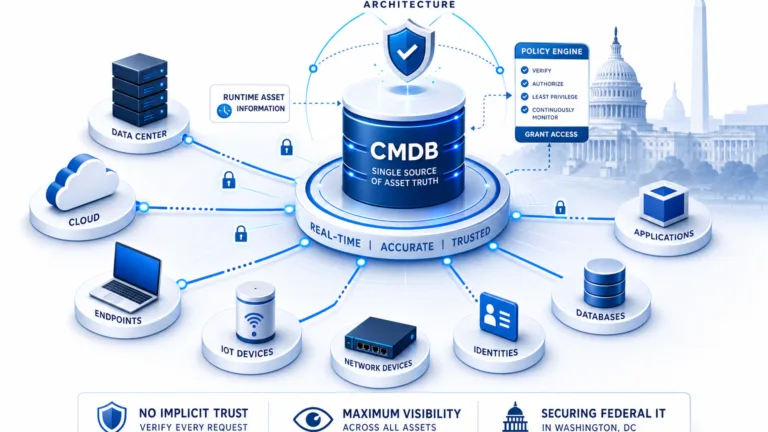
A single pane of glass for IT is the effort to change that: one unified view of infrastructure health, asset inventory, service dependencies, change events, and operational alerts, with enough context to act rather than just observe.
What is a single pane of glass in IT?
A single pane of glass for IT is a unified management interface that consolidates visibility across infrastructure, assets, services, and operational events into one view. The goal is to reduce tool-switching and give IT teams enough context to triage incidents, approve changes, and monitor health without jumping between separate systems.
What IT Teams Actually Want From a Single View
When IT directors talk about wanting a single pane of glass, the underlying requests are usually more specific than the phrase suggests. They want to know:
- Which assets are in the environment right now, not last quarter
- How those assets connect to each other and to business services
- What changed recently, and whether those changes correlate with current alerts
- Who owns each service, and what will break if a specific configuration item goes down
That last question, blast radius, is where most single pane of glass tools fail completely. Displaying metrics from multiple sources in one UI is a display problem. Understanding impact across a dependency chain is a data problem. The two are not the same, and solving one does not solve the other.
Why Most Single Pane of Glass Tools Fall Short
There are four specific failure modes that explain why so many SPOG implementations disappoint.
The data is stale
Most single pane of glass dashboards pull from a CMDB that was last verified weeks or months ago. According to Gartner, CMDB inaccuracy is one of the top barriers to effective IT operations, with many organizations finding a significant portion of their configuration item records out of date at any given time. A unified view built on top of stale data centralizes the problem rather than solving it.
The context is missing
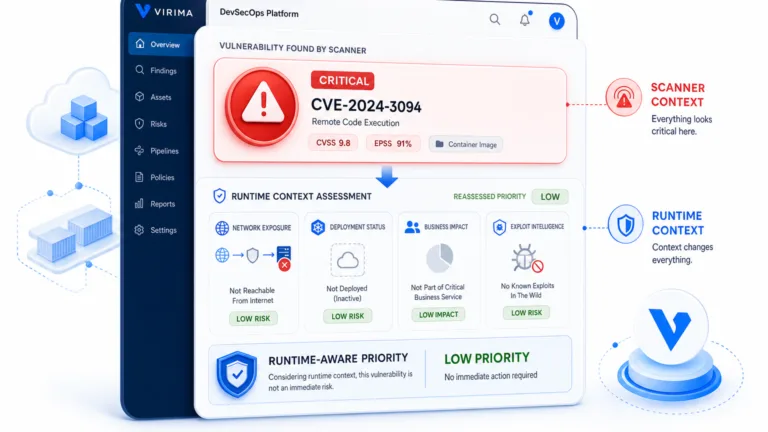
Knowing that a server has high CPU is not the same as knowing it hosts the payment processing service, was changed two days ago, and has three downstream dependencies that will fail if it goes down. Most SPOG tools show the metric. Almost none show the dependency context that makes the metric actionable.
The data sources do not agree
When an IP address management system, a cloud provider inventory, and a CMDB each describe the same asset differently, a unified dashboard has to resolve the conflict or pick one source and silently discard the others. Most tools do the latter.
The view is read-only
A display layer that aggregates data from other systems does not change those systems. If a change is made in the field, the service map does not update. If a CI is decommissioned, it stays in the dashboard until someone manually removes it. The glass stays current only for as long as the underlying data does, and in most environments, that is not long.
The Root Problem Is the Data Layer, Not the Display Layer
Here is the insight that most single pane of glass discussions miss: the interface is not the problem. The problem is what sits behind it.
A single pane of glass is only as accurate as the data it draws from. If an organization’s CMDB is populated through manual updates, spreadsheet imports, and infrequent discovery scans, the unified view reflects that cadence. Assets decommissioned last month still appear. Cloud instances spun up last week are missing. Service dependencies mapped 18 months ago no longer reflect how traffic actually flows.
What IT teams actually need is a data layer that reflects what exists in the environment right now, every CI, every relationship, every ownership record, updated through high-frequency discovery cycles rather than periodic manual effort.
This is the difference between a single pane of glass built on top of stale records and one built on discovery-sourced runtime truth.
Why do single pane of glass IT tools fail?
Most single pane of glass IT tools fail because they fix the display layer without fixing the data layer. They aggregate metrics from multiple sources, but if the underlying CMDB is stale or manually maintained, the unified view reflects those inaccuracies. Real IT visibility requires discovery-sourced, current CI data as the foundation, not just a better dashboard.
What Real Single Pane of Glass IT Visibility Requires
For a single pane of glass to work in practice, the data foundation has to meet four requirements.
- Authoritative asset inventory: every CI in the environment discovered and tracked through automated methods, not populated manually or imported from a spreadsheet that is already 60 days old.
- Relationship mapping: assets do not exist in isolation. A service depends on applications, which depend on servers, which depend on network devices and storage. Any visibility tool that does not map those relationships cannot answer the question IT teams most need answered: what will break, and what does that affect?
- Change context: every alert is more interpretable when you know what changed recently. The single pane of glass has to surface recent changes alongside current health data, not as two separate views, but in the same context.
- Ownership and policy awareness: which team owns this service? Which change policy applies to this CI? Which vulnerability affects which asset? Without this layer, the unified view tells you something is wrong without telling you who needs to fix it or how.
Virima delivers all four through discovery-sourced Trusted Runtime Truth, live, explainable, and governed across every layer of the IT estate. See how it works: trusted-runtime-truth
How Virima Powers Single Pane of Glass IT Visibility
Virima approaches single pane of glass from the data layer up, not the display layer down.
Virima’s IT discovery uses agentless (WMI, SSH, SNMP), agent-based, and API-based methods to populate and maintain an accurate CMDB without manual updates. Every scan adds to an authoritative record of what exists: hardware, software, cloud instances, containers, and network devices, with ownership, location, and lifecycle data attached.
On top of that foundation, ViVID™ service maps visualize the dependency relationships between CIs and the business services they support. When an incident fires, the blast radius is visible before the first responder opens a ticket. When a change is proposed, the impact path is traceable before the change advisory board meets.
Virima ITAM extends the same discovery-sourced accuracy to hardware lifecycle, software license, and contract management, giving finance and procurement the same reliable data that IT operations depends on.
All of this feeds into Virima ITOM, which connects discovery, CMDB, service maps, and ITSM integrations into the unified operations view IT teams have been looking for.
Virima integrates with the ITSM platforms your team already uses: ServiceNow, Jira Service Management, Ivanti, Halo, Xurrent, Hornbill, and TeamDynamix. The single pane of glass is not a separate console. It extends the tools already in your environment with authoritative, discovery-sourced data.
How does Virima support single pane of glass IT visibility?
Virima builds a single pane of glass IT visibility from the data layer up. It uses agentless and agent-based discovery to maintain an accurate CMDB, then maps service dependencies through ViVID™ service maps. The result is a discovery-sourced view of every asset, relationship, change event, and blast radius, updated through high-frequency discovery cycles.
Single Pane of Glass in Agentic IT Environments
The demand for accurate single pane of glass visibility has sharpened as organizations begin deploying AI agents to automate IT operations tasks. An AI agent diagnosing an incident, recommending a change, or triggering a remediation workflow needs the same thing a human engineer needs: accurate, current, explainable data about what exists, how it is connected, and what the impact of an action will be.
A display-layer SPOG does not meet that requirement. An AI agent querying a dashboard that aggregates stale CMDB data makes decisions based on outdated asset records. It may identify the wrong root cause, recommend the wrong fix, or act on a dependency that no longer exists.
According to a 2025 Gartner report on agentic AI, by 2028 approximately 15 percent of day-to-day IT decisions will be made autonomously by AI agents without human initiation. For those decisions to be safe, the data foundation has to be authoritative. Discovery-sourced runtime truth is not a convenience for agentic IT. It is the precondition for operating safely at that speed.
Schedule a demo to see how Virima’s Trusted Runtime Truth layer supports agentic IT operations with live, governed, explainable data: Schedule a Demo
From Dashboard Promise to Discovery-Sourced Reality
The single pane of glass for IT has been promised for a long time. Most implementations delivered a better interface without delivering better data, and the interface is not where the value is.
The question for IT directors and CIOs evaluating visibility tools is not how many sources a dashboard can aggregate. It is how accurate the data behind the glass is, how often it is updated, and whether it shows not just what exists but what depends on what, what changed, and what will break.
Those are the questions discovery-sourced runtime truth is built to answer.
See Virima in action and find out how we deliver trusted, discovery-sourced IT visibility across your full estate: Schedule a Demo
Frequently Asked Questions
What is the difference between a single pane of glass and a monitoring dashboard?
A monitoring dashboard typically shows performance metrics and alerts for specific systems. A single pane of glass for IT is a broader concept that consolidates visibility across assets, services, changes, and operational events from multiple source systems into one view. The practical difference is context: a monitoring dashboard shows you a metric; a real single pane of glass shows you what that metric means for your services and what to do about it.
Why is single pane of glass IT so difficult to achieve?
The difficulty is almost always the data layer, not the interface. Building one unified view is technically straightforward. Building one that is accurate enough to act on requires every data source to be current, consistent, and complete. Most organizations maintain their CMDBs and asset inventories manually or through infrequent discovery scans, which means the unified view inherits those gaps. Discovery-sourced runtime truth solves this at the foundation.
Does Virima replace existing monitoring or ITSM tools?
Virima does not replace monitoring, observability, or ITSM tools. It provides the discovery-sourced CMDB and service dependency layer that those tools draw context from. When ServiceNow, Jira Service Management, Ivanti, Halo, Xurrent, Hornbill, or TeamDynamix integrates with Virima, it gains accurate CI data, dependency maps, and blast radius context, making the tools you already use more effective.
What is Trusted Runtime Truth and how does it relate to a single pane of glass IT?
Trusted Runtime Truth is Virima’s term for live, explainable, discovery-sourced data that describes your IT environment as it actually exists: what is running, how everything is connected, what changed, and what the impact of any action will be. For a single pane of glass IT, it serves as the data foundation. Any unified view is only as trustworthy as the data behind it, and Trusted Runtime Truth ensures that foundation is authoritative.
Can a single pane of glass IT tools support AI-driven IT operations?
Yes, but only if the underlying data is accurate and current. AI agents making autonomous IT decisions depend on authoritative asset records, service dependency maps, and change history. A display-layer SPOG built on stale CMDB data produces unreliable agent behavior. Discovery-sourced runtime truth provides the governed, explainable data layer that agentic IT operations require.