Top ServiceNow competitors and alternatives (2026)

If you are weighing ServiceNow competitors in 2026, start with one number. Gartner has estimated that poor data quality costs organizations an average of $12.9 million per year. A stale or incomplete CMDB is exactly that kind of costly bad data. So the real question is not only which platform you license, but which one keeps your configuration data accurate enough to act on.
ServiceNow changed materially in 2025. Its acquisition of Armis added agentless visibility for IoT, OT, and unmanaged devices, a gap the platform had long carried. At Knowledge 2026, ServiceNow expanded its agentic AI workflows and pushed further toward a full enterprise operating system.
The result is a stronger platform that costs more and covers more. For teams deciding whether to expand a ServiceNow investment or look elsewhere, 2026 brings sharper tradeoffs than any prior year. We also compared the top ITSM platforms if you want a wider buyer view.
This guide covers the platforms we evaluate most often as ServiceNow alternatives and complements: Device42, Ivanti Neurons, Jira Service Management, HaloITSM, Freshservice, BMC Helix, ManageEngine ServiceDesk Plus, and Axonius. We also clarify where Virima stands. Virima is not a ServiceNow replacement. It is the discovery-driven runtime truth layer that fills what ServiceNow ITOM licensing leaves out.
| Who this guide is NOT for: If you need a full ServiceNow ITSM replacement covering tickets, change workflows, a self-service portal, and a service catalog, then Freshservice, Jira Service Management, HaloITSM, and BMC Helix are the right place to start. Virima is not an ITSM platform. This guide matters most if you are evaluating the CMDB and IT discovery layer, with or without ServiceNow. |
Already evaluating CMDB accuracy or ITOM cost while keeping ServiceNow? Start with the category view: Trusted Runtime Truth for Agentic IT.
| Your job this quarter | Start here | Primary next step |
|---|---|---|
| Path A: Replace ServiceNow ITSM (tickets, catalog, portal, change workflows) | ITSM shortlist below: Jira Service Management, Freshservice, HaloITSM, BMC Helix, Ivanti Neurons, ManageEngine | Use the ITSM table and competitor write-ups. Virima is not an ITSM platform. |
| Path B: Keep ServiceNow, fix CMDB accuracy, discovery depth, or ITOM Discovery cost | CMDB / discovery / runtime-truth table (next section), then Virima + ServiceNow comparison | Trusted Runtime Truth, then a scoped demo |
| Path C: Non-ServiceNow ITSM plus real discovery and CMDB feed | CMDB / discovery layer table + partner ITSM of record | Review Virima integrations and book a walkthrough |
Decision rule in one line. When the job is a full ServiceNow ITSM swap, shortlist Jira Service Management, Freshservice, HaloITSM, BMC Helix, Ivanti, or ManageEngine by size and budget. When the job is CMDB accuracy, discovery depth, or ITOM cost without ripping ITSM, evaluate a discovery-sourced runtime truth layer such as Virima beside ServiceNow rather than another full platform.
At a Glance: ServiceNow Competitors Compared
| Tool | CMDB | Discovery | SN Integration | Pricing | Best For |
|---|---|---|---|---|---|
| Ivanti Neurons | Modular add-on | Modular add-on | Competing platform | Mid to high | Mid to large enterprises needing modular ITSM |
| Jira SM | Basic only | Via integrations | Limited | Per-user, tiered | Agile and DevOps-driven IT teams |
| HaloITSM | All tiers | All tiers | Competing platform | Low | Small to mid-size teams needing full ITSM |
| Freshservice | Included | Via Device42 | Limited | Per-agent, tiered | Fast-growing IT teams needing quick deployment |
| BMC Helix | Native | Helix Discovery | Competing platform | Enterprise | Large enterprises replacing ServiceNow |
| ManageEngine | Built-in | Basic native | Competing platform | Low | Budget-conscious mid-market |
Table note: The grid above is Path A, full ITSM platform alternatives. Path B and Path C buyers should use the CMDB and discovery layer table next.
CMDB, Discovery, and Runtime Truth Layer Compared
CMDB owners and IT directors who keep ServiceNow for workflows still need an answer on discovery licensing, CI freshness, and dependency maps agents and change boards can trust. This shortlist is the conversion path for that job, not another ITSM bake-off.
| Layer | SN ITOM required? | Discovery posture | ServiceNow relationship | Pricing posture | Best when |
|---|---|---|---|---|---|
| ServiceNow ITOM Discovery | Yes (separate tier) | Native SN discovery and related ITOM modules | Built-in platform path | Enterprise add-on | You already fund full ITOM and have admin capacity to run it |
| Virima | No | Discovery-sourced CMDB and maps that feed ITSM systems of record | Complements ServiceNow ITSM; not an ITSM replacement | Typically far below full ITOM Discovery TCO for mid-market estates | You keep ServiceNow workflows, need CMDB accuracy and maps without ITOM bill shock, or need runtime truth for change and agentic IT |
| Device42 | No | Strong DCIM-leaning discovery and asset inventory | Often paired via integration; also feeds tools such as Freshservice | Mid to high depending on scope | Data center inventory depth is the primary buying driver |
| Axonius | No | Connector-led asset graph across security and IT tools | Complements; not a classic CMDB replacement alone | Enterprise cybersecurity platform pricing | Security asset inventory and control gaps dominate the brief |
Path B TCO strip (decision aid, not a quote). ServiceNow ITOM Discovery is a separate license tier plus implementation and ongoing maintenance. A complementary discovery and CMDB accuracy layer keeps ITSM on ServiceNow while shifting discovery cost and ownership outside that ITOM SKU. Exact dollars depend on CI count, modules, and discounting. Use the strip to decide whether to model ITOM expansion or a Virima-fed CMDB path on a walkthrough. Public list pricing varies by deal; treat vendor quotes as source of truth.
Should you replace ServiceNow or keep it and fix the data layer?
Replace ServiceNow when you need a different ITSM suite for tickets, catalog, and portal economics. Keep ServiceNow and add a discovery-sourced runtime truth layer when workflows stay on ServiceNow but CMDB freshness, maps, and ITOM cost are the blockers. Virima targets that second job.
| Proof and trust (Path B). Ask peers and review sites for ServiceNow plus third-party discovery outcomes before you expand ITOM. On a Virima walkthrough, request a discovery-to-map-to-ServiceNow CI path for your estate class, plus any customer references your account team can share under NDA. Pair that with the Trusted Runtime Truth brief so the category is clear before a demo. |
Why the ServiceNow Landscape Shifted in 2026
The Armis acquisition added connector-based visibility for unmanaged IoT, OT, medical, and network devices. Those are categories ServiceNow ITOM Discovery historically missed. For teams that bought a third-party discovery tool mainly to cover those gaps, the math is now less clear.
Still, breadth is not the same as depth. Agentic AI workflows act on CMDB data, so that data has to be authoritative, explainable, and tied to an owner. Armis puts more devices in the record. A runtime truth layer gives AI agents the governed context to act safely on those records.
At Knowledge 2026, ServiceNow reinforced its agentic story with new automation announcements. For teams already committed to the stack, that strengthens the case to stay. For teams watching total cost of ownership, it raises a fair question: expand the ServiceNow investment, or add a complementary accuracy layer instead?
What Is ServiceNow ITOM Discovery, and What Does It Cost?
ServiceNow ITOM Discovery is the add-on module that populates and maintains the ServiceNow CMDB through network scanning. It finds configuration items (CIs), maps relationships, and feeds the CMDB. A related add-on, Service Mapping, builds dependency maps from that data. If you want the deeper breakdown, see what ServiceNow CMDB discovery actually costs, and how ServiceNow discovery and service mapping differ.
Here is the catch. ITOM Discovery is not part of the base ITSM license. It needs a separate licensing tier, its own implementation cycle, and ongoing maintenance. For many teams, this is where the total cost diverges sharply from the first estimate.
| Industry cost benchmarks from buyer-side analysts and ServiceNow consulting partners put fully loaded ServiceNow deployments with ITOM Discovery and Visibility at roughly $150,000 to $400,000 per year for mid-enterprise organizations. That covers the add-on license, implementation, and maintenance, separate from the base ITSM subscription. |
This gap is the main reason IT teams evaluate third-party discovery platforms. A standalone discovery tool that syncs directly into the ServiceNow CMDB can deliver coverage at a fraction of ITOM cost, without adding another module to run.
Why IT Teams Look for ServiceNow Alternatives
CMDB and ITOM licensing costs
Discovery and service mapping in ServiceNow require ITOM Discovery and Visibility licenses on top of the base ITSM subscription. Each add-on carries its own implementation cycle and maintenance. As noted above, fully loaded deployments with ITOM commonly run $150,000 to $400,000 per year for mid-enterprise teams.
Platform complexity for mid-market teams
ServiceNow serves enterprises with dedicated admins and multi-year rollouts. Mid-market teams often report using less than 30 percent of platform capabilities while paying for all of them.
What is the best ServiceNow CMDB alternative for mid-market IT teams?
Mid-market IT teams need CMDB accuracy and service dependency mapping without ServiceNow ITOM licensing costs. Purpose-built discovery platforms deliver discovery-sourced CI data, relationship maps, and bi-directional ITSM integrations at a fraction of full ITOM pricing, without requiring a platform migration or dedicated admin team.
Vendor lock-in risk
As ServiceNow expands from ITSM into ITOM, SecOps, HR, and now IoT discovery via Armis, teams take on growing dependency on one vendor. Each expansion deepens the commitment to a roadmap and pricing they do not control.
Who Should Consider a ServiceNow Alternative?
Consider a standalone alternative if:
- ITOM licensing costs equal or exceed your base ITSM spend
- CMDB accuracy stays poor despite ServiceNow native tooling
- Your team lacks capacity to manage the full ServiceNow configuration and upgrade cycle
- You are a mid-market organization using fewer than 30 percent of ServiceNow capabilities
Consider a discovery-driven runtime truth layer like Virima if:
- You need accurate CMDB data and discovery coverage without adding another ServiceNow module
- Your AI and automation efforts need governed, explainable data to act safely
- You want CMDB portability across ITSM platforms without locking in a single vendor
If that sounds like your situation, see how Virima delivers runtime truth across discovery, CMDB, and service mapping. Request a demo.
Consider a security-focused tool like Axonius if:
- Your main driver is security asset visibility across unmanaged and IoT devices
- Your team needs a CAASM layer, not a full ITSM workflow platform
Can You Use ServiceNow Without ITOM Licensing?
Yes, and many teams do. The core ITSM platform runs without ITOM, but the CMDB then becomes a manual job. Without ITOM, asset detection, service mapping, and CI relationship tracking fall away. Teams maintain the CMDB by hand or through spreadsheet imports, and that data ages quickly.
The practical fix is simple. Keep ServiceNow for ITSM workflows, and add a third-party IT discovery platform that syncs into the ServiceNow CMDB. This delivers discovery coverage at a fraction of ITOM cost, often with better depth and reconciliation accuracy. For the mechanics, see why a CMDB integration keeps your ITSM data accurate.
Virima’s ServiceNow integration is codeless and uses an extensive library of pre-built blueprints that map directly to ServiceNow tables, including custom objects.
| Virima fills the discovery and CMDB gap without ITOM licensing. First dependency map in under 60 minutes. Request a demo. |
ServiceNow vs. Alternatives: Cost Reference (500 Users)
| Platform | Est. Annual Cost (500 Users) | CMDB and Discovery |
|---|---|---|
| ServiceNow ITSM + ITOM | $150K to $400K | ITOM add-on required; Virima adds discovery and ViVID service mapping without ITOM |
| BMC Helix | $100K to $250K | Helix Discovery included; full enterprise ITSM stack |
| Ivanti Neurons | $60K to $150K | Modular; Virima-powered discovery and ViVID available via OEM partnership |
| Jira Service Management | $25K to $75K | Basic CMDB; advanced discovery and bi-directional CMDB sync via Virima integration |
| Freshservice | $30K to $90K | Included; discovery via Device42 |
| HaloITSM | $20K to $60K | Included in all tiers; Virima integrates with Halo for ViVID service mapping |
| ManageEngine SDP | $15K to $50K | Built-in CMDB; basic discovery |
Cost estimates are based on analyst research and publicly available vendor data. Actual costs vary by contract, region, and configuration.
Top ServiceNow Competitors in 2026
Path A reference. The six write-ups below are full ITSM platform options if you are leaving ServiceNow for tickets, catalog, and portal. If you are on Path B (keep ServiceNow, fix CMDB and discovery), skip to the discovery and CMDB alternatives section and the Virima + ServiceNow comparison.
1. Atlassian Jira Service Management
Ideal for: Agile IT teams, DevOps-driven organizations, and fast-growing businesses already on the Atlassian stack.
Jira Service Management (JSM) connects IT operations with software development. Deep ties to Jira Software, Bitbucket, and Confluence make it a natural pick for teams running both dev and IT on Atlassian. Advanced discovery and CMDB depth come through third-party integrations.
Key strengths: DevOps-native with deep Atlassian integration; transparent per-user pricing; fast deployment. With Virima, you add full IT asset discovery, CMDB sync, and ViVID maps that extend Jira’s native CMDB.
Key limitations: Fewer enterprise ITIL features than ServiceNow or BMC; basic native CMDB depth without add-ons; scaling challenges in highly regulated environments. For a closer look, see our guide to Jira alternatives for IT teams.
2. Ivanti Neurons for ITSM
Ideal for: Mid-size to large enterprises seeking a modular, flexible ITSM platform with lower TCO than ServiceNow.
Ivanti Neurons offers a strong set of ITSM features with a modular design, hyperautomation, and flexible deployment across cloud, on-premises, and hybrid environments.
Key strengths: Modular architecture (start with core, then add ITAM, CMDB, and change management); hyperautomation and self-healing endpoints; a low-code workflow builder. With Virima, you add discovery and recurring scheduled scans that keep the CMDB current, plus ViVID service maps.
Key limitations: Smaller third-party ecosystem than ServiceNow; fewer certified partners globally; a UX that feels less unified across modules.
3. HaloITSM
Ideal for: Small to mid-size organizations seeking full ITIL-aligned ITSM without high cost or complexity.
HaloITSM offers a complete ITIL suite with built-in asset and CMDB management, AI-powered ticket triage, and a customizable self-service portal, all under one price. It deploys in days, not months.
Key strengths: Complete ITIL suite (incident, problem, change, release, service request); built-in CMDB and asset management at every tier; AI-powered triage. With Virima, Halo customers add discovery and ViVID service mapping.
Key limitations: May lack advanced governance for complex enterprises; smaller marketplace; out-of-the-box reporting may need enhancement for enterprise analytics.
4. Freshservice by Freshworks
Ideal for: Fast-growing IT teams that value simplicity, quick deployment, and modern design.
Freshservice is the Freshworks ITSM platform for teams that want modern UX and quick deployment. It includes CMDB and discovery through its Device42 partnership, plus the Freddy AI engine for ticket automation.
Key strengths: Fast time to value (most teams go live within weeks); an intuitive interface; affordable per-agent pricing; Freddy AI for ticket categorization.
Key limitations: CMDB discovery depends on Device42 rather than native tooling; governance and compliance controls are less developed for regulated enterprises; advanced service mapping needs extra tooling.
5. BMC Helix ITSM
Ideal for: Large enterprises seeking AI-powered automation, full ITIL alignment, and hybrid cloud deployment.
BMC Helix is a full-stack enterprise ITSM platform with native discovery, CMDB, and AI automation. It is a direct ServiceNow replacement rather than a complement, and it targets large enterprises that want a complete platform migration.
Key strengths: Full ITSM, CMDB, and native Helix Discovery in one platform; ITIL v4 certified; flexible deployment (SaaS, on-premises, hybrid); lower TCO than ServiceNow at large scale.
Key limitations: A steeper learning curve; a more complex admin console than newer platforms; implementation that often runs 6 to 12 months for full enterprise rollout.
For a detailed breakdown of how Virima compares on CMDB, discovery, and deployment cost, see Virima vs BMC Helix.
6. ManageEngine ServiceDesk Plus
Ideal for: Mid-sized organizations seeking an affordable, all-in-one ITSM and ITAM solution.
ManageEngine ServiceDesk Plus is one of the most established mid-market ServiceNow alternatives. It offers a complete ITSM platform with built-in CMDB, asset management, and workflow automation at a much lower cost than ServiceNow.
Key strengths: A unified ITSM and ITAM platform; built-in CMDB with relationship tracking; affordable licensing with on-prem or cloud deployment. With Virima, you add high-frequency discovery cycles and ViVID service mapping.
Key limitations: Less suited to large enterprises with advanced governance needs; basic native discovery without Virima; more limited customization than ServiceNow.
ServiceNow Discovery and CMDB Alternatives (No ITOM License Required)
Most ServiceNow competitor guides focus on ticketing and workflow. This section covers a different category: platforms that replace or complement the ServiceNow ITOM Discovery and CMDB layer, without an ITOM license. These tools do not manage incidents or requests. They discover infrastructure, populate and maintain a CMDB, and map service dependencies. For a focused list, see our roundup of ServiceNow CMDB alternatives and the best CMDB software for 2026.
For teams that already run ServiceNow ITSM but do not need, or cannot justify, the full ITOM add-on, these are the tools worth evaluating.
| Tool | Discovery Method | CMDB Depth | ServiceNow Dependency | Best For |
|---|---|---|---|---|
| Device42 | Agentless and agent-based (SNMP, WMI, SSH, REST API, cloud connectors) | Strong; discovery-fed CMDB with application dependency mapping and impact visualization | None; runs standalone or integrates via API | Teams replacing ServiceNow ITOM Discovery with a purpose-built CMDB |
| Axonius | Connector-based; aggregates 800+ tools; no active network scanning | Asset-centric; strong on inventory and security hygiene, lighter on dependency mapping | None; CAASM model, not a discovery-fed CMDB | Security-led teams consolidating asset inventory without a new scanner |
| Virima | Agentless multi-protocol discovery (SNMP, WMI, SSH, cloud APIs, certified integrations) | Full; discovery-driven CMDB with ViVID service mapping, impact analysis, and change context | None required; runs standalone or as a ServiceNow ITSM complement, feeding CI data into the CMDB without ITOM | IT Ops teams needing accurate, discovery-driven CMDB and service mapping with or without ServiceNow |
Evaluating discovery-first tools more broadly? Compare Device42 alternatives and our full Virima, Device42, and ServiceNow comparison.
Where Virima fits in this category
Among the tools in this table, Virima is distinct in being designed to work alongside ServiceNow rather than replace it. Teams running ServiceNow ITSM that want authoritative CI data, kept current through recurring scheduled scans and without the ITOM uplift, use Virima as the discovery and CMDB accuracy layer. The integration pushes verified configuration data into the ServiceNow CMDB, so incident, change, and problem workflows run on current data rather than stale records. For a real-world view, read about one enterprise’s head-to-head evaluation.
For teams that have outgrown ServiceNow ITOM Discovery coverage but are not ready to move off ServiceNow ITSM, this is the specific gap Virima was built to close.
| Disclosure: This guide is published by Virima. The comparison reflects our honest read of how these tools differ. We recommend evaluating each one against your own environment before you decide. |
Can you get accurate CMDB data without a ServiceNow ITOM license?
Yes. Purpose-built discovery platforms provide per-CI freshness tracking, multi-source reconciliation, and service dependency maps independently of ServiceNow ITOM. They integrate with an existing ServiceNow instance via native connectors, enriching the CMDB without the additional licensing overhead.
Virima: Discovery-Driven Runtime Truth for Agentic IT
Virima is neither a ServiceNow replacement nor a basic discovery tool. It occupies its own category: discovery-driven runtime truth for agentic IT.
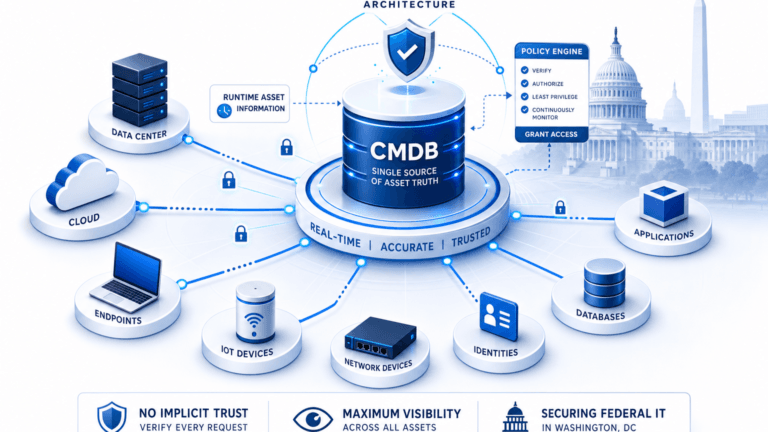
Runtime truth means knowing what exists, how it connects, what changed, what could break, and who owns it, all built from authoritative multi-source discovery. That truth feeds ServiceNow, Ivanti, Halo, Jira Service Management, and Xurrent, or any other ITSM platform you run. It also stands alone as a complete CMDB, ITAM, and IT operations management platform for teams that do not run ServiceNow or want to reduce their ITOM footprint.
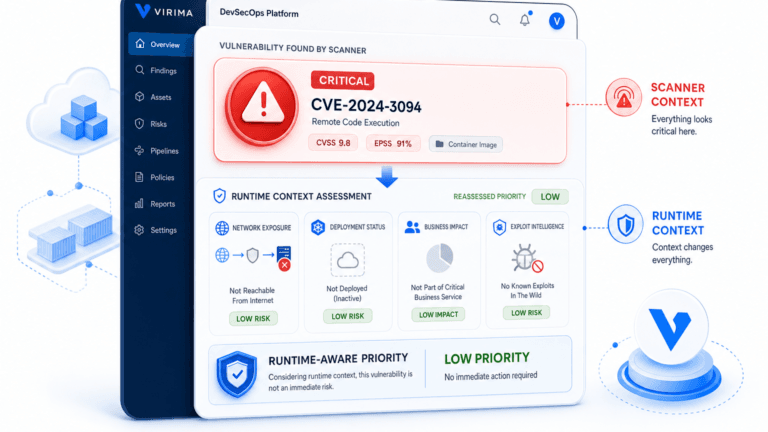
As a ServiceNow complement: Virima’s bi-directional CMDB sync keeps ServiceNow accurate with discovery-driven CI data, no ITOM license required. Our ViVID service mapping overlays open incidents, pending changes, and vulnerability data onto dynamic dependency maps, so change managers see the full impact before they act.
As a standalone platform: Every CI record in our CMDB carries source attribution, ownership, and relationship context from the moment of discovery. Our ITAM module ties financial and operational context into one record across the full asset lifecycle.
For agentic IT in 2026: AI agents need more than a list of connected devices. They need runtime truth that is discovery-driven, explainable, and policy-aware, so they act safely without creating downstream impact. Virima delivers that foundation whether your agents run inside ServiceNow or any other automation layer. See why organizations choose Virima for their runtime truth foundation.
Feature Comparison: Virima + ServiceNow vs. ServiceNow Alone
| Feature | ServiceNow Only | ServiceNow + Virima |
|---|---|---|
| CMDB auto-discovery | Requires ITOM licensing | Included with Virima |
| Agentless discovery | Limited | Included |
| Visual service mapping | Basic (with ITOM) | ViVID dynamic visual maps |
| Cloud asset coverage | Add-ons required | Included (AWS, Azure) |
| Deployment speed | Weeks to months | Days to weeks with Virima |
| Total cost of ownership | High | Significantly lower with Virima |
| Third-party integration | Good | Strong, with easy API mapping |
| License complexity | High | Simple, flat licensing |
See the Virima + ServiceNow difference yourself
Same ServiceNow investment. Full discovery and CMDB accuracy without buying ServiceNow ITOM Discovery as the only path.
Get Accurate CMDB Data Without the ITOM Licensing Bill
ServiceNow is the right platform for teams that need a full-stack enterprise operating system and can absorb the total cost. For teams where CMDB accuracy, discovery coverage, and trusted data for AI operations are the main concern, a dedicated runtime truth layer delivers more value at lower cost.
We help IT teams move faster and act safely, and that starts with knowing what actually exists: what is running, how it is connected, what changed, what will break, and who owns it.
CMDB owners and IT directors on Path B: keep ServiceNow workflows, reduce ITOM Discovery pressure, and validate discovery-fed CI truth on a scoped session. Request a demo and bring your CI count and current discovery stack.
Procurement and finance: use the same session to model ITOM add-on TCO against a complementary discovery layer before the next renewal. Start from the Virima pricing plans overview, then confirm numbers on the walkthrough.