PCI DSS Compliance and CMDB Accuracy for Atlanta’s Payment Processors

Seventy percent of America’s card transactions pass through Atlanta daily. Roughly 118 billion transactions moving annually through a cluster of processors headquartered along the I-85 corridor the industry calls Transaction Alley.
That concentration doesn’t just mean volume. It means the city absorbs a disproportionate share of the industry’s mergers and acquisitions too: acquisition of TSYS, GTCR’s stake in Worldpay in 2023, and on January 12, 2026, Global Payments completed its acquisition while simultaneously selling its TSYS card-issuing division to Florida-based FIS.
In Atlanta, restructuring a cardholder data environment (CDE) isn’t a rare event. It’s close to routine.
Every one of those deals carries the same operational obligation. PCI DSS Requirement 12.5.2 requires that CDE scope be reconfirmed after any significant change to the environment, and an acquisition of this size is exactly that: new merchant estates, new third-party integrations, new data flows folded in, and whatever moved to the acquiring party carved back out.
The question a Qualified Security Assessor (QSA) asks during a review isn’t whether the deal made business sense. It’s whether anyone can produce an accurate picture of what’s now inside the CDE and what isn’t.
That picture doesn’t exist without a maintained, discovery-backed asset inventory. Requirement 2.4 calls for exactly that: records built on high-frequency scheduled discovery cycles, verified against actual network scans, not assembled once for the next audit cycle and left to age.
For a processor operating at this scale of deal-making, an inventory that’s current is the difference between reconfirming scope in weeks and reconstructing it under pressure, pressure that compounds if a breach were ever to surface mid-reconciliation, given a US-listed company’s four-day window to determine materiality under SEC disclosure rules.
For Atlanta’s fintech companies, that’s not a hypothetical. It’s the operating condition of doing business in the city with the highest concentration of payment M&A activity in the country.
Why a Stale CMDB Threatens Atlanta’s Fintech Giants and Startups Alike
A Configuration Management Database (CMDB) that was accurate at the last audit and untouched since is a liability disguised as an asset. It gives a compliance team the confidence of a documented CDE boundary without the substance of one.
That gap doesn’t stay theoretical. It surfaces the moment an assessor cross-checks the inventory against a live network scan, or the moment an incident response team needs to know, in hours rather than weeks, exactly which systems touch cardholder data.
Scale determines what breaks first, not whether something breaks. For an enterprise processor absorbing a multibillion-dollar acquisition, a stale CMDB means the combined entity cannot state with confidence what’s now inside its CDE. The acquired company’s legacy systems, its third-party integrations, its cloud footprint all arrive faster than a manual reconciliation process can absorb them.
The 2026 close of the Global Payments–Worldpay deal folded in 6 million merchant locations across more than 175 countries in a single transaction. An inventory current to January 11 tells a QSA nothing useful about the environment on January 13.
For Atlanta’s smaller fintech firms, the exposure looks different but isn’t smaller. Companies like Greenlight, Splitit, and Featurespace (the last acquired by Visa’s Value-Added Services unit) built their businesses inside the same ecosystem, often integrating directly with the city’s larger processors and card networks.
A startup doesn’t need a billion-dollar merger to outgrow its own asset records. A new cloud region, a new payment integration, a new API partnership with a larger platform accomplishes the same scope drift on a smaller footprint, and Requirement 12.5.2 doesn’t distinguish between a Fortune 500 CDE and a Series B one. Both are required to reconfirm scope after a significant change. Only one of them typically has the discovery infrastructure to do it without a fire drill.
The financial consequence scales with delay, not company size. PCI DSS non-compliance carries fines starting at $5,000 to $10,000 per month for the first three months, rising to $50,000 to $100,000 per month beyond six months of unresolved non-compliance.
A confirmed breach compounds that: financial services organizations averaged $5.56 million per data breach in 2025, according to IBM’s Cost of a Data Breach Report.
According to Verizon’s Payment Security Report, fewer than half of assessed organizations maintain full PCI DSS compliance year-round, a pattern driven less by security control failures than by asset records that stop reflecting the environment the moment something changes.
What PCI DSS 4.0.1 Demands From Atlanta’s Fintech Companies
PCI DSS applies to any organization that stores, processes, or transmits cardholder data, regardless of industry. But for Atlanta’s payment processors and the fintech companies built around them, the standard’s asset-visibility requirements land with more force than almost anywhere else.
Primarily because of what operating in Transaction Alley involves: dense third-party integration, high transaction throughput, and a steady cadence of acquisitions, divestitures, and platform consolidations.
Requirement 2.4 requires a maintained inventory of every in-scope system component, with function and location documented for each. Under PCI DSS 4.0.1, assessors verify that inventory against actual network scans rather than accepting documentation at face value.
For a company mid-integration after an acquisition, that means the inventory has to reflect the merged environment, not the pre-deal snapshot either company had six months earlier.
Requirement 12.5.2 requires CDE scope to be reconfirmed at least every 12 months and after any significant change to the environment. An acquisition, a divestiture, a new payment channel, a cloud migration; each one resets the clock on this requirement. For an Atlanta processor completing a merger, scope reconfirmation isn’t an annual formality. It’s an immediate, deal-triggered obligation.
The scope of PCI DSS has expanded well beyond what most enterprise compliance programs are currently optimized for, shifting from annual point-in-time validation to continuous operational assurance. These requirements can’t be satisfied by a pre-audit scramble.
That distinction matters most for companies whose environments change the fastest, and in Atlanta, few environments change faster than a payment processor’s CDE in the middle of integrating an acquisition.
How Atlanta Fintech Companies Can Stay Audit-Ready
Staying audit-ready starts with treating scope confirmation as a deal-triggered process rather than a calendar-triggered one. Any acquisition, divestiture, or major platform integration should initiate an immediate CDE reassessment, not wait for the next scheduled annual review. The gap between a deal closing and the inventory catching up to it is exactly where scope errors accumulate.
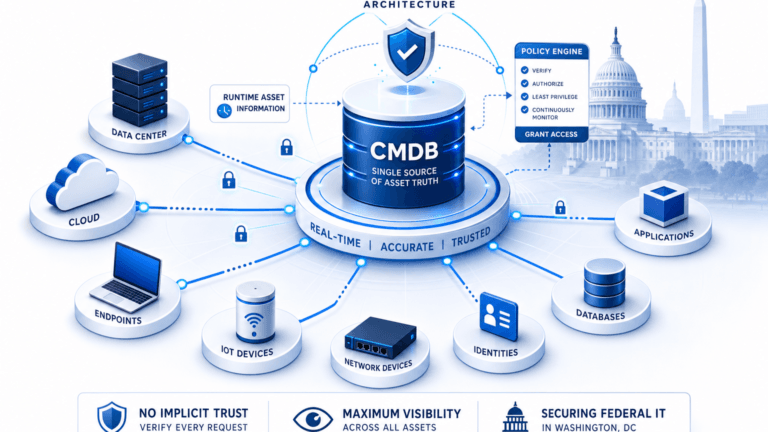
That reassessment depends on discovery that runs on a governed, high-frequency schedule rather than a manual reconciliation exercise. Agentless discovery across on-premises, cloud, and hybrid environments builds the inventory from what’s actually running, not from what a spreadsheet says should be running.
Every discovered component should enter the CMDB with a documented timestamp and a traceable origin, so that when an assessor asks whether the inventory reflects the current state, the answer has evidence behind it rather than assurance.
Dependency mapping matters as much as the inventory itself. Knowing which systems exist is a starting point; knowing which systems connect to which and which third-party integrations reach into the payment environment is what actually answers a QSA’s scope questions.
For a processor absorbing a merger’s worth of new merchant relationships and integrations, a live dependency map is what turns scope reconfirmation from a months-long forensic exercise into a query against a current record.
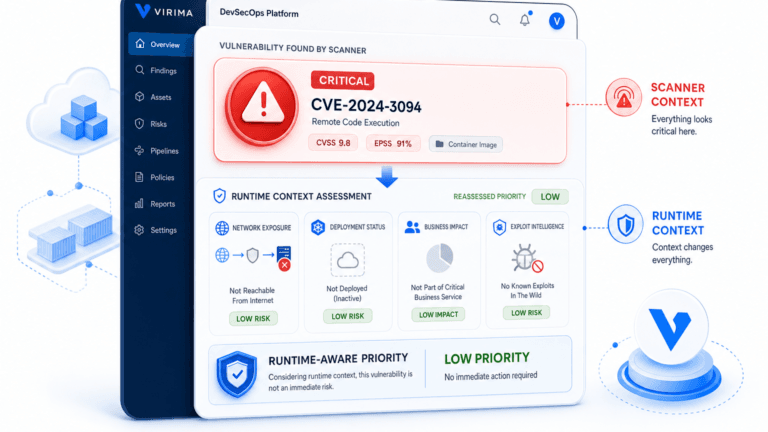
This is the layer where Virima operates. Its agentless discovery builds the system component inventory that Requirement 2.4 demands from actual discovery data, not manual entry, and its ViVID service maps produce the dependency mapping that Requirement 12.5.2’s scope confirmation depends on.
When a significant change occurs, a merger, a divestiture, a new integration, the updated dependency map supports a scope reconfirmation that reflects the environment as it actually stands, not as it stood before the deal closed. Neither replaces the compliance program built around it. It’s the infrastructure layer that makes the rest of that program operationally possible.
Atlanta’s payment processors and fintech companies will keep merging, integrating, and expanding. That’s the operating rhythm of Transaction Alley. The compliance question isn’t whether the next deal will change the CDE. It’s whether the inventory will be ready when it does.