Now Assist Pricing vs Alternative AI Triage Architectures

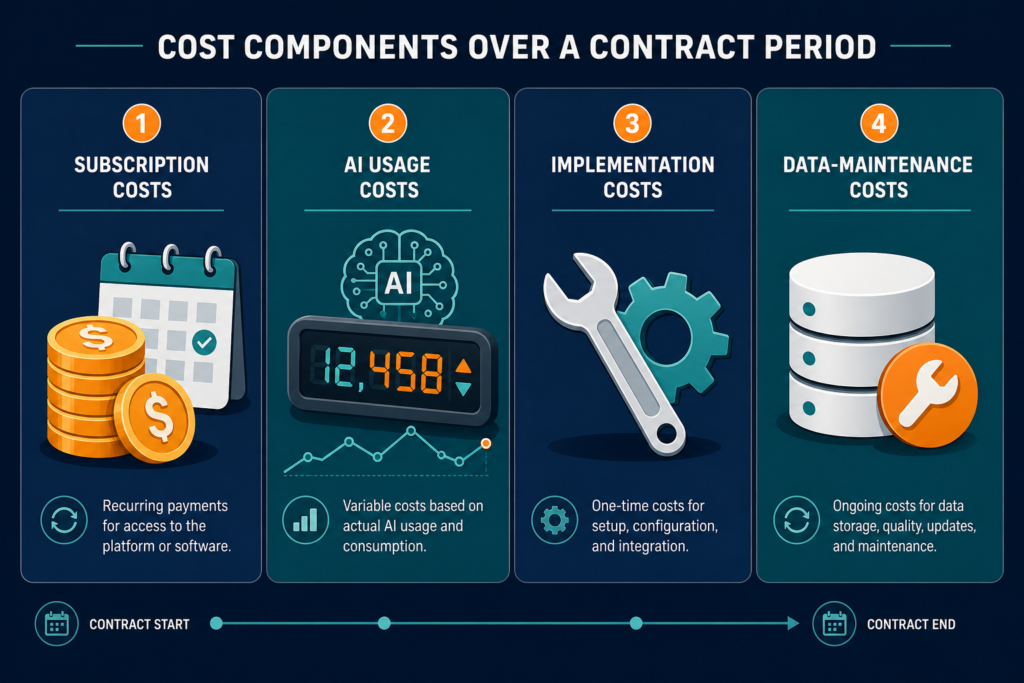
A Now Assist pricing quote often leaves implementation, usage, and data-maintenance costs outside the initial number — gaps that can add months of unbudgeted work before a workflow goes live. Those costs typically surface only after a renewal is signed, when switching architectures means absorbing migration costs on top of the new contract. Procurement teams need those costs identified before comparing Now Assist pricing against alternative AI triage architectures or approving a renewal.
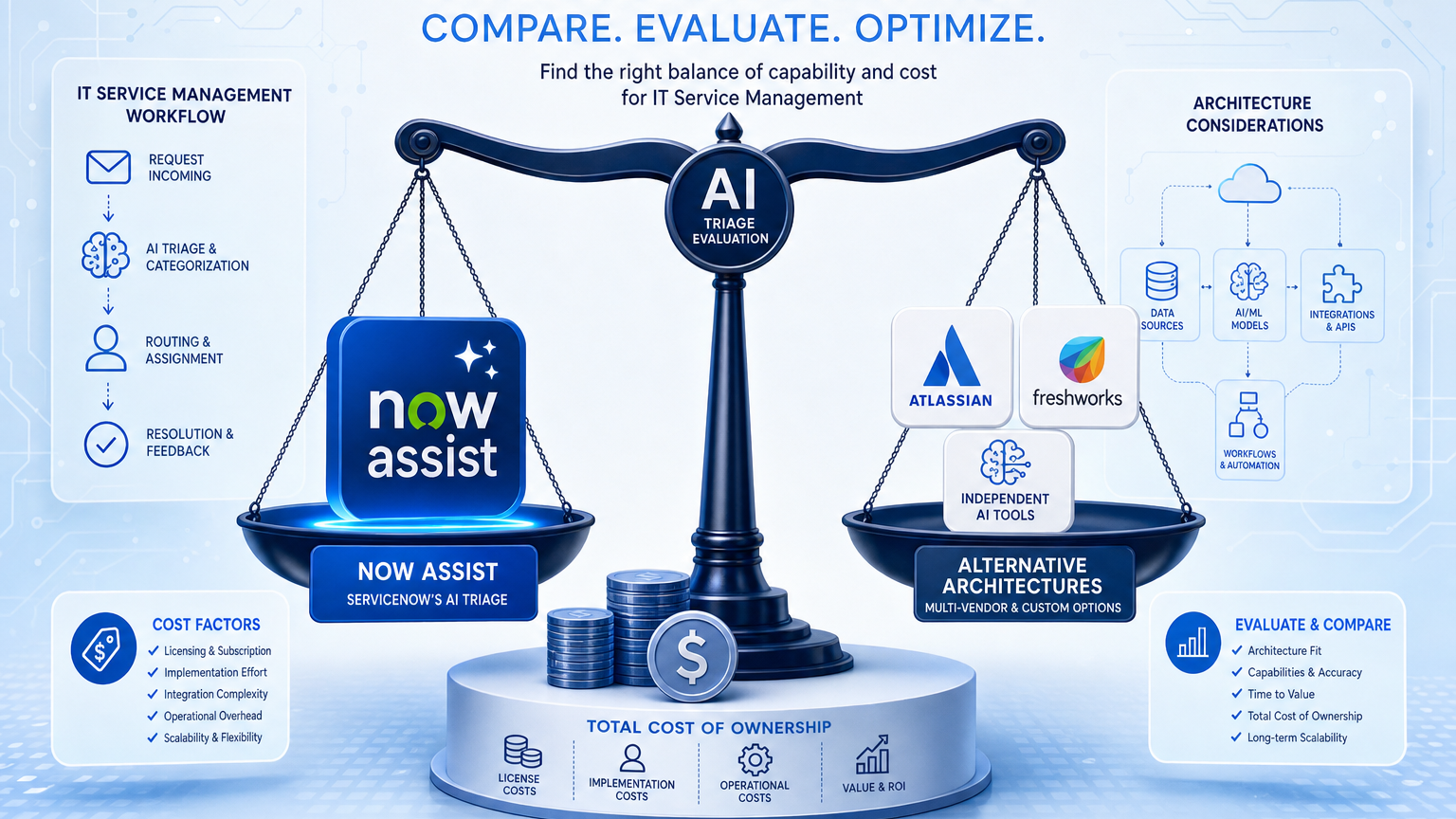
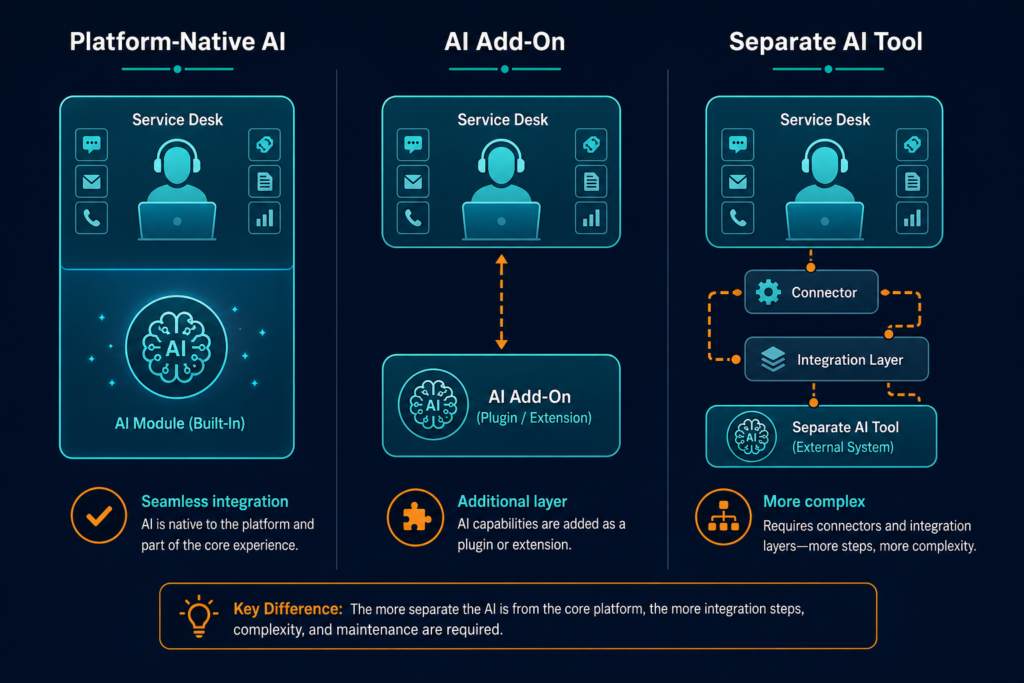
ServiceNow, Atlassian, and Freshworks offer AI assistance through different service management arrangements. A separate AI tool can also connect to an existing service desk. Each approach needs its own review of contract, workflow, and supporting data.
How Now Assist pricing compares to alternative AI triage architectures
ServiceNow has renamed Now Assist to ServiceNow Otto. Its public ITSM application listing identifies the application as paid without displaying a numeric price — ServiceNow Otto pricing depends on the package and workflows you request, so ask for a quote covering your intended users and incident volume.
Atlassian includes Rovo credit allowances with eligible paid cloud subscriptions. Its Rovo credit documentation explains how allowances and usage vary by feature. Pay-as-you-go billing is scheduled to take effect on December 3, 2026.
Freshworks offers Freddy AI Copilot as an add-on for Freshservice Pro and Enterprise plans. Its Copilot pricing documentation distinguishes annual from monthly billing. Buyers can purchase licenses for selected agents.
| Architecture | Published pricing approach | Contract question |
|---|---|---|
| ServiceNow Otto for ITSM | Paid application; obtain a quote for the required package and capabilities. | Which workflows and usage terms does the quote cover? |
| Atlassian Service Collection with Rovo | Eligible subscriptions include pooled credits; consumption varies by feature. | Which triage actions draw from the allowance? |
| Freshservice with Freddy AI Copilot | Copilot is an agent-based add-on for eligible plans. | Which agents need licenses, and what base subscription is required? |
| Existing service desk with a separate AI tool | Pricing depends on the selected provider and integration. | Which connector, support, and maintenance costs are included? |
How do existing contracts affect AI triage comparisons?
Existing service management commitments affect the cost of changing an artificial intelligence (AI) triage architecture. Procurement teams should check termination terms, renewal dates, and overlapping subscriptions. A replacement may carry costs during a transition period, while an add-on may extend an existing agreement.
Where discovery and service context fit
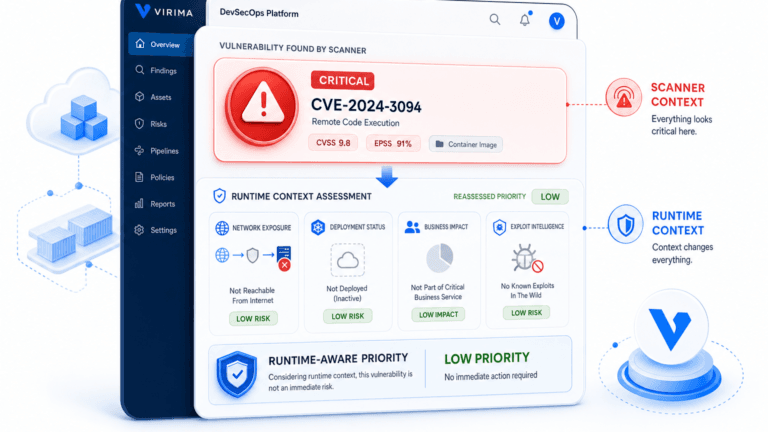
An assistant may summarize an incident or suggest an assignment. Analysts also need relevant asset and service information to investigate the issue.
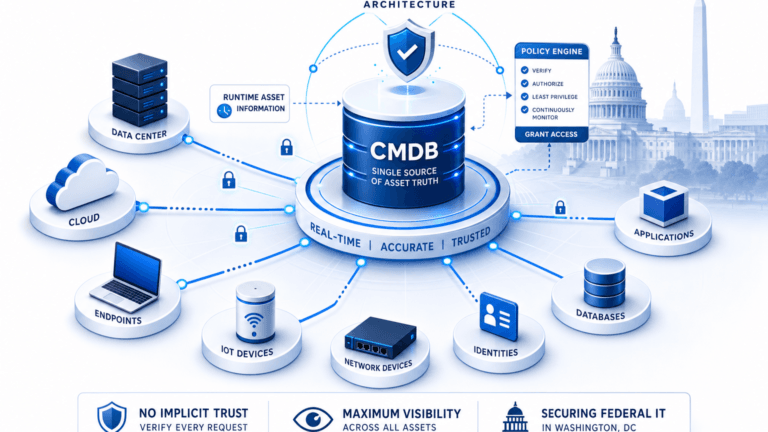
Virima’s Trusted Runtime Truth approach brings together discovered assets, their connections, change information, potential impact, and ownership. Scheduled discovery populates configuration management database (CMDB) records for discovered assets. ViVID™ service maps help teams examine relationships between infrastructure and business services after customers provide service definitions.
Virima can enrich ServiceNow configuration records with discovered assets and relationships. Jira Service Management users can connect asset and configuration information to their service workflows. Access to that information within an AI feature depends on the integration and its configuration.
Explore Trusted Runtime Truth for discovery and service information supporting incident decisions.
A team should test whether the assistant receives the records it needs. Permissions, mapping rules, and discovery schedules can affect which information reaches a workflow. The team should also identify who reviews a suggestion before any change occurs.
How should teams handle missing asset context during AI triage?
An artificial intelligence (AI) triage procedure should specify an escalation path when an incident lacks an identifiable asset. Analysts can record the missing identifier and investigate the affected service before accepting an assignment. The incident review can then identify whether a discovery scope change or an ownership update is needed.
Build a comparable cost model
Use the same contract period and incident workload for each quote, so procurement can compare AI incident triage costs across vendors on equal terms. Separate one-time setup from recurring charges so procurement can compare the proposed commitments.
License and usage terms
Record the base service management subscription and the AI entitlement, and confirm the quoted license covers the analysts and workflows included in the evaluation.
Metered features consume an event or a credit — identify which one, then request an estimate using your expected incident volume and confirm what happens once usage reaches the allowance and who can change spending controls.
Purchased entitlements may cover only a pilot rather than a full production rollout, so ask how adding analyst seats or changing contract terms affects the renewal. Where multiple departments share a usage pool, agree upfront on who monitors consumption and how costs are allocated.
Implementation and maintenance
Include integration configuration, security review, testing, and training — a failed data exchange discovered during an overnight incident costs more in analyst hours than most license line items. A separate AI tool may also need connector maintenance when either system changes.
In its 2026 State of ITSM report, SolarWinds surveyed more than 800 IT professionals worldwide. Seven percent reported that AI adoption costs matched their plans. Respondents identified staff training, data cleanup, and ongoing tuning among unexpected expenses.
Include the effort to maintain incident knowledge and configuration records. For service mapping, Virima builds ViVID™ service maps after customers provide service definitions. Budget for preparing those definitions and reviewing them when services change.
Ask each vendor to separate setup services from recurring support, and identify who troubleshoots a failed data exchange and maintains integration credentials. Confirm which tasks each vendor’s support agreement covers, and include internal staff time alongside vendor charges — access approvals, onboarding roles, and review of new data handling arrangements all belong in the estimate. If a quote excludes these activities, record the assumed ownership and confirm it with the implementation team before signing, so procurement can investigate differences rather than treating incomplete estimates as equivalent.
Review Virima’s service management integration options when assessing the exchange of asset and configuration information.
How can buyers account for AI triage transition costs?
An artificial intelligence (AI) triage transition can require parallel service desk subscriptions during migration. Buyers should include the period when both systems remain active. They should also confirm whether exporting incident history or transferring knowledge articles requires separate services. These transition items belong in the comparison alongside the new contract.
Test the proposed workflow
Select historical incidents with clear classifications and others that span multiple systems, then run the same sample against each shortlisted architecture.
Ask analysts to review the suggested category and assignment, and record whether they accept each suggestion, what investigation remains, and what they consulted when the incident record lacked an identified asset or owner.
For each demonstration, ask the vendor to show:
- Which incident and knowledge records the assistant can access.
- Whether asset relationships appear in the analyst’s workflow.
- Which actions require approval before execution.
- How administrators inspect usage and spending.
- How the system records suggestions and completed actions.
Keep human review in place during the test, and confirm approval settings before enabling any workflow that can make changes on its own.
Compare the resulting investigation steps against the access and configuration each vendor proposed, then use those findings to define training, permissions, and support responsibilities in the implementation plan. Review the pilot results with the service desk manager and procurement team, record which responsibilities stay with internal staff after launch, and add any required support or training to the final comparison before approving a contract.
Choose the right evaluation path
ServiceNow customers can evaluate Otto within their existing service management environment. Teams considering another platform should include transition work and existing contract commitments in the decision.
A separate AI tool may suit a team that wants to retain its current service desk. Its evaluation should include connector ownership and the information available through that connection. Whichever path you choose, weigh Now Assist pricing against the alternative AI triage architectures using the same cost model, so the comparison reflects total cost rather than just the license line. Virima’s discovery and service maps can support incident investigation, subject to the configured integration and access.
Schedule an incident-context demo to review discovery records and service dependencies with your team.
Frequently Asked Questions
How much does Now Assist cost?
ServiceNow’s public ITSM application listing says paid without displaying a numeric price. Request a quote for your capabilities, users, and usage. ServiceNow now calls the experience ServiceNow Otto.
What costs should an AI triage comparison include?
Include subscription, AI entitlement, usage, implementation, and ongoing administration. This is the core of any AI service desk comparison — evaluate quotes over the same contract period and expected workload.
Can an AI assistant use service dependency data?
That depends on the assistant’s access and the configured integration. Ask vendors to demonstrate which asset fields and relationships reach the workflow.
Does Virima replace ServiceNow Otto or Now Assist?
Virima provides discovery, configuration management, and service mapping that can complement ServiceNow workflows. ServiceNow Otto provides AI assistance within ServiceNow.
How can Virima support incident investigation?
Virima’s scheduled discovery populates configuration information for discovered assets. Its service maps show dependencies after customers provide service definitions. Use depends on the configured integrations and access.