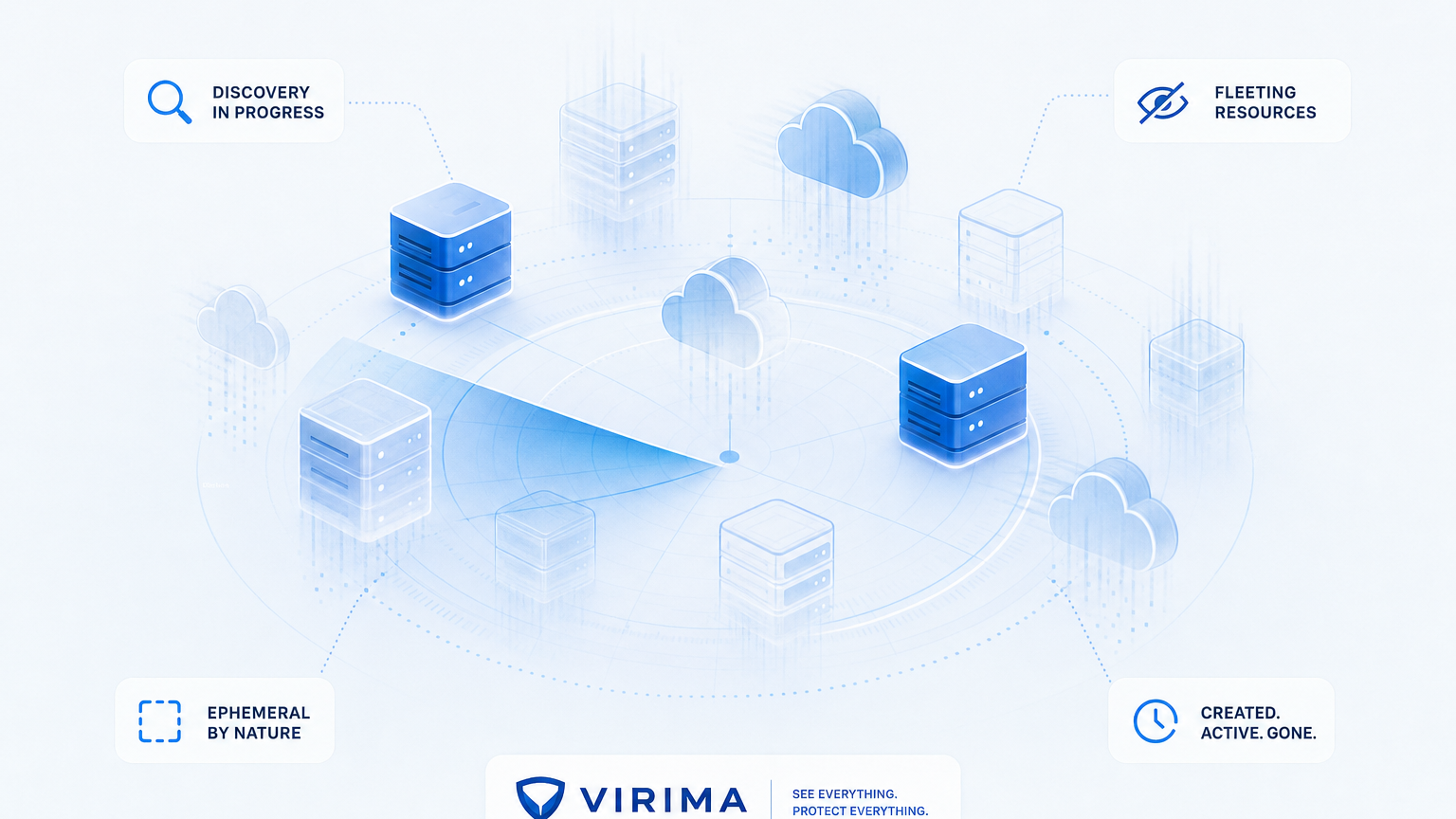
The Ephemeral Drift Problem: How Platform I&O Reclaims Visibility Over Machine-Spun Infrastructure

Infrastructure and operations (I&O) teams can be accountable for resources created outside their usual request process. Machine-provisioned infrastructure visibility becomes harder when those resources disappear before the next discovery cycle. An inventory may also show a running resource without identifying its owner, purpose, or expected end date.
A useful operating record connects those details to what discovery finds. It also explains which activity must be recorded at creation because a later scan cannot observe it.
Gartner’s upcoming IT Infrastructure, Operations & Cloud Strategies Conference will include a keynote on platform-centric I&O. The session description argues that cloud services, followed by artificial intelligence (AI) agents, can route work around I&O. Its discussion of the inventory implications below is Virima’s interpretation, rather than a conclusion attributed to Gartner.
What Gartner says is happening to I&O
Gartner’s keynote description compares the shift in I&O with desktop publishing’s effect on printing. Its proposed roadmap focuses on the expertise I&O brings to a platform-centric organization. The keynote is scheduled for December 8, 2026.
The abstract does not prescribe a configuration management database (CMDB), discovery schedule, or inventory design. Those operational choices belong to each organization. Virima’s interpretation is that I&O can contribute an accountable record connecting provisioning decisions with the infrastructure that remains in use.
Cloud self-service already lets people provision resources without a traditional infrastructure ticket. Infrastructure as code (IaC) adds another path through repositories and deployment pipelines. Machine-directed provisioning introduces another possible initiator, and the relevant evidence may be spread across different systems.
| Provisioning path | Typical initiator | Possible evidence |
|---|---|---|
| Cloud self-service | A person using a console or API | Account activity and provider logs |
| Infrastructure as code | An engineer or deployment workflow | Code changes and pipeline logs |
| Agent-initiated provisioning | A machine actor operating within assigned permissions | Workflow records and provider logs |
The presence of a log does not establish that a resource has an accountable business owner. The team needs an agreed connection between the initiating identity, the resource identifier, and the person or team responsible for the task.
Three lifespans, three kinds of drift
The discovery interval determines whether a resource is available to be observed during a run. A resource’s lifetime alone does not guarantee coverage: account access, supported resource types, credentials, and discovery scope also matter.
| Resource lifetime | Scheduled discovery | Additional evidence needed |
|---|---|---|
| Created and removed between runs | Cannot observe it during those runs | Provisioning records or retained provider logs |
| Present during a successful run | May record it if the resource is within configured coverage | Owner, purpose, and expiry from an accountable source |
| Still present after its purpose ends | May show that it remains present | Task status and a decision about removal |
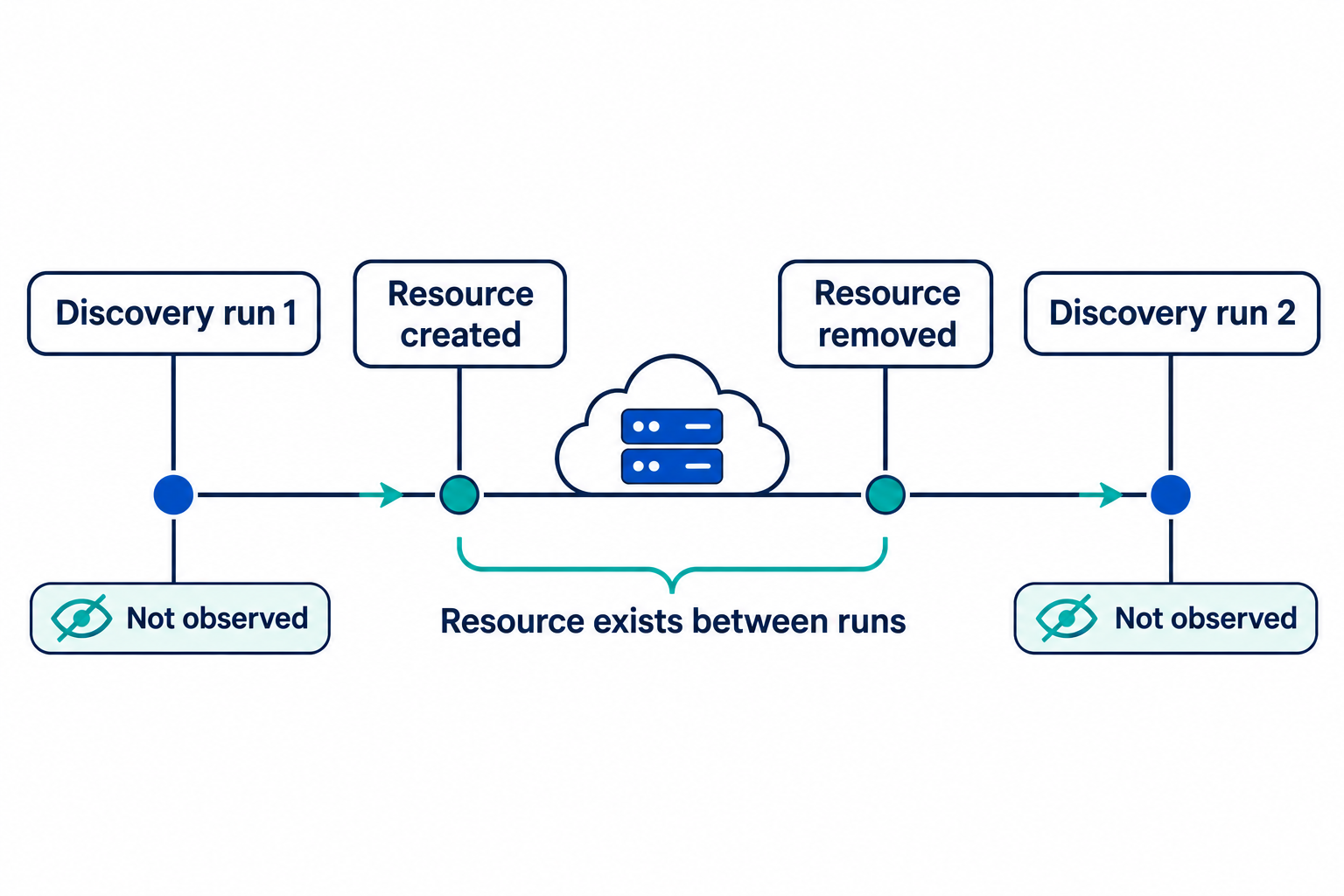
Resources that disappear between runs
A resource created and removed between two discovery runs cannot be observed by either run. Increasing the frequency of those runs can reduce the interval, but it cannot guarantee that every short-lived resource will be present when discovery executes.
The provisioning workflow can record a creation request and the resulting resource identifier. Where configured and retained, provider audit logs provide another source of evidence. AWS CloudTrail documentation describes how AWS records user and API activity for auditing.
I&O should agree with platform engineering on which record is authoritative for the task. The record should connect the initiating identity with an accountable person or team. It should also retain the resource identifier and the time of creation, subject to the organization’s retention policy.
Virima’s scheduled discovery does not record a resource that appears and disappears between runs. A creation-time record must therefore come from the provisioning workflow or another system that captures that activity.
Resources present without a clear owner
Discovery can identify a supported resource that exists during a successful run. The resulting record still needs a named owner and a business purpose. Those details may come from a provisioning request, an approved metadata field, or a person responsible for the account.
The identity that calls a cloud API may identify a service account rather than the person accountable for its work. A team should keep both relationships where available. The machine identity helps trace the action, while the accountable owner can answer questions about the resource.
Set a response path for resources with missing ownership. The cloud account owner can identify the responsible team or direct the record to a shared review queue. That handoff gives the CMDB owner a way to resolve an incomplete record without inventing an owner.
Resources that outlive their purpose
A resource can remain active after the work that required it has ended. Discovery can show a supported resource still exists within the configured scope. The task owner must establish whether the resource remains necessary.
Before decommissioning, the responsible team should check the expected end date and the service relationships available to it. A resource might support another workload, even if its original request is closed. The team should resolve that uncertainty before removing it.
Reviewing potential change impact gives the owner a way to discuss dependencies with service teams. The final decision remains with an authorized person or team, using evidence from discovery and the systems that own the workload.
What I&O can require of every machine-provisioned resource
A provisioning standard gives engineering teams a small set of fields to carry into their existing workflows. The standard also names who checks missing information and how exceptions are resolved.
| Field | Why the team needs it | Who supplies or checks it |
|---|---|---|
| Accountable owner | Identifies the person or team responsible for the resource | Requesting or provisioning team supplies it |
| Purpose | Connects the resource to a request, task, or service | Requesting team supplies it |
| Expected expiry | Provides a date for reviewing continued need | Owner sets it and reviews exceptions |
| Account or subscription | Shows where the resource was provisioned | Platform team checks it against discovery scope |
| Resource identifier | Connects the creation record to later observations | Provisioning workflow records the provider identifier |
Use a durable identifier appropriate to the resource, such as a cloud instance ID, rather than treating a hostname as a durable join key. Where identifiers change during replacement, retain enough information to distinguish the old resource from its successor.
A provisioning workflow can write a record to a CMDB or service-management system when it creates a resource. Virima provides a representational state transfer application programming interface (REST API) for custom integrations. The provisioning team owns the workflow logic and should validate the available endpoints, authentication, fields, and matching behavior before implementing a write.
A useful local measure is the share of discovered resources in selected agent-enabled accounts that have an owner, purpose, and expiry. Define the denominator, review window, and exception process before comparing results. The measure reflects the team’s own standard, rather than an external benchmark.
Reconciling what machines intended with what discovery found
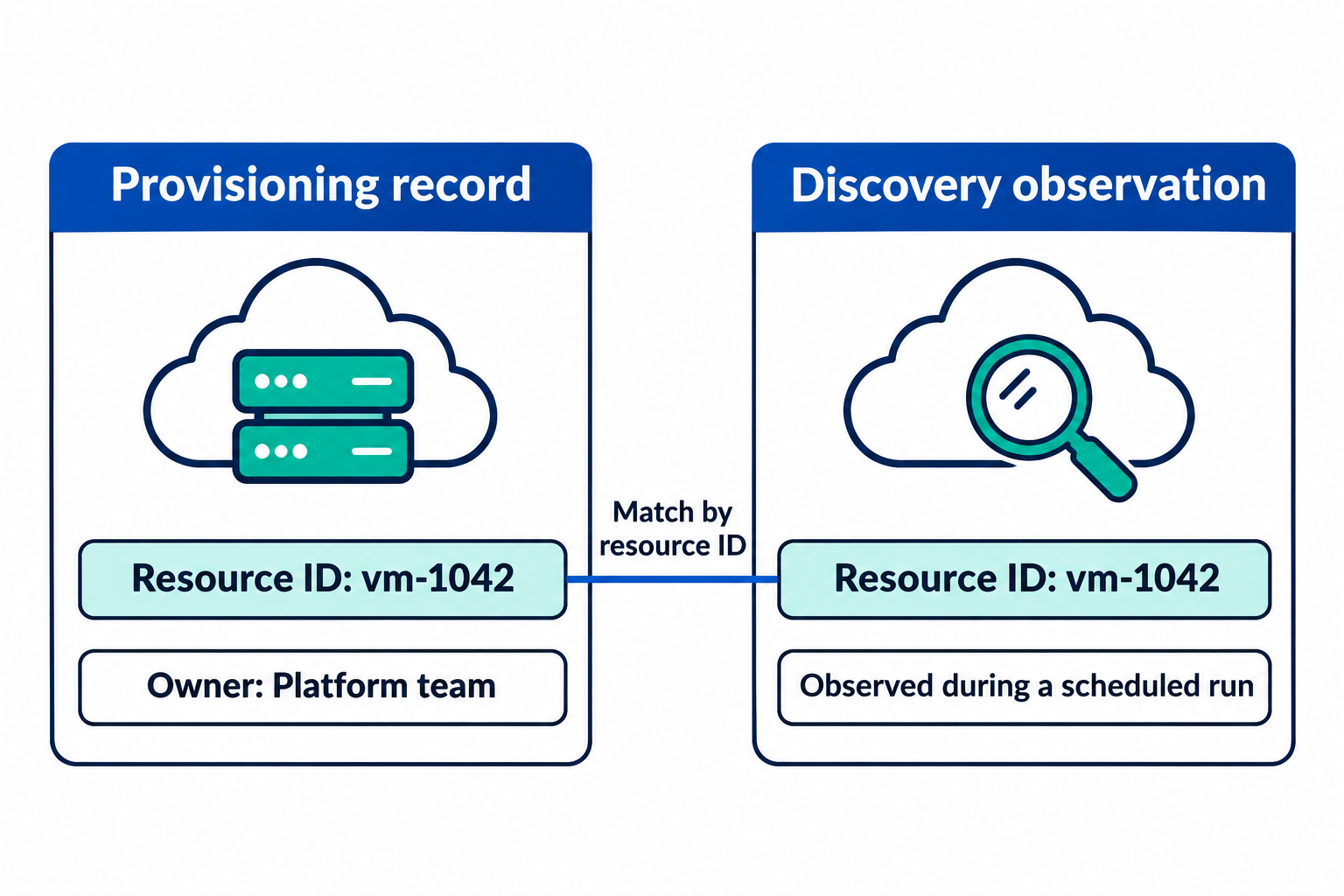
Creation records and discovery observations answer different questions. The first describes an intended or completed provisioning action. The second describes a resource observed within the configured scope at a particular discovery run.
Match the two records using the provider identifier and account context. Reconciliation rules should specify which source supplies each field and who resolves a conflict. The source reconciliation process can help teams define how competing observations are handled.
| Outcome | What the team should check | Next action |
|---|---|---|
| Matched | The intended record and observed resource refer to the same identifier | Review conflicting fields under the agreed source rules |
| Seen without intent | Discovery found a resource without a matching creation record | Route it to the account owner for investigation |
| Intended but not seen | A registered resource was not observed in the relevant run | Check timing, scope, permissions, and whether it was removed |
An absent observation does not prove a resource has been deleted. The next step is to check discovery coverage and provider evidence. Preserve the record and its status while the accountable team investigates, according to the organization’s retention rules.
Teams can connect these findings to existing IT service management (ITSM) workflows. The available service management integrations should be evaluated for the specific records and direction of sync required by the organization.
Where Virima fits when machines are provisioned
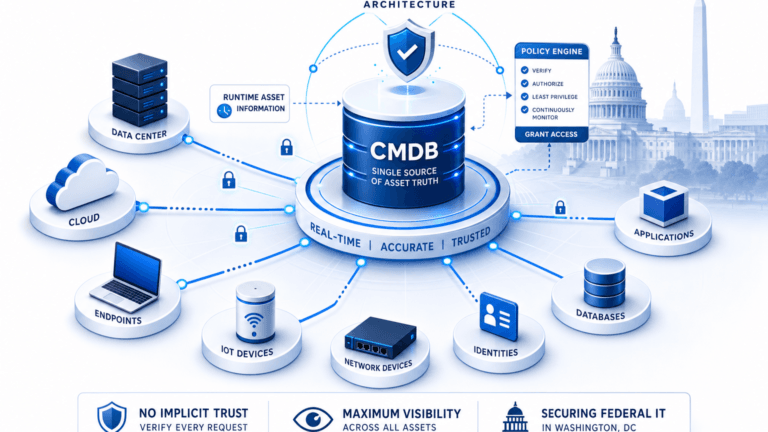
Virima supports scheduled discovery and multi-source reconciliation for infrastructure within its configured coverage. Its CMDB can connect discovered configuration items with relationships and lifecycle information. People and connected systems remain responsible for supplying or confirming ownership and purpose.
| Operational need | Virima’s role | Team responsibility |
|---|---|---|
| Find supported cloud resources | Scheduled discovery across configured AWS and Azure environments | Configure access and verify resource coverage |
| Maintain infrastructure records | CMDB records and multi-source reconciliation | Set matching and source rules |
| Understand service relationships | ViVID™ maps dependencies using supplied service definitions | Provide service definitions and review the impact |
| Connect custom workflows | REST API access for integrations | Build and validate the provisioning workflow |
ViVID™ service maps depend on service definitions supplied by the team. They can help a reviewer understand recorded relationships, but the reviewer should check whether the available map covers the decision at hand.
The scope of an inventory also needs a clear boundary. Virima’s scheduled discovery cannot observe resources that exist only between runs. The provisioning system and provider logs remain relevant evidence for those resources. This article addresses infrastructure created by agents rather than claiming discovery of the agents themselves.
For a CMDB owner, the practical challenge is getting the authority to resolve incomplete records. I&O leaders can help by assigning account owners, agreeing on a response window, and making exceptions visible to the teams that created them.
Questions to put to teams that provision with agents
Use these questions with platform engineering and the owners of agent-enabled accounts. Each answer should name the system or team responsible for the next action.
| Question | What a useful answer identifies |
|---|---|
| Which accounts can agent workflows use? | The approved accounts and their owners |
| Who is accountable for each task? | A person or team responsible for its resources |
| Where is the creation record stored? | The workflow, request, or audit record and its retention period |
| How are creation and discovery records matched? | The provider identifier and account context used for matching |
| Who decides when a resource can be removed? | An authorized owner and the evidence used for review |
Virima will exhibit at Booth 645 during the Gartner IT Infrastructure, Operations & Cloud Strategies Conference. Visit Virima at Gartner IOCS to discuss how your team records and reviews infrastructure changes.
Frequently asked questions
What is machine-provisioned infrastructure?
Machine-provisioned infrastructure consists of resources created through software-driven workflows. An AI agent can initiate a request under assigned permissions, while a platform workflow performs the provider action and records its outcome.
Why can ephemeral infrastructure cause configuration drift?
Configuration drift occurs when recorded information differs from the infrastructure or configuration it describes. Short-lived resources can appear and disappear between discovery runs, leaving no observation in a scan-based inventory.
Can scheduled discovery see resources that exist only between runs?
Scheduled discovery cannot observe a resource that is created and removed between its runs. A provisioning record or appropriately configured provider audit log can provide separate evidence of the activity.
How can Virima support records for agent-created resources?
Virima provides scheduled discovery, configuration management database records, reconciliation, and an application programming interface for custom integrations. Teams must configure the integration and validate its supported fields and matching behavior.
Does Virima’s scheduled discovery record an agent’s actions?
Scheduled discovery records supported resources observed within its configured scope. The team’s provisioning workflow or provider audit logs supply evidence of individual actions, according to their configuration and retention settings.