IT Asset Management for HIPAA Audits in Denver: Stop Rebuilding the Inventory

Colorado Health Network runs clinics in Denver, Fort Collins, Colorado Springs, and Grand Junction. According to Comparitech’s reporting, the organization discovered a breach on July 29, 2025, and began notifying 68,212 people on June 18, 2026. Its notice states that an unauthorized individual viewed and obtained certain files on its network.
IT asset management for HIPAA audits in Denver starts with a question every health system faces before an audit or after an incident: which systems hold ePHI (electronic protected health information) today, who owns them, and when did anyone last confirm that? Records that stay current let teams stop rebuilding the inventory from scratch each year. IT asset management for HIPAA audits is the practice of keeping a continuously verified inventory of every system handling ePHI, so a risk analysis starts from evidence instead of memory.
The Office for Civil Rights (OCR) makes a specific finding in its Summer 2020 cybersecurity newsletter: its investigations frequently find organizations lack sufficient understanding of where all of their ePHI is located. That gap sits at the center of every risk analysis, and a current HIPAA asset inventory is the tool that closes it.
What OCR asks for and what the rule says
The Security Rule requires covered entities and business associates to complete an accurate and thorough risk analysis of the risks to the ePHI they hold. OCR presents the asset inventory as guidance that supports that analysis. The same newsletter says larger, more complex organizations may choose dedicated ITAM solutions with automated discovery and update processes.
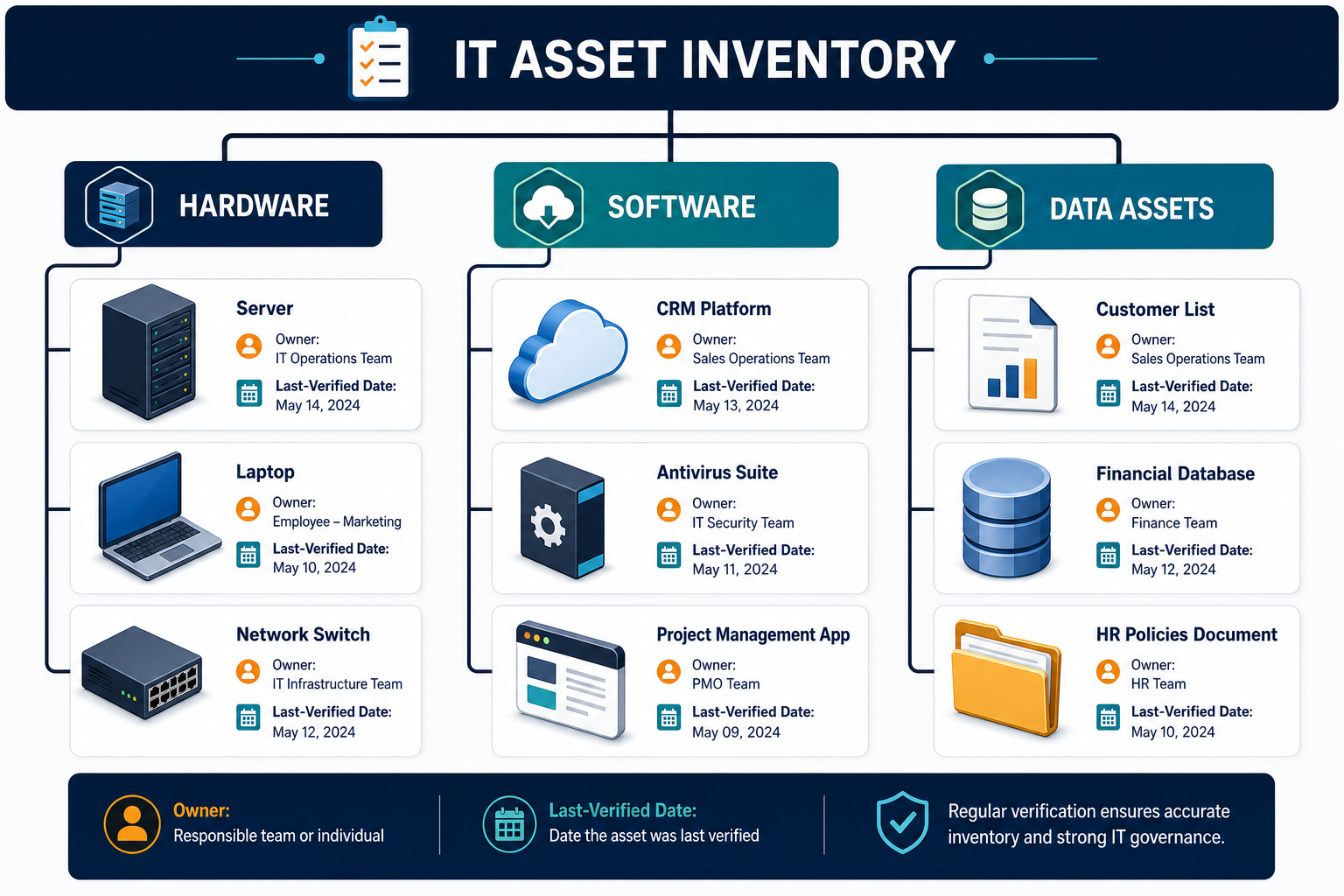
OCR describes an inventory as a listing of assets with identifying details such as vendor, asset type, and name, along with version information and an assigned owner and location. It groups assets into hardware, software, and data assets that include ePHI. Organizations that use the NIST Cybersecurity Framework can draw on its Asset Management category, which covers inventorying hardware and software and mapping communication and data flows. Our guide to HIPAA compliance through a CMDB covers the enforcement history behind these expectations.
| Source | What it says | Status |
|---|---|---|
| 45 CFR 164.308(a)(1)(ii)(A) | Requires an accurate and thorough risk analysis of risks to ePHI | In force |
| OCR Summer 2020 cybersecurity newsletter | Describes an up-to-date IT asset inventory as a useful tool for building the risk analysis | Guidance |
| 45 CFR 164.310(d) | Requires policies for the receipt, removal, and movement of hardware and media that hold ePHI | In force |
| Security Rule NPRM, December 2024 | Would require a technology asset inventory and network map, reviewed at least every 12 months and after relevant changes | Proposed |
OCR adds that an inventory with location and owner details helps an organization record the movement of hardware and electronic media. The same inventory supports vulnerability management, because it helps teams identify the devices affected by a new vulnerability and verify that updates reached them.
The Security Rule update proposed in December 2024 would make the inventory an express requirement, reviewed at least every 12 months and after relevant changes, and would require the risk analysis to include a review of it. HHS states that the current Security Rule remains in effect during the rulemaking, so the inventory requirement stays a proposal until HHS finalizes a rule.
Colorado adds its own notification clock
Colorado law sets a 30-day deadline for notifying affected residents after a covered entity determines that a security breach occurred. When a breach is reasonably believed to affect 500 or more Colorado residents, the Attorney General also receives notice within the same 30 days. The Colorado Attorney General’s data protection FAQ lays out both requirements.
HIPAA permits notification within up to 60 days in some circumstances. The Attorney General’s guidance states that the shorter Colorado timeframe applies in that case. Entities that follow HIPAA breach procedures still owe the Attorney General a notice once a breach reaches 500 residents. Health systems in other states face a different layering of state and federal rules, as our Chicago health systems HIPAA guide shows.
Colorado defines personal information to include a resident’s name combined with medical information or a health insurance identification number. Each notice must describe the date range of the breach and the personal information acquired. Meeting a 30-day window therefore depends on scoping the breach quickly, and scoping depends on knowing which systems hold which data and where those systems sit.
Regional systems with several hospitals and clinics operate across multiple sites, networks, and vendors, so every site adds records that someone must reconcile.
Why a regional system’s inventory goes stale between audits
Flexera’s 2026 State of ITAM report found that complete IT visibility across industries fell to 36% from 43% a year earlier. The same report found that 78% of ITAM teams name an accurate inventory their top priority. Healthcare estates add clinical equipment to that challenge.
Three patterns explain why healthcare inventories age quickly.
- Per-site spreadsheets reconciled once a year. Each hospital and clinic keeps its own register, and someone merges them before the audit. Result: audit prep becomes a project, and the record is oldest at the moment someone needs it.
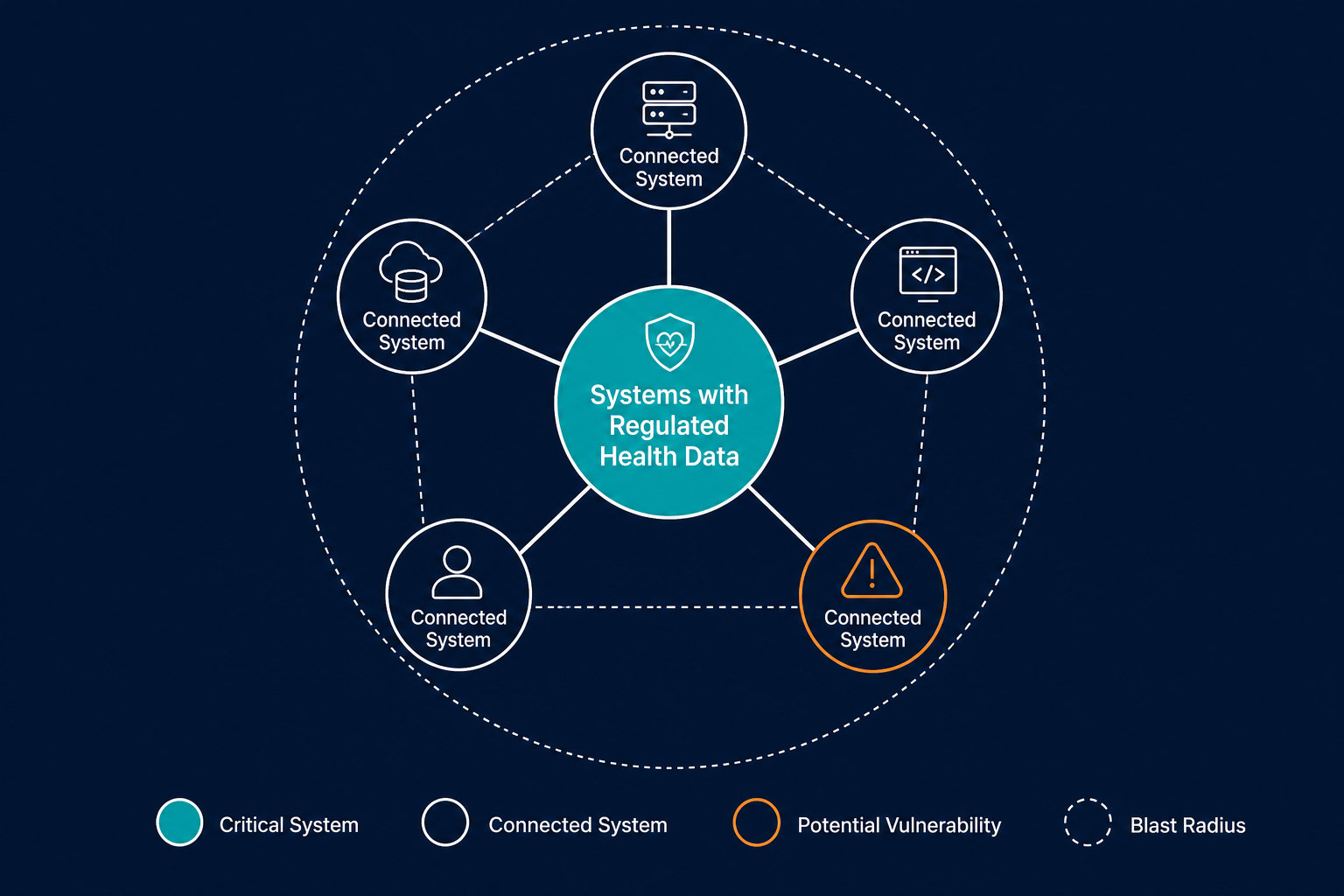
- Clinical devices and connected equipment outside IT’s view. OCR’s own example is a connected HVAC controller with known vulnerabilities and a default password, which can give an intruder a foothold when the network lacks segmentation. The device stores no ePHI, yet it shares a network with systems that do. What this means: devices that never reached the risk analysis sit beside the systems the analysis is meant to protect.
- Retirements without a decision on record. A server or workstation leaves service, and no named owner records the decision. The upshot: the audit trail has gaps, and cost lines continue for assets that no longer exist.
OCR notes that comparing the inventory against network scanning results surfaces unknown devices and applications. Those can then be added to the inventory and assessed for risk to ePHI. Our healthcare IT asset management guide covers the asset categories that multi-site health systems need to include.
IT asset management for HIPAA audits in Denver: how discovery changes the work
ITAM and a CMDB answer different questions about the same assets. ITAM tracks ownership, cost, and license entitlement across an asset’s lifecycle. A CMDB maps the dependencies between configuration items. In a hospital, ITAM flags a workstation nearing end-of-warranty; a CMDB shows which clinical application fails if that workstation goes offline. Discovery feeds both records from the same scan, which is why health systems don’t need to choose one over the other.
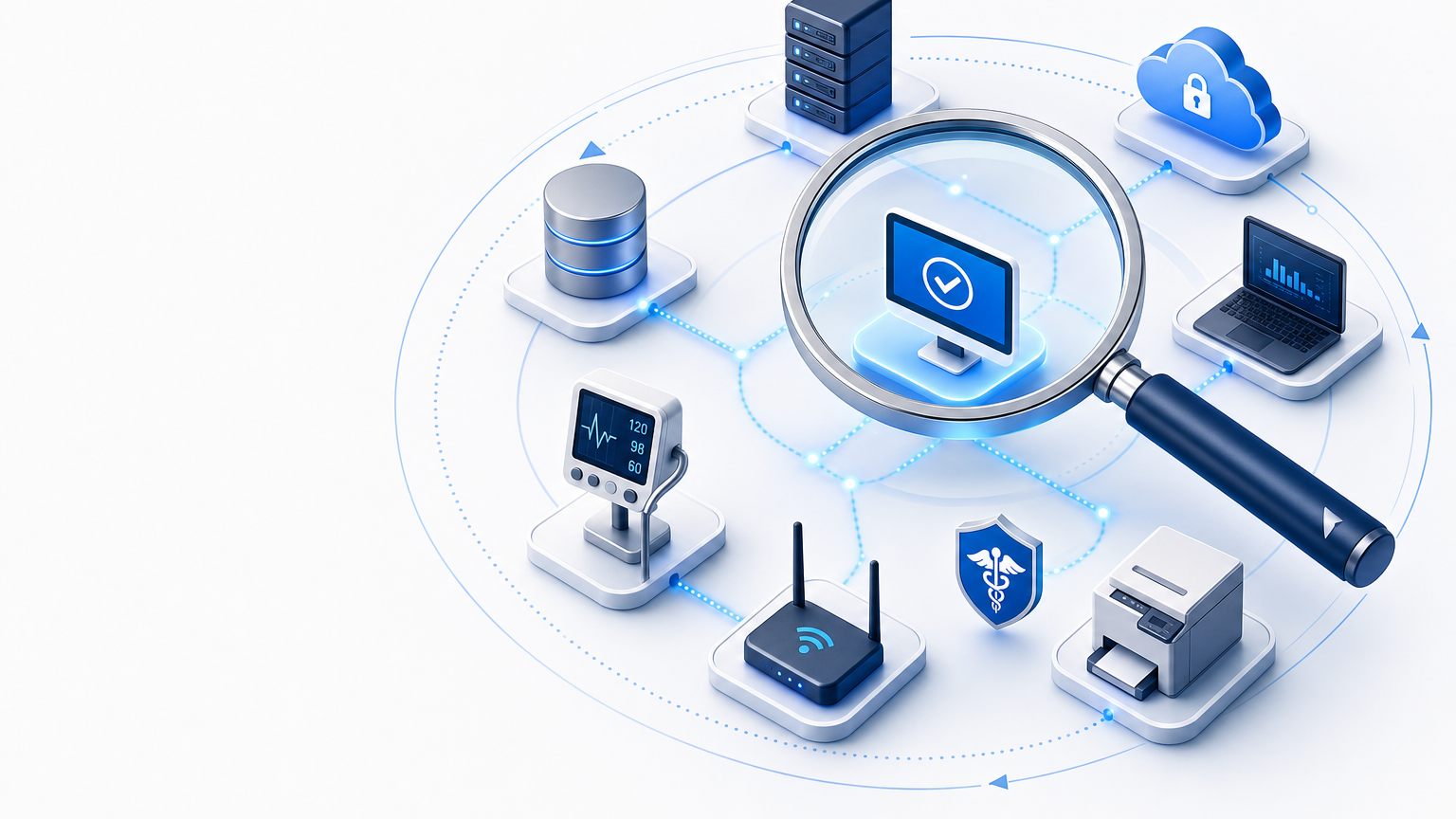
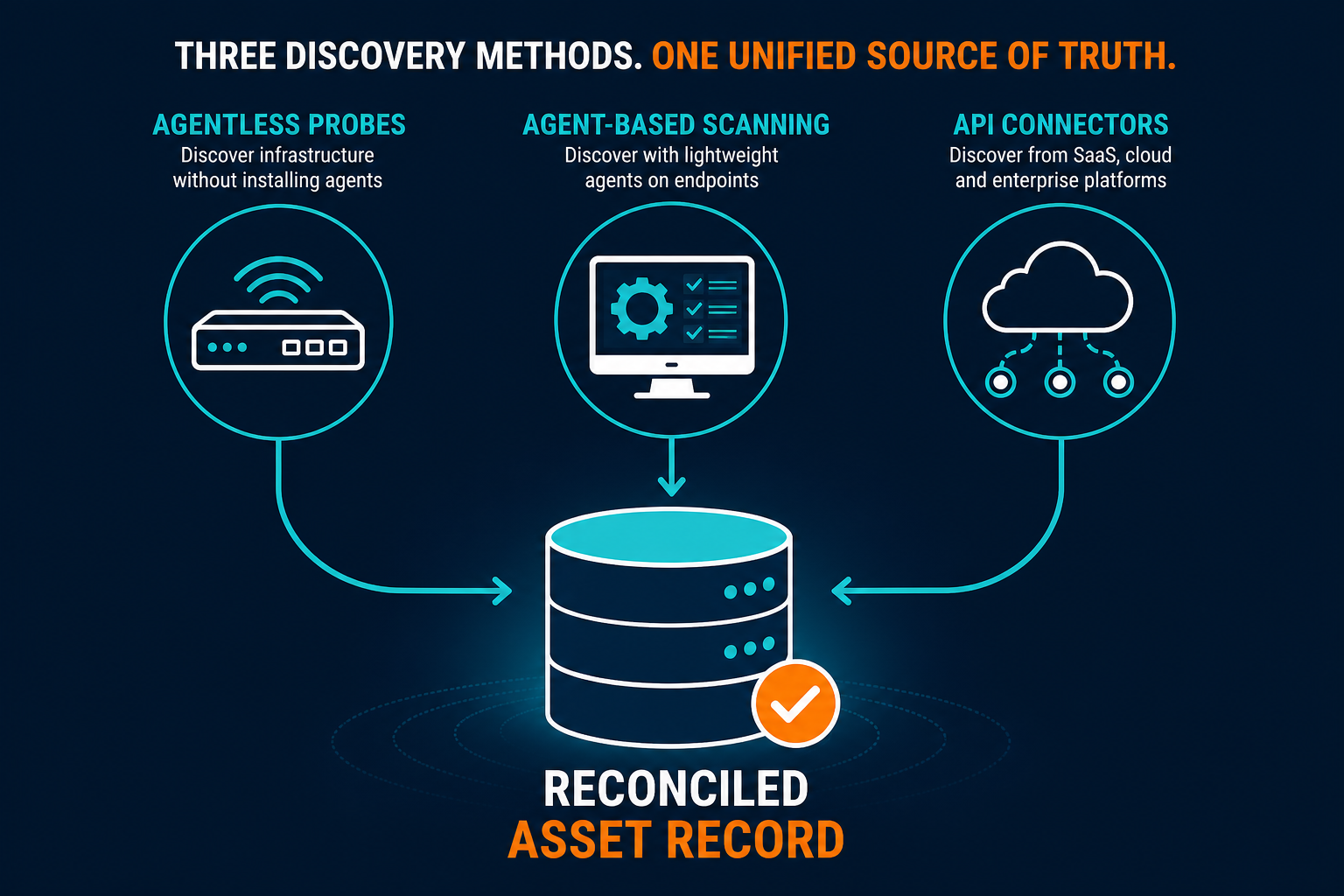
Discovery replaces the annual merge of registers with scheduled scans that feed ITAM and CMDB records directly. For each discovered asset, Virima captures hundreds of hardware and software attributes, including OS version, patch level, serial numbers, network adapters, running processes, installed certificates, and relationships to other assets. Three mechanisms handle most of that work.
Discovery that reaches the clinical estate
Virima uses more than 140 extendable agentless probes across SNMP, WMI, SSH, and other protocols. A Windows agent covers roaming endpoints, and API connectors cover AWS and Azure. Agentless probes handle on-premises servers, network devices, storage, and hypervisors. The agent suits remote workers and roaming endpoints where credential access is restricted.
The Discovery App runs on a server the customer owns, and credentials stay on it, encrypted. The AWS and Azure connectors pull compute, storage, and the relationships between cloud and on-premises components.
Virima has built custom probes for a healthcare customer’s medical devices, and clinical engineering maintenance systems can feed device records through integration. A device that resists every automated method needs a manual entry from its owner. Data from all three collection methods flows into one reconciliation engine, so a hybrid estate appears as one connected record set.
Evidence on every record
Each discovered configuration item carries an attribute-level source record and a last-verified timestamp. When two discovery sources disagree about an attribute, an authority rule decides which source wins. Discovery runs on high-frequency scheduled cycles at a cadence the customer sets. When an auditor asks when a record was last confirmed, the answer is a timestamp and a source. See how multi-protocol IT discovery works across a mixed estate.
Dependency maps for the systems your compliance team identifies
ViVID™ builds service maps from discovery data once a team defines each service in the Virima interface or imports it from a CSV. The privacy team decides which systems hold ePHI, and the map shows what those systems connect to, with incidents, changes, and vulnerability data overlaid. The map refreshes as new scan data arrives, so change reviews and incident triage start from a current dependency view.
| Question | Annual spreadsheet reconciliation | Discovery-fed ITAM and CMDB |
|---|---|---|
| How the inventory is built | Staff merge per-site registers before each audit | Scheduled discovery populates records from source systems |
| Evidence of currency | The date of the last reconciliation | A source and last-verified timestamp on each record |
| Medical devices | Listed when someone remembers to add them | Custom probes and clinical engineering integration, with manual entry for the rest |
| Change impact | Staff trace connections by hand | A ViVID™ service map of defined services shows connected systems |
| Audit prep effort | A reconciliation project each cycle | Reports from current records, plus review of exceptions |
| What still needs people | Staff handle every step of the process | Owners, ePHI tagging, and review of unknown devices |
Discovered records can also feed the IT service management platform a health system already runs, through Virima’s ITSM integrations.
What an inventory settles and what stays with other owners
An inventory answers questions about assets. Other questions belong to other teams, and the table shows who decides each one.
| Question | What ITAM and CMDB supply | Who decides |
|---|---|---|
| What assets exist, and where do they sit? | Discovered records with location and source | IT and clinical engineering |
| Who is accountable for each asset? | An owner field on every record | Asset owners by domain |
| What does each system connect to? | A dependency map for defined services | IT operations |
| When was a record last verified? | A last-verified timestamp and source | IT and ITAM |
| Which systems hold ePHI? | Tags applied after confirmation | Privacy and data owners |
| Is the risk analysis complete? | The inventory input to the analysis | Security and compliance |
| Is a given breach reportable? | Scope data on affected systems | Legal and compliance |
The inventory feeds the risk analysis, while access control, encryption, and breach decisions stay with their owners. IT operations can read the connection view for defined services through ViVID™ service maps, which show what each system depends on. A CIO can present the inventory to the board as the input that makes the risk analysis faster to complete and easier to support with evidence.
Where the efficiency and savings come from
Five cost lines respond to a current inventory, and each one can be measured in your own system before any vendor claim enters the business case.
| Cost line | Where it shows up | How to measure it | Evidence |
|---|---|---|---|
| Audit and risk-analysis prep | Staff hours each cycle | Hours times loaded rate for one cycle, before and after | OCR describes the inventory as support for the risk analysis |
| Software audits and true-ups | Vendor audit responses | Audits in three years, spend, and days to respond | Flexera 2026, across industries: 48% audited in the past year |
| Unused licenses | Renewals | Installed versus entitled versus used, by title | Flexera 2026, across industries: license reuse produces significant savings for 43% of organizations |
| Support on retired hardware | Maintenance contracts | Contracts compared with live assets in the CMDB | Contract lists compare directly with live asset records |
| Change and incident effort | Triage time and failed changes | Time to identify dependencies with and without a map | Dependency maps show connected systems before a change |
In the Flexera survey, 44% of organizations spent more than $1 million on software audits over three years. ITAM keeps license entitlements next to installation data, so reconciliation starts from one record. Stored or inactive medical hardware can keep consuming software licenses until someone reclaims the entitlement at retirement, and a record of each device’s lifecycle state prompts that step. A discovery agent on Windows endpoints can meter software usage, including on remote devices, which identifies licenses worth reclaiming. As hospital IT asset management software, Virima’s ITAM capabilities keep that lifecycle state, license entitlement, and discovery data in one record, so reclaiming a license doesn’t require a separate spreadsheet pass.
Run these five cost lines against your own staff hours and contracts before you bring a business case to budget. One audit cycle measured this way gives a baseline, and a later cycle shows the difference.
A healthcare case study shows the effect in a system formed from three merged organizations, where staff had relied on spreadsheets and disconnected tools. Discovery began in 2016 with two network segments and more than 200 servers. Within a few months, the team had cataloged more than 7,000 server configurations and mapped dependencies for more than 2,000 applications, linked to more than 150 enterprise services. When a prescription transmitting application failed at one hospital, the vendor pointed to four servers, and Virima showed the application running on 12 others.
Standing it up across sites: the first 90 days
- Name owners. Assign an inventory owner, then asset owners by domain across IT, clinical engineering, security, and privacy. OCR lists the person accountable for each asset among the details an inventory should carry.
- Confirm ePHI-bearing systems. Ask the privacy team to identify which systems hold ePHI, and tag those systems in the record. OCR’s newsletter cites the 2003 HHS final rule, which says the data flow analysis done for the Privacy Rule should serve as the starting point for the parallel Security Rule analysis.
- Run discovery at two sites. Scan network ranges, cloud accounts, and endpoints, starting with one hospital and one clinic. Varying scan windows helps catch devices that appear only at certain times of day.
- Reconcile against existing registers. Compare discovery results with clinical engineering, procurement, and spreadsheet registers, and investigate unknown devices, as OCR suggests. Each unknown device gets an owner, a risk assessment, and a place in the inventory.
- Map, schedule, and assign. Map dependencies for ePHI-bearing systems, set a discovery cadence, schedule stale-record review, and name an owner who decides each decommission. A retirement then closes in every record, including the licenses and the maintenance contract tied to the device.
Compare One Site Against the Current Register
Run a discovery pass at one hospital or clinic and compare the results with your current register. The gaps show how much of the annual rebuild a scheduled cycle can replace, and Virima’s Stay Audit-Ready use case shows how that reporting works.
Frequently Asked Questions
What does IT asset management for HIPAA audits include?
OCR lists hardware, software, and data assets, with identifying details such as vendor, version, location, and the person accountable for each asset. Inventories can also include connected devices that store no ePHI but share the network.
What is the difference between ITAM and a CMDB?
ITAM governs the lifecycle, ownership, cost, and license position of each asset. A CMDB records configuration items and the relationships between them. Discovery feeds both, so one scan updates the lifecycle record and the dependency view.
How do you inventory medical devices that do not respond to discovery?
Combine agentless network scanning, SNMP queries, DHCP log analysis, and integration with clinical engineering maintenance systems. A device that resists every automated method needs a manual entry from clinical engineering.
Can Virima discovery records serve as audit documentation?
Each record carries a source and a last-verified timestamp, which supports audit evidence. The risk analysis, security controls, and compliance decisions remain with the organization, and an audit outcome depends on all of them.
Can Virima work with an existing IT service management platform?
Yes, Virima integrates with several IT service management platforms, so discovered records and service maps can support the service desk a health system already runs, and incidents and changes appear on the maps.