Can Your IT Asset Management for Aerospace Cybersecurity in Denver Name Every Owner?

A security lead at a Denver-area aerospace supplier opens the asset register while preparing the annual affirmation of the company’s NIST SP 800-171 self-assessment. The register lists roughly 1,400 systems, and the number looks solid until a network scan returns a longer list. Test-bench computers, a lab laptop, and an instrument controller appear on the scan without a matching register entry. Nobody in the room remembers approving the laptop, and nobody can name its owner with confidence.
That gap frames the question behind IT asset management for aerospace cybersecurity in Denver: can your record name an owner, a lifecycle status, and a business reason for every system it claims to cover? Colorado’s aerospace and defense industry supports more than 61,000 jobs and about $14 billion in state GDP, according to Chamber Foundation report coverage. Many of those employers sit somewhere inside a defense supply chain, so how many of them could answer the owner question for every system today?
Why a Denver Aerospace Estate Is Hard to See
Aerospace estates grow around programs rather than around a single IT plan, which leaves blind spots that look familiar across the industry. Engineering and test equipment often sits outside the normal refresh cycle because programs buy lab computers, test benches, and instruments directly for schedule reasons, with the result that equipment works on the floor for years while the central register never records its arrival.
Records also stop at the contract boundary, since subcontractors, joint programs, and acquired teams each keep their own lists in their own formats. One program tracks systems by contract number while another tracks them by lab location, and neither list maps cleanly to the other, with the result that nobody can say with confidence which systems support which program when a customer asks.
Retired equipment often stays open in the record because nobody with clear authority closes it out when the hardware leaves service. The server leaves the rack while its entry keeps its production status, and the associated licenses keep renewing on schedule, with the result that the inventory stops matching the floor and each review starts by arguing about entries that should have closed months earlier.
Virima’s analysis of San Diego CMMC scoping walks through the five asset categories that shape defense scoping work. The broader point in knowing your assets applies directly here: security work starts from the inventory, so gaps in the inventory become gaps in every assessment that follows.
What Still Applies While CMMC Phase 2 Is on Hold
The Pentagon suspended CMMC Phase 2 requirements on 13 July 2026 and opened a 60-day program review, as described in this WilmerHale suspension alert. Federal News Network reporting confirms the same date and the same review. The review outcome was still unknown at the time of writing, so Denver teams should treat the pause as a suspension with an open review rather than a rollback.
What stayed in force matters more for daily work. Phase 1 self-assessments, DFARS 252.204-7012 obligations, enforcement of NIST SP 800-171 Revision 2 through self-assessments and selected government-led assessments, and SPRS posting remain in place. Teams that keep their inventory current during the pause will enter whatever follows with evidence already organized.
The inventory duty itself sits in NIST SP 800-171, which calls for baseline configurations and inventories covering hardware, software, firmware, and documentation across the system lifecycle. The authoritative text lives on the NIST publication page. Defense scoping guidance adds five asset categories, including specialized assets such as operational technology, test equipment, and government property, and the San Diego post linked above covers that scoping in detail.
A draft NIST project description on operational technology asset management puts the stakes plainly: organizations cannot defend environments they cannot see, as stated in the NCCoE draft description. That document remains a draft with its comment period closed, so readers should treat it as direction rather than a final requirement.
The Gap Between the List and the Network
Cross-industry data shows how common the register-versus-network gap has become. The Flexera 2026 State of ITAM report, based on a global survey of 512 professionals, found that only 36 percent report complete visibility, down from 43 percent the prior year, while 78 percent name maintaining an accurate inventory their leading priority. Those figures describe cross-industry respondents rather than aerospace teams specifically, and the direction still matters for Denver suppliers managing mixed lab and corporate estates.
A list behaves like a snapshot, while a working record carries an owner, a lifecycle status, and a verification date on every entry. The snapshot answers how many systems existed on the day someone exported the spreadsheet. The working record answers who vouches for each system today and when that fact was last confirmed. Reviews move faster when the starting point is the second kind of record.
The cost context comes from the IBM Cost of a Data Breach Report 2026, which places the global average breach cost at 4.99 million dollars, an increase of 12 percent over the prior period. That figure is global and cross-industry, and it sets the backdrop for inventory discipline rather than predicting local incident counts. Readers building the inventory business case will find practical structure in Virima’s guide to asset inventory software value.
IT Asset Management for Aerospace Cybersecurity in Denver
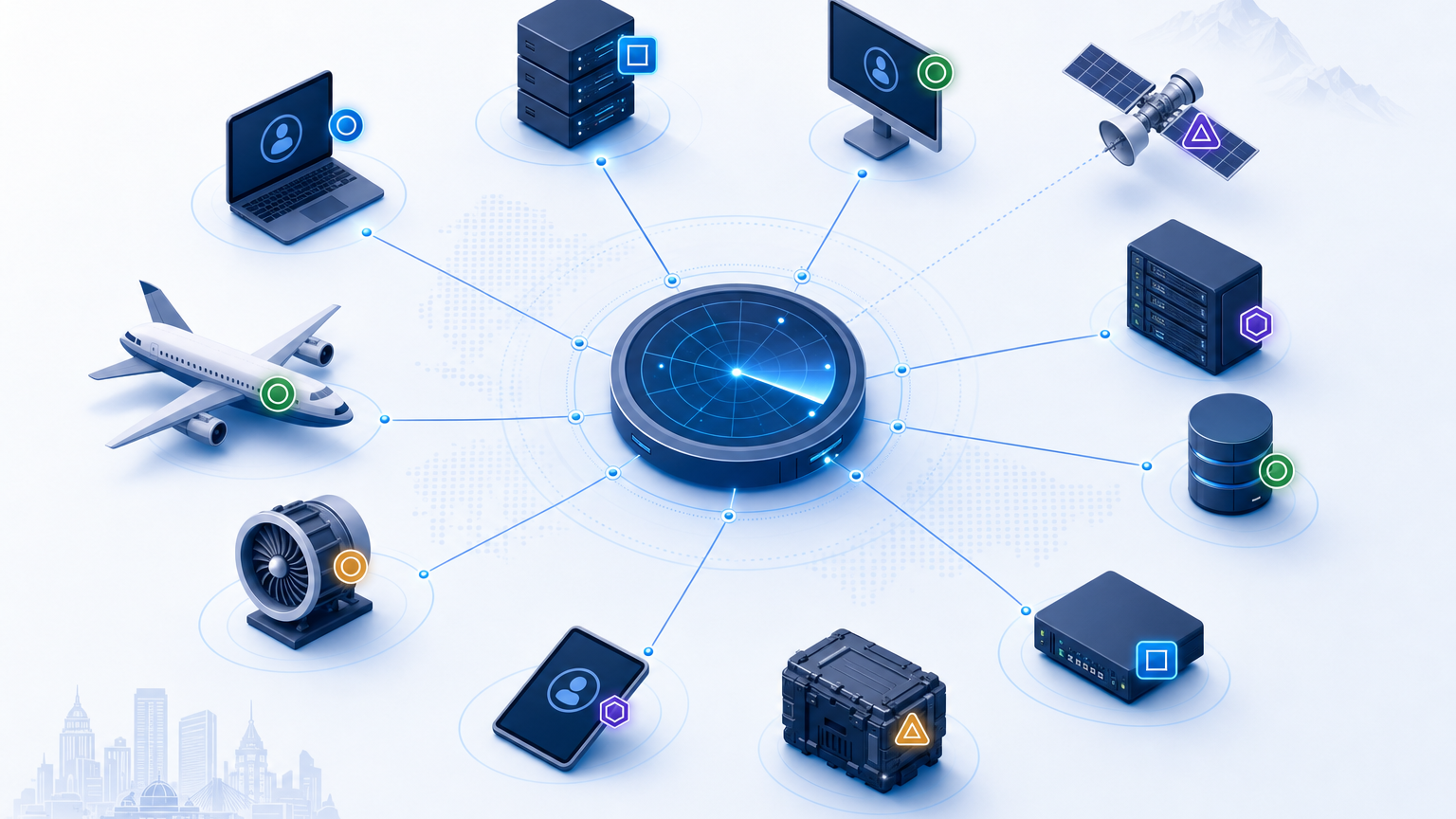
IT asset management for aerospace cybersecurity in Denver means one owned record that follows each asset from purchase through retirement, with discovery supplying the facts and people supplying the accountability. The record earns trust when the network provides what exists, owners confirm responsibility, and every entry carries a source with a timestamp.
Discovery starts from the network using methods matched to each environment. Agentless probes reach on-premises infrastructure across a broad protocol range, while installed agents cover roaming Windows, macOS, and Linux endpoints that leave the office network. The agent versus agentless guide explains where each method fits. Coverage follows network reach and protocol compatibility, and devices that resist discovery receive manual registration so the record stays explicit about its limits. The IT discovery methods page details probe, agent, and import options for mixed estates.
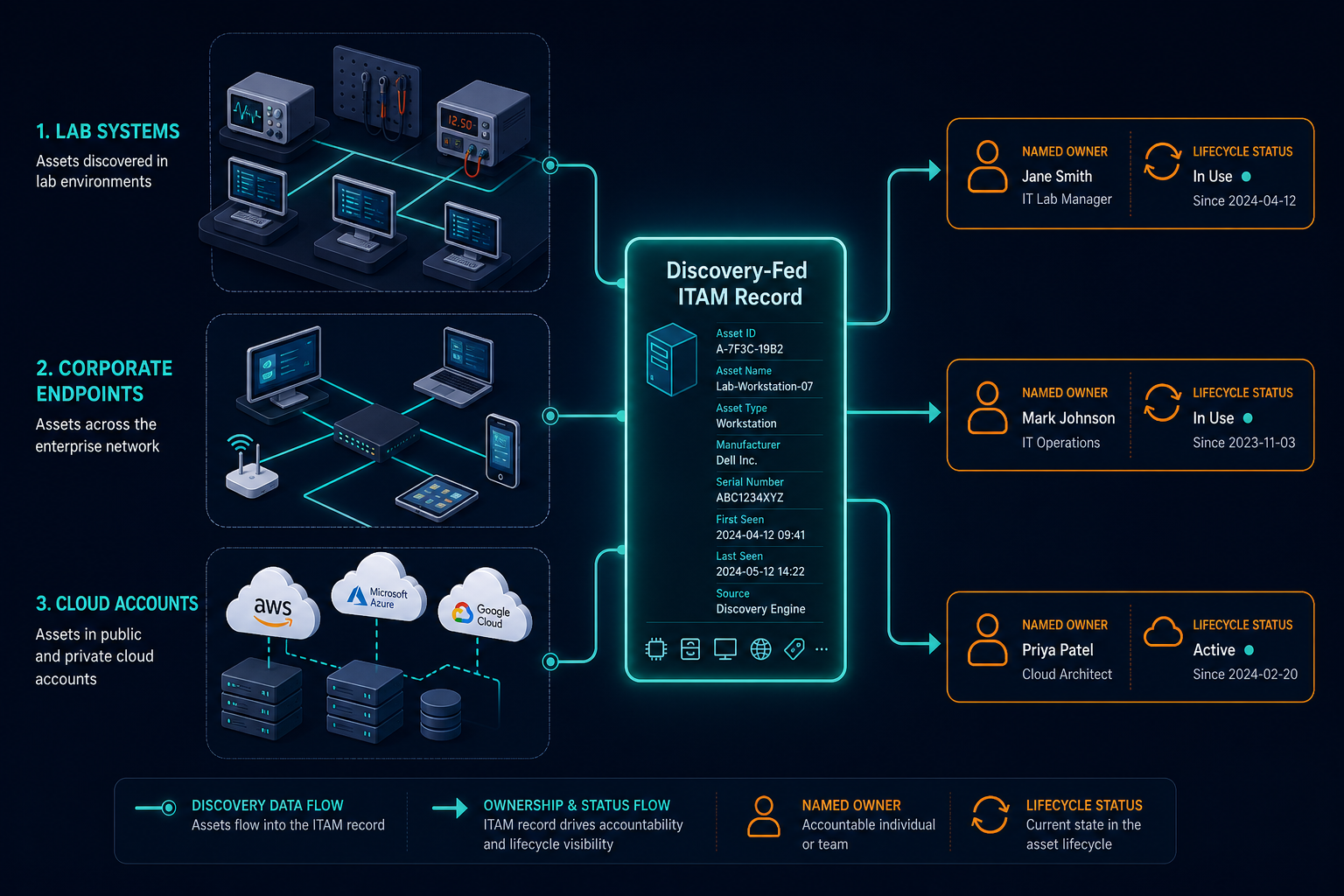
Each asset then receives an owner and a lifecycle status, from requested through production to decommissioned, with the owner named by a person rather than inferred by the tool. Ownership and criticality inputs gathered through collaborative discovery attach accountable names to systems, services, and cloud accounts. Each record carries its source and verification timestamp, so an assessment response can show where a fact originated and when it was last confirmed.
Installed software is compared with owned entitlements down to the device and its owner, so audits start from a reconciled record instead of a fresh count. Usage metering on Windows endpoints adds depth to that comparison where the agent supports it. The ITAM capability page describes lifecycle tracking and entitlement comparison, while the CMDB record structure holds infrastructure, relationships, and ownership together.
The record connects to security work through vulnerability lookups against the National Vulnerability Database for known software, with patch checks on Windows, and through the documented integrations hub so changes flow toward ITSM workflows. Service context comes from service mapping, which renders communication flows after people define each business service. The cybersecurity asset management capability ties ownership and criticality to that inventory so assessment answers carry evidence. Discovery refreshes run on a high-frequency scheduled cadence set by the customer, which keeps evidence current without manual recollection efforts.
What ITAM Settles, and What Stays Elsewhere
The ITAM record answers four questions well: what infrastructure and software exists, who owns it, what lifecycle status each item holds, and when each fact was last verified. Those answers give every downstream process the same starting point.
Several decisions stay with the security and governance teams by design. Whether a system handles controlled unclassified information and how it is scoped belongs to the security team. The system security plan, the assessment itself, network segmentation, and patch execution all sit outside the inventory tool. Physical inventory of air-gapped systems requires hands-on methods, since discovery covers network-accessible devices. Where the tool itself may be hosted is an architecture decision for the organization.
The message for the security lead is straightforward: the record shows what to look at, while scoping and security decisions remain with the security team. Discovery cannot read data content or browser content, so classification work stays human. That boundary keeps the tool honest and the assessment defensible.
Where the Efficiency and Savings Come From
Self-assessment evidence comes first, since collecting inventories and owners before an affirmation consumes review cycles every year. Teams measure this by tracking hours spent producing the asset list for one review before and after the record improves. The mechanism is direct: fewer unowned entries mean fewer interviews before the assessment starts.
Orphaned equipment and licenses come next, since assets without an owner decision keep consuming budget quietly. Teams measure this by counting records with no named owner after each review and driving that count down. Each retired entry that leaves monitoring and billing together removes a small recurring cost.
Software audits and renewals carry the largest sourced figures. Cross-industry respondents in the Flexera report linked above show 48 percent were audited in the past year, 44 percent spent more than one million dollars on audits over three years, and 43 percent report significant savings from license reuse. Teams measure progress by comparing installed software against entitlements before and after each review cycle. Virima’s guide to simplifying ITAM audits and the walkthrough for streamlining compliance audits describe that preparation in practical terms.
New equipment onboarding matters for labs, since engineering equipment that never reaches the register creates the next review gap. Teams measure this in days from purchase to a record with an owner. Incident scoping benefits the same way, since the time from alert to a named system list shrinks when the record already exists. The global IBM breach-cost figure cited earlier frames why faster scoping deserves attention.
The First 90 Days
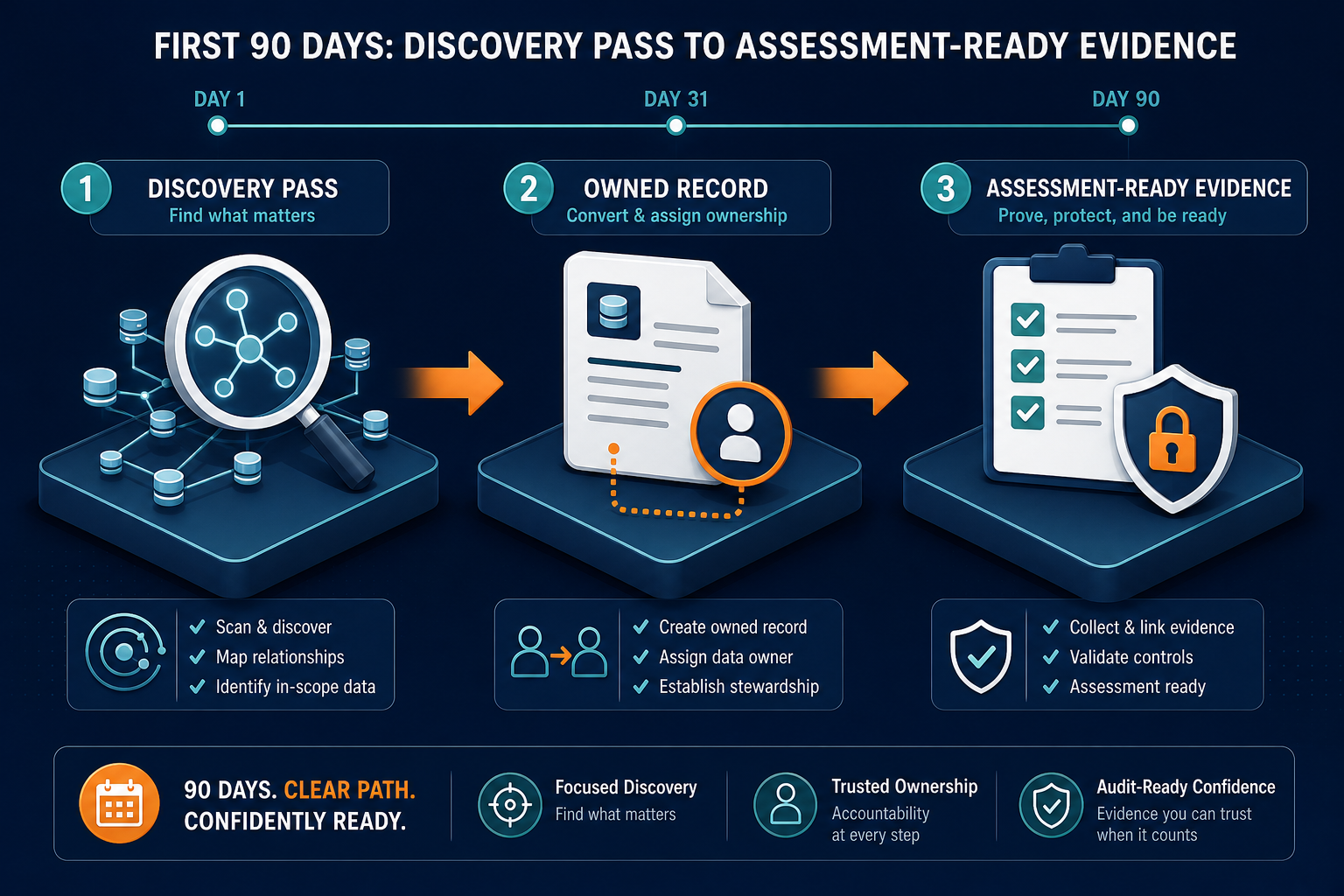
Name an owner for the inventory and for each domain across engineering and test equipment, corporate IT, cloud, and endpoints. Run discovery against one site and one program network, then set a refresh cadence the team can sustain.
- Name an owner for the inventory and for each domain across engineering and test equipment, corporate IT, cloud, and endpoints.
- Run discovery against one site and one program network, then set a refresh cadence the team can sustain.
- Reconcile discovery output against the register, and record each unlisted system with an owner and a decision.
- Set lifecycle statuses for what the discovery pass finds, and compare installed software with entitlements for the first program.
- Close out retired equipment through a named owner decision, update the record, and rerun discovery to confirm.
- Hand the record to the scoping process, where the security team decides controlled-information boundaries while the record shows what exists.
The IT discovery methods page supports expansion to further sites once the first program holds. Teams that route changes through ITSM workflows can use the documented integrations hub rather than building one-off feeds.
Security reviews move faster when every system carries an owner, a status, and a verification date. Explore Trusted Runtime Truth to see how discovery-sourced records support assessment preparation across mixed lab and corporate estates.