Virima’s Guide to Incorporating Agile With ITIL 4 Framework

ITIL4® embraces Agile more fully than any previous version of ITIL. This makes adoption easier and reduces the organizational disruption it typically causes.
ITIL4 still prioritizes customer value. But its focus shifts from service management practices alone to the broader value that programs deliver. This makes it a meaningful departure from earlier versions of the framework.
Agile is a software development methodology. It prioritizes small, rapid, iterative changes with a strong emphasis on customer needs.
The Seven Guiding Principles of ITIL 4
ITIL 4 departs from ITIL v.3 (2011) by centering on seven guiding principles. The Practitioner guidance first introduced these principles; they now form the foundation of ITIL 4:
- Focus on Value
- Start Where You Are
- Progress Iteratively with Feedback
- Collaborate and Promote Visibility
- Think and Work Holistically
- Keep It Simple and Practical
- Optimize and Automate
The first principle, “Focus on Value,” explains why an organization is adopting ITIL and what it aims to accomplish.
The ITIL foundation guide provides additional questions to guide adoption. These questions help IT teams identify which services customers value most and clarify the organization’s reason for adopting ITIL 4:
- What? What is the current issue that must be solved?
- Why? Why must this issue be solved?
- How? How can the guiding principle(s) prevent mistakes during the process to reach the best solution?
The remaining principles deliver on the promise of the framework. Several of them show why ITIL 4 and Agile work so well together.
Start Where You Are
This principle applies well in most organizations. It reduces the disruption typically associated with adoption. In plain terms, it means: do not discard the good work already done.
The goal is to assess what works well and improve it. Teams then apply the three questions above to any pain point and determine how to address it. This process defines the scope of work ahead.
Agile: Progress Iteratively with Feedback
This principle is where Agile thinking enters ITIL 4. It applies the concept of making many small improvements to existing practices. Teams introduce new processes in increments, which makes adoption far easier.
Small, iterative changes let teams collect feedback as they go. They can confirm a process is heading in the right direction before committing to further changes. This gives organizations room to adjust before each next iteration.
Optimize and Automate
After establishing a base ITIL4 adoption program, teams continue looking for ways to optimize and automate. The goal is to automate as many functions as possible, improving efficiency with each iteration.
The ITSM-ITOM Connection
When an organization reaches the optimize-and-automate phase, IT Service Management (ITSM) and IT Operations Management (ITOM) platforms become central to execution.
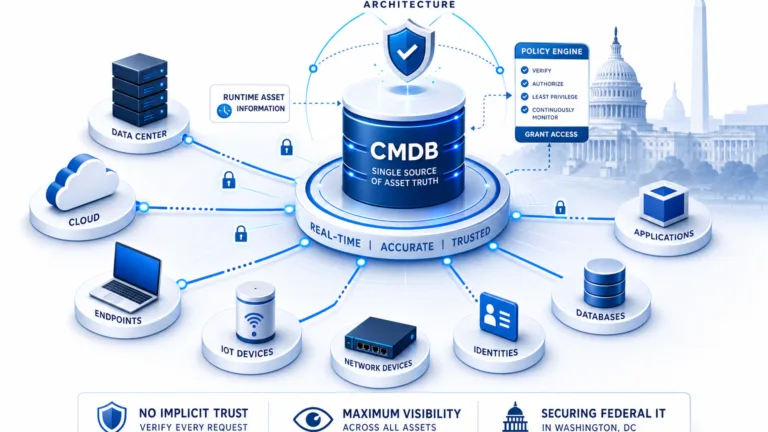
The Configuration Management Database (CMDB) is a core component of every ITIL adoption program. It supplies data to other processes, enabling teams to diagnose issues and assess the risk of any proposed change. A less obvious application is automation’s role in improving ITIL4 practices, such as problem management.
Most organizations use problem management mainly to troubleshoot the root cause of major and repetitive incidents. With the right monitoring tools and a reliable CMDB, however, teams can take a more proactive approach.
Predictive analytics and AI capabilities are now available in many service management platforms. These tools draw on CMDB data and historical event monitoring records. They help organizations identify problems earlier, prioritize them by the services they support, and act before incidents escalate.
Organizations can adopt all of this iteratively. Each cycle starts from the current state and moves progressively toward proactive service management.
Virima automatically discovers and maps your critical IT resources, the interconnections between them, your applications and services, and your users. Ready to see it in action? Schedule a demo at virima.com/request-demo.
ITIL® and ITIL4® are registered trademarks of AXELOS Limited. Copyright © AXELOS Limited 2019. All rights reserved.