Healthcare: Mapping Dependencies Behind Patient-Facing Systems Like EHR and Scheduling

At 7:00 AM on a Tuesday, clinic check-in kiosks across a regional hospital network freeze. Patients lining up for lab work and outpatient procedures cannot confirm appointments. On-call IT engineers receive alert spikes for patient portal timeouts, while clinical staff report that electronic health record (EHR) charts are loading blank pages.
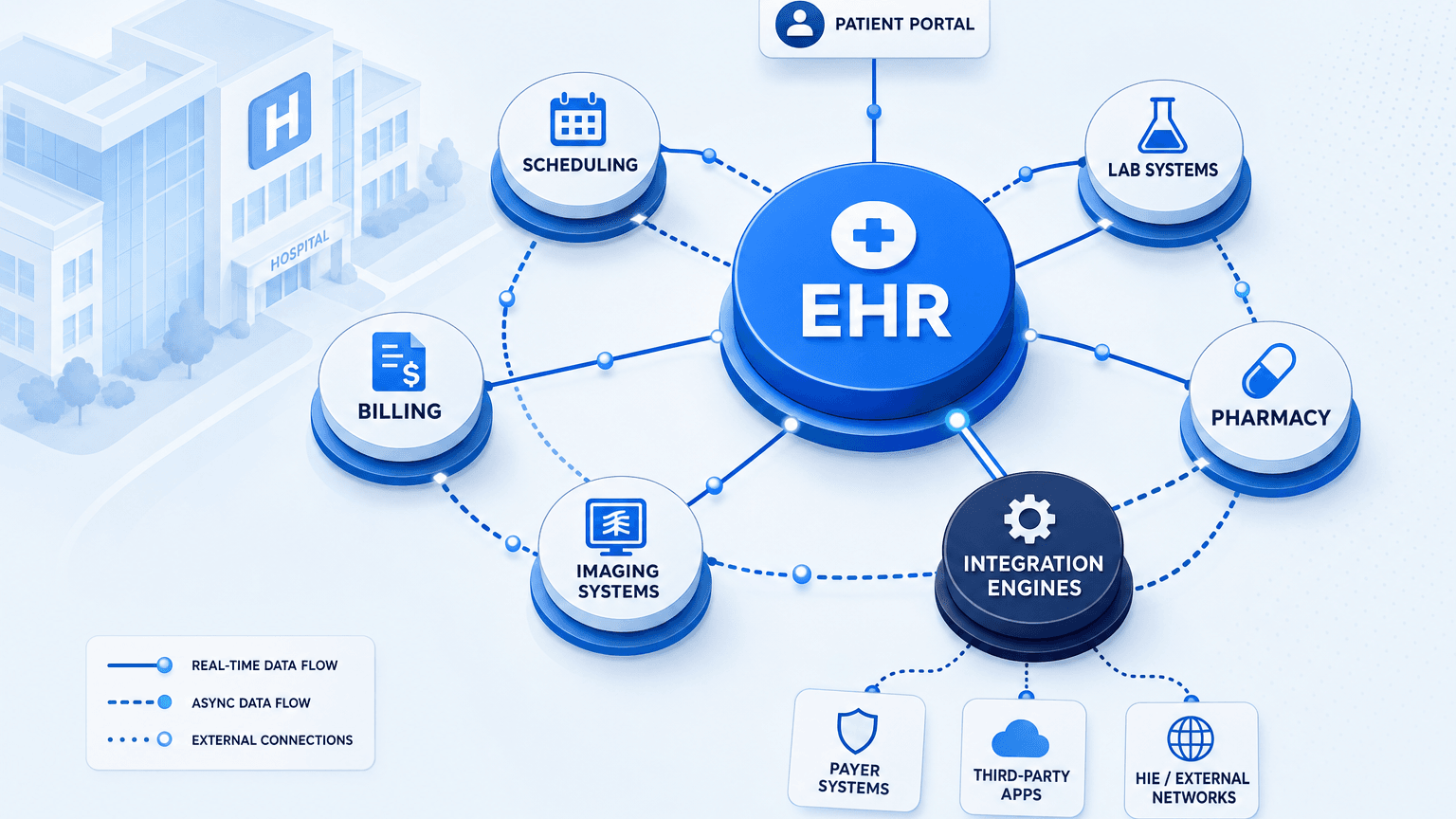
Initial triage points to the primary EHR application servers, which show green status indicators on monitoring dashboards. What the dashboards miss is a silent failure three layers down: a connection pool exhaustion on an unmapped secondary integration engine running on a legacy virtual machine. That engine routes real-time appointment updates between the scheduling portal, lab information systems, and the core EHR.
When healthcare IT directors and CMDB owners rely on static asset spreadsheets or manual network diagrams, critical dependencies remain hidden until a change or infrastructure failure impacts patient care. Mapping dependencies behind EHR, scheduling, and patient portals requires continuous automated discovery, application-aware relationship mapping, and a CMDB that reflects actual runtime truth.
Why is dependency mapping essential for patient-facing healthcare systems like EHR and scheduling?
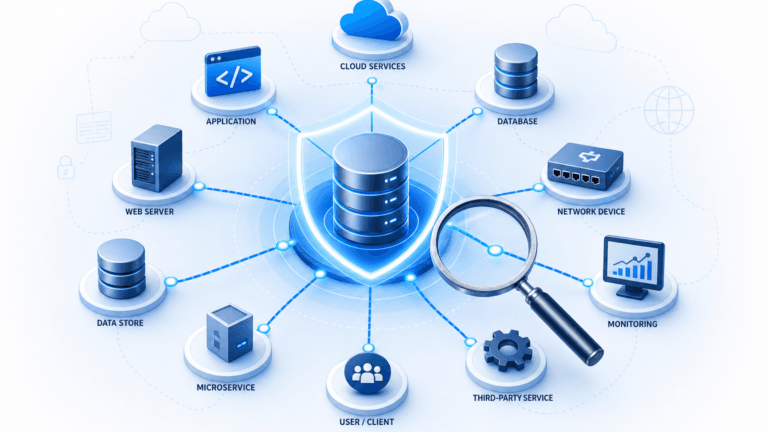
Patient-facing applications rely on complex web of backend databases, API gateways, integration engines, and cloud microservices. Mapping these relationships ensures healthcare IT teams identify single points of failure, assess change risks, and prevent downtime that interrupts clinical workflows and patient care.
The Hidden Complexity Behind Modern EHR and Patient Scheduling Suites
Modern healthcare delivery depends on instant data exchange across clinical and administrative platforms. A patient booking an appointment through a mobile portal touches dozens of interconnected systems before walking through the hospital door.
HIMSS research on healthcare digital transformation highlights that enterprise health systems operate hundreds of clinical and operational software applications. These systems communicate through complex message brokers, web services, and legacy interfaces that change frequently.
1. Multi-Tier Application Stacks and API Gateways
Patient portals and digital scheduling systems present a simple interface to patients, but their underlying architecture is multi-tiered. Incoming web traffic passes through load balancers, firewalls, and API gateways before reaching application logic.
Behind the application tier, microservices query master patient indexes, insurance verification engines, and provider schedule databases. A minor configuration drift on an API gateway or an expired SSL certificate on an authentication server can knock out patient scheduling while core EHR modules appear fully operational.
2. Integration Engines and Legacy Standards
Healthcare infrastructure still depends heavily on HL7 message feeds, FHIR APIs, and DICOM image transfer protocols. Integration engines translate and route messages between specialized point solutions, such as radiology systems, pharmacy databases, and central billing platforms.
Because these integration flows are configured inside engine routing tables rather than network hardware, traditional network ping tools cannot see which clinical application depends on which integration port. When IT teams upgrade a database or migrate a virtual host without mapping these routing pathways, critical data feeds stop silently.
How do unmapped dependencies cause downtime in healthcare patient portals and EHRs?
Unmapped dependencies hide secondary connections, such as identity providers, lab message routers, and database pools. When IT teams modify hardware or software without seeing these hidden links, unexpected outages occur, locking clinicians out of records and preventing patient appointment check-ins.
How Unmapped Application Dependencies Endanger Patient Care
When an enterprise application fails in a retail or financial company, revenue drops. When an application fails in a hospital system, clinical workflows stall, surgery schedules slip, and patient safety risks escalate immediately.
1. Extended Outage Triage and Increased Mean Time to Resolution
During a major clinical system incident, IT teams assemble war rooms with representatives from network, storage, database, and application teams. Without a clear map of service dependencies, engineers spend hours testing individual components rather than isolating the root cause.
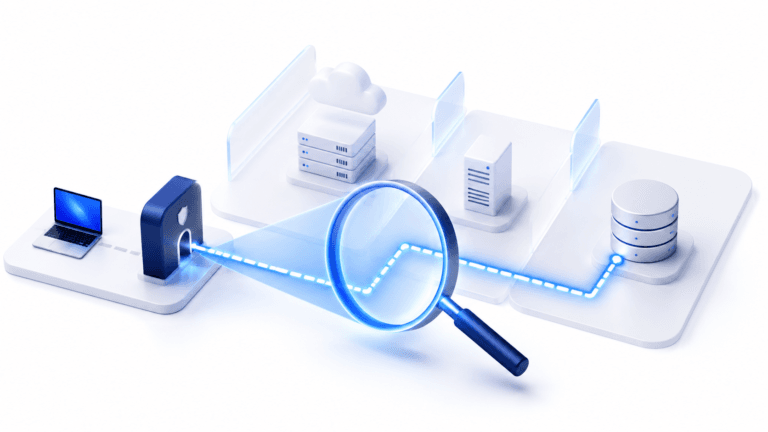
When engineers must manually trace IP addresses and routing logs while emergency department staff wait for patient charts, mean time to resolution stretches from minutes to hours. Clear dependency maps show the exact path from patient portal interfaces down to underlying virtual machines, storage arrays, and network switches.
2. Change-Induced Incidents During Maintenance Windows
Most healthcare IT outages stem from routine maintenance rather than hardware failure. Patching an operating system, applying a database security update, or reconfiguring a network switch seem low-risk when looking at a single server record.
If that server hosts an unmapped service bus component used by patient scheduling, applying a routine reboot takes down appointment booking across every clinic. CMDB owners who lack automated service mapping cannot calculate the true blast radius of scheduled changes.
To eliminate data decay and unmapped patient care risks, IT leaders implement discovery-sourced Trusted Runtime Truth.
Architecting Service Mapping for Healthcare IT Environments
Healthcare networks must maintain strict operational availability. Automated discovery and service mapping tools must inventory systems without injecting network latency or interfering with medical devices.
1. Agentless Multi-Protocol Discovery Across Clinical Subnets
Healthcare environments include a mix of enterprise Windows and Linux servers, cloud workloads, virtual desktop infrastructure, and specialized medical hardware. Deploying software agents across every endpoint is difficult due to vendor warranties and medical device certification constraints.
Agentless discovery uses standard administrative protocols (WMI, SSH, SNMP, and cloud APIs) to query system configurations safely. By scanning subnets on defined schedules, discovery tools capture installed software builds, network interfaces, running processes, and active TCP connections.
2. Context-Aware Dynamic Service Visualization
Capturing raw asset inventories is only the first step. IT teams need to see how assets group into business services, such as “Patient Self-Scheduling,” “Inpatient EHR Charting,” or “Emergency Department Triage.”
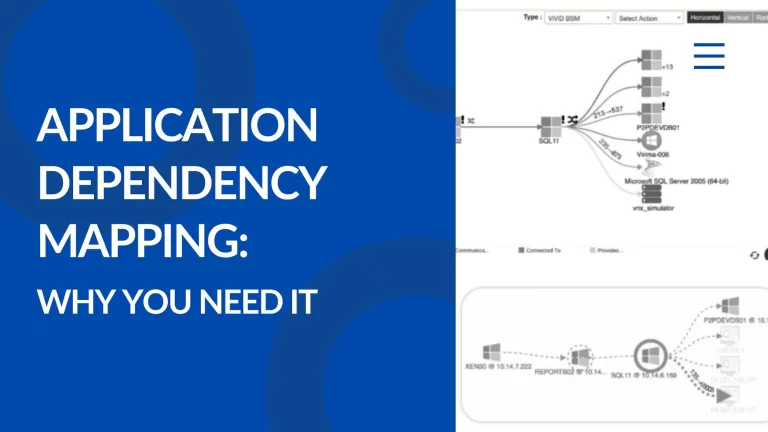
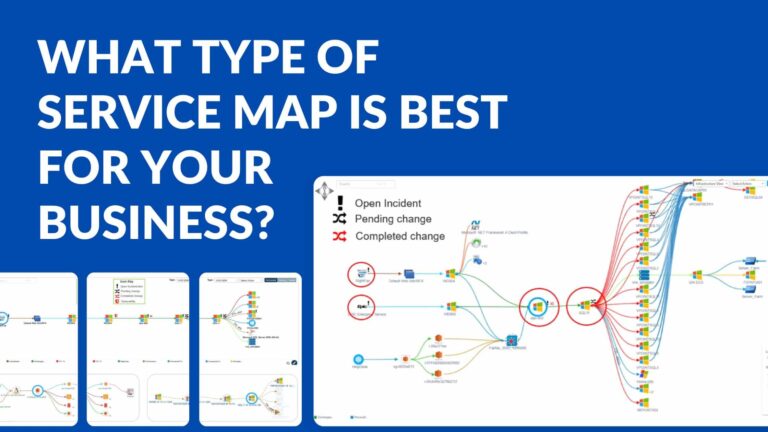
Dynamic service mapping processes connection data to build visual dependency trees automatically. These visual maps display physical, virtual, and cloud infrastructure relationships alongside application-to-application communications. When an alert fires on a database, engineers immediately see every clinical service impacted by that database.
To see how automated discovery connects with healthcare ITSM platforms, visit the Virima integrations hub.
How does agentless discovery safely map healthcare IT environments without disrupting clinical devices?
Agentless discovery uses read-only administrative protocols like WMI, SSH, and SNMP to query servers, virtual hosts, and network devices. By avoiding endpoint software agents and using low-impact scanning schedules, IT teams discover systems without affecting clinical performance or medical device certifications.
Maintaining HIPAA Compliance and Audit Readiness Through Runtime Truth
Healthcare IT organizations operate under strict regulatory oversight, including HIPAA security rules and Joint Commission technology standards. Federal regulators require health systems to maintain accurate inventories of all electronic protected health information (ePHI) assets and document baseline security controls.
1. Mapping ePHI Data Flows and Protected Assets
HIPAA compliance requires knowing exactly where ePHI travels and resides across the network. Manual asset inventories quickly fail audit scrutiny because virtual servers move, cloud storage buckets launch, and remote patient monitoring tools attach to subnets continuously.
Automated dependency mapping tracks data paths between patient-facing web forms, middleware servers, and backend database stores. Compliance officers can generate verifiable reports demonstrating that ePHI processing systems reside behind required firewalls and encryption gateways.
2. Supporting Vulnerability Management and Blast Radius Analysis
When security advisories announce critical vulnerabilities in web frameworks or database software, security teams must act fast. Knowing that a server runs a vulnerable software build is helpful, but knowing that server supports the primary patient scheduling system changes remediation priority.
Discovery-sourced CMDBs combine software vulnerability data with service mapping context. Security engineers prioritize patching based on asset criticality and potential patient care impact, ensuring emergency fixes do not inadvertently trigger clinical system downtime.
Best Practices for Mapping Healthcare IT Dependencies at Scale
Healthcare IT teams that build reliable, audit-ready CMDBs follow a structured operational framework that connects automated technology with team governance.
- Start with High-Impact Patient Services: Focus discovery and service mapping efforts first on mission-critical platforms, such as EHR, patient portal, scheduling, and pharmacy systems, before expanding to administrative workflows.
- Establish Automated High-Frequency Scanning: Schedule agentless discovery scans during off-peak hours to catch configuration changes, temporary cloud instances, and newly attached devices before data turns stale.
- Validate Integration Engine Mappings: Work with clinical application teams to verify message routing pathways and ensure HL7/FHIR message brokers are mapped to their supporting infrastructure.
- Integrate Service Maps into Change Management: Require change advisory boards to review dynamic service maps and blast radius assessments before approving maintenance windows on clinical infrastructure.
- Bind CMDB Data to Operational Workflows: Feed discovery-sourced CIs directly into incident, change, and asset management workflows within your service desk platform.
Healthcare organizations evaluating dependency mapping can see how automated discovery protects clinical availability by requesting a Virima product demo.
Protecting Patient Care Continuity with Discovery-Sourced Dependency Mapping
As healthcare delivery shifts toward digital patient portals, virtual visits, and automated scheduling, the boundary between clinical care and IT infrastructure vanishes. A database timeout or unmapped server reboot is not merely an IT ticket; it is a delayed procedure, an frustrated patient, or a risk to care quality.
Static CMDBs and manual network documentation cannot keep pace with dynamic healthcare environments. By deploying automated agentless discovery and dynamic service mapping, healthcare IT teams gain a clear, defensible view of every system supporting patient care. They eliminate blind spots, resolve incidents faster, and maintain compliance with confidence.
Frequently Asked Questions
How does automated discovery map EHR dependencies without disrupting clinical HL7 and FHIR data streams?
Automated discovery uses passive port listener inspection and read-only administrative queries (such as WMI and SSH) during low-traffic windows. It captures active network connections and running process details without sending intrusive packets or disrupting clinical message streams.
Why are traditional static CMDBs insufficient for healthcare scheduling and patient portals?
Patient-facing systems rely on cloud services, load balancers, and dynamic API endpoints that change frequently. Static CMDBs require manual updates, causing data to age rapidly and hiding critical relationships that cause unexpected downtime during routine IT maintenance.
How does Virima help healthcare IT teams maintain HIPAA compliance during system changes?
Virima provides discovery-sourced service maps that visualize all infrastructure, databases, and network paths supporting ePHI. Change managers review these maps to evaluate blast radius, confirm security controls remain intact, and prevent unauthorized disruptions before approving changes.