Easyvista CMDB: Features, benefits, and alternative

Your change window is two hours away. EasyVista already holds the ticket, the catalog item, and the CMDB CI the change will touch. Then someone asks the question that stalls the CAB: which downstream services still depend on the host you are patching, and is that CI still accurate after last month’s cloud moves?
That is the EasyVista CMDB decision in practice. EasyVista CMDB fits teams standardized on EasyVista ITSM that want configuration data next to workflows, contracts, and the service catalog. Teams evaluate an alternative when hybrid estates change faster than ticket-driven CI upkeep, and when incident or change work needs current dependency context and multi-source asset truth.
This guide covers EasyVista CMDB features and benefits, where the suite path is enough, where depth gaps show up, and how to evaluate Virima as a discovery-sourced CMDB and mapping layer rather than a full EasyVista ITSM replacement.
| When change and incident decisions need current CIs and service paths, not only a CMDB purchase checklist, the missing layer is discovery-sourced runtime accuracy. Explore Trusted Runtime Truth. |
When is EasyVista CMDB enough, and when do teams evaluate an alternative?
EasyVista CMDB fits organizations standardized on EasyVista ITSM that want configuration data beside catalog, contracts, and service workflows. Teams evaluate an alternative when hybrid estates drift between updates, and when incident or change work needs current dependency maps plus multi-source asset truth under the ITSM they already run.
Features of EasyVista CMDB
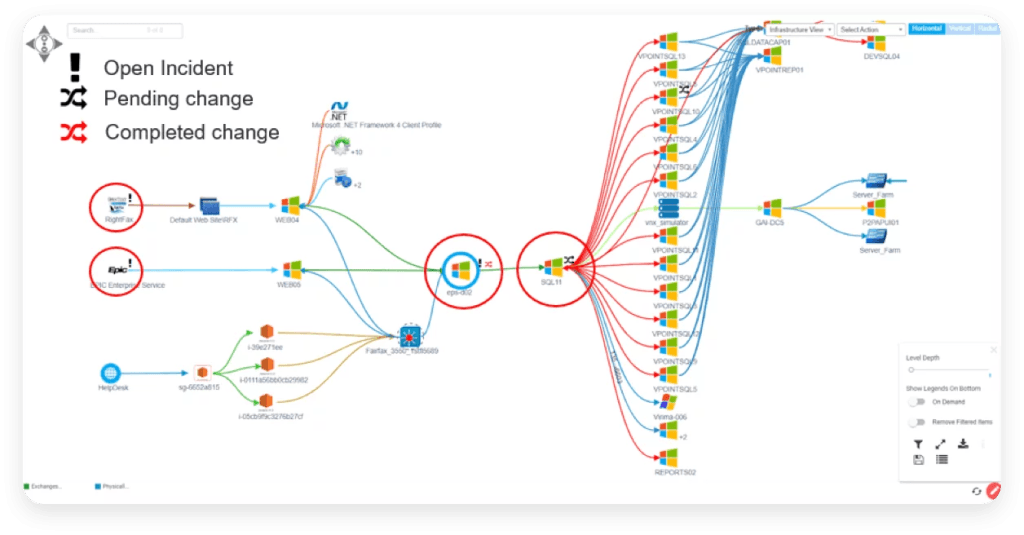
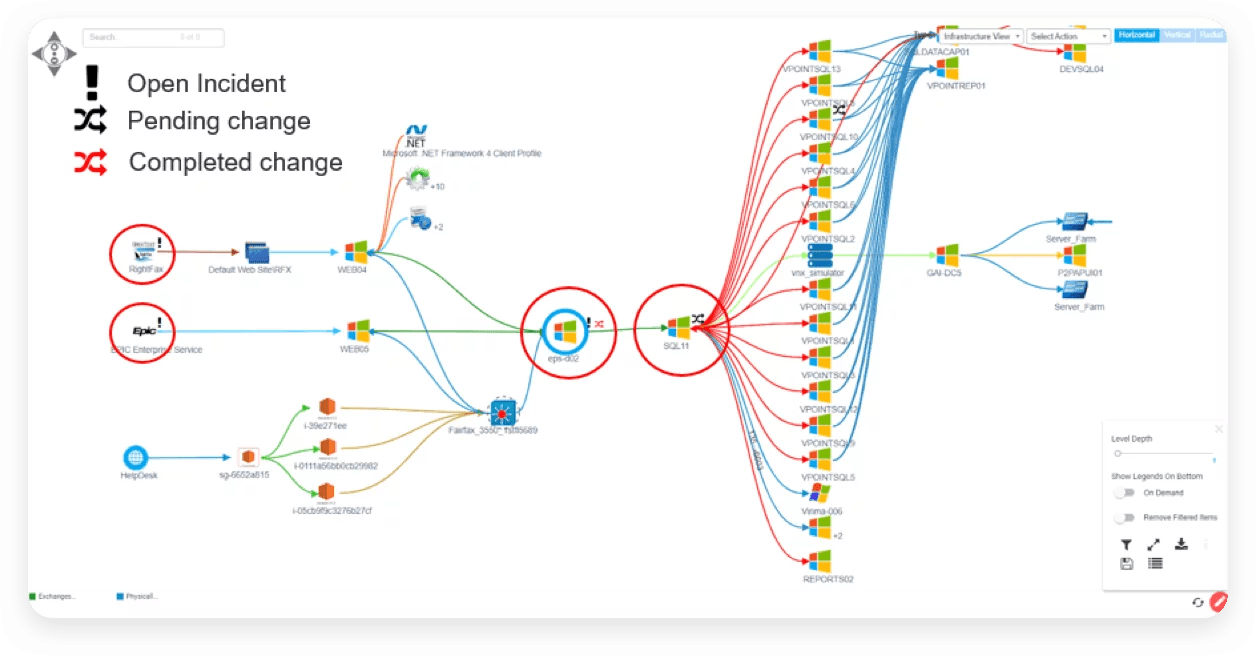
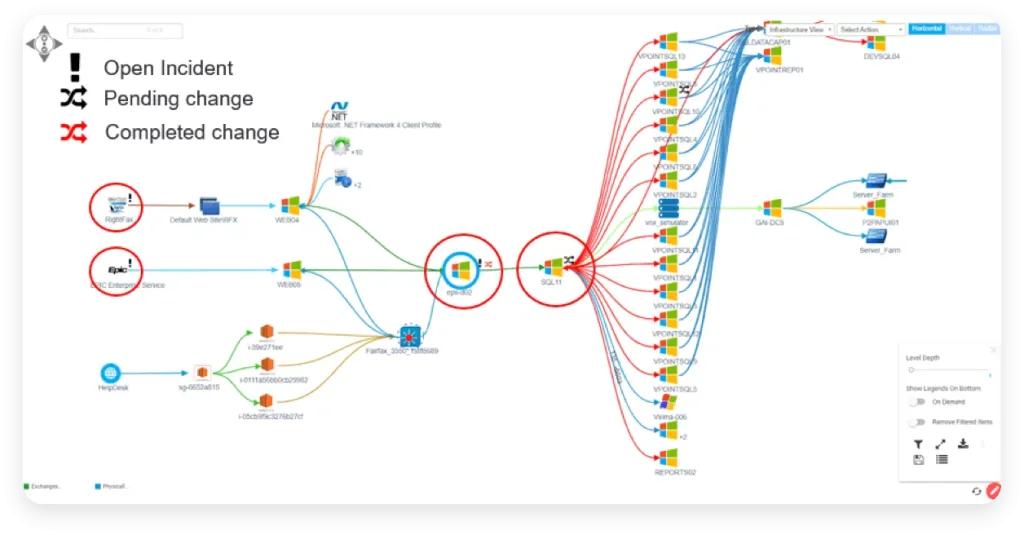 EasyVista CMDB" class="wp-image-33386" srcset="https://virima.com/wp-content/uploads/2025/05/Customizable-and-interactive-views-of-complex-CMDB-relationships-1024×535.png 1024w, https://virima.com/wp-content/uploads/2025/05/Customizable-and-interactive-views-of-complex-CMDB-relationships-300×157.png 300w, https://virima.com/wp-content/uploads/2025/05/Customizable-and-interactive-views-of-complex-CMDB-relationships-768×401.png 768w, https://virima.com/wp-content/uploads/2025/05/Customizable-and-interactive-views-of-complex-CMDB-relationships.png 1256w" sizes="(max-width: 1024px) 100vw, 1024px" />
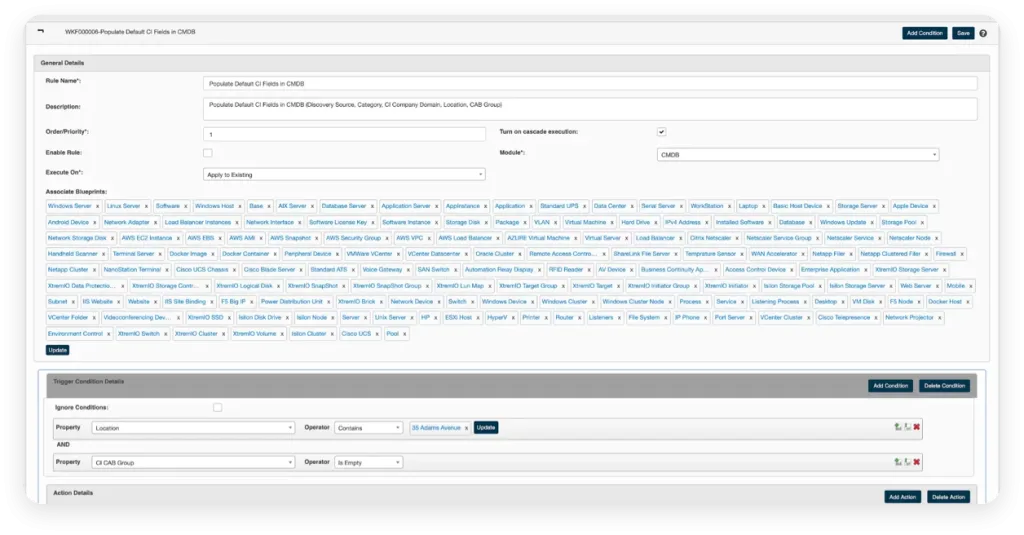
EasyVista CMDB stores configuration items (CIs) such as hardware, software, networks, and related records, along with connections and changes. The goal is clearer decision support inside EasyVista IT service management. EasyVista also markets automated discovery and dependency mapping in its portfolio, including agent and agentless approaches. Confirm what ships natively versus across EV Service Manager modules in current EasyVista documentation.
- Asset and configuration management to track changes, movements, and service dependencies from multiple data sources inside the suite.
- Ready-to-use modules for hardware, software, licenses, and contracts next to ITSM processes for faster early setup.
- Alerting and dashboards for renewals, budgets, catalog-related dates, and consolidated asset views without leaving EasyVista.
- Lifecycle and software compliance from introduction through retirement, including version tracking and reconciliation when data stays in-suite.
Benefits of EasyVista CMDB
For EVSM-centric operations, common benefits include visibility in one place, faster first value from pre-built modules, compliance support beside workflows, dashboard inputs for asset and service planning, change and impact assessment support when relationships are current, and a path that scales with a single-vendor operating model.
What does EasyVista CMDB do well for EVSM-standardized teams?
It keeps configuration data close to ITSM processes, catalog items, contracts, and suite modules for hardware, software, and licenses. That cohesion speeds early setup and day-to-day work when one vendor stack is the operating model and most decisions stay inside EasyVista.
Limitations of EasyVista CMDB
Capability boundaries matter more than vague platform pricing language. Gaps show up when hybrid on-prem and cloud estates change faster than CI maintenance can keep attributes trustworthy; when incident and change teams need blast-radius context from fresh discovery and service definitions; when multi-ITSM estates need a data layer for more than one system of engagement; or when specialist discovery depth across on-prem, AWS, and Azure is the buying driver rather than suite ITSM breadth.
For qualitative sentiment, review independent platforms such as G2 as plain-text guidance, not fixed scores. Confirm current EasyVista discovery and dependency mapping on EasyVista’s official product pages before a bake-off.
EasyVista CMDB vs Virima: decision table
Virima is a discovery-sourced CMDB and service mapping layer. It does not replace EasyVista ITSM.
| Criterion | EasyVista CMDB | Virima | Choose when… |
|---|---|---|---|
| Primary job | CMDB inside EasyVista ITSM | Discovery-sourced CMDB and dependency maps | Suite cohesion vs data-layer depth |
| Discovery | Suite discovery and dependency mapping (confirm EV docs) | Agent-based and agentless methods plus APIs, high-frequency scheduled cycles | Estate change outpaces ticket updates |
| Service dependencies | Dependency support in the EasyVista portfolio | ViVID™ maps after business service definitions are provided | Blast-radius questions dominate |
| ITAM and contracts | Strong module story next to ITSM | Inventory and CI feed into ITAM processes | Contracts must live in the same suite UI |
| ITSM model | Native EasyVista Service Manager path | Integrates with ITSM platforms; does not replace them | Replace-suite vs augment-data |
| Best fit | EV-standardized ITSM shops | Hybrid visibility and map-driven operations | Path selection below |
Three practical paths: (1) Stay on EasyVista CMDB when EVSM is the system of engagement and CI currency matches your change risk. (2) Augment EasyVista ITSM with discovery-sourced CIs and maps where runtime accuracy is the bottleneck. (3) Take the Virima path when hybrid estates need high-frequency scheduled discovery and ViVID™ maps under existing tickets.
Should you replace EasyVista ITSM or add a discovery-sourced CMDB layer?
Most teams should not frame this as a full ITSM rip-and-replace. Stay on EasyVista when suite cohesion wins. Add a discovery-sourced CMDB and mapping layer when CI drift and weak dependency context are the constraint. Virima is evaluated as that data layer under ITSM, not as a catalog and workflow suite substitute.
Exploring alternatives to EasyVista CMDB
Data gaps, stale relationships, and fragmented ownership still drive longer MTTR and failed changes. EasyVista CMDB remains helpful for many EVSM-centered teams. Evaluate a specialist discovery and CMDB approach when the job is keeping hybrid inventory and service paths current enough for high-velocity operations. Shared criteria beat brochure claims.
Virima CMDB: visual, intelligent, and automated
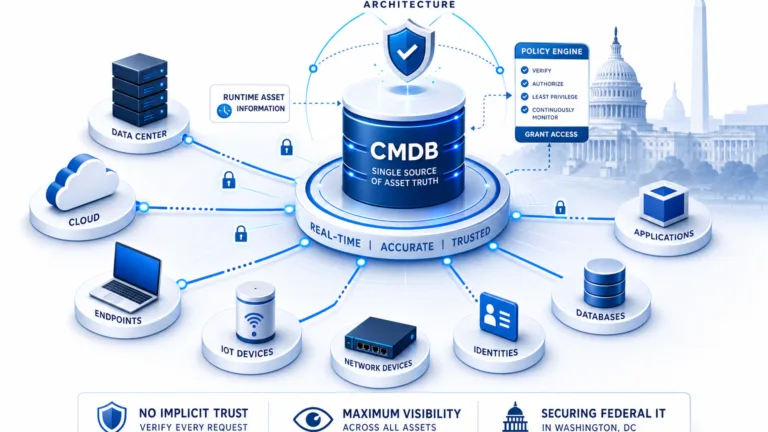
Virima delivers discovery-sourced configuration management with service mapping and ViVID™ visualization for trusted runtime truth: what exists, how it connects, what changed, and what sits in the blast radius.
High-frequency scheduled discovery
An agent-based and agentless IT discovery engine covers on-prem, cloud, and hybrid assets through scans and API integrations across environments such as AWS and Azure. Discovery runs on high-frequency scheduled cycles so the CMDB reflects estate change without pure manual entry. Current public positioning does not claim passive event-driven discovery as shipping product.
ViVID™ after services are defined
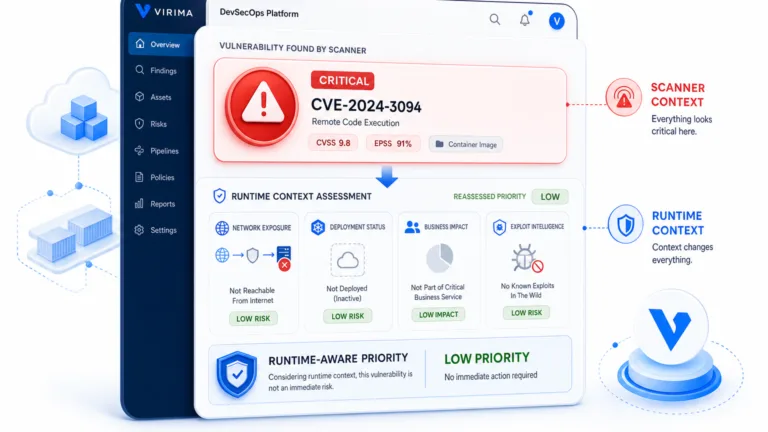
Business services are defined by your team through manual entry, import, or architecture tools. ViVID™ then builds dependency maps from those definitions and discovered infrastructure. It does not invent service composition without that input. Maps can carry ITSM incident and change context, plus vulnerability intelligence where product supports it, for example NIST NVD overlays associated with Windows Server findings, on service maps for blast-radius and remediation prioritization.
Automated CMDB maintenance and ITSM integration
Multi-source reconciliation and scheduled refresh reduce stale CIs. Automation means disciplined discovery and attribute authority, not unsupervised business-service invention. Virima integrates with ServiceNow, Jira, Ivanti, HaloITSM, and other ITSM platforms so discovery-sourced CIs and maps support the system of engagement you already run. See the integrations hub.
How does Virima approach CMDB population and service mapping?
Virima populates CIs through scheduled discovery using agent-based and agentless methods, with multi-source reconciliation for authoritative attributes. Business services are defined by the customer. ViVID™ then builds dependency maps from those definitions and discovered infrastructure and does not invent service composition without input.
If your EasyVista evaluation is stuck on whether suite CMDB currency can keep up with hybrid change, shift the proof from brochure features to a short discovery and mapping pilot on a critical service path.
See how discovery-sourced CMDB data and ViVID™ maps support EasyVista or multi-ITSM estates without replacing your service desk. Bring a critical service path and leave with a clearer stay, augment, or dual-path decision.
Elevate IT operations with a scalable CMDB data layer
EasyVista CMDB is a solid suite option for EVSM-standardized teams. Virima is the alternative when you need high-frequency scheduled discovery, multi-source CI truth, and ViVID™ maps under ITSM tickets. Outcomes teams chase include faster incident context, smarter change planning, fewer surprises from stale inventory, and stronger compliance conversations from owned inventory.
When you want a hands-on walkthrough, request a demo.
Disclaimer: Product capabilities change. Confirm current EasyVista features in EasyVista’s official documentation before purchase decisions.
Frequently asked questions
Is EasyVista CMDB enough if we already run EasyVista ITSM?
Often yes for suite-centric teams that keep CI maintenance disciplined and whose estates change at a manageable rate. Revisit the decision when hybrid drift, weak dependency context, or multi-tool data needs become the binding constraint.
Does choosing Virima mean replacing EasyVista?
No. Virima is positioned as a discovery-sourced CMDB and mapping layer that can augment ITSM platforms. Many evaluations keep EasyVista as the system of engagement and improve the data under tickets and changes.
What should we compare beyond feature checklists?
Compare discovery methods and refresh cadence, how service maps are built after definitions are provided, multi-source CI authority, ITSM integration pattern, and time to trustworthy data on your estate rather than a curated demo.
How does Virima handle service mapping?
You define business services. ViVID™ builds dependency maps from those definitions and discovered infrastructure. Maps become useful for incident and change work when definitions and discovery stay current.
Where do integrations fit in the decision?
If you run one ITSM suite end to end, native CMDB cohesion can win. If you need discovery truth across tools, prefer a hub integration pattern into the platforms you already operate rather than forcing single-suite lock-in for data quality alone.