Can You Name Every System in 24 Hours? CMDB for NIS2 Asset Visibility in Brussels

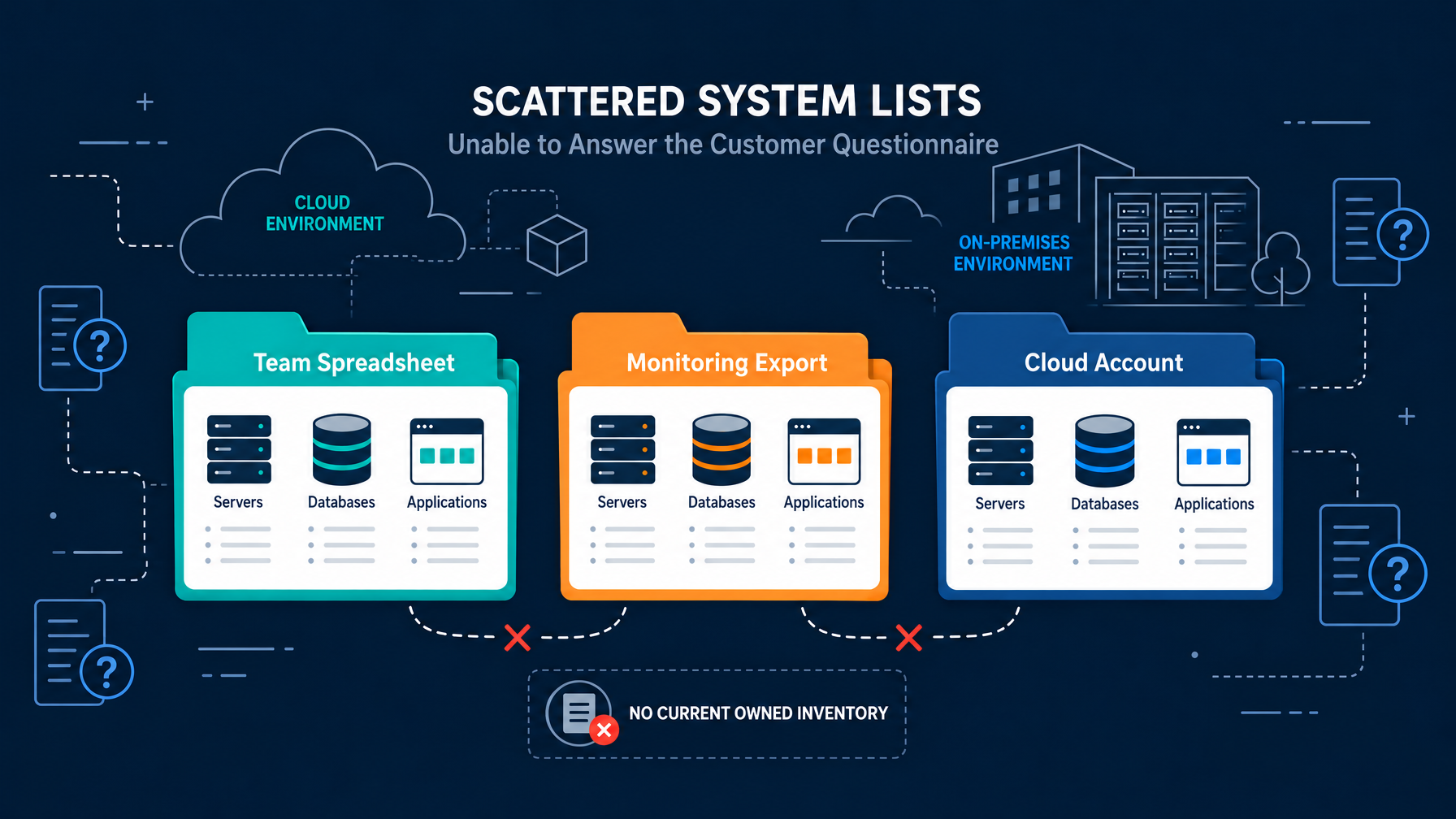
A Brussels services firm supporting an EU agency receives a supplier security questionnaire from an in-scope customer on a Tuesday morning. The customer requests a current list of every system that touches its work, including servers, cloud workloads, and owners. The internal team opens three spreadsheets and a monitoring export, and the four lists disagree on names, owners, and currency.
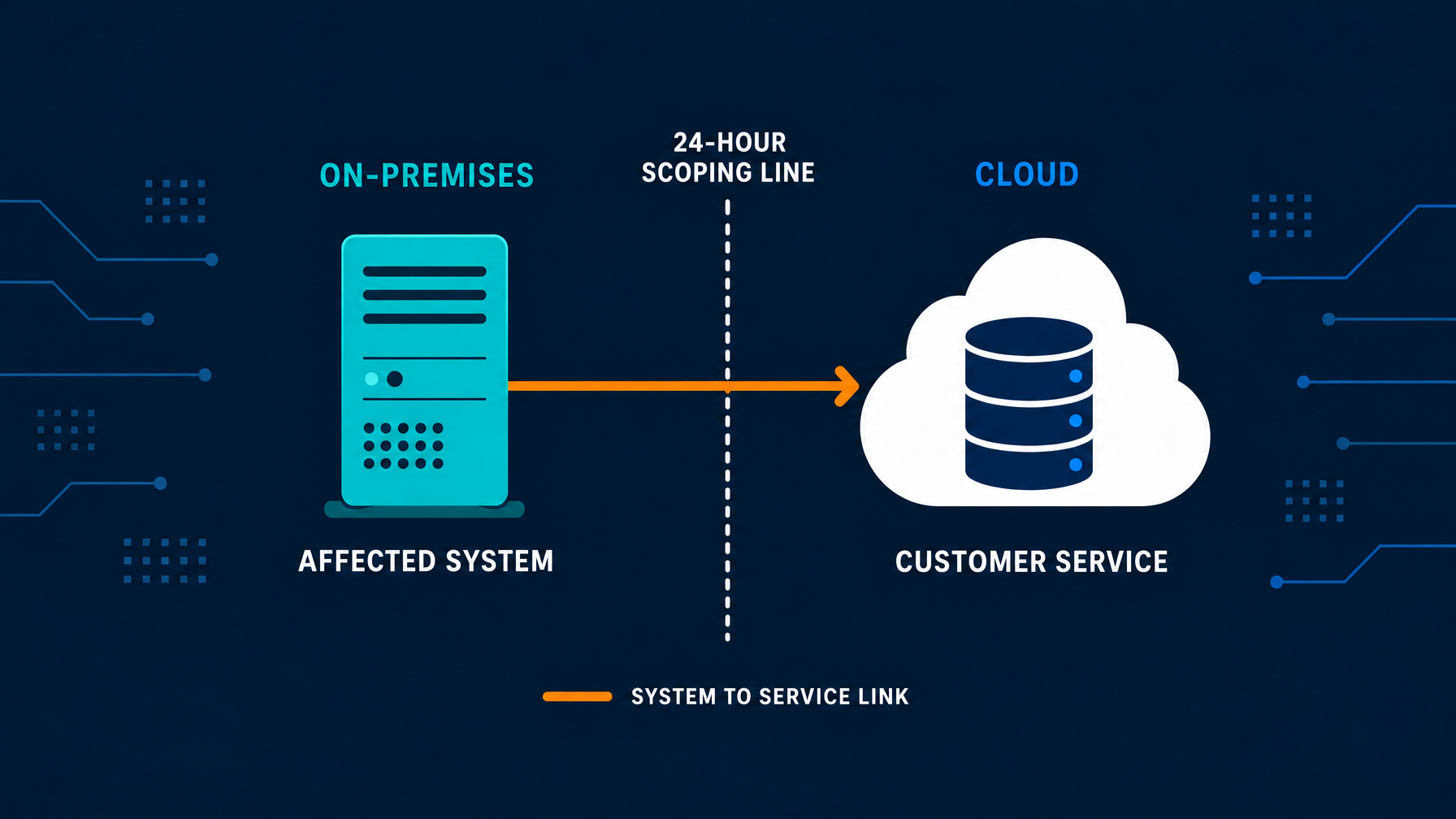
This composite scenario illustrates the exact question that CMDB for NIS2 asset visibility in Brussels must answer for supplier teams. The NIS2 early warning is due within 24 hours of awareness of a significant incident, so the team must know which systems support each customer service before pressure rises.
The Belgian NIS2 law has been in force since 18 October 2024, and it approaches its second anniversary this month. Supplier questions now arrive as contract clauses, audit requests, and assessment evidence rather than general interest inquiries.
Brussels teams that advise, supply, or host services around EU institutions feel this shift early because their customers operate under strict assurance expectations. A discovery-fed record gives those teams a current inventory, documented relationships, and named owners when questionnaires and incident clocks demand precise answers.
Who NIS2 Reaches in Brussels
The phrase EU-institution-adjacent describes a commercial position, while NIS2 scope depends on sector, size, and establishment in Belgium. EU institutions, bodies, offices, and agencies fall under Regulation 2023/2841 for Union entities, which entered into force on 7 January 2024 with CERT-EU support, rather than under the Belgian NIS2 law. The Airbus Protect summary of Regulation 2023/2841 explains that there is a separate Interinstitutional Cybersecurity Board framework for Union bodies. A Brussels supplier therefore answers to customers that may themselves sit under two different regimes.
A company established in Belgium in an Annex I or II sector, at least medium size, qualifies as essential or important under the Belgian framework. The Belgian scope covers the whole in-scope entity, including units where the regulated activity appears ancillary to the main business. Teams unsure of their status should work through the official scope tool with legal counsel and document the resulting determination. For background on the directive itself, the Virima analysis of IT asset visibility for NIS2 compliance in Milan outlines the EU-wide structure that Belgium transposed.
Suppliers outside those sectors still encounter NIS2 through procurement language and security questionnaires. In-scope customers must manage supply chain risk, and Belgian guidance recommends requiring suppliers by contract to meet CyberFundamentals or an equivalent framework. EU institutions may ask suppliers for security evidence through their own procurement processes, although no sourced material reviewed for this article establishes a general NIS2 flow-down from those institutions. Supplier teams should therefore treat every major customer questionnaire as a record request that rewards a current, owned inventory.
What NIS2 Expects From Asset Visibility
The NIS2 Directive text on EUR-Lex structures asset visibility across three layers that Brussels teams should keep distinct.
The precise inventory phrase appears in Implementing Regulation 2024/2690, which calls for a complete, accurate, up-to-date, and consistent inventory in its security measures section. That regulation binds only the entity types named in its annex, including DNS service providers, cloud computing providers, data centre providers, and managed service providers.
Teams outside that annex should read the inventory expectation as interpretation rather than direct text: an organization cannot perform the asset management measure named in Article 21 without a maintained list of assets. This article labels that extension as interpretation wherever it appears.
The Belgian layer adds registration, reporting, and assurance mechanics around those EU texts. In-scope entities register through the national portal and report significant incidents to the national authority under timelines that have applied since October 2024.
Financial entities reading this article face an overlapping regime with its own testing and registration expectations. Those teams can compare notes with the Virima analysis of CMDB accuracy for DORA compliance in Milan before mapping shared evidence across both frameworks. Every other reader should treat the CMDB as support for the asset management measure, while scope decisions, control selection, and reporting remain with legal, security, and governance teams.
The 24-Hour Clock and the Supplier Question
The headline question works as a readiness test, while the legal duty stays narrower than the headline suggests. The 24-hour early warning reports a significant incident based on what the entity knows at that point, and the rule does not demand a complete inventory of every system within 24 hours.
Readiness still determines how quickly a team identifies which services, systems, and owners sit inside the scope of that early report. Teams with a current record scope incidents from evidence, while teams without one assemble lists while the clock runs.
Customer questionnaires create the first pressure, and they arrive with contractual weight behind them. In-scope customers must address security across their supply chains, and Belgian guidance encourages contract clauses that require defined assurance from suppliers.
Result: Suppliers with a current and owned inventory answer customer questionnaires from a verified record within hours. The contrast appears during renewals, when procurement teams compare the supplier inventory against their own service maps and ask about every unexplained difference.
Incident scoping creates the second pressure, and it compresses discovery into the first hours after awareness. The early warning goes out within 24 hours of awareness, which often precedes confirmation of which systems carry customer data or support regulated services.
Result: Teams that connect systems to services and owners scope incident reports faster and with documented evidence. Early warnings serve situational awareness for authorities rather than acting as enforcement triggers, as described in the Chambers Belgium cybersecurity guide.
Two cross-industry figures set the stakes without overstating Brussels-specific frequency.
- The IBM Cost of a Data Breach Report 2026 places the global average breach cost at 4.99 million dollars, an increase of 12 percent over the prior period.
- The Flexera State of ITAM 2026 surveyed 512 cross-industry respondents and found only 36 percent report complete visibility, down from 43 percent, while 78 percent name accurate inventory their leading priority.
Brussels suppliers should read both figures as global context that justifies inventory discipline, rather than as predictions about local incident counts.
The cybersecurity asset management platform connects ownership and criticality to that inventory so questionnaire answers carry evidence. Ephemeral cloud workloads complicate the same task because short-lived instances appear and disappear between manual reviews, a pattern the Virima guide to CMDB practice across cloud environments addresses directly.
CMDB for NIS2 Asset Visibility in Brussels
CMDB for NIS2 asset visibility in Brussels means one maintained record that shows what exists, how systems connect, and who answers for each component. The record earns trust when discovery builds it, relationships explain service impact, and every fact carries a source with a timestamp. Brussels supplier teams use that record to answer questionnaires, prepare assessments, and scope incidents from shared evidence.
Discovery builds the inventory from the network using methods matched to each environment.
- Agentless probes reach on-premises infrastructure across more than 140 extendable protocols, while installed agents cover roaming Windows, macOS, and Linux endpoints that leave the office network.
- AWS and Azure imports bring public cloud accounts into the same record using credentials configured in the Virima interface.
- Coverage follows network reach and protocol compatibility; devices that resist discovery receive manual registration, and cloud imports cover AWS and Azure within the documented connectors.
Relationships turn that inventory into service context that incident teams can read under pressure. ViVID™ Service Mapping shows server-to-server communication flows by port and protocol, which reveals what surrounds an affected system during triage. People define each business service once, including the applications and infrastructure that compose customer-facing delivery. ViVID™ renders the resulting flows for review, while segmentation decisions and enforcement remain with network and security tooling.
Ownership and evidence turn technical data into answers that customers and assessors accept. Ownership and criticality inputs gathered through collaborative discovery attach accountable names to systems, services, and cloud accounts.
Each record carries its source and verification timestamp, so a questionnaire response can show where a fact originated and when it was last confirmed. The CMDB record structure stores infrastructure, relationships, and ownership together rather than scattering them across team spreadsheets. Discovery refreshes run on a high-frequency scheduled cadence set by the customer, which keeps questionnaire evidence current without manual recollection efforts.
Cloud coverage deserves explicit attention because Brussels suppliers often mix an office estate with customer-dedicated cloud accounts. AWS and Azure imports bring those accounts into the same record as on-premises infrastructure through the documented integrations hub. Teams that run discovery against the site and the cloud accounts behind their largest customer contracts cover the systems that questionnaires examine most closely.
What the CMDB Settles and What Stays Elsewhere
A CMDB supports the asset management measure by recording infrastructure with relationships, ownership, and verification evidence. Scope boundaries keep that contribution honest, and every compliance decision outside the record needs a named owner. The following table gives Brussels teams a practical division of responsibilities.
Browser content and data content sit outside discovery reach, so classification and residency work continues in data governance tooling. Vulnerability response uses CMDB adjacency as input, while scanning and remediation tracking continue in security platforms. The message for technology leadership stays direct: the CMDB documents the estate that NIS2 asset management measures require, while accountability for scope, assurance, and reporting stays with designated teams.
Where Efficiency and Savings Come From
Efficiency gains come from replacing repeated manual assembly with a maintained record that teams can query on demand. Customer questionnaires consume the first visible block of time, because every response without a record starts with reconciliation across conflicting lists. Teams that answer from a discovery-fed record measure hours per questionnaire before and after adoption and track the reduction across renewals. Assessment preparation follows the same pattern, since assessors request inventories, owners, and verification evidence for every sampled system.
Incident scoping benefits show in drill performance rather than in abstract tool comparisons. Teams that rehearse with the record measure minutes from alert to a named list of affected systems and owners. The IBM Cost of a Data Breach Report 2026 global average of 4.99 million dollars frames why faster scoping matters for business risk. No Brussels-specific breach cost figure was available from an approved source, so this article caps the claim at global context.
Software audits and orphaned infrastructure add measurable lines that finance teams recognize. The Flexera State of ITAM 2026 reports that 48 percent of surveyed organizations faced a vendor audit in the past year, 44 percent spent over one million dollars on audits across three years, and 43 percent see significant savings from license reuse. A CMDB-backed IT asset management practice compares installed software against entitlements before auditors arrive and flags servers without owners after each review. Orphaned systems then receive a retirement decision from a named owner instead of continuing to consume contracts and support attention.
The First 90 Days
The first 90 days should build a record that answers the next customer questionnaire from evidence. Start by confirming scope with the official tool and legal counsel, then document whether the organization qualifies as an essential, important, or out-of-scope supplier. A written scope note prevents repeated debate every time a customer asks for assurance evidence.
- Name an owner for the inventory and for each domain across infrastructure, applications, cloud, and endpoints.
- Run discovery against one office site and one cloud account connected to the services that the largest customer examines.
- Set a refresh cadence the team can sustain, then define those customer-facing services with their owners and review the resulting communication flows.
- Record ownership in the same place as the technical data so future questionnaires carry names and timestamps.
Reconcile discovery output against existing spreadsheets and record each gap with an owner and a decision. Retirements need a named approver who confirms that decommissioned hosts and cloud instances leave production, monitoring, and billing together.
Rehearse the outcome by answering a mock customer questionnaire from the record and timing the response from request to evidence-backed answer. Teams that connect the record to service management can feed verified data into ServiceNow and Jira Service Management workflows, while the IT discovery methods page supports expansion to further sites.
See What Your Customer Would See
Run a discovery pass across one site and one cloud account, then compare that verified record with the list your team would send a customer today. Explore Trusted Runtime Truth to see how discovery-sourced evidence supports each customer answer, then start a free trial to test the comparison on the services your largest customer asks about most.
Frequently Asked Questions
What does NIS2 require for asset management in Belgium?
NIS2 names asset management among its risk measures, and Belgian assurance builds on CyberFundamentals levels with third-party assessment for essential entities. Teams should confirm exact wording with counsel.
Do EU institutions fall under the Belgian NIS2 law?
Union institutions and agencies fall under Regulation 2023/2841 with CERT-EU support rather than under Belgian NIS2. Brussels suppliers still answer NIS2-driven customer requests through contracts and questionnaires.
Does a CMDB make a company NIS2 compliant?
A CMDB records infrastructure, relationships, and owners that support the asset management measure with evidence. Scope, assurance, reporting, and governance decisions remain with designated legal and security teams.
How does a CMDB help with incident reporting timelines?
A current record names affected systems, service relationships, and owners during early triage and assessment. Detection, reporting decisions, and formal submissions remain with security leadership and counsel.
Does Virima connect with ServiceNow or Jira Service Management?
Virima feeds verified inventory and service context into ServiceNow and Jira Service Management alongside other listed ITSM platforms. Teams keep record ownership in Virima while fulfilling requests inside service workflows.