Business Continuity vs Disaster Recovery: What Actually Differs

The payroll app is up, but the identity provider is not. Finance can open tickets, yet nobody can approve a wire because MFA cannot complete. Leadership asks whether this is a continuity problem or a recovery problem, and two teams answer with two different runbooks. That split is where business continuity vs disaster recovery stops being vocabulary and starts burning minutes you cannot buy back.
Business continuity (BC) keeps critical work moving while conditions are bad. Disaster recovery (DR) restores the technology that failed so normal operations can resume, and most organizations need both. Mixing them produces plans that look complete in a binder and fail when a dependency nobody mapped takes the service down.
This article contrasts the two disciplines, shows where a business continuity plan vs disaster recovery plan should diverge, and explains why service dependency data is the shared foundation underneath both.
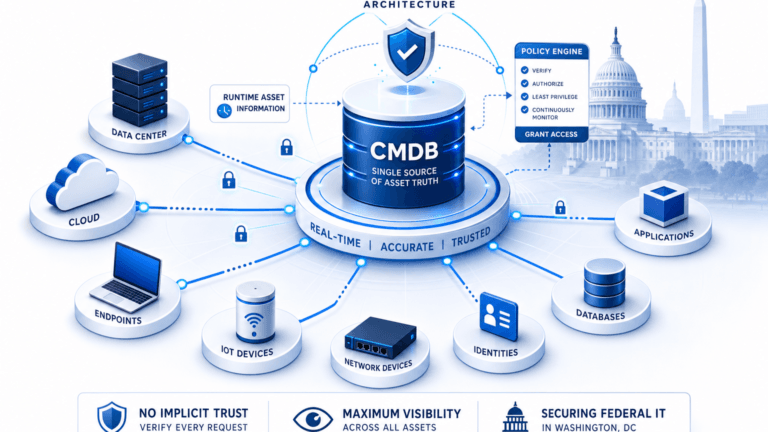
| When BC and DR disagree on the same service path, the issue is shared runtime accuracy across dependencies, ownership, and restore order. Explore Trusted Runtime Truth. |
Business Continuity vs Disaster Recovery at a Glance
Use this table when stakeholders treat the labels as interchangeable, as they are not.
| Dimension | Business continuity (BC) | Disaster recovery (DR) |
|---|---|---|
| Primary question | How do we keep critical work running during disruption? | How do we restore failed IT systems and data? |
| Scope | People, process, facilities, vendors, communications, and IT | Infrastructure, applications, data, networks, and recovery sites |
| Timing focus | Before, during, and after an event | Mainly during and after IT failure |
| Success measure | Critical business functions stay within agreed limits | Systems return within RTO and RPO targets |
| Typical owners | Business leaders plus risk, ops, and IT partners | IT operations, infrastructure, and application owners |
| Plan artifact | Business continuity plan (BCP) | Disaster recovery plan (DRP) |
| Dependency need | Which services matter, in what order, and who acts | Which CIs and data paths must restore first |
What is the difference between business continuity and disaster recovery?
Business continuity keeps critical work moving through disruption across people, process, facilities, vendors, and technology. Disaster recovery restores systems, applications, and data after failure within agreed RTO and RPO targets. Continuity owns degraded-mode operations while recovery owns the technical path back to normal footing.
IBM’s comparison of business continuity and disaster recovery treats both as risk management strategies for unexpected incidents. Continuity work aims to keep operations viable, and recovery work aims to restore IT after disruption. That split matches how mature IT organizations staff and fund the work.
Look at the last row of the table again. Both sides need dependency truth, just for different jobs. Continuity teams need ranked services and who acts when a path breaks. Recovery teams need the configuration items (CIs) and data paths that must restore first. That shared need is why discovery-fed CMDB records and service mapping sit under both disciplines long before backup SKUs or crisis scripts get written. Virima is built for that ground-truth layer: multi-source discovery into the CMDB, service definitions your team supplies, then application-to-infrastructure maps operators can trust during impact analysis. The rest of this article keeps the BC vs DR contrast clear, then returns to how that map layer keeps both plans honest.
What is the Difference Between Business Continuity and Disaster Recovery?
BC keeps essential work running through disruption across people, process, and technology. DR restores systems, applications, and data after failure within agreed RTO and RPO targets. Continuity owns degraded-mode operations while recovery owns the technical path back to normal footing.
What Business Continuity Covers
Under pressure, the BC agenda is which work must continue, at what capacity, and through which alternate path when a ransomware event, regional outage, supplier failure, or facility issue hits.
NIST Special Publication 800-34 Revision 1 defines a business continuity plan as documentation of predetermined instructions or procedures that describe how an organization’s mission and business processes will be sustained during and after a significant disruption. NIST also notes that a BCP focuses on sustaining those processes, such as payroll or customer service, during and after disruption, and may cover a single unit or the whole enterprise.
A strong continuity program usually includes a business impact analysis (BIA), prioritized business functions, manual or alternate procedures, crisis communications, vendor contingencies, and clear decision rights. IT is inside that picture, but IT is not the whole picture. If customer support can take calls on a secondary channel while the primary CRM is offline, that is continuity even before full system recovery finishes.
Business Continuity Strategies That Hold Up
Business continuity strategies fail when they assume every function needs full capacity on day one. Better programs tier services and the highest-priority functions get the tightest time objectives and the most rehearsed alternate paths. Lower tiers wait, degrade gracefully, or pause with an explicit customer message.
Practical strategy patterns include:
- Alternate process paths: paper, secondary tools, or partner-run steps that keep revenue or safety work moving.
- Workforce flexibility: remote access, secondary sites, and role cross-training so a single office or team is not a single point of failure.
- Supplier and SaaS contingencies: documented contacts, contractual recovery expectations, and known integration choke points.
- Communications playbooks: who speaks to customers, regulators, and staff when systems are partial.
None of those strategies work if leadership cannot name the services that matter or the systems those services sit on. That is why continuity planning and configuration data belong in the same conversation. For the implementation path, see business continuity planning with ITAM and maps. The comparison point here is simpler: BC without service context becomes a list of hopes.
What Disaster Recovery Covers
The DR agenda is different from the continuity agenda above: which systems come back first, from which copies, in which order, and how much data loss is acceptable after a major failure.
NIST SP 800-34 describes a disaster recovery plan as a written plan for recovering one or more information systems at an alternate facility after major hardware or software failure or facility destruction. In the same guide, the DRP is information system-focused and designed to restore operability of the target system, application, or facility infrastructure at an alternate site after an emergency.
Core DR concepts include recovery time objective (RTO), recovery point objective (RPO), backup and replication design, runbooks, failover and failback, and regular tests. NIST defines RTO as the maximum time a system resource can remain unavailable before impact on other resources and supported mission processes becomes unacceptable. RPO is the point in time, before disruption, to which process data must be recovered from the most recent usable copy after an outage.
DR teams care about storage consistency, identity paths, network cutover, application start order, and the difference between “the VM is up” and “the business transaction completes.”
DR is usually narrower than BC. A clean DR execution can still leave the business partially impaired if staffing, facilities, or third parties are not covered in the continuity plan. The reverse is also true, as clever manual workarounds collapse if the identity platform never returns and nobody owns the technical restore path.
For a step-oriented DR build, see Virima’s guide to an IT disaster recovery plan.
Is disaster recovery part of business continuity?
Disaster recovery is usually a major technical component inside a broader business continuity program. Continuity defines which business outcomes must continue and how people operate under stress. Recovery defines how IT systems and data are restored so those outcomes can return to normal technical footing. Treating DR as the entire continuity program leaves people, vendors, and communications uncovered.
Business Continuity Plan vs Disaster Recovery Plan
A business continuity plan vs disaster recovery plan comparison is where teams get practical. Both documents should reference the same service list and the same criticality tiers. They should not copy-paste the same content under two covers.
IBM’s BCDR guidance is useful here: continuity plans are largely proactive, aiming to maintain operations before, during, and right after a disaster, while disaster recovery plans are more reactive and focus on how to respond and recover after an incident. Both still share heavy dependence on RTO and RPO as design controls.
What Belongs in the BCP
The BCP should answer business questions:
- Which products, plants, regions, or customer journeys are in scope?
- What is the maximum tolerable downtime for each critical function?
- Which alternate processes keep work moving when primary systems are impaired?
- Who declares an incident, who authorizes spend, and who talks externally?
- Which vendors must respond, and under what contractual clocks?
- How will staff operate if buildings, laptops, or SaaS tenants are limited?
The BCP should point to technical runbooks without swallowing them. When it lists “restore ERP,” it should name the business function, the owners, and the acceptable degraded mode, then link to the DRP for restore mechanics.
What Belongs in the DRP
The DRP should answer technical questions:
- Which applications and infrastructure components support each critical function?
- What are RTO and RPO per system, and how were they derived from the BIA?
- Where do clean copies live, and how is integrity verified?
- What is the restore order across identity, network, data, and app tiers?
- How is failover declared, tested, and reversed?
- What evidence proves a service is healthy enough for business use?
If the DRP cannot trace a system to a business service, restore priority becomes politics. Loud teams get recovered first. Quiet revenue paths wait.
Shared Inputs Both Plans Need
Both plans need a current inventory of configuration items (CIs), ownership, and relationships. Both need tested contact trees. Both need a change history that explains what shifted before the event. Both need a single ranked service list so BC tiers and DR RTOs do not contradict each other.
When those inputs are stale, business continuity disaster recovery programs look mature in audits and still surprise operators during the real event. The failure mode is familiar: the runbook names a server that was decommissioned, or it omits a middleware hop that every checkout call still uses.
Do I need both a business continuity plan and a disaster recovery plan?
Most mid-size and enterprise environments need both. The BCP covers business priorities, alternate ways of working, and communications. The DRP covers technical restore mechanics, copies, and sequence. One shared ranked service list and dependency paths should feed both documents so labels do not drift under pressure.
Where Business Continuity and Disaster Recovery Meet
Disaster recovery and business continuity meet at service outcomes. Finance does not buy “server restored.” Finance buys “payroll posts.” Support does not buy “database online.” Support buys “case updates commit with the right entitlements.”
Where do business continuity and disaster recovery meet?
They meet at service outcomes. Finance buys payroll posts, not server restored. Support buys case updates with correct entitlements, not database online. Shared dependency-aware prioritization ranks functions, maps infrastructure, sets BIA-driven RTO and RPO, and rehearses alternate paths beside technical restore on the same service list.
That meeting point is dependency-aware prioritization:
- Rank business functions from the BIA.
- Map each function to the applications and infrastructure it needs.
- Set RTOs and RPOs that match business tolerance, not only storage product defaults.
- Design alternate BC paths for the gap between impact and full restore.
- Rehearse both the manual path and the technical path on the same service list.
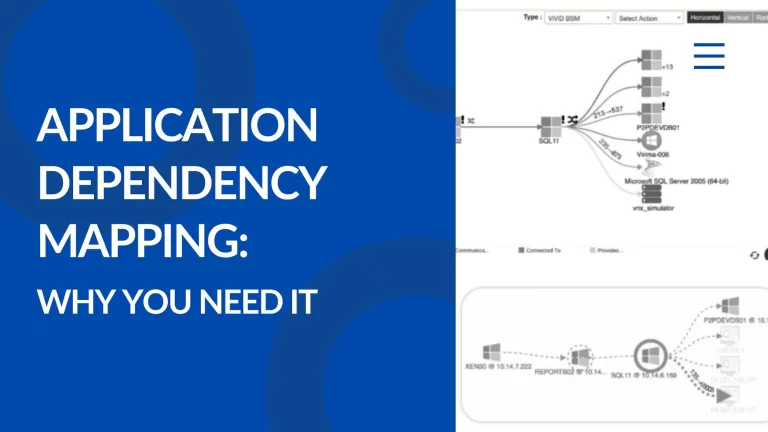
Service mapping is how step 2 stops being a whiteboard memory exercise. Service mapping for disaster recovery shows why maps belong in DR design, and business continuity dependency mapping covers the continuity-side resilience angle.
The cost of getting that join wrong keeps rising. IBM’s Cost of a Data Breach Report 2026 put the global average breach cost at USD 4.99 million, a 12% increase over 2025. Breach cost is not identical to every continuity event, yet it remains a credible marker of how expensive prolonged disruption and recovery work have become.
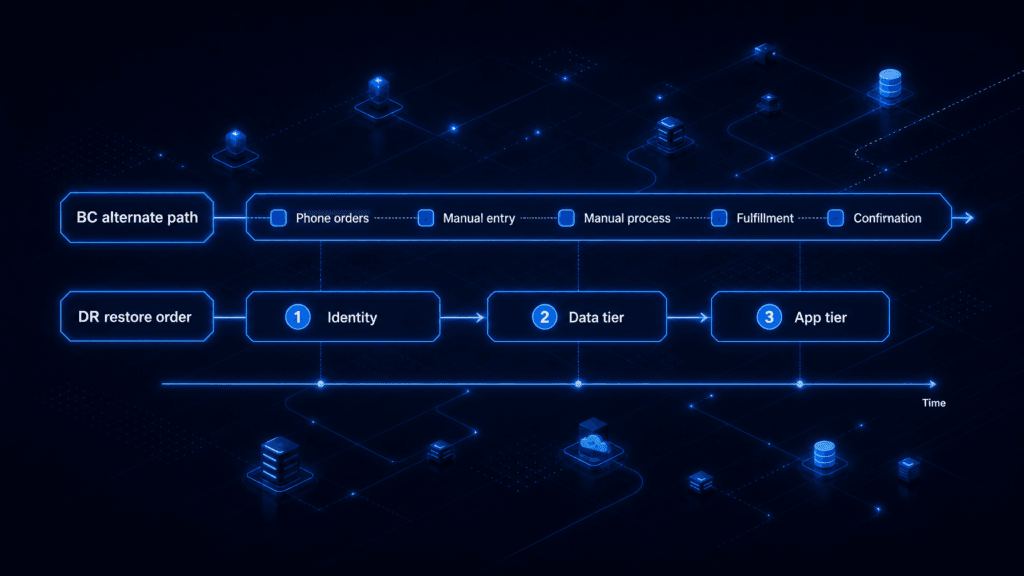
How do business continuity and disaster recovery work together?
Business continuity defines which outcomes must continue and which alternate paths keep them alive. Disaster recovery restores the IT stack those outcomes normally run on. They work together when both plans share one ranked service list, matching time objectives, and dependency maps that show restore order and blast radius. Without that shared list, continuity workarounds and technical restores pull in different directions.
Why Service Maps and CMDB Data Underpin Both Disciplines
Why do service maps and CMDB data sit under both BC and DR?
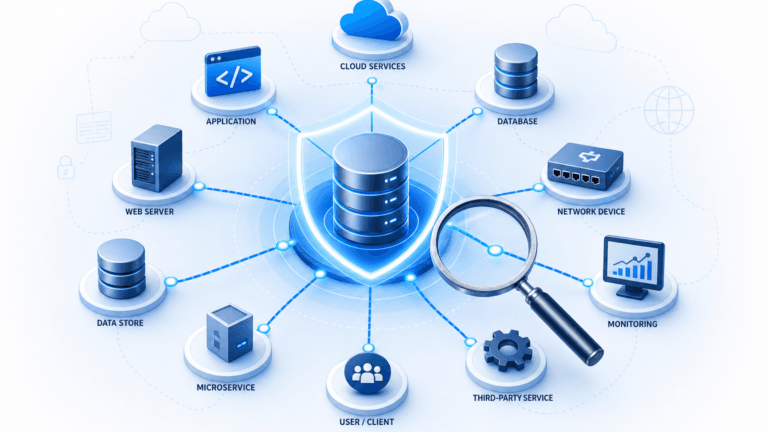
You cannot sequence recovery you cannot see, and you cannot design a continuity workaround without knowing which technical pieces a function truly needs. A CMDB holds CI records, ownership, and relationships. Service maps present those paths operators follow during impact analysis so both clocks use the same estate picture.
You cannot sequence recovery you cannot see. You also cannot design a continuity workaround if you do not know which technical pieces a function truly needs versus which ones only look important in a slide deck.
A configuration management database (CMDB) holds CI records, ownership, and relationships. Service maps present those relationships in the paths operators actually follow during impact analysis. Together they support questions both BC and DR owners ask under pressure:
- If this database host fails, which customer-facing services degrade?
- If we restore app servers before identity, what still fails?
- Which changes landed in the last maintenance window on this path?
- Who owns the CI that sits on the critical edge of the map?
Once service definitions are provided, manually, by spreadsheet import, or through an enterprise architecture integration, ViVID™ builds dependency maps from that input and does not invent which applications form a service. Service maps show blast radius and restore order for those defined services during continuity and recovery work.
Virima’s approach starts with multi-source discovery that populates and refreshes CI data in the CMDB. Teams define business services (manually, by import, or via architecture tools such as LeanIX). ViVID™ service mapping then builds application-to-infrastructure dependency maps from those definitions plus discovered relationships. Maps stay current as infrastructure changes are rediscovered on schedule through high-frequency discovery cycles. Disciplined CMDB hygiene keeps that picture trustworthy for both continuity and recovery work.
That trusted picture is the operational half of Trusted Runtime Truth: what exists, how it is connected, what changed, what will break, and who owns it. BC and DR programs that plan against stale spreadsheets inherit every gap the spreadsheet never captured.
For practitioners building the continuity document itself, Virima’s steps for an IT continuity plan remain the process guide. Pair those steps with live service context so the plan names real paths instead of last year’s inventory export.
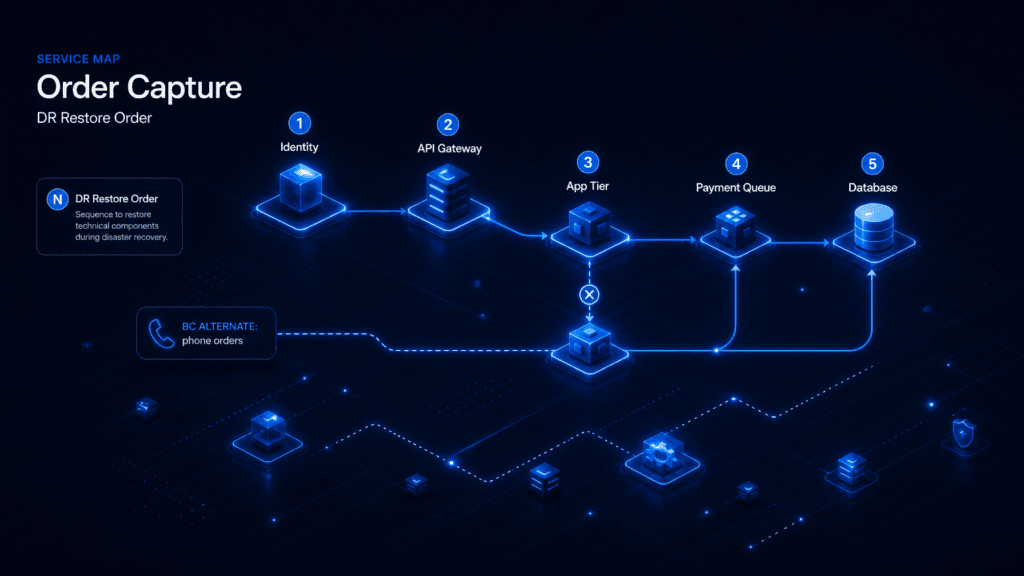
When availability owners need the same dependency picture for uptime work, Virima’s service availability use case sits on that shared foundation.
Disaster Recovery Tools: Where Discovery and Mapping Fit
To operationalize that dependency-aware prioritization, teams assemble a multi-layered toolchain rather than a single product. Search interest in disaster recovery tools often lands on backup appliances, replication software, cloud failover, and orchestration platforms. Those categories matter, and they are not the whole stack.
A workable DR toolchain usually has layers:
| Layer | Job | Examples of tool types |
|---|---|---|
| Data protection | Copy and retain recoverable data | Backup, snapshots, immutable storage |
| Replication and failover | Keep secondary capacity ready | Database replication, storage mirror, cloud DR |
| Orchestration | Execute runbooks at speed | DR automation, runbook engines |
| Observability | Detect and confirm health | Monitoring, logging, synthetic checks |
| Ground truth | Know what to restore and in what order | Discovery, CMDB, service mapping |
Virima sits in the ground-truth layer. It does not replace your backup vendor. It reduces the chance that orchestration runs a perfect failover against an incomplete service definition. When CI relationships and service maps are current, DR tools receive better scope, better order, and better proof of what “recovered” means for the business.
If you already run workflow on ServiceNow, Jira Service Management, Ivanti, HaloITSM, Xurrent, Hornbill, or TeamDynamix, Virima integrations can push discovery-fed CMDB data into those systems instead of asking operators to maintain a second private inventory for drill weekends only.
| Illustrative dual-clock walk-through (not a customer claim): Identity fails while the payroll app stays up. The BC path activates manual wire approvals and a degraded finance queue. The DR runbook restores app servers before the identity provider because the start order still follows tribal knowledge from last year’s data-center drill. Payment commits wait on MFA. License and vendor calls route to the wrong owner because the CMDB still shows the retired IdP host as primary. Both clocks run. Only one shared service map would have put identity first for that business function. |
Common Mistakes When Teams Confuse BC and DR
These patterns show up repeatedly in reviews and tabletop exercises:
- One document, two labels. A backup policy renamed as a BCP leaves people and vendors unaddressed.
- RTO set by storage SKU. Product defaults replace BIA-driven targets, so quiet critical services starve.
- Restore order by tribal knowledge. The person who “just knows” the start order is on leave during the event.
- SaaS blind spots. Identity, DNS, and third-party APIs sit outside the old data-center runbook.
- Untested communications. Technical restore succeeds while customers hear silence or conflicting updates.
- Maps frozen at project end. The dependency picture was accurate at go-live and wrong six changes later.
Each mistake is cheaper to fix in planning than during an incident bridge. The fix is rarely another slide template. The fix is shared service truth plus rehearsals that include both continuity workarounds and technical restore.
How to Align BC and DR Without Duplicating Work
Use one operating model across both programs:
- One service catalog for crisis use. Same names in BIA, BCP, DRP, and monitoring labels.
- One criticality model. BC tiers and DR RTOs must translate without a spreadsheet of exceptions.
- One ownership matrix. Business owner, technical owner, and communications owner per critical service.
- One evidence path. Discovery and CMDB updates feed maps used in both tabletop and technical tests.
- Joint exercises. Run a scenario where BC alternate paths activate while DR restores in parallel, then measure both clocks.
- Change-aware maintenance. Material architecture changes trigger plan and map review, not an annual-only refresh.
This model keeps business continuity disaster recovery work complementary. Continuity owners stop guessing at technical depth and recovery owners stop guessing at business priority.
Choosing Focus When Budget and Time Are Tight
Not every team can mature every layer at once. Sequence investment by failure cost and uncertainty:
- If you cannot name critical services and their dependencies, fund discovery, CMDB quality, and service mapping first.
- If dependencies are clear but copies are weak, fund data protection and replication next.
- If copies are strong but execution is slow, fund orchestration and rehearsed runbooks.
- If technical recovery is solid but customers and staff flail, fund continuity communications and alternate processes.
That order prevents a common spend error: buying sophisticated failover while restore scope still comes from an outdated Visio diagram.
Put the Shared Service List Into Next Quarter’s Drill
The useful version of business continuity vs disaster recovery is a design problem, not a labeling debate. Shared service priority, honest time objectives, and dependency paths both plans can trust decide whether the next exercise produces evidence or another binder update.
Before the next joint drill, lock three artifacts both owners sign: the ranked service list with business and technical owners, the restore order for the top tier only, and the alternate process that covers the gap between impact and full restore. Run one scenario where the BC path activates while DR restores in parallel, then record both clocks against the same service names used in monitoring and tickets.
See how Virima connects discovery, CMDB, and service mapping so continuity and recovery teams plan against the same runtime picture. Start with Trusted Runtime Truth
See how discovery-sourced CMDB relationships and ViVID™ maps after service definitions give BC and DR owners one ranked service path both clocks can trust.
Frequently Asked Questions
What is business continuity vs disaster recovery in one sentence each?
Business continuity is how the organization keeps critical functions operating through a disruption, including people and processes. Disaster recovery is how IT restores systems, applications, and data so normal technical operations can resume within agreed RTO and RPO targets.
Do I need both a business continuity plan and a disaster recovery plan?
Most mid-size and enterprise IT environments need both. The BCP covers business priorities, alternate ways of working, and communications. The DRP covers technical restore mechanics. Using only one document usually leaves either human response or system restore under-specified when an incident hits.
Why do BC and DR programs fail even after audits pass?
Audits often check for document presence, not dependency accuracy. Plans fail when restore order ignores real service paths, when SaaS and identity sit outside the runbook, or when ownership is unclear. Fresh CMDB relationships and service maps reduce that gap before the next tabletop or real event. Virima’s discovery-fed maps give both teams one picture to rehearse against.
How does Virima support disaster recovery and business continuity work?
Virima discovers assets and configuration data, maintains CMDB CI records and relationships, and builds service dependency maps once business services are defined. Continuity and recovery teams use that shared ground truth to set priority, trace blast radius, and align BCP and DRP scopes. Virima complements backup and failover tools rather than replacing them.
What should we fix first if our continuity and recovery plans disagree?
Reconcile the ranked service list and the dependency paths under each critical service before rewriting prose. When BC tiers and DR RTOs reference different names or missing hops, document edits will not hold. Align service definitions, owners, and maps first, then update both plans from that single list.