Best Managed IT Services Software for MSPs in 2026

Managing IT for multiple clients means juggling endpoint alerts, billing disputes, and asset inventories that nobody fully trusts. The global managed services market reached $401.2 billion in 2025, according to Grand View Research, and is projected to grow at 9.9% annually through 2033. That growth brings more clients, more complexity, and more pressure to deliver accurate, scalable service.
Most MSPs hit a ceiling not from a lack of monitoring tools. The real bottleneck is asset data that grows stale before the week ends. Choosing the right managed IT services software determines whether you scale profitably or stay stuck in manual firefighting.
Top Managed IT Services Software Platforms for 2026
What Is Managed IT Services Software?
Managed IT services software covers the platforms MSPs use to monitor, manage, and support client IT environments at scale. These tools fall into four core categories: RMM, PSA, ITSM, and configuration management database (CMDB) with IT discovery. Each layer supports a different part of the service delivery chain. Together, they form the full MSP technology stack.
The Four Layers Every MSP Stack Needs
Before comparing specific tools, it helps to understand what each layer of the stack is supposed to do. Gaps between layers tend to show up in client escalations, not in your monitoring dashboard.
Remote Monitoring and Management (RMM)
RMM tools give your team visibility into every client endpoint. They handle patch management, remote access, health alerts, and scripting across multiple client environments at scale.
Professional Services Automation (PSA)
PSA platforms manage the business side of service delivery through ticketing, billing, project management, and time tracking. A strong PSA turns service hours into predictable, billable revenue.
ITSM and Help Desk
ITSM platforms formalize service delivery with structured incident, change, and problem management workflows. Many PSA platforms include ITSM capabilities as part of their standard feature set.
CMDB and IT Discovery
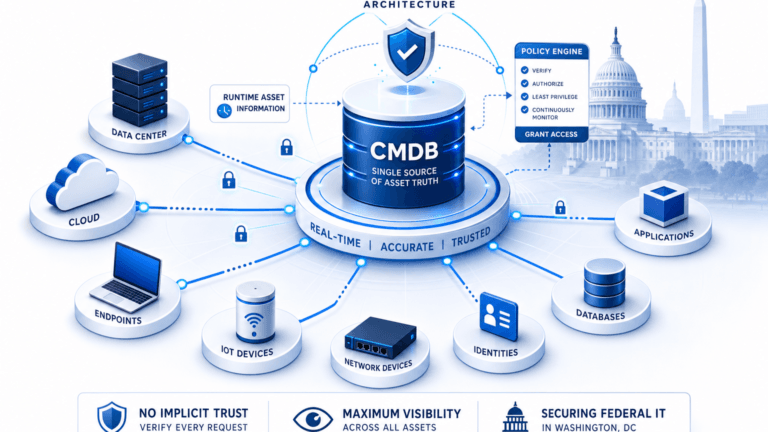
This is the layer most MSPs underinvest in. A CMDB built on high-frequency discovery cycles maintains an accurate inventory of every client asset and its dependencies. Without it, every other tool in your stack runs on incomplete or stale data.
Top 8 Managed IT Services Software Platforms for 2026
The tools below cover each major layer of the MSP stack. Each entry highlights what the platform does best and where it fits in your delivery architecture.
1. Virima: The CMDB and Discovery Foundation for MSPs
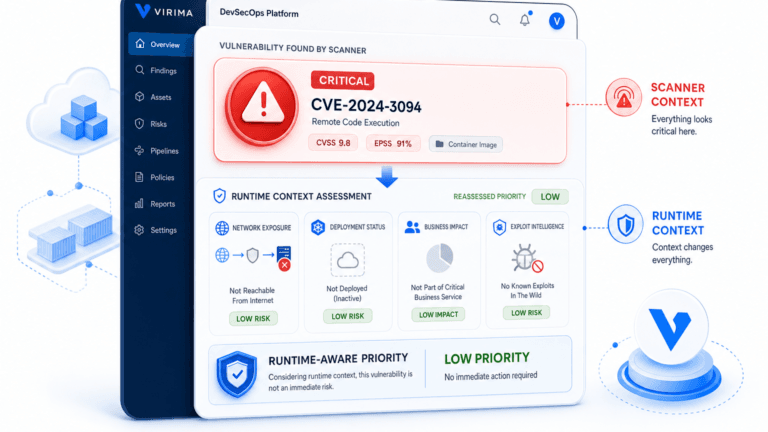
Virima fills a different layer than RMM or PSA tools. It provides MSPs with a discovery-driven CMDB, IT asset management, and ViVID™ service mapping, all in a multi-tenant architecture built for service provider delivery. RMM tools show you endpoint health. Virima shows you what every asset is, what it connects to, what depends on it, and who owns it.
Best for: MSPs that need accurate, structured asset data to power client reporting, change impact analysis, cloud migrations, and compliance audits.
Key features:
High-frequency IT discovery across hardware, software, AWS, and Azure environments; Discovery-driven CMDB with full CI relationship mapping; IT asset management for hardware lifecycle and software license tracking; ViVID™ service mapping that builds dynamic dependency maps; Multi-tenant MSP capabilities with role-based access and full client segmentation; White labeling for branded service delivery; Integrations with ServiceNow, Ivanti, Halo, AWS, Jira Service Management, and Xurrent.
Because Virima feeds discovery-driven data into your ITSM and ticketing tools, every ticket opens with accurate asset context. So your team spends less time investigating and more time resolving.
2. NinjaOne
NinjaOne is a cloud-native RMM platform built for MSPs and internal IT teams. It covers endpoint monitoring, patch management, remote access, ticketing, and backup within a single interface. Because it uses per-device pricing, it scales with your client base. Costs stay predictable even as your team grows.
Best for: MSPs that need strong patch management and fast remote access across mixed Windows, Mac, and Linux environments.
Key features:
Endpoint monitoring and alerting; Automated patch management; Remote control and scripting; Backup and recovery integration; Built-in ticketing.
NinjaOne provides solid endpoint visibility. However, it does not include structured CMDB or service dependency mapping. So, pairing it with a discovery-driven data layer closes that asset context gap.
3. ConnectWise PSA (Manage)
ConnectWise PSA is one of the most widely used professional services automation platforms in the MSP market. It handles service ticketing, contract management, project tracking, billing, and time entry in one system. Because it integrates with dozens of RMM and documentation tools, it works well as the operational backbone for larger MSP teams.
Best for: Mid-to-large MSPs that need tight billing, procurement, and service delivery workflows in one platform.
Key features:
Service ticketing and SLA tracking; Contract and billing management; Project management and time tracking; Client self-service portal; Broad third-party integrations.
ConnectWise PSA excels at service operations. However, it depends on accurate asset data flowing in from other tools. The quality of your service tickets is only as good as the discovery layer feeding them.
4. Datto Autotask PSA
Datto Autotask PSA is a cloud-based PSA platform focused on contract management, ticketing, and reporting dashboards. It integrates natively with Datto backup and RMM products. This makes it attractive for teams already inside the Datto ecosystem. Its flexible billing module handles both block-hour and managed contract models cleanly.
Best for: MSPs already using Datto backup or RMM who want a tightly integrated PSA platform.
Key features:
Ticketing and SLA tracking; Contract and billing automation; Time tracking and expense management; Reporting dashboards; Native Datto product integrations.
5. Kaseya VSA
Kaseya VSA is a mature RMM platform with a long track record across enterprise and MSP environments. It provides agent-based endpoint management, scripting, remote control, software deployment, and patch automation. Kaseya also offers an integrated bundle called Kaseya One. It combines VSA with PSA and other MSP tools in one package.
Best for: MSPs managing complex, script-heavy environments who need granular endpoint control and deep automation.
Key features:
Agent-based remote monitoring; Scripting and policy automation; Software deployment and patch management; IT documentation integrations; Multi-tenant management console.
6. Atera
Atera is an all-in-one RMM and PSA platform. It bundles monitoring, remote access, ticketing, billing, and reporting under flat per-technician pricing. Because pricing scales with team size rather than device count, it suits smaller MSPs where technician capacity is the limiting factor. Atera also includes AI-assisted ticket summaries and suggested resolutions.
Best for: Small MSPs that want a simple, all-in-one platform with predictable monthly costs.
Key features:
RMM and PSA in one platform; Per-technician flat pricing; AI-assisted ticketing; Remote access and scripting; Billing and client reporting.
7. N-able N-central
N-able N-central is an enterprise-grade RMM designed for MSPs managing large, distributed client environments. It supports advanced automation, deep scripting, network device monitoring, and a centralized MSP dashboard. Because it handles thousands of managed devices, it suits teams with mature automation workflows and complex multi-site environments.
Best for: Established MSPs managing high device volumes who need advanced scripting and policy automation at scale.
Key features:
Multi-tenant RMM dashboard; Advanced scripting and automation policies; Network device monitoring; Security integrations including EDR and backup; Detailed performance and compliance reporting.
8. HaloPSA
HaloPSA is an ITIL-aligned PSA platform built for MSPs that want structured, enterprise-grade service delivery. It covers ticketing, change management, asset tracking, contracts, billing, and a client self-service portal. Because it follows ITIL frameworks closely, it suits MSPs delivering services to compliance-conscious clients in regulated industries.
Best for: MSPs serving regulated industries or enterprise clients who need ITIL-aligned incident and change management.
Key features:
ITIL-aligned ticketing and change management; Asset tracking; Client self-service portal; Billing and contract management; Customizable workflows and automation rules.
Virima integrates with Halo; so discovery-sourced asset data flows directly into your HaloPSA environment. Every ticket opens with an accurate, up-to-date CI context already attached.
Why Accurate Asset Data Is the Layer Most MSP Stacks Skip
Why do MSPs need a CMDB?
MSPs need a CMDB to maintain an accurate, structured inventory of client assets, configurations, and service dependencies. A discovery-driven CMDB reduces alert noise, improves change impact analysis, and speeds up incident resolution. It gives every ticket accurate asset context from the start, preventing the data degradation that stalls MSP teams across client environments.
Most MSP stacks are strong on monitoring and ticketing. However, they share a common weakness: they depend on asset data that someone entered manually or imported once and never updated again. When that data goes stale, alerts lack context, change requests carry unknown impact, and audit reports require hours of manual reconciliation. Multi-tenant asset management across client boundaries compounds this problem—one stale CMDB record at one client site can cascade into service delivery delays across your entire portfolio.
Virima runs high-frequency IT discovery cycles against client environments on a recurring, scheduled basis. So your CMDB reflects what actually exists, not what someone recorded six months ago. That accuracy flows upstream into every tool that depends on it, including your PSA, ITSM, and security platforms.
MSPs that build on a discovery-driven foundation spend less time correcting stale data and more time delivering measurable service outcomes. According to MarketsandMarkets, the US managed services market reached $128 billion in 2025. In that competitive environment, data accuracy is a differentiator, not just a good practice.
What to Look For When Choosing Managed IT Services Software
Choosing the right managed IT services software comes down to five factors: integration depth, multi-tenant architecture, discovery and data accuracy, scalability and pricing, and compliance and audit support. When evaluating tools, prioritize how cleanly they exchange data, support full client segmentation, use discovery-driven approaches, scale with your business model, and support audit trails.
Build Your MSP Stack on Asset Data You Can Trust
The right managed IT services software does not start with the tool that has the best dashboard. It starts with the data layer that makes every other tool more accurate and every client interaction more defensible.
RMM and PSA platforms give you operational reach. A discovery-driven CMDB gives you the ground truth those platforms depend on. When your asset data is accurate, tickets close faster, change requests carry real impact context, and client reports take far less manual effort.
That compounding advantage separates MSPs who scale from those who stay busy without growing margins. If you want to see how Virima fits your current MSP stack, schedule a demo to explore the MSP portal, multi-tenant architecture, and ViVID™ service mapping in your own environment.
Request a demo to see how Virima’s discovery-driven CMDB and ViVID™ service mapping integrate with your MSP stack.
Frequently Asked Questions
What is the difference between RMM and PSA software?
RMM monitors and manages client endpoints, handles patching, and enables remote access. PSA manages the business side of service delivery, covering ticketing, billing, contracts, and time tracking. Most MSPs use both tools as complementary layers within the same delivery stack.
Do MSPs need a separate CMDB?
Many MSPs rely on basic asset records inside their RMM or PSA platform. However, those records rarely capture full configuration relationships, service dependencies, or change history needed for impact analysis and compliance reporting. A dedicated, discovery-driven CMDB fills that gap.