Asset Panda Reviews: An Honest Assessment for IT Teams

An IT ops manager opens Asset Panda reviews the week after a shortlist meeting. Facilities already likes the barcode flow. Procurement likes the mobile story. IT still needs a clear answer: will this system find servers it never scanned, join licenses to installs, or feed a CMDB the change board can trust?
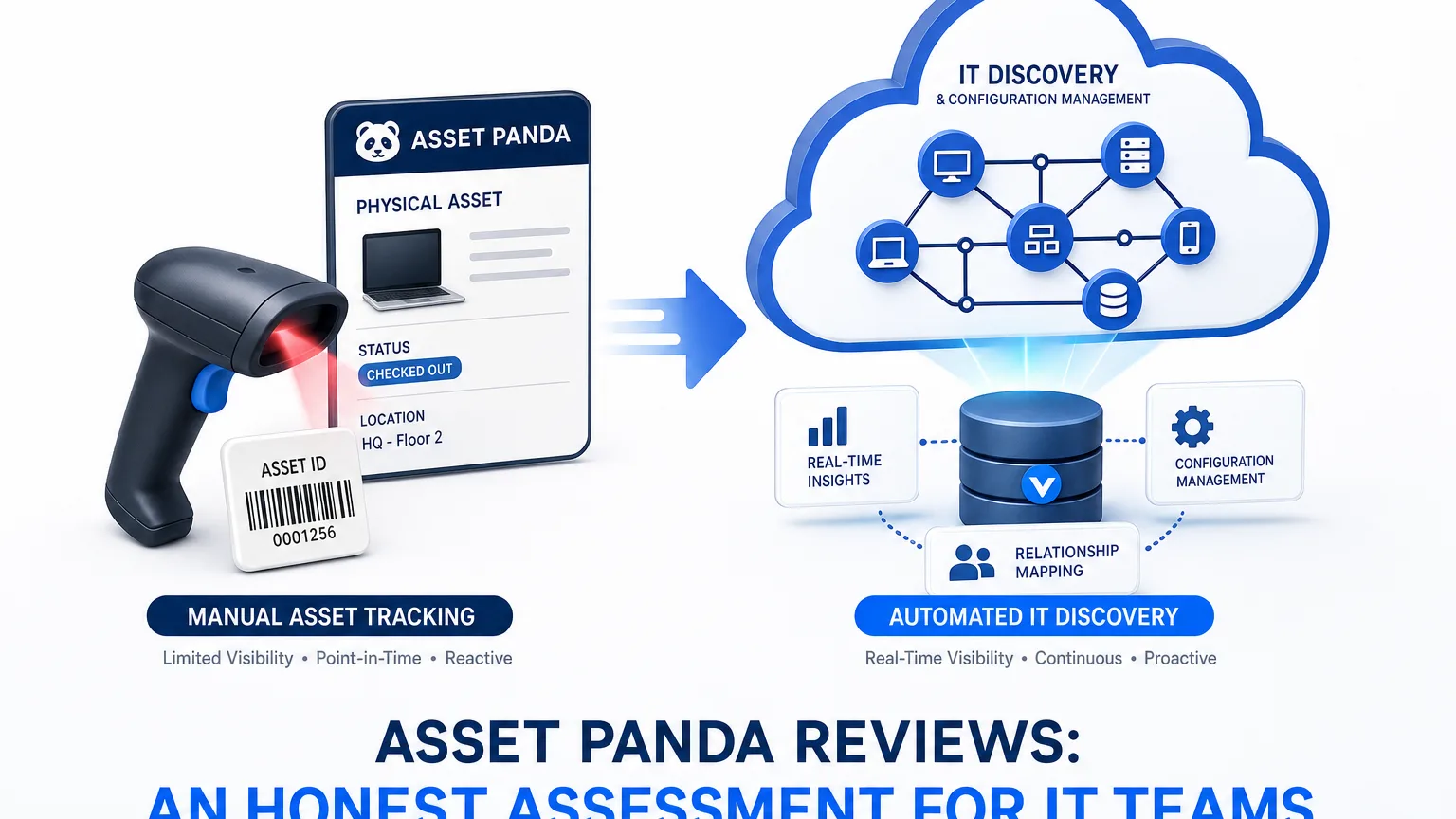
That is the real job of an Asset Panda review for IT. The product is strong at physical custody. Enterprise IT estates need discovery, configuration truth, and service context. This assessment separates those jobs so you can decide without treating every gap as a product failure.
CISA BOD 23-01 frames the bar for many public-sector and regulated peers: you need current asset visibility, not a spreadsheet of last quarter’s checkouts. Private-sector ITAM leads feel the same pressure when auditors or license true-ups arrive.
If you are weighing custody tools against discovery-backed inventory, start with how Trusted Runtime Truth describes live, explainable estate context before you lock a three-year contract.
What Asset Panda Is (and What It Is Built For)
Asset Panda is a cloud-based asset tracking platform built around flexible records, mobile barcode and QR workflows, and check-in / check-out custody. Teams use it for equipment, facilities gear, fleet assets, medical devices, education kits, and IT hardware that staff can label and scan. Vendor positioning stresses lifecycle history, audit trails, inspections, and no-code field customization rather than network scanning.
That design matches how many mid-market and departmental teams work: someone receives a laptop, scans a tag, assigns a user, and later scans it back into a cage, while managers want photos, locations, warranty dates, and a clean chain of custody. IT hardware can live inside the same schema — serial numbers, PO numbers, room locations, and software license keys all fit as custom fields — but none of that turns the platform into a network discovery engine or a configuration management database. It remains a highly configurable tracker for assets people already know about.
Give the product full credit on its home turf. Physical accountability, mobile scanning, and configurable workflows are real strengths. The review problem starts when buyers treat those strengths as a substitute for multi-protocol discovery, CI relationships, and software metering across hybrid estates. That substitution shows up in the category’s own growth: the CMDB and IT discovery software market is projected to grow from $5.28 billion in 2025 to $5.98 billion in 2026, roughly 14.5 percent annually, as more mid-market IT teams move past manual tracking toward configuration-aware platforms, according to Mordor Intelligence.
What Users Consistently Praise
Reviewers and secondary overviews return to the same strengths.
Customization without code. Teams reshape fields, workflows, and dashboards for their process. Fleet managers rename fields to VINs. Facilities teams track inspection steps. Education teams model device checkout seasons. That flexibility is why Asset Panda shows up outside pure IT shops.
Mobile barcode and QR scanning. Floor walks, warehouse receiving, and remote sites depend on phone cameras more than desk consoles. Offline-capable mobile workflows matter when Wi-Fi is weak. For custody-heavy programs, this is often the feature that wins the pilot.
Deployment speed versus heavyweight suites. Compared with multi-year CMDB programs, a custody tracker can go live faster when the scope is tagged hardware and known inventory. Buyers who need a clean audit trail for physical assets value that time-to-first-value.
Lifecycle and audit history on known assets. Purchase, assignment, maintenance, and retirement events create a tamper-evident path when staff complete the scans and forms. Compliance teams that sample physical accountability find this useful.
Integrations as data helpers, not CMDB authority. Public materials and partner overviews describe connections that can pull device context from MDM-style sources and attach asset detail to tickets in platforms such as ServiceNow or Jira. Linked integrations reduce swivel-chair lookups. They do not produce a full multi-source CI model with authority rules and service maps.
These praises are consistent with a physical-first product. They do not cancel the discovery and CMDB gaps that surface when IT tries to run infrastructure management on the same foundation.
Where IT Teams Hit Limits
This section documents operational friction, not a takedown.
No Automated Network or Multi-Protocol Discovery
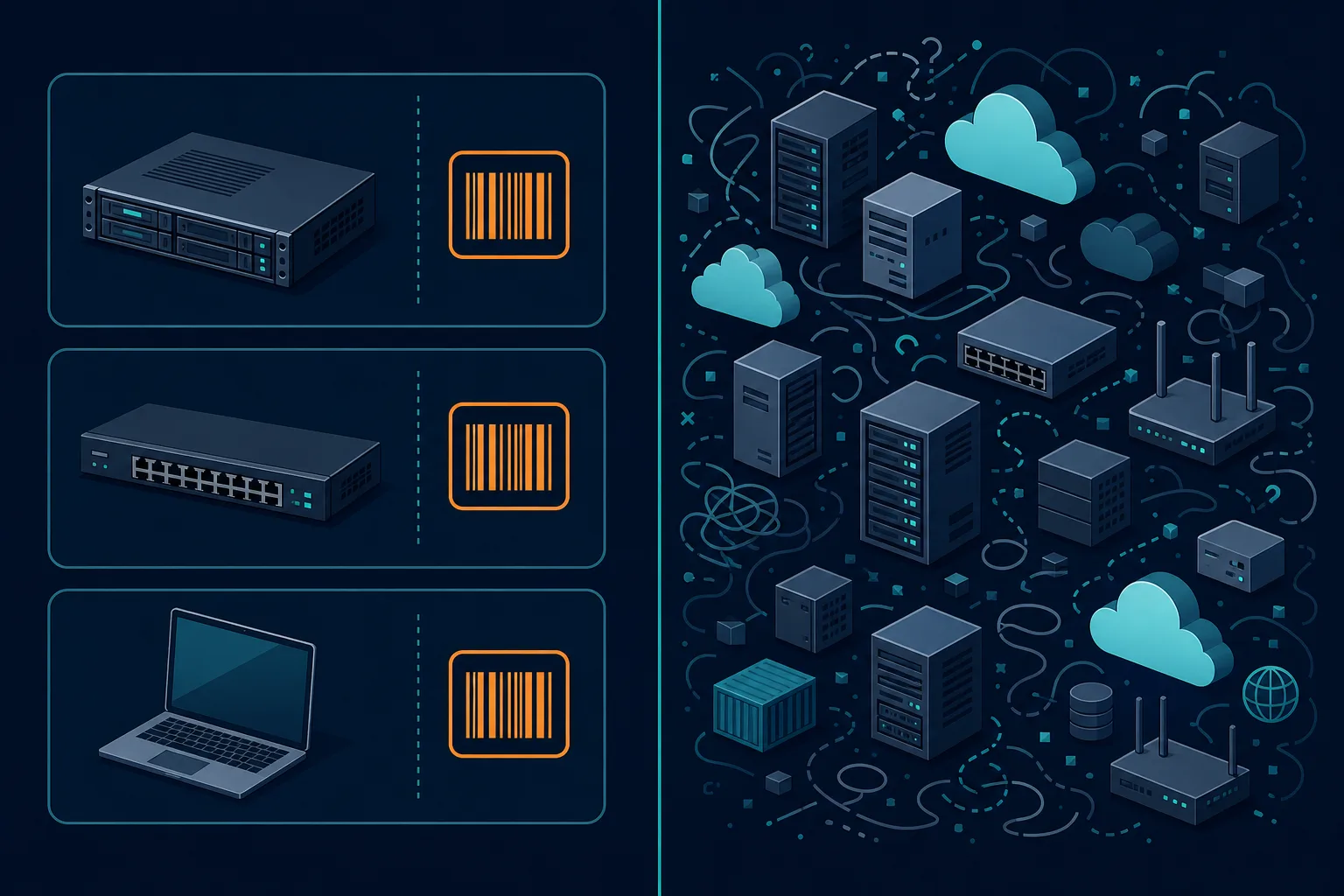
A PCMag review of Asset Panda calls out missing network discovery relative to IT-centric suites. Secondary IT overviews repeat the same point: Asset Panda is strong at tracking assets you already registered, imported, or synced from an MDM. It does not walk the network with SNMP, WMI, SSH, or similar probes to find unknown hosts.
That gap shows up on day two of a hybrid estate. A VM spun up for a project, a switch added in a closet, and a cloud instance outside the last CSV never appear until someone types them in. Shadow devices stay dark. Audit samples fail because the population was incomplete, not because tags were wrong. Manual entry and MDM sync connectors help with tagged laptops and managed endpoints, but neither replaces high-frequency discovery cycles across on-prem infrastructure, virtualization, and cloud control planes — when staff stop scanning, the database freezes at the last good walkthrough.
Software License Management Stays Shallow for Enterprise ITAM
Storing a license key or seat count as a field is not metering installs against entitlements. ITAM leads still need normalized publishers, install evidence, and compliance views that survive a vendor audit. A custody platform is not a full software asset management engine.
No CMDB Population or CI Relationship Model
A tracker records assets. A CMDB records configuration items, relationships, owners, and change-relevant state. Asset Panda is not designed to be the authoritative CI store with multi-source reconciliation. Teams that paste exports into ServiceNow still own the join, the drift, and the stale owner problem. For why cleanup projects decay without a discovery authority, see CMDB projects decay without discovery authority.
No Service Dependency or Blast-Radius Context
Barcode history will not tell a CAB which business service breaks when a database host fails. Dependency visualization and impact paths require service definitions plus infrastructure relationships. Application dependency mapping tools exist for that job. For category context, see top application dependency mapping tools.
ITSM Depth Is Link-Level, Not Estate-Truth-Level
Attaching a serial number to a ticket helps agents. It does not give change and incident workflows a trusted, refreshed CI graph. Limited native depth for full ITSM operating models is a recurring theme when IT buyers compare custody tools to discovery-plus-CMDB stacks.
Reporting and Commercial Friction Show Up in Evaluations
Buyers often flag reporting depth, session behavior, and commercial structure during diligence. Asset Panda’s published starter pricing begins near $50 per user per month billed annually, with user minimums and asset ceilings; enterprise pricing is demo-led — confirm current tiers directly with the vendor. Cost scales with seats and asset ceilings even when automation does not scale with estate change.
If audit samples or shadow IT are the recurring failure mode here, see a live discovery walkthrough before the next change window exposes the gap.
Does Asset Panda include automated network discovery for IT assets?
No. Independent reviews note Asset Panda lacks network discovery. It tracks assets you register, scan, import, or sync from managed sources. It does not multi-protocol scan the estate to find unknown servers, network gear, or cloud instances on its own.
Who Asset Panda Is Right for (and Who It Is Not)
Strong fit when:
- Mid-market or departmental teams need physical custody, barcode or QR checkout, and location history.
- Education, healthcare, facilities, or field operations manage non-IT or mixed equipment fleets.
- The primary risk is lost gear and weak audit trails on known inventory, not unknown infrastructure.
- IT hardware is a labeled subset of a broader physical program, and MDM already covers managed endpoints.
Weak fit when:
- Enterprise IT must prove complete, current inventory across hybrid on-prem and cloud estates.
- CMDB accuracy, change impact, and service ownership drive the buying decision.
- Software license compliance and install metering are first-class requirements.
- ITSM platforms need bi-directional CI and relationship feeds, not only ticket side panels.
Procurement can still approve Asset Panda for facilities while IT runs a separate discovery and CMDB layer. The mistake is forcing one product to own both jobs without checking discovery and CI requirements.
For a broader ITAM shortlist lens, see top IT asset management software.
Is Asset Panda good for enterprise IT asset management?
It can support labeled hardware custody and mobile check-in workflows. Enterprise ITAM that depends on automated discovery, CMDB relationships, software metering, and service impact usually needs a purpose-built discovery and configuration layer beyond physical tracking alone.
What to Look for If You Need More
If the gaps above match your situation, evaluate IT-focused platforms against criteria, not brand names first.
- Multi-method discovery, agent, agentless, and API collection on a schedule you can defend, not one-time imports.
- CMDB population and reconciliation, source tagging, authority rules, and CI health you can show an auditor.
- Service dependency mapping, after service definitions exist, maps that stay useful for change and incident work.
- Software and hardware lifecycle, installs joined to entitlements, EOL and EOS flags, financial fields where needed.
- ITSM handoff depth, bi-directional flows into the tools your desk already runs, without re-keying CIs.
Virima is built against each of these five criteria directly — the next two sections break down how.
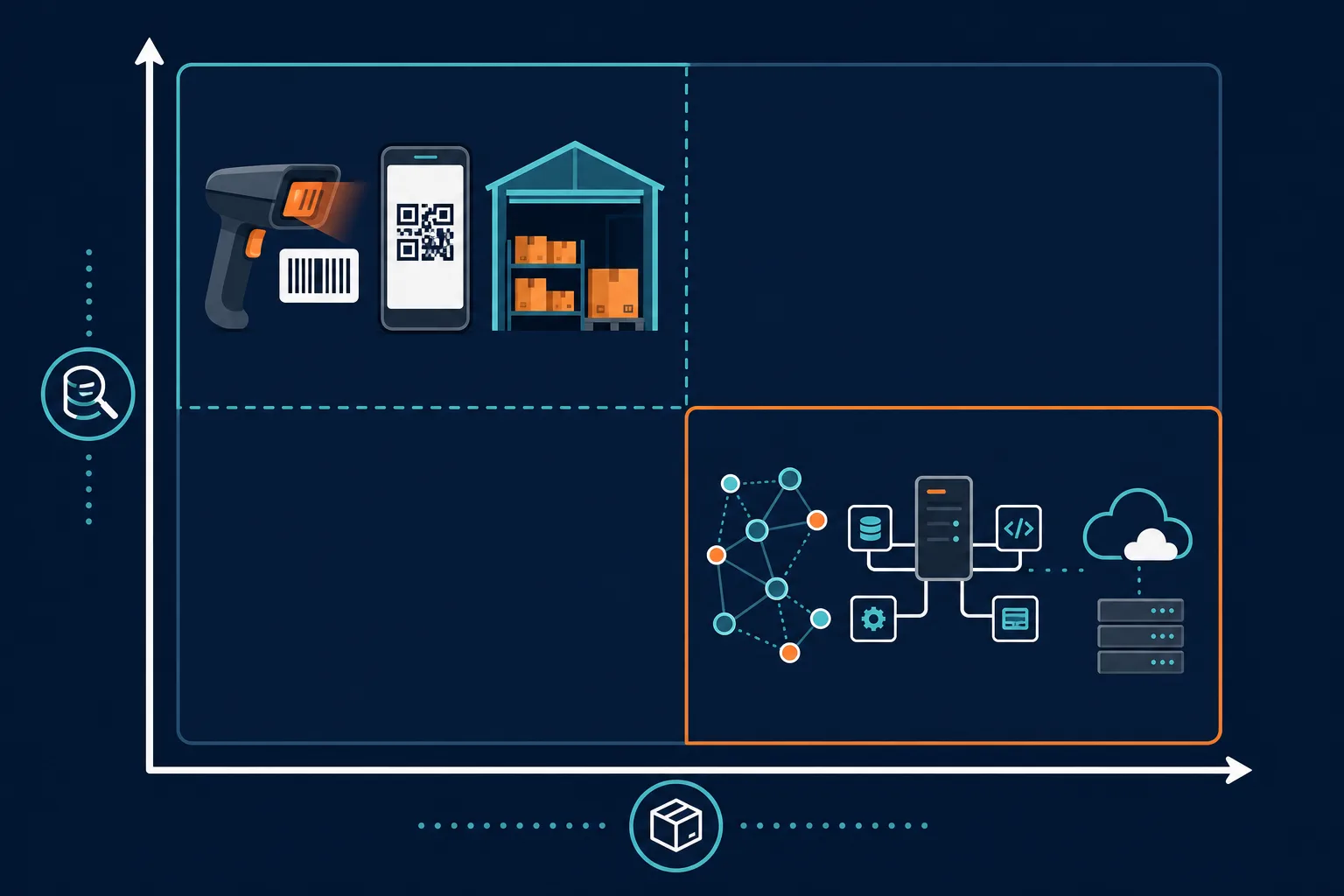
Flexera’s 2026 State of ITAM press summary underscores how few organizations claim complete IT asset visibility even as spend and complexity rise. Visibility gaps are the norm; tools that depend only on manual scans inherit that risk.
For discovery method literacy, read the four major approaches of IT asset discovery. For CMDB selection criteria, use the CMDB buyer guide. For a broader alternatives shortlist, see top asset management tools.
What should IT teams evaluate after Asset Panda reviews?
Prioritize multi-method discovery, CMDB reconciliation, service dependency maps, software license evidence, and ITSM integration depth. If those requirements dominate, shortlist IT discovery and CMDB platforms instead of extending a physical custody tool alone.
Virima as an Alternative When the Need Is IT Infrastructure Truth
Virima is built for the discovery-to-CMDB path Asset Panda is not designed to own.
- Discovery, agent-based, agentless, and API collection across hybrid estates on high-frequency scheduled cycles.
- CMDB, automated CI population, multi-source reconciliation, relationship modeling, and change-oriented context.
- ViVID™ service maps, once service definitions are provided (manual, spreadsheet, or architecture integrations), Virima builds and maintains dependency maps for impact paths.
- ITAM, hardware lifecycle plus software inventory and license compliance views grounded in discovered installs.
- Integrations, Virima connects with ServiceNow, Jira, Ivanti, and many more through a single integrations hub rather than one-off spreadsheet drops. See all integrations.
Honest trade-off: Virima is not a facilities barcode checkout product. If your primary workflow is mobile scan custody for non-IT equipment, Asset Panda may remain the better fit for that lane. If your primary risk is unknown infrastructure, stale CIs, and missing service context, evaluate Virima on ITAM, CMDB, and service mapping.
Match the Tool to the Job. Move Faster. Act with Confidence.
Asset Panda earns strong Asset Panda reviews when the job is physical asset tracking, mobile scanning, and configurable custody workflows. IT teams outgrow it when the job becomes automated discovery, CMDB accuracy, software compliance evidence, and service dependency truth.
Ready to check your estate against these criteria?
Use this rule: buy Asset Panda for assets people hold and scan; buy a discovery-backed CMDB stack for assets networks and clouds create without asking. If your shortlist is still open on that second job, request a demo and walk your hybrid estate against those criteria with a live discovery and mapping path.
Frequently Asked Questions
Can Asset Panda replace a CMDB?
No. A custody tracker stores asset records and history. A CMDB models configuration items, relationships, ownership, and change-relevant state with reconciliation rules. Exporting rows into an ITSM CMDB still leaves drift and authority problems without discovery-backed refresh.
Does Asset Panda support ServiceNow or Jira?
Public materials describe integrations that can attach asset context to tickets and sync device data from certain management sources. That linked experience helps agents. It is not the same as a bi-directional discovery CMDB feeding full CI graphs into ITSM change and incident workflows.
How does discovery-backed CI data stay current compared to a manual Asset Panda import?
Virima’s scheduled agentless, agent-based, and API discovery cycles keep CI data current on an ongoing basis after initial deployment. A manual Asset Panda import or MDM sync reflects only what staff scan or connect at that moment, with no further update until someone repeats the process.
How does Virima differ from Asset Panda for IT estates?
Virima focuses on scheduled multi-method discovery, CMDB population and reconciliation, ViVID™ service maps after service definitions are provided, and ITAM views grounded in discovered inventory. Asset Panda focuses on configurable physical tracking and mobile custody. Choose based on which job dominates your risk.