Virima: A Powerful Alternative to Jira Asset Discovery for IT Asset and Configuration Management

Jira Service Management owns the ticket. An Assets object shows the host, owner field, and schema attributes your team filled in last quarter. Then CAB asks which business services still depend on the change path after last week’s hybrid moves, whether discovery refreshed those CIs outside the collector window, and what breaks if the relationship graph is incomplete. Native Jira Asset Discovery does not automatically answer hybrid blast radius under those tickets.
That is the Jira Asset Discovery decision in practice. Jira Asset Discovery fits teams that need inventory and ticket-linked asset context tightly inside Jira Service Management, with manageable object schemas and collector patterns that stay inside JSM. Teams evaluate an alternative when hybrid on-prem and multi-account AWS and Azure depth, discovery-sourced CMDB authority, and ViVID™-class dependency maps for change risk outgrow collector operations and manual relationship work. Virima is a discovery-sourced ITAM and CMDB layer with service mapping that can feed Jira Service Management. It does not replace JSM as the system of engagement for every team.
This guide covers how discovery works on both paths, when Jira Asset Discovery is enough, how maps and Windows Server vulnerability context change CAB decisions, and how to choose stay, augment, or Virima without a false rip-and-replace of Jira.
| When change and incident decisions need current hybrid IT CIs and service paths under Jira Service Management, not only Assets object records, the missing layer is discovery-sourced runtime accuracy. Explore Trusted Runtime Truth. |
When is Jira Asset Discovery enough, and when do teams evaluate an alternative?
Jira Asset Discovery is often enough for JSM-centric estates with simple object schemas, limited hybrid complexity, and inventory needs that stay inside Jira Assets. Teams evaluate an alternative when collector operations, relationship maintenance, or hybrid blast-radius questions exceed what native Assets discovery can sustain under CAB and incident work.
Jira Asset Discovery vs Virima: decision table
Virima delivers discovery-sourced ITAM, CMDB population, and service mapping under ITSM. It does not replace Jira Service Management. It does not force every team off Jira Assets when the estate still fits collector and schema limits.
| Criterion | Jira Asset Discovery | Virima | Choose when… |
|---|---|---|---|
| Primary job | JSM-native Assets inventory and ticket-linked context | Discovery-sourced ITAM and CMDB/maps | Desk-native inventory vs hybrid runtime truth |
| Population model | Pattern and collector based discovery suited to JSM-centric environments | Agent-based and agentless methods plus APIs, high-frequency scheduled cycles | Estate change model and credential design |
| Service and dependency mapping | Object schemas and relationships teams largely define and maintain | ViVID™ maps after business service definitions are provided | CAB blast radius under tickets |
| Hybrid and cloud coverage | Strongest when the estate fits Jira Assets patterns and imports | On-premises plus AWS and Azure discovery feeding a unified CMDB baseline | Complexity beyond JSM-bounded inventory |
| Vulnerability context | Not a native NVD correlation layer on discovered CIs | NIST NVD CVE overlay for discovered Windows Servers, weighted by asset and service criticality on maps | Change prioritization with Windows Server findings |
| ITSM fit | Native inside Jira Service Management | Integrates with Jira Service Management and other ITSM platforms; does not replace them | System of engagement |
| Best fit | Teams that want inventory tightly inside JSM with manageable schema complexity | Teams that outgrew collector and manual relationship limits for hybrid change risk | Path selection below |
Three practical paths: (1) Stay on Jira Asset Discovery when JSM-centric inventory, simple schemas, and ticket-linked Assets objects are the constraint. (2) Augment Jira Service Management with discovery-sourced CIs and maps where hybrid runtime accuracy is the bottleneck. (3) Take the Virima path when collector load, relationship maintenance, and CAB-grade dependency questions bind the evaluation.
How does Virima compare to Jira Asset Discovery for hybrid networks?
Jira Asset Discovery is optimized to feed Jira Assets with collector and pattern based inventory. Virima runs agent-based and agentless discovery with API integrations on high-frequency scheduled cycles across on-premises infrastructure plus AWS and Azure, then feeds CMDB attributes and relationships that JSM can consume for change and incident work.
Jira Asset Discovery vs Virima: how discovery works
Jira Asset Discovery is built to feed Jira Assets. In many deployments that means collectors, patterns, and object schemas tuned for what JSM needs in tickets and asset records. That path is efficient when the estate and schema stay bounded.
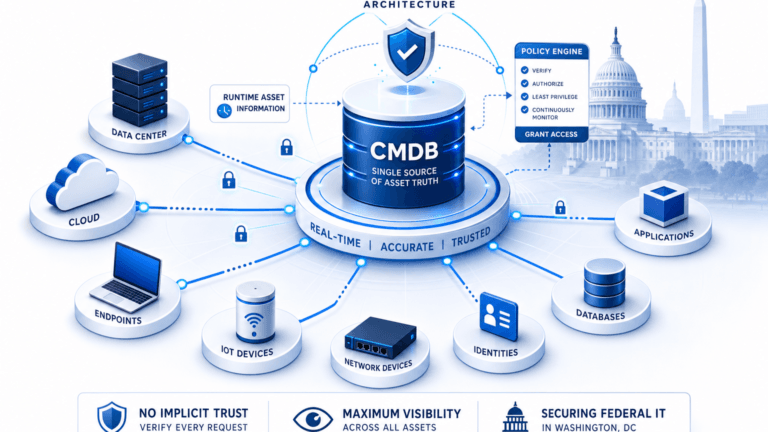
Virima approaches discovery as an authoritative CMDB feed. An agent-based and agentless IT discovery engine covers hardware, software, and cloud resources through scans and API integrations across on-premises systems plus environments such as AWS and Azure. Discovery runs on high-frequency scheduled cycles so CI attributes, relationships, and configuration states update without pure manual entry. Current public positioning does not claim passive event-driven discovery as shipping product.
If your evaluation is really whether JSM Assets can hold the CMDB of record for hybrid change risk, compare maintenance load: schema and relationship upkeep inside Assets versus discovery-fed updates and business rules that promote CI changes in Virima. Keep Jira Service Management for workflow. Upgrade the discovery and dependency layer when object maintenance becomes the bottleneck.
Do you have to leave Jira Service Management to replace Jira Asset Discovery?
No. Replacing or augmenting Jira Asset Discovery does not require leaving Jira Service Management. Many teams keep JSM as the system of engagement for tickets, approvals, and SLAs, then improve the CI and relationship feed under those tickets.
Virima integrates with Jira Service Management so discovery-sourced CIs and maps support the workflows you already run. Partner names stay plain text. See the integrations hub for JSM and other ITSM platforms such as ServiceNow, Ivanti, HaloITSM, Xurrent, and Hornbill. Confirm current sync direction and object mapping on a pilot that includes at least one hybrid service path.
Can Virima replace Jira Asset Discovery without leaving Jira Service Management?
Yes. Virima is evaluated as a discovery-sourced ITAM and CMDB layer that can feed Jira Service Management. Teams commonly keep JSM for tickets and workflow while improving hybrid CI accuracy and dependency maps under change and incident processes.
Why teams look for an alternative to Jira Asset Discovery
Teams stay on Jira Asset Discovery successfully when inventory stays inside Assets and CAB questions stay within schema depth. Evaluation pressure rises when:
- Collector and pattern operations struggle to cover hybrid networks, multi-account cloud, and remote endpoints at the cadence change windows need.
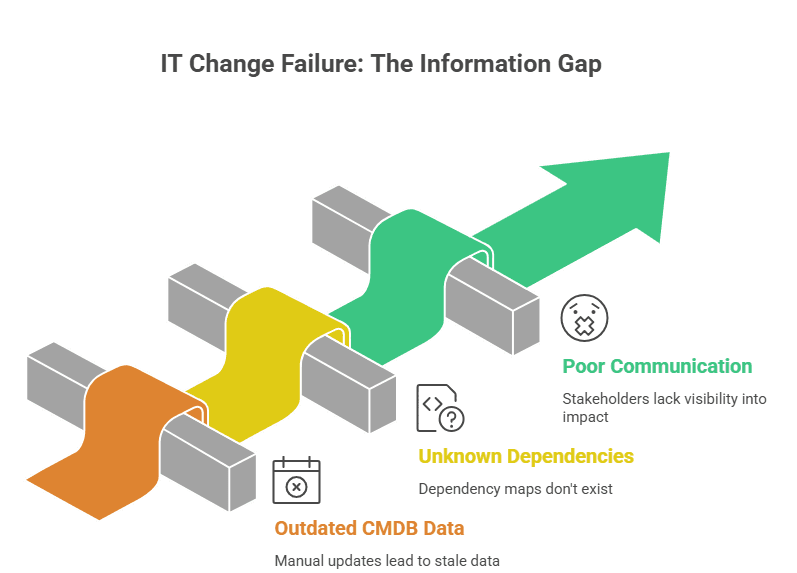
- Relationship maintenance depends on manual schema work that falls behind estate change, so impact questions become guesswork.
- Thin asset records hold inventory fields without the configuration and dependency context change reviewers need for collision and blast-radius checks.
- CMDB of record expectations exceed what ticket-linked Assets objects were designed to sustain for audit and hybrid operations.
Those limits are path boundaries, not a claim that every JSM shop must rip out Assets tomorrow. Validate on a pilot service path with real change tickets, not only a clean schema demo.
How a discovery-fed CMDB supports change review
Change review improves when reviewers trust current CIs, owners, and relationships rather than last quarter’s object import. A discovery-fed CMDB reduces reliance on manual updates for attributes that discovery can authoritatively refresh. Business rules can promote reconciled CI changes so maintenance stays operational instead of spreadsheet-driven.
ITAM and ITOM context still matter under the ticket: hardware and software state, configuration drift signals, and service path membership help approvers judge risk. Virima’s IT asset management and CMDB-oriented workflows sit under that decision path. Virima does not replace JSM change workflow modules.
How ViVID™ maps support change impact when Assets relationships need depth
Business services are defined by your team through manual entry, import, or architecture tools. ViVID™ then builds dependency maps from those definitions and discovered infrastructure. It does not invent service composition without that input.
Maps can carry planned change and incident context so reviewers see upstream and downstream impact before execution. Cross-team collaboration improves when the same map is the shared reference during change windows. After execution, comparing expected versus observed configuration state on discovery cycles closes the loop without treating a ticket close as proof the estate matched the plan.
Use service mapping for product scope when Jira Assets relationships stay thin for CAB-grade blast radius.
Can Jira Asset Discovery automatically map application dependencies like ViVID™?
Jira Assets relationships are largely schema-driven and team-maintained. ViVID™ builds dependency maps after business service definitions are provided, using discovery-sourced relationships for impact views. It does not invent service composition without that input.
NVD-based vulnerability context for change prioritization
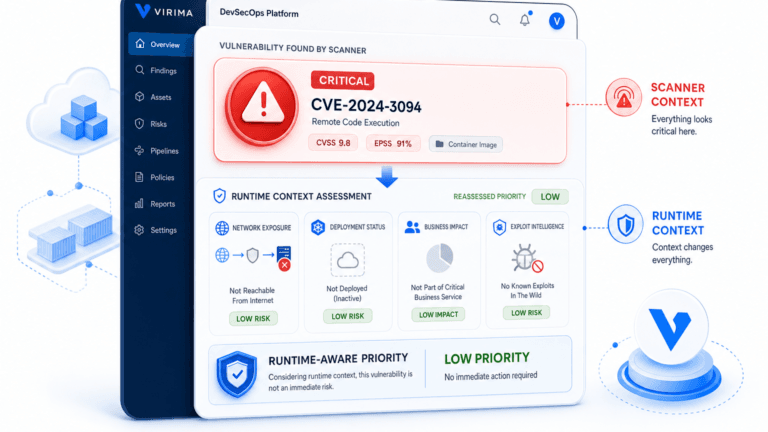
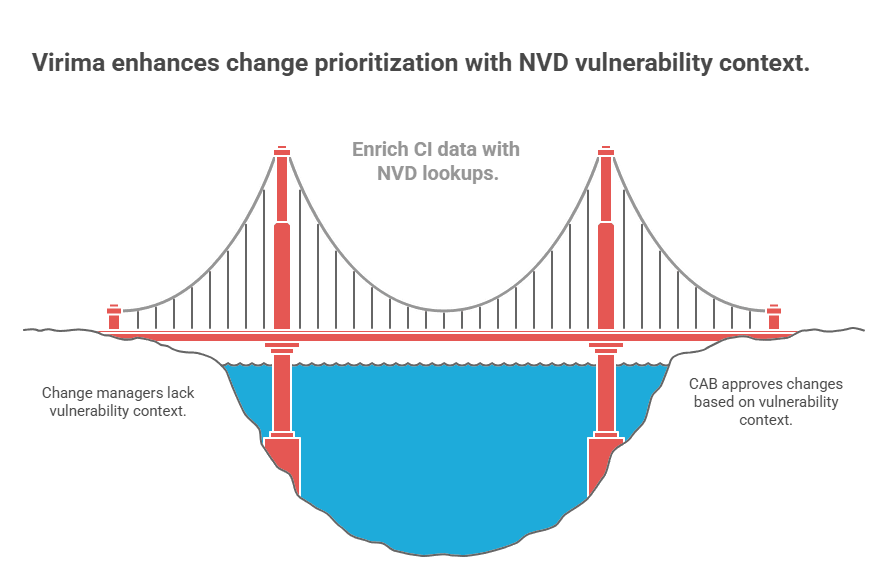
Where product supports it, maps can carry vulnerability intelligence for discovered Windows Server findings using NIST NVD CVE overlays, weighted by asset and business service criticality. That helps prioritize change and remediation conversations on the services that matter. It is not a full multi-OS vulnerability management scanner replacement. Pair with dedicated VM tooling for broader coverage.
Does Virima add vulnerability context during asset discovery?
Virima can overlay NIST NVD CVE context for discovered Windows Servers on service maps, weighted by asset and service criticality. That supports change prioritization. It does not replace a dedicated multi-OS vulnerability management platform.
If your Jira Asset Discovery evaluation is stuck on whether collectors and schema relationships can keep up with hybrid change risk under JSM, shift the proof from brochure features to a short discovery and mapping pilot on a critical IT service path while Jira Service Management keeps ticket and approval workflows.
See how discovery-sourced ITAM and ViVID™ maps feed Jira Service Management without forcing you off JSM. Bring a critical hybrid IT service path and leave with a clearer stay, augment, or dual-path decision on Jira Asset Discovery.
Choosing an alternative to Jira Asset Discovery without losing change control
Jira Asset Discovery is a solid path for JSM-centric inventory and ticket-linked Assets context. Virima is the alternative when you need high-frequency scheduled IT discovery, hybrid ITAM and CMDB context, and ViVID™ maps under change and incident tickets while keeping Jira Service Management as the desk. Outcomes teams chase include fewer surprises from stale hybrid inventory, clearer change blast radius, and stronger evidence from owned IT configuration data.
When you want a hands-on walkthrough, request a demo.
Disclaimer: Product capabilities and Atlassian packaging change. Confirm current Jira Assets, Asset Discovery, and JSM plan features in official Atlassian documentation before purchase decisions.
Frequently asked questions
What usually pushes teams to seek an alternative to Jira Asset Discovery?
Common triggers are hybrid depth beyond collector patterns, relationship maintenance that falls behind estate change, thin asset records for CAB questions, and the need for discovery-sourced CMDB authority under Jira Service Management tickets.
Do you have to leave Jira Service Management to use Virima?
No. Virima is positioned as a discovery-sourced ITAM and CMDB layer that can feed JSM. Many evaluations keep JSM for tickets and workflow and improve hybrid CI and map truth under those processes.
How does a CMDB improve change management?
A CMDB improves change management when it holds current CIs, relationships, and ownership the CAB can trust. Discovery-fed updates reduce reliance on tribal knowledge. Without current relationships, risk review misses downstream services and collision potential.
How do service maps reduce change-related outages?
Service maps reduce change-related outages by exposing hidden dependencies before execution. After service definitions are provided, discovery-sourced relationship maps show upstream and downstream impact so approvers are not guessing from partial asset lists.
Is Jira Asset Discovery enough for small JSM-centric estates?
Often yes when object schemas stay simple, hybrid complexity is limited, and inventory needs stay inside Jira Assets with ticket-linked context. Revisit when collector load and CAB blast-radius questions become the binding constraint.