Top 11 CMDB Discovery Tools in 2026: Which Ones Actually Keep Your CMDB Accurate?

What are the top CMDB discovery tools in 2026?
CMDB discovery tools teams evaluate in 2026 include Virima, ServiceNow Discovery, BMC Helix Discovery, OpenText Universal Discovery, Ivanti Neurons for Discovery, Lansweeper, ManageEngine AssetExplorer, Micro Focus UCMDB, SolarWinds Service Desk, Freshservice Discovery Probe, and Device42. The useful split is not brand order. It is whether a tool only loads inventory once, or keeps CI records, relationships, and dependency maps current as hybrid estates change.
Most CMDB discovery tools scan your environment and report what they find. Fewer actually maintain the CI records, relationships, and dependency maps your CMDB needs to stay accurate as infrastructure changes day to day. That is the gap this guide is about. The right CMDB discovery tools do not just populate the database once; they keep it trustworthy as your estate shifts.
That distinction matters because a CMDB that is accurate at scan time but outdated within days is not doing its job. Hybrid estates change daily. A CMDB that is right at scan time and wrong a week later still misroutes incidents and understates change impact. IBM’s Cost of a Data Breach Report 2024 found 40% of breaches involved data spread across multiple environments; those incidents cost more on average and took longer to contain (283 days). Discovery that only fills the CMDB once does not close that visibility gap. Discovery that keeps CIs and relationships current does.
If you are new to CMDBs, start with how to select the best CMDB discovery technique before comparing tools.
This guide reviews the top 11 CMDB discovery tools for 2026, covering hybrid IT coverage, CI relationship mapping depth, ITSM integration, and the question that separates the field: does each tool maintain the CMDB, or just fill it once?
What are CMDB discovery tools?
CMDB (Configuration Management Database) discovery tools identify IT assets and record them in a CMDB. The assets they find include servers, endpoints, cloud instances, applications, mobile devices, and network devices.
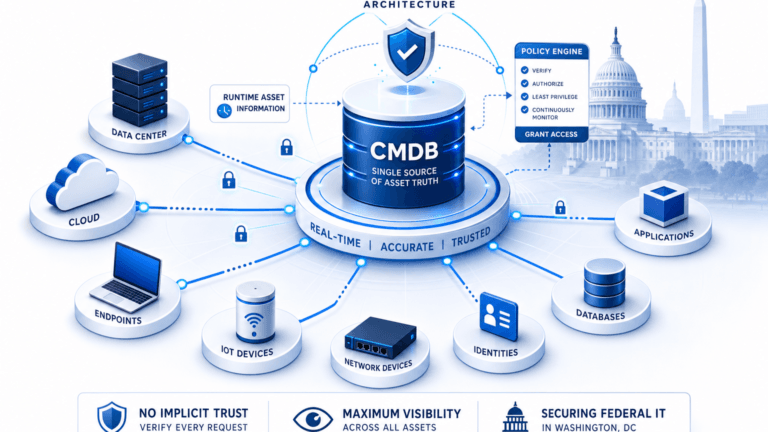
The right CMDB software gives IT teams a live map of assets and relationships across changing environments. But how is that map built? That is the job of CMDB discovery tools: the platforms, scripts, and integrations that find assets and fill the CMDB with current data, pulling from every part of a modern hybrid environment.
These tools matter most in complex, hybrid, and cloud environments, where visibility gaps lead to costly service disruptions or compliance risk. During hybrid cloud discovery, for example, scheduled scans gather data from both on-premises and cloud assets, helping you keep a current, unified view of the infrastructure.
What to look for in a CMDB discovery tool
Virima has 20 years of roots in the IT industry, and we talk to IT teams about what they actually need. These are the features they tell us matter most:
- Relationship and dependency mapping: Shows how configuration items (CIs) connect, with application dependencies, infrastructure relationships, and service maps in dynamic, filterable dashboards.
- Asset discovery: Critical in scenarios like data center migrations, where keeping the CMDB current during rapid change helps teams run impact analysis and plan risk-aware moves.
- Data accuracy with recurring scheduled scans: Keeps records current through high-frequency discovery cycles, reducing manual input and the errors and drift it causes.
- Graphical visualization: Interactive dashboards that overlay CMDB relationships, live ITSM incidents, changes, and vulnerabilities for faster troubleshooting.
- ITSM and ITOM integration: Bi-directional data flow with IT Service Management platforms, syncing incidents, changes, and problem records to CMDB assets.
- Security and access controls: Role-based access so only authorized users can view or change sensitive configuration data, supporting compliance.
- Scalability and flexibility: Adapts as the IT estate grows, supporting diverse assets, custom CI classes, and evolving needs.
The Four CMDB Discovery Techniques
Not all discovery works the same way. Understanding the technique behind a tool helps you evaluate whether it will reach your assets and keep records current in your specific environment.
1. API-Based Discovery
API-based discovery connects to cloud-native APIs — such as AWS Config, Azure Resource Graph, or VMware vCenter — and pulls structured configuration data directly from the source. This approach is well-suited for cloud and hybrid environments where infrastructure changes frequently. It captures not just resource IDs but encryption status, region, runtime state, cost center tags, and change deltas. It does not require installing software on target systems.
Best for: Cloud-first environments managing resources across multiple accounts or subscriptions, Infrastructure-as-Code validation, and policy drift monitoring.
2. Agent-Based Discovery
Agent-based discovery deploys a lightweight software agent on each endpoint or server. The agent surfaces data that APIs cannot reach: OS patch level, installed software versions, logged-in users, file systems, firewall configurations, and BIOS serials. This depth is critical for legacy systems and endpoints outside cloud management planes.
Best for: On-premises data centers, legacy infrastructure, environments where compliance requires evidence at the host level, and estates with devices that do not expose cloud APIs.
3. Credential-Based Discovery
Credential-based discovery authenticates over SSH, WinRM, or similar protocols to run configuration checks directly on the target node, without installing a persistent agent. This approach provides granular visibility without leaving software on the host — valuable in regulated environments where agent installation is restricted.
Best for: PCI-scoped environments, security-sensitive subnets with agent restrictions, and compliance programs that require host-level evidence without a persistent software footprint.
4. Passive Discovery
Passive discovery reads network flow logs, DNS traffic, and firewall events to infer what is running in the environment and how devices communicate. It requires no credentials and creates no footprint. It does not provide file-system-level data, but it can surface shadow infrastructure and unsanctioned network paths that no other technique catches.
Best for: Zero-trust planning, detecting rogue deployments, and identifying assets in network segments where active scanning is not permitted.
| What are the main types of CMDB discovery techniques? The four main CMDB discovery techniques are API-based discovery (pulling structured configuration data from cloud-native APIs like AWS Config or Azure Resource Graph), agent-based discovery (lightweight agents that surface OS and software data from endpoints), credential-based discovery (SSH or WinRM access with no installed agent), and passive discovery (reading network flow logs and DNS traffic to infer what is running). |
Why discovery is critical for CMDB success
What separates CMDB discovery that maintains the CMDB from discovery that only fills it once?
One-time discovery loads CI records at scan time. Maintaining discovery re-runs collection on a set cycle, reconciles duplicates, updates attributes, and refreshes CI relationships and service dependencies as the estate changes. Without that second job, change impact and incident routing drift within days in hybrid environments.
A CMDB’s value depends on its freshness. Outdated or incomplete data leads to bad service maps, misrouted incidents, and failed change analysis. Discovery tools collect asset and dependency data across environments through several methods:
- Auto-import from on-prem and cloud platforms: for example, ServiceNow Discovery, vCenter, and SCCM.
- Integration with external sources: cloud APIs, network scans, and third-party asset inventories.
- Manual entry and one-time imports: for edge cases or legacy equipment.
- Ongoing data normalization: so device names, versions, and attributes stay consistent.
To go deeper on why this foundation matters, see why a CMDB without discovery is just a database.
CMDB discovery tools to evaluate in 2026
This guide reviews eleven platforms teams commonly shortlist for CMDB population and ongoing CI freshness:
- Virima
- ServiceNow Discovery
- BMC Helix Discovery
- OpenText Universal Discovery (UD)
- Ivanti Neurons for Discovery
- Lansweeper
- ManageEngine ServiceDesk Plus / AssetExplorer
- Micro Focus Universal CMDB (UCMDB)
- SolarWinds Service Desk
- Freshservice Discovery Probe
- Device42
Top Pick
Virima — Best for Hybrid Environments That Need CMDB Accuracy, Not Just Inventory
Virima combines agentless and agent-based discovery with ViVID™ Service Mapping and data certification workflows to keep CI records current — not just filled once. Built for IT teams that need live dependency maps, blast-radius visibility, and a Trusted Runtime Truth foundation for both operators and AI agents.
Quick comparison
| Tool | Discovery Type | Coverage | Dep. Mapping | Cloud | CMDB | Pricing |
|---|---|---|---|---|---|---|
| Virima | Agentless + agent | Infra + Cloud + Apps | Yes – ViVID™ | AWS, Azure | Native + ITSM integration | $$ |
| ServiceNow | Agentless + agent | Infra + Cloud + Apps | Yes | AWS, Azure, GCP, OCI | ServiceNow CMDB | $$$ |
| BMC Helix | Agentless + agent | Infra + Cloud + Apps | Yes | AWS, Azure, GCP, OCI | BMC Helix CMDB | $$$ |
| OpenText UD | Agentless + agent + hybrid | Infra + Cloud + Apps | Yes | AWS, Azure, GCP, OCI | OpenText UCMDB | $$$ |
| Ivanti Neurons | Agentless + agent | Infra + Cloud + Apps | Yes | AWS, Azure, GCP | Ivanti CMDB | $$ |
| Lansweeper | Agentless | Primarily Infra | No | Limited | Third-party CMDBs | $ |
| ManageEngine | Agentless + agent | Infra + Cloud | No | AWS, Azure (basic) | Native | $-$$ |
| Micro Focus UCMDB | Agentless + agent | Infra + Cloud + Apps | Yes | AWS, Azure, GCP | Native UCMDB | $$$ |
| SolarWinds | Agentless | Infra + SaaS | No | Limited | Native | $$ |
| Freshservice | Agent + probes | Infra + Cloud | No | AWS, Azure (basic) | Native | $-$$ |
| Device42 | Agentless + agent | Infra + Cloud + Apps | Yes | AWS, Azure, GCP | Native | $$ |
Now, a closer look at each tool.
1. Virima
Virima combines agentless and agent-based discovery with CMDB, IT asset management, and ViVID service maps for hybrid estates where inventory alone is not enough. Each capability below maps to a concrete ops failure mode: stale CIs, blind change impact, weak ownership, and thin security context on critical servers.
Discovery-driven asset visibility. Picture a hybrid cloud estate with hundreds of servers, virtual machines, containers, and SaaS assets in constant change. Virima’s IT discovery collects live and historical configuration data across physical, virtual, and cloud environments through high-frequency discovery cycles, so teams stop relying on incomplete spreadsheets. In a cloud migration, the current data speeds validation of moved assets and tracks legacy infrastructure slated for retirement, reducing risk and supporting accurate impact assessment.
Service and dependency mapping. One of the hardest problems in IT is seeing how a single server issue ripples into a key business service. ViVID™ Service Mapping builds dynamic dependency maps that show what depends on what, what runs on what, and what hosts what. Incident responders find the root cause by seeing impact rather than guessing, which helps reduce mean time to resolution (MTTR), and change managers can anticipate the ripple effects of planned updates with more confidence.
Data certification and attestation. CMDB accuracy is not static. Owners change, configurations change, and the data has to keep pace. Virima adds data certification and attestation workflows that prompt stakeholders to review and validate the record of truth, helping reduce orphaned and duplicate records. For compliance leaders, that helps avoid the outdated data that causes failed audits.
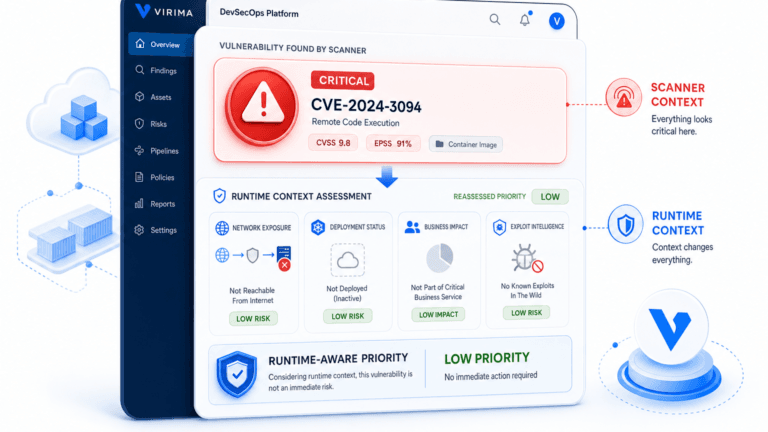
Integrated vulnerability and lifecycle management. A modern CMDB should reach beyond asset tracking. Virima can overlay NIST NVD CVE intelligence on discovered Windows Server CIs and weight findings with asset and business service criticality in ViVID maps. That supports prioritization alongside dedicated vulnerability scanners; it is not a full multi-OS VM replacement. By managing the software asset lifecycle, teams can identify unused or unnecessary licenses, reducing both cost and risk.
Visualization and role-based governance. The ViVID™ dashboard and interactive maps serve more than CMDB admins. Role-based access controls determine who can view and change data, so business users, service owners, and MSP teams each get the view they need. For MSPs managing multiple clients, that governance model supports consistent operations across customers from one platform.
2. ServiceNow Discovery
Best for large enterprises with complex ITSM needs.
ServiceNow Discovery offers enterprise-grade discovery and deep ITOM capabilities tightly integrated into the broader ServiceNow platform. It handles recurring scheduled network scans, detailed IT asset tracking, and service dependency mapping well. The trade-offs are steep licensing costs and a complex implementation that can slow adoption for smaller teams. For organizations committed to the ServiceNow ecosystem, it remains a strong, if heavyweight, choice. If you are weighing platform-native discovery against a discovery-first layer, see Virima vs Device42 vs ServiceNow.
Key features:
- Infrastructure discovery: Scans the network for servers, virtual machines, laptops, and network gear.
- Application dependency mapping: Visualizes relationships between applications and infrastructure to support incident management.
- Multi-cloud support: Maps resources across hybrid and multi-cloud environments.
- Third-party data integration: Ingests and reconciles data from external tools.
- Serverless discovery: Supports serverless functions on platforms like AWS Lambda and Azure Functions.
3. BMC Helix Discovery
Ideal for multi-cloud environments and complex asset portfolios.
BMC Helix uses AI-driven discovery to maintain a cloud-aware CMDB. Its strength is data federation across hybrid infrastructures, paired with ITIL-aligned asset management and built-in change risk assessment. Users often cite implementation complexity and price as downsides.
Key features:
- Agentless discovery: Identifies assets and relationships without manual updates.
- Cloud-native SaaS platform: Managed by BMC for upgrades and availability.
- Dynamic service modeling: Builds topologies that support anomaly detection and root cause analysis.
- Broad asset coverage: Containers, cloud, hyperconverged infrastructure, mainframes, and distributed systems.
- Security and compliance: Change impact assessment and audit support.
4. OpenText Universal Discovery (UD)
Suited for enterprises needing a wide-ranging network and software discovery.
OpenText UD focuses on broad asset discovery across network devices, SaaS, and cloud. Its agentless approach simplifies deployment in distributed environments, though the interface feels dated, and usability can be a hurdle for teams new to discovery tools.
Key features:
- Agent-based, agentless, and hybrid discovery across network layers and devices.
- Multi-cloud and on-premises support: public clouds (AWS, Azure, GCP, Oracle), private clouds (OpenStack, VMware), and network infrastructure.
- Broad software discovery across a large catalog of software titles.
- Service mapping and modeling to support CMDB accuracy.
5. Ivanti Neurons for Discovery
Great for organizations that want integration with broader endpoint management.
Ivanti Neurons offers agentless and agent-based discovery tied into Ivanti endpoint security and ITSM. Its IT asset management flows benefit from unified data, though some users report more limited cloud and SaaS discovery, positioning it well for traditional on-prem estates moving toward hybrid. Virima also offers discovery and service mapping for Ivanti Neurons customers.
Key features:
- Asset discovery as devices connect to the network.
- Scalable, self-organizing design that reduces duplication.
- Asset normalization for accurate inventory.
- Policy-based discovery control.
- Integration with Ivanti endpoint security and ITSM.
6. Lansweeper
Best for simpler IT environments and cost-conscious SMBs.
Lansweeper’s agentless discovery is strong at mapping networks of physical and virtual assets. It is praised for ease of use and fast setup, but lacks the deeper service mapping and multi-cloud depth that larger enterprises need, making it a better fit for straightforward infrastructure.
Key features:
- Passive and active discovery on network connections or via IP range scans.
- Credential-free device recognition (CDR).
- Agent-based scanning for hard-to-reach devices.
- Cloud and OT discovery.
- Visual network diagrams.
- Vulnerability insights via the NIST catalog.
7. ManageEngine AssetExplorer
Ideal for mid-market teams wanting an integrated asset and service desk.
ManageEngine AssetExplorer combines discovery with ITSM workflows and inventory tracking. It is competitive on cost and features but falls short on complex dependency mapping and cloud-native discovery, so larger or more complex enterprises may outgrow it.
Key features:
- Multiple discovery methods across hardware and software.
- Asset lifecycle management from procurement to disposal.
- Inventory and license compliance.
- Custom workflows.
- Integration with Zoho, the ManageEngine ecosystem, and third-party apps.
- Cloud and on-premises deployment.
8. Micro Focus Universal CMDB (UCMDB)
Fits enterprises wanting deep integration with Micro Focus ITSM.
UCMDB provides detailed topology and service modeling with strong relationship discovery. It supports diverse environments but has a steep learning curve and significant maintenance overhead, which can slow time to value versus newer SaaS tools.
Key features:
- Detailed topology and service modeling.
- Strong relationship discovery across complex environments.
- Change tracking and impact analysis.
- CMS UI for multiple analytical perspectives.
- On-premises and SaaS options.
9. SolarWinds Service Desk
Good for teams already invested in SolarWinds infrastructure.
SolarWinds Service Desk includes discovery built around its ITSM capabilities, with solid asset and endpoint detection and useful alerting. It is more limited in cloud service and application dependency visibility, suiting small to mid-sized organizations.
Key features:
- Incident and problem management.
- Service request management.
- Change management.
- Knowledge management and self-service.
- Asset management across the lifecycle and licensing.
- Mobile access and reporting.
10. Freshservice Discovery Probe
Best for Freshworks users seeking integrated discovery.
Freshservice Discovery Probe focuses on agent-based asset detection tied closely to Freshservice ITSM. It is easy to deploy and use, but less mature in broad cloud discovery and advanced service mapping, making it a solid starter for teams already on Freshworks.
Key features:
- Agent-based asset detection integrated with Freshservice ITSM.
- Quick deployment.
- Basic cloud discovery.
- Foundational service mapping.
11. Device42
Ideal for data-center-centric environments needing detailed network asset management.
Device42 is strong in data center asset discovery with rich visual topology maps. It’s one-way integration with ServiceNow CMDB limits value for teams that want bi-directional sync.
Key features:
- Detailed data center and network asset discovery.
- Strong visual topology mapping.
- Integration with ServiceNow CMDB (one-way sync).
- Infrastructure documentation: IP address management, cabling, and configuration details.
How to choose the right CMDB discovery tool
Choosing a CMDB tool is about fit, not just features. Not every tool here suits every team. Use this checklist to filter the field:
- Match scale and complexity. Small to mid-sized organizations may prefer affordable, easy-to-deploy tools like Lansweeper or ManageEngine. Large enterprises with hybrid or global estates often need enterprise-grade discovery like ServiceNow, BMC Helix, or OpenText.
- Consider cloud coverage. If you run workloads in AWS or Azure, confirm the tool has strong cloud discovery and SaaS integrations.
- Check ITSM and CMDB integration. Pick a tool that integrates cleanly with your ITSM platform, such as ServiceNow, Halo, or Ivanti, to avoid reconciliation headaches.
- Weigh visualization needs. If your team benefits from graphical service maps, prioritize tools like Virima or Device42. Our pick is the Virima Visual Impact Display (ViVID™).
- Compare budget and licensing. Weigh transparent subscription pricing against quote-only enterprise models.
- Plan for growth. Choose a platform that scales with AI and ML insights and multi-client management as your environment expands.
CMDB discovery evaluation scorecard
Use this scorecard in vendor calls. Score each row 1-5. Weight relationship depth and refresh model higher than UI polish. Inventory breadth without relationship freshness rarely survives the first month of hybrid change.
| Criterion | Why it matters | What to ask | Red flag |
|---|---|---|---|
| Relationship depth | Change and incident impact | How are service dependencies maintained after the first map? | Inventory only; static diagrams |
| Refresh model | CI drift | What is the discovery schedule, reconciliation, and ownership certification model? | Project-style scan-once onboarding |
| Hybrid reach | Estate reality | Which mix of API, agent, and credential methods covers on-prem and cloud? | LAN-only or cloud-only blind spots |
| ITSM or CMDB sync | Workflow truth | What is sync direction, conflict handling, and CI class coverage? | Manual CSV as the steady state |
| Access and governance | Audit and least privilege | How do RBAC and CI ownership work for operators vs auditors? | Shared admin-only access |
| Visualization for ops | MTTR and change safety | Can maps overlay incidents, changes, and criticality? | Export-only topology with no ops context |
A right-fit CMDB discovery tool does more than populate the database. It helps keep IT operations, security, and business services running on current, trustworthy data.
Why Virima maintains the CMDB, not just fills it
The CMDB market still runs into the same failure mode: high manual overhead, stale relationships after the first scan, expensive reconciliation, and tools that lock discovery inside one platform. Hybrid estates need discovery that refreshes CI attributes and the dependency maps those CIs belong to. When you shortlist platforms, score that maintain-vs-fill gap first. Virima is built around that gap for teams that need hybrid coverage, service impact visibility, and governed CMDB data without forcing a full platform rip-and-replace.