SysAid CMDB Alternative: When the Bundle Is Not Estate Authority

SysAid often works well as a combined ticketing and asset workspace for daily operations. Tickets link to asset records and staff track assignments in one queue. That setup helps small teams avoid managing separate tools for every request. That convenience helps service delivery when the question is who owns the current ticket and what was done.
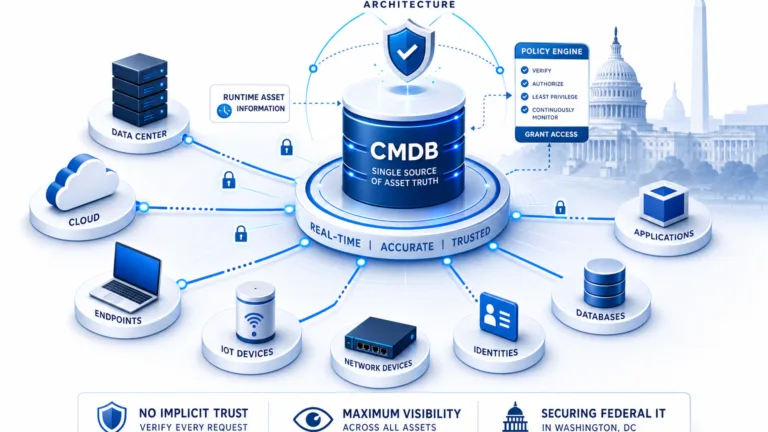
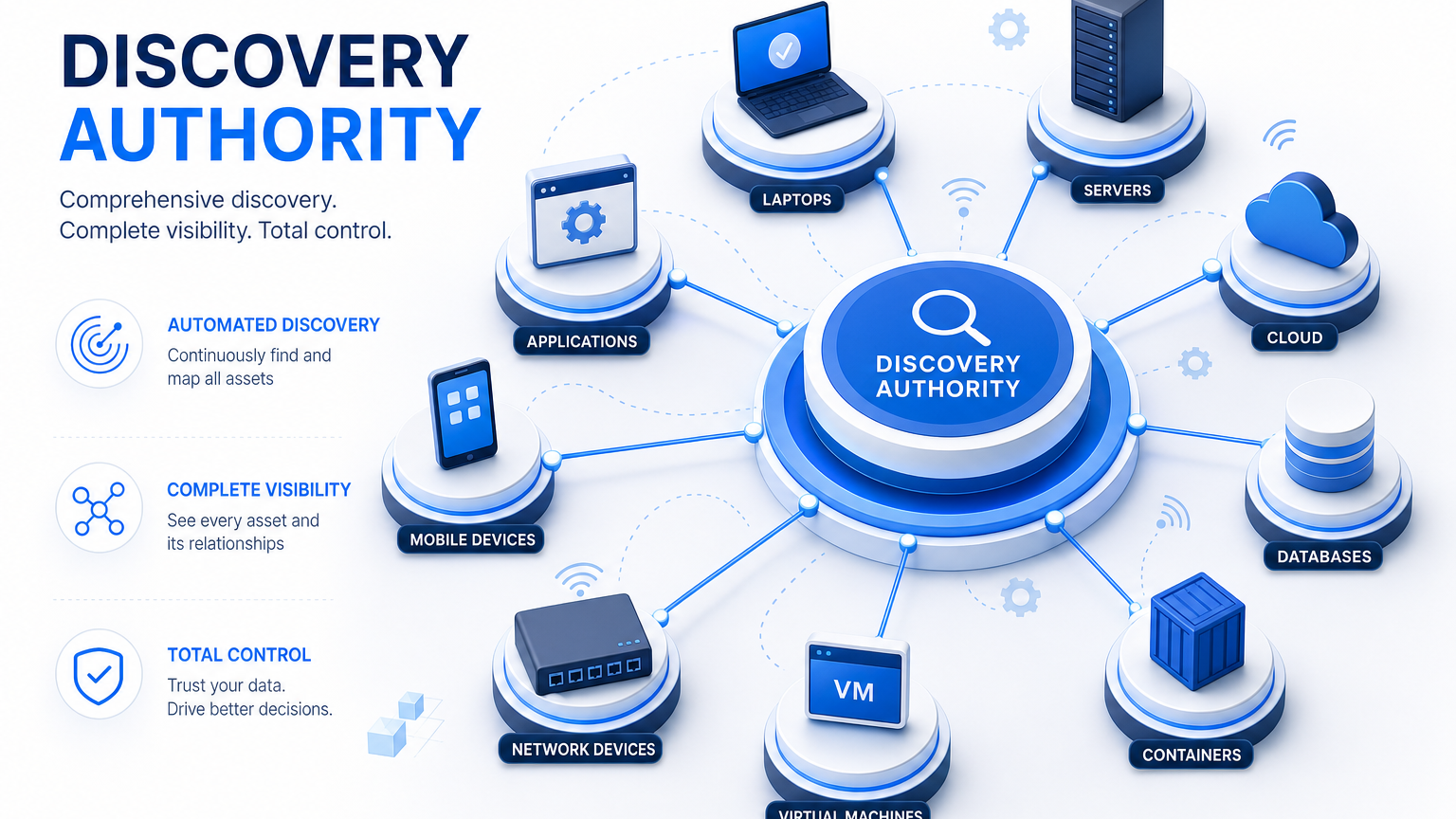
Estate authority answers a different question with evidence from scheduled discovery. It confirms every laptop, server, virtual machine, and cloud workload that exists. It then shows how each item connects to services, who owns it, and what changed since the last scheduled discovery cycle. Explore how discovery-sourced evidence becomes Trusted Runtime Truth for change and incident decisions.
Where the bundled asset list starts to strain
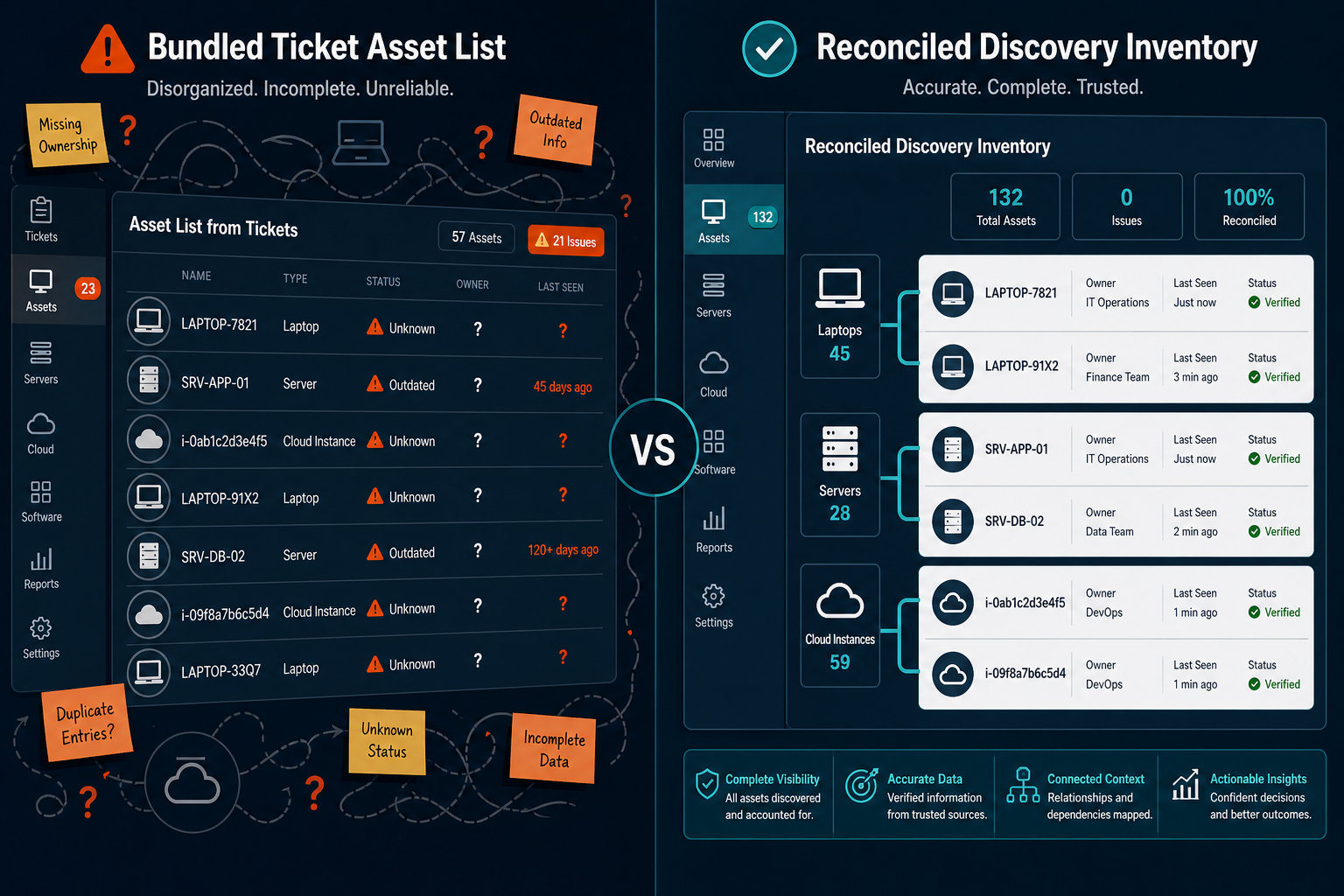
Bundled asset records depend heavily on agents, manual entry, and ticket activity for updates. Devices that miss agent deployment or sit offline during scans often appear late. Cloud-provisioned workloads that never enter ticket workflows can remain missing entirely. Stale serial numbers, duplicate hostnames, and retired assets retained as active records accumulate over time.
The gap shows up during audits, patch cycles, and incident response. Teams reconcile spreadsheets before they can answer how many licensed installs exist or which services depend on a failing switch. Leadership asks for coverage proof, and the desk can show tickets closed without showing complete estate coverage. This pattern aligns with configuration item management guidance from NIST on maintaining accurate baselines for security and change decisions.
What discovery authority requires from a CMDB alternative
A discovery authority platform establishes identity with durable keys such as device serial number or cloud instance ID. Hostnames change during reimaging and reassignment, so they cannot serve as the primary join key across sources. Scheduled discovery from multiple protocols reconciles wired, wireless, virtual, and cloud infrastructure into one record set.
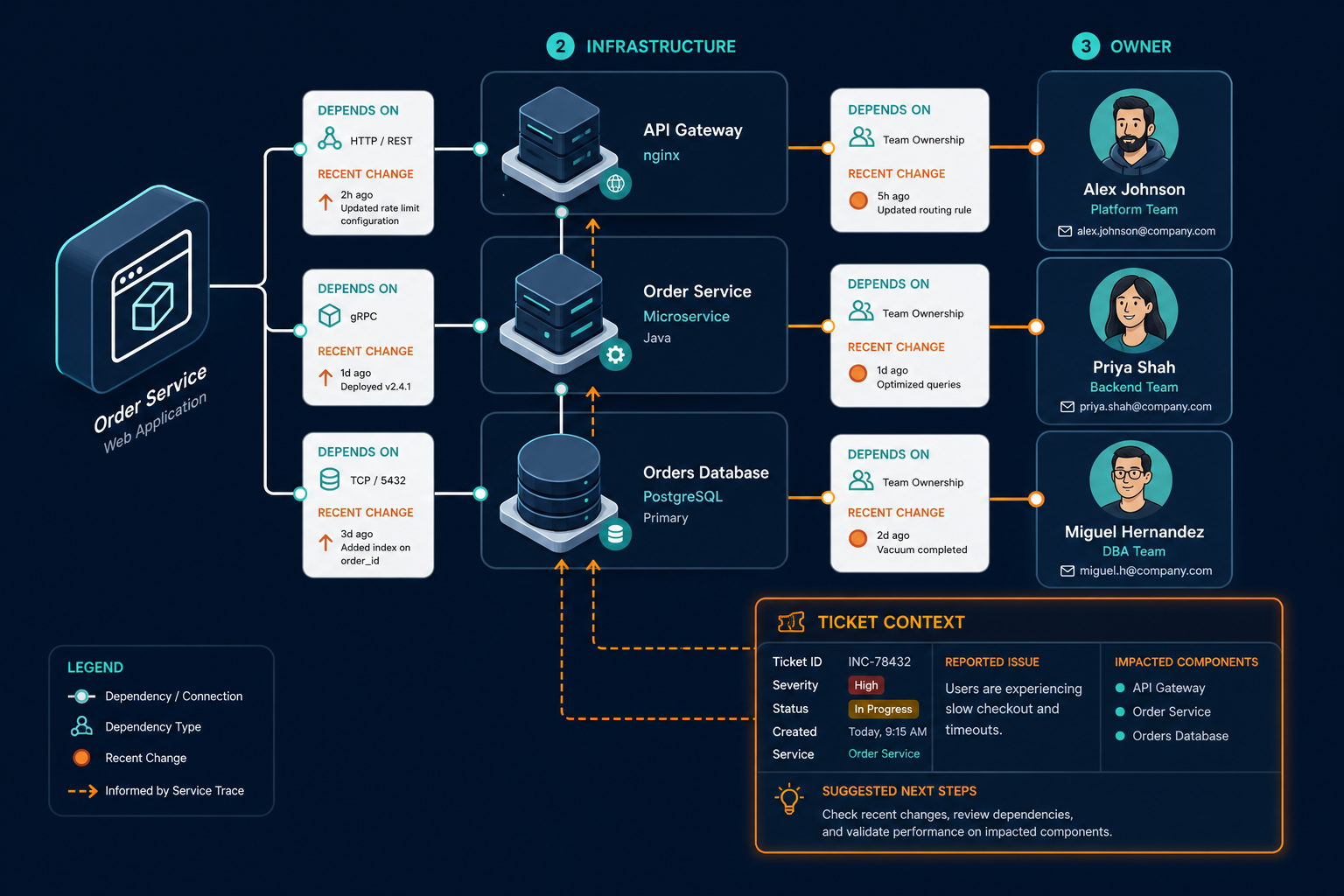
Typed relationships matter as much as inventory completeness. Installed-on, runs-on, virtualizes, and depends-on links show how an application maps to infrastructure and which business service feels the impact. Ownership, location, lifecycle state, and change history attach to the same configuration item for audit-ready context.
How Virima sits beside the SysAid desk
Virima provides high-frequency scheduled discovery, a reconciliation-driven CMDB, and ViVID service mapping built from defined business services. Once service definitions are supplied through import or input, Virima builds dependency maps automatically from discovery evidence. Teams keep SysAid for intake, prioritization, and ticket resolution. Virima holds the authoritative asset and relationship data teams reference alongside those tickets.
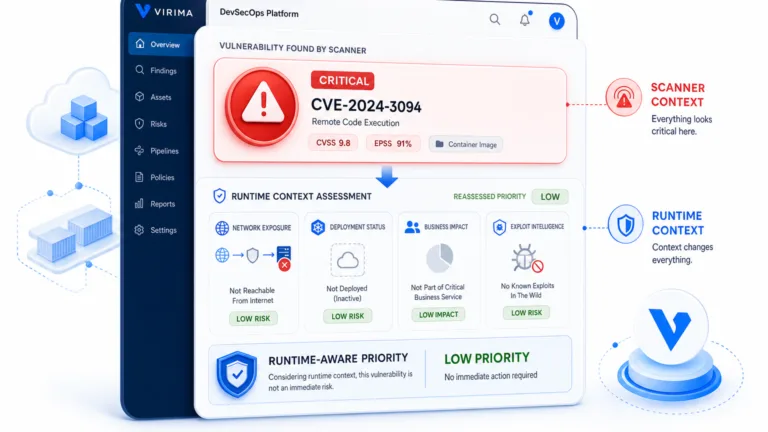
Agents gain context by checking the affected configuration item in Virima alongside the SysAid ticket, including service dependencies, recent changes, and ownership. Change requests carry blast-radius evidence before approval instead of assumptions from an incomplete asset tab. Audit preparation starts from reconciled records rather than reconstructed ticket histories.
When bundled asset coverage falls short for audits or changes, see a right-sized path that keeps your desk. It strengthens discovery authority without disrupting ticket workflows.
Evaluation starts with one site or one cloud account before expanding coverage to the full estate. Comparison of scheduled discovery against ticket-linked records reveals gaps that stay hidden during normal queue work.
Can Virima work alongside SysAid for ticketing?
Yes, teams keep SysAid for ticket intake and resolution while using Virima separately for discovery and service context. Virima supplies scheduled discovery, reconciled configuration items, and service maps to inform audit, patch, and change decisions. There is no native SysAid connector listed on the integrations hub.
A practical decision checklist for lean IT teams
Start with coverage by comparing scheduled discovery results against the bundled asset list for one site or one cloud account. Look for unmanaged endpoints, duplicate records, and cloud workloads that never entered ticket workflows. Measure how long reconciliation takes before patch reporting feels trustworthy.
Then evaluate relationship depth by tracing one critical service from application to infrastructure and owner. Confirm whether the current record shows dependencies, recent changes, and support ownership without manual research. If that trace requires three tools and a spreadsheet, the bundle is handling workflow while estate authority remains missing.
Connection paths to ITSM tools remain straightforward when teams need ticket enrichment. ServiceNow and Jira workflows can consume reconciled data through the central integrations hub for ticket enrichment.
What makes a CMDB an estate authority?
An estate authority reconciles multi-protocol scheduled discovery into durable configuration items, links them with typed service relationships, and retains ownership and change history for audit and change decisions.
Decide whether to add discovery authority beside your desk
Keep SysAid where it performs best, namely intake, triage, assignment, and resolution tracking for daily service delivery. Add discovery authority when patch assurance or audit evidence depends on complete coverage. Change safety also depends on knowing everything that exists and how it connects. Schedule a demo to see discovery evidence for your estate and service maps.
Frequently Asked Questions
Is Virima a replacement for SysAid help desk?
No, Virima provides scheduled discovery, CMDB depth, and service mapping that feed ticket and change workflows. Teams continue running intake and resolution in SysAid while referencing Virima records separately for asset accuracy and impact context.
How does discovery improve ticket data quality?
Scheduled discovery reconciles agents, network scans, and cloud signals into durable configuration items keyed on serial number or cloud instance ID. Tickets then reference verified assets with ownership and service links instead of manually maintained rows.
Does Virima support AWS and Azure discovery?
Yes. Virima discovers workloads across on-premises infrastructure plus AWS and Azure through scheduled discovery cycles. Reconciled cloud instance IDs preserve identity even when hostnames or IP addresses change.