How Post-Incident Reviews for CMDB Accuracy Help IT Operations Managers Close Triage Gaps

During a major incident, an unfamiliar asset name can delay the search for an affected service. The responder might find the answer during the call, yet the next shift may inherit the same incomplete record. Post-incident reviews for CMDB accuracy give IT operations managers a way to capture those discoveries and correct the data behind future tickets.
Consider the questions raised by a regional disruption. Network World reported that connectivity to Microsoft’s West US cloud region was interrupted for nearly five hours on July 23, 2026. Traffic entering or leaving the region was affected, while services running entirely within it were unaffected. Teams assessing their own exposure would need to identify which services crossed that regional boundary and who owned them.
A review after an incident can examine whether that information was available when responders needed it. The practical goal is to leave a reliable correction for the next incident, with an owner and a way to check the result.
What an Incident Can Be Linked To, and What You Supply Yourself
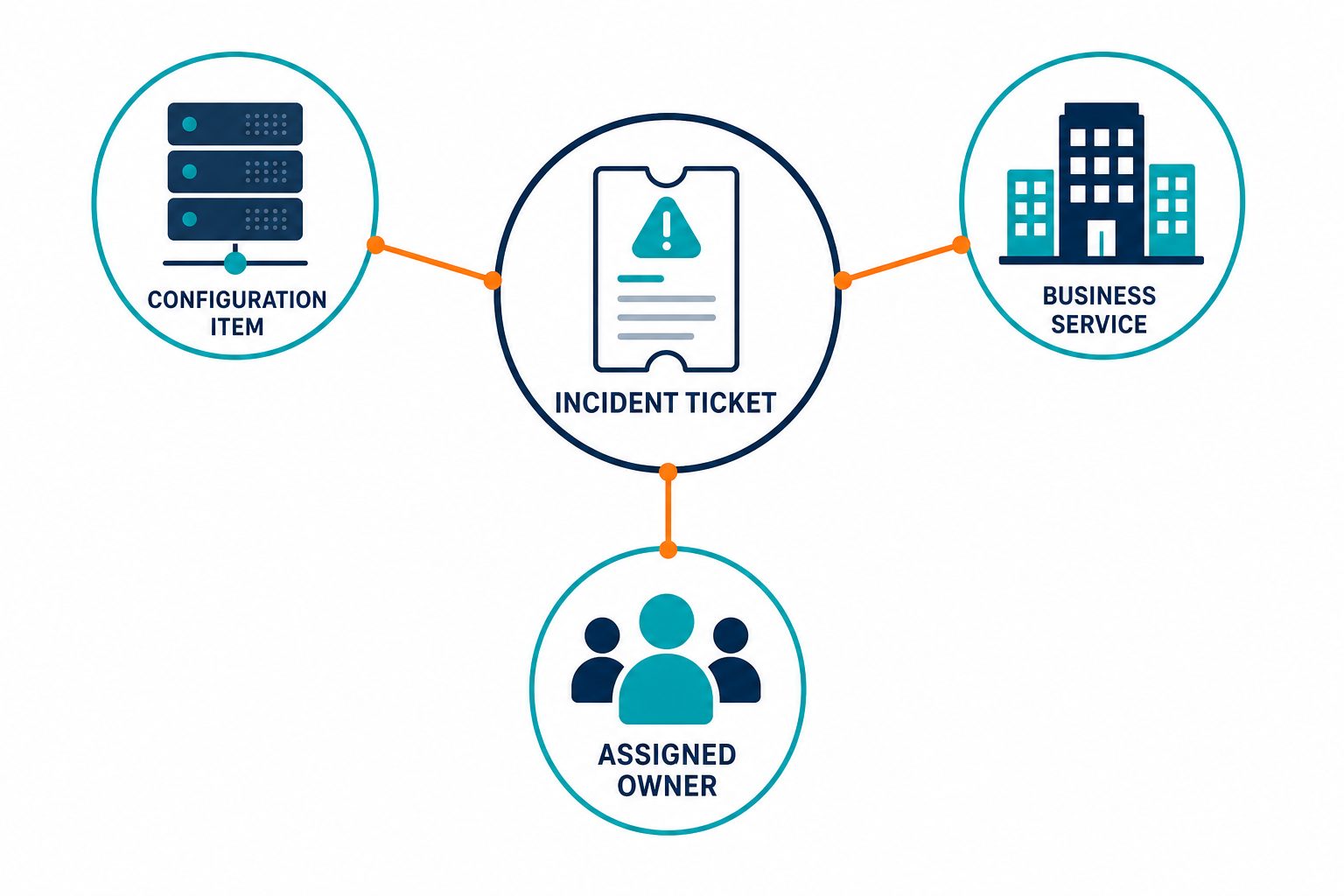
Virima can help link alerts and incidents to configuration items (CIs) and affected services. The outcome depends on available CI records, service definitions, and the way connected tools are configured. Integration behavior and the information displayed on a ticket vary by platform.
| Link | What it needs | Who supplies it |
|---|---|---|
| Incident to CI | A CI record and a dependable way to identify the affected asset. | Discovery can populate the CI; the team establishes how records are matched or selected. |
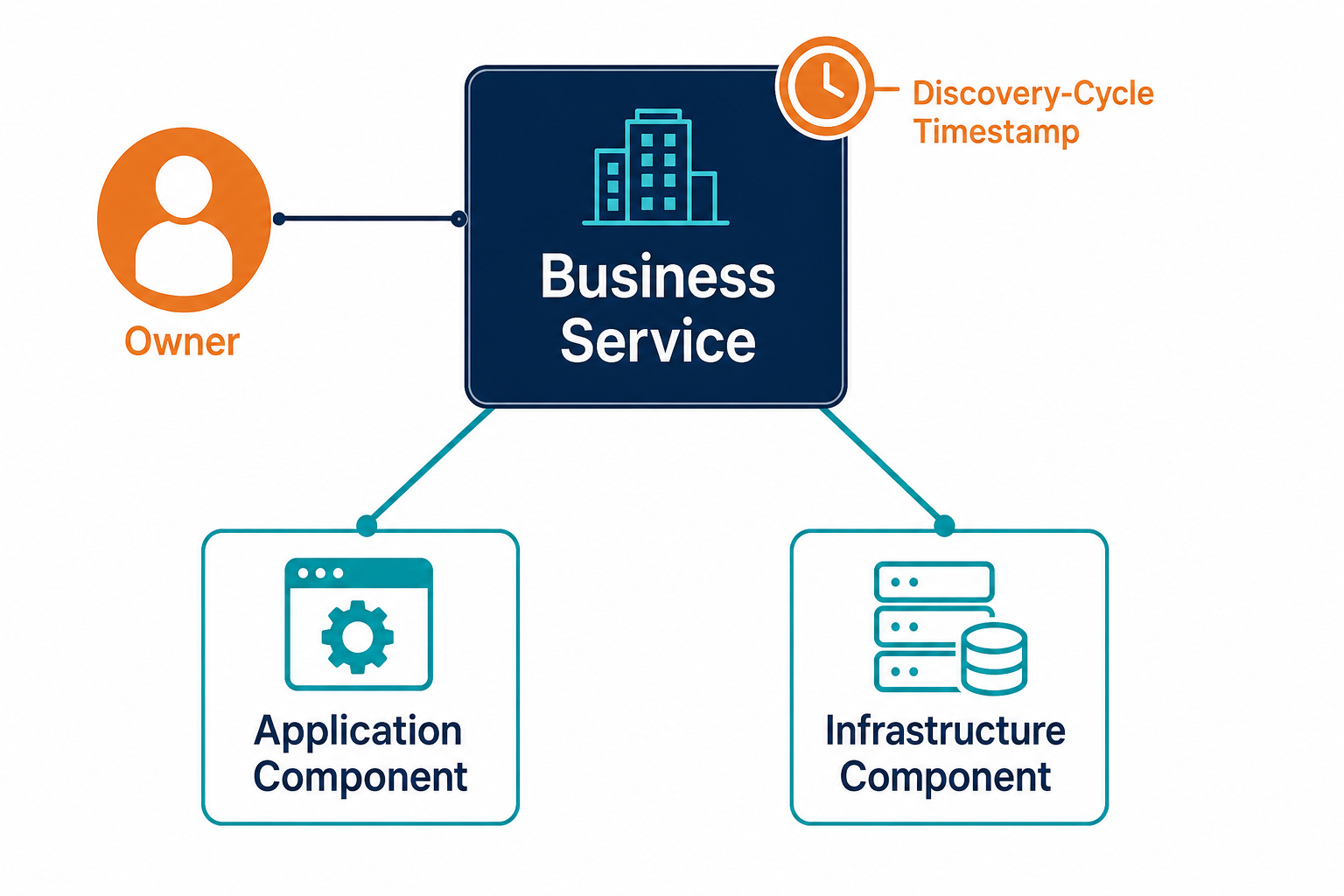
| CI to service | A defined service and its dependencies. | The service team supplies the definition, and ViVID™ builds a dependency map from that input. |
| Service to owner | A named owner or accountable support team. | People confirm ownership and maintain it in the relevant record. |
| Record freshness | Discovery configured for the relevant scope and schedule. | The discovery team sets the scope, credentials, and scheduled cycles. |
A hostname can help a responder investigate, but it should not serve as the sole durable join key. A serial number or cloud instance ID can provide a more reliable identifier when it is available and appropriate to the asset.
The incident-to-CMDB guide describes the relationship between incidents and configuration records. For a connected tool, ask which CI fields and service context reach the ticket before relying on them during an outage.
Why Triage Slows Down After the Alert Fires
In a PagerDuty-sponsored 2026 survey of 1,000 business and IT decision-makers and senior developers, 68% reported organizational losses above $300,000 per hour during IT incidents. The figure reflects respondents across several markets and industries, rather than the cost of a particular team’s triage gap.
For an operations manager, the immediate concern is whether responders can identify the affected asset and contact the right owner. Four gaps can interrupt that work even when monitoring detects the disruption promptly.
Four Places the Link Breaks Between Alert and Owner
- The alert and the CI use different identifiers. A responder may see a hostname while the relevant record uses another identifier. Result: The team spends time confirming which asset the ticket refers to.
- The CI has no usable service relationship. A server can appear in inventory without a documented path to the affected application. Result: The incident team has less context for judging service impact.
- The service owner has changed. A reorganization may leave an outdated team or contact on the record. Result: The first escalation can reach someone who no longer owns the service.
- The answer is found but never recorded. Responders may identify a dependency through a colleague or a message thread. Result: The next incident can begin with the same missing information.
The fourth gap is the review opportunity. A ticket can record what the responder learned, while the responsible team decides whether a CI, service definition, or ownership field needs correction.
What Slow Triage Costs Each Seat
For an IT operations manager, incomplete context makes shift handoffs harder to verify. The next team must distinguish confirmed impact from questions that remain open.
For on-call engineers, the first task can become identifying the asset and service instead of diagnosing the reported problem. A useful handoff includes the identifier checked, the affected service, and the owner contacted.
Service owners also need a dependable escalation path. An outdated record can send a page to a former owner while the current team waits for information.
Leadership needs an impact estimate that can be updated as evidence improves. Clear service relationships help the incident manager explain what is confirmed, what remains uncertain, and who is investigating.
A Weekly Link Review That Turns Triage Into Corrections
Set aside a short weekly review of recent Priority 1 and Priority 2 incidents. Include the incident manager and the people who can approve changes to CI records, service definitions, and ownership. If another meeting already examines these issues, add the checks there instead.
The PagerDuty survey also reported that 48% of organizations increased resilience by turning incidents into structured learning opportunities. That finding concerns resilience broadly, rather than CMDB linkage specifically. A link review applies the same learning principle to a defined set of incident records.
Record the Miss While the Incident Is Fresh
For each selected incident, capture three observations before the details disappear from the handoff:
- Was the correct CI attached when the ticket was created?
- Was a useful path to the affected service available?
- Did the recorded owner match the team responsible for the service?
Use the ticket’s available fields or notes to record what responders found. Mark an answer as unknown when evidence is incomplete, then assign someone to investigate. The review should distinguish an absent link from an incorrect link because they may require different fixes.
Virima provides an ITSM offering and connects with other service management platforms. Consult the integration options and confirm which fields and updates are supported in the chosen workflow. The team owns the review and the correction, regardless of where the evidence is recorded.
Fix the Record at Its Source
A missing CI may point to discovery scope, credentials, a schedule, or a matching issue. Check the last relevant discovery cycle and the asset’s durable identifier before changing the schedule. A missing service path may require the service owner to provide or update its definition.
An incorrect owner needs confirmation from the people responsible for the service. Once confirmed, update the authoritative record and check whether the connected workflow receives the change. Avoid assuming that a correction in one system automatically appears in every other system.
| Triage question | Where the answer lived | Correction to review |
|---|---|---|
| Which asset was affected? | The identifier was found during investigation. | Check the CI record and the configured matching or selection process. |
| Which service depended on it? | The relationship was known by an engineer. | Confirm the dependency and update the service definition. |
| Who owned the service? | The current owner was found through a handoff. | Confirm ownership and update the appropriate record. |
| Will the next shift see the correction? | The answer remained in the incident notes. | Assign an owner to update the source and verify the connected view. |
The service desk and CMDB guide examines conflicts between ticket records and CIs. Use the weekly review to identify which conflicts need a specific owner and follow-up date.
Check the Link Rate After the Fix
Choose a measure that the operations manager can calculate from the incident queue. One useful measure is the share of reviewed Priority 1 and Priority 2 incidents that had both the correct CI and a service association at creation.
Divide the number meeting both conditions by the number of applicable incidents reviewed. Record the period and sample size beside the percentage. Where the service association cannot be verified from historical data, mark it unknown rather than counting it as a failure or a success.
Use the same definition in each review. A second count of incorrect owners can provide context without changing the primary measure. Examine individual misses as well as the percentage, especially when only a few incidents occurred.
When a Separate Review Is Not Worth Running
A team with few major incidents may prefer a monthly review or add these checks to an existing meeting. Teams already examining CI links in their post-incident process can keep their existing cadence. The important step is to assign and verify corrections rather than create another meeting.
Four Reviews in Practice
The following examples are illustrative and do not describe customer incidents.
The unrecognized hostname. An incident identifies a server by a name that is absent from the ticket’s CI field. The reviewer confirms the asset using its cloud instance ID and finds that the relevant account was outside discovery scope. The discovery owner updates the scope and checks the next scheduled cycle.
The service nobody had defined. A ticket identifies the affected application component, but the service relationship is missing. The service owner documents the component and its service definition. The team reviews the resulting map before using it in a later incident.
The stale owner. An escalation reaches a team that handed over the service after a reorganization. The current and former owners confirm the change. An administrator updates the owner field and verifies the connected view where the escalation team looks.
The correct link nobody recorded. During response, an engineer finds a dependency in an architecture document. The incident record captures that finding, and the service owner confirms it. The CMDB team then updates the relationship and checks the map.
Virima Supplies the CI and Service Context Your Incident Tickets Carry
Virima’s ITOM capabilities include alert and incident correlation with CIs and affected services. The exact matching method and ticket fields depend on the configuration and connected platform. Ask the implementation team to demonstrate the path for the incident tools your responders use.
Discovery populates CI information within its configured scope. Records reflect the latest applicable discovery cycle, and coverage depends on factors such as access and credentials. People remain responsible for checking business ownership and correcting service definitions.
Once a team provides service definitions, ViVID™ service mapping builds dependency maps from those inputs. Responders can use those maps to examine relationships and potential impact. A map is only as useful as the definitions and discovered relationships available to it.
Monitoring tools raise alerts, while service management workflows track incident handling. Virima contributes CI and relationship information that teams can use alongside those workflows. Validate what appears in each ticket and where the service map is accessed before setting expectations for responders.
A 30-Day Pilot on One Service
Start with one service that has a confirmed owner and enough incident history for a useful review. The first month establishes a baseline and assigns corrections, even if the next ten incidents take longer to occur.
- Choose one service. Confirm its owner and identify the systems and support teams in scope.
- Pull recent incidents. Review up to ten relevant Priority 1 and Priority 2 tickets, or use the available sample.
- Score the records. Record CI attachment at creation, the service path, and ownership accuracy for each ticket.
- Assign corrections. Address the most common verified gaps in discovery scope, CI records, service definitions, or ownership.
- Review the next incidents. Apply the same checks to the next ten applicable tickets, even if they fall outside the first month.
Take the sample size, link rate, and outstanding corrections to the next operations review. A small sample can reveal a recurring issue, but it does not establish a broader performance trend on its own.
Put One Incident Through the Review
Choose a past incident where responders had to ask which asset, service, or owner was involved. Use it to examine what the ticket carried at creation and what the team learned during response.
Explore Trusted Runtime Truth for discovery-sourced information about what exists, how it connects, what changed, what might be affected, and who owns it. To walk through that incident with the team, request a demo.
Frequently Asked Questions
Can Virima link incidents and alerts to CIs and affected services?
Virima supports correlation of alerts and incidents with CIs and affected services. The information available depends on CI records, customer-provided service definitions, integration capabilities, and configuration. Confirm the matching and ticket fields for each connected platform.
How does linking incidents to configuration items help triage?
A correct CI link helps responders locate the affected asset and review available service relationships. That context can support impact assessment and escalation, although the information shown depends on the connected tools and record quality.
What is a post-incident review for CMDB accuracy?
It is a review of whether incident records contained the right CI, service relationship, and owner when responders needed them. The team assigns corrections to the appropriate record owners and checks whether those corrections reach the relevant workflow.
What can cause an incident-to-CI link to be missing?
A CI can be outside discovery scope, use an identifier that does not match the ticket, or require manual selection. A review should identify the specific cause before the team changes discovery settings or matching rules.
Does Virima work alongside monitoring and ITSM platforms?
Virima provides discovery, CMDB, mapping, and ITOM capabilities alongside supported integrations. Teams should verify the data passed by their specific integration and decide where responders will view CI, service, and ownership information.