IT Regulatory Compliance: How Virima Keeps You Audit-Ready

Why IT Regulatory Compliance Keeps Getting Harder
Compliance isn’t about checking boxes. It’s a core part of IT governance that shields your organization from financial penalties, reputational damage, and security failures. Data protection regulations, cybersecurity mandates, and industry-specific frameworks keep expanding, and each brings its own requirements for documentation, access control, and evidence.
GDPR, HIPAA, SOX, and PCI-DSS each impose distinct demands on how your team manages, protects, and reports on IT systems. Falling short on any one of them carries real consequences: regulatory fines, failed audits, contractual breaches, and in some cases operational shutdowns.
The core challenge is visibility. You can’t demonstrate compliance for assets you haven’t inventoried, systems whose configurations you don’t track, or software installs you haven’t reconciled against your license agreements. Keeping that picture accurate, especially across hybrid and cloud environments, is where most organizations struggle. IT compliance management has grown substantially more complex as infrastructure spans more environments.
Data Sovereignty and Cloud Challenges
Data sovereignty adds another layer of complexity to IT regulatory compliance. When data crosses borders, the legal requirements governing it can shift entirely. A workload hosted in one country may fall under different privacy laws when accessed from another. Multinational organizations must navigate an overlapping patchwork of national and regional frameworks simultaneously.
Cloud environments make this harder. Organizations typically run workloads across multiple providers, each with different data residency and access policies. Without a clear record of where data lives and which systems process it, demonstrating compliance to an auditor is guesswork. Managing hybrid IT environments effectively requires a single inventory that spans on-premises and cloud assets.
Virima provides exactly that. Its unified asset record captures location, cloud context, and ownership for every device and workload, making compliance scoping a structured, repeatable exercise regardless of where your data sits.
IT Governance Frameworks: ISO 27001 and Beyond
ISO 27001 sets an internationally recognized standard for information security management. Certification requires organizations to establish and maintain an Information Security Management System (ISMS) backed by meticulous asset inventories, documented controls, and consistent evidence that policies are working.
Other frameworks share similar requirements. NIST CSF, PCI-DSS, HIPAA, and SOX each require you to know which systems are in scope, who owns them, and whether they meet defined security and configuration standards. Without accurate, current asset data, those certifications are difficult to achieve and harder to defend. IT governance built on incomplete data creates risk rather than reducing it.
How Virima Supports IT Regulatory Compliance
Virima brings together IT discovery, ITAM, CMDB, and ViVID Service Mapping to give your team the asset visibility and documentation that compliance programs require. It doesn’t just tell you what exists. It shows you how everything connects, what’s changed, and where risks are concentrated. Tools like Virima are reshaping how businesses handle these changes, particularly in complex IT environments where manual tracking breaks down.
Discovery-Driven Asset Inventory
An accurate asset inventory is the foundation of IT regulatory compliance. Frameworks like SOX, HIPAA, and PCI-DSS each require you to know which systems are in scope, who owns them, and whether they meet defined configuration and security standards.
Virima maintains a discovery-driven asset inventory that captures hardware, software, cloud instances, and network devices. Every record includes ownership, configuration state, lifecycle status, and location. When an auditor asks which systems process sensitive data, your team has a defensible, documented answer, not a spreadsheet assembled over a weekend.
Software License Compliance
Licensing gaps are among the most common and costly audit findings. Organizations frequently discover they are either over-licensed (wasting budget) or under-licensed (creating legal risk). Virima ITAM tracks license entitlements against actual software installs across your environment. You can demonstrate compliance without guesswork and identify underutilized licenses before they become an audit finding.
Warranty, Support, and Vendor Contract Management
Many compliance frameworks require organizations to track end-of-life and end-of-support status for hardware and software. Running on unsupported systems introduces regulatory risk, especially under HIPAA and PCI-DSS. Virima looks up warranty status by serial number, links support documentation to individual asset records, and flags items that are out-of-warranty or out-of-support.
Vendor SLA tracking is also built in, so you can demonstrate that service agreements meet your compliance obligations. This supports safeguarding sensitive information throughout the asset lifecycle, not just at initial procurement.
ViVID Service Mapping and Dependency Visibility
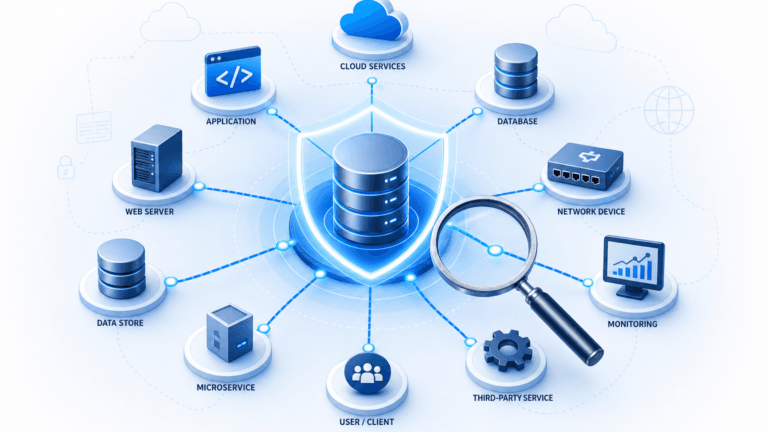
Understanding which assets support which services is critical for scoping compliance assessments accurately. Service mapping with ViVID builds dynamic dependency maps from discovery data, showing the relationships between infrastructure components, applications, and business services.
When a compliance framework requires you to document systems in scope for a specific process or dataset, ViVID gives you a visual, auditable answer. Service definitions are provided by your team through direct input, spreadsheet import, or integrations such as Lean IX. Virima then builds the dependency map from that input. This approach improves application visibility and makes compliance scoping far more reliable.
Cybersecurity Compliance Support
Regulatory frameworks increasingly require active management of vulnerabilities, not just documentation that they exist. Virima overlays vulnerability data from NIST NVD lookups onto your service maps, helping cybersecurity teams prioritize threats and compliance issues based on the criticality of impacted services.
This creates an auditable record that supports cybersecurity and compliance requirements across HIPAA, PCI-DSS, and ISO 27001. For a deeper look at how this approach supports risk-based compliance, see 8 ways CSAM can help you manage cyber risks.
IT Regulatory Compliance Across Cloud and Hybrid Environments
Hybrid IT environments create special compliance challenges. When workloads run on-premises alongside AWS and Azure, compliance teams must track assets across multiple discovery sources simultaneously. Virima’s discovery capabilities cover on-premises infrastructure alongside AWS and Azure via API-based discovery. All assets feed into a single CMDB, giving your team a unified compliance view across the full hybrid environment.
For data sovereignty specifically, you can filter and report on assets by location, ownership, and regulatory scope. That makes demonstrating compliance in any jurisdiction a structured exercise rather than an emergency investigation. The challenges of achieving IT visibility in complex and distributed environments are significantly reduced when every asset, regardless of location, flows into one authoritative record.
From Reactive Audits to Proactive IT Regulatory Compliance
Traditional compliance programs are reactive. Teams pull reports from disconnected systems at audit time and hope the data is current. That approach carries real risk: stale inventories, untracked configuration changes, and undocumented software installs all become findings.
Virima shifts IT regulatory compliance from a point-in-time scramble to an ongoing discipline. High-frequency discovery cycles keep asset records current between audits. ITAM tracks license and lifecycle status on an ongoing basis. ViVID service maps update as your environment changes. When your next audit arrives, the documentation is already there, organized, accurate, and ready to present.
Integrations with ITSM platforms including ServiceNow, Ivanti, Halo, Jira Service Management, and Xurrent mean that compliance status flows through the same workflows your team already uses. No parallel systems, no manual data transfers. Intelligent automation supports this shift from reactive to proactive across the compliance lifecycle.
| Want to see how Virima supports your compliance program? Schedule a demo to see Virima’s asset inventory, service mapping, and ITAM in action. |
Advantages Over Traditional Approaches to IT Regulatory Compliance
Using Virima for IT regulatory compliance offers distinct advantages over manual or spreadsheet-based methods:
- Accuracy: Discovery-driven asset records reduce the human errors that manual tracking introduces.
- Speed: When a compliance question arises, your team can answer it from a current, centralized record rather than assembling data from multiple sources.
- Scope coverage: ITAM, service mapping, vulnerability data, and contract tracking are accessible from one platform, which means fewer gaps between compliance requirements and what you can prove.
- Audit readiness: Because records stay current through high-frequency discovery cycles, audit preparation shifts from a crisis to a routine check.
For a detailed look at how Virima maps controls to specific compliance frameworks, see compliance mapping with Virima.
Build Compliance Confidence with Discovery-Sourced Asset Truth
Regulatory requirements keep expanding. What doesn’t change is the underlying need: accurate records of what you have, how it’s configured, and who’s responsible for it. Virima gives your IT team the discovery-driven foundation to answer those questions confidently, before an auditor asks.
Organizations that treat IT regulatory compliance as a continuous program rather than a periodic project are better positioned for audits, more resilient to regulatory changes, and faster to respond when something goes wrong. The reporting and auditing use case shows how Virima supports compliance evidence across SOX, HIPAA, and PCI in practice.
The role of CMDB compliance in IT security and risk management is one more layer to consider. A discovery-driven CMDB that stays current turns compliance from a documentation burden into a reliable operational signal.
Frequently Asked Questions
What is IT regulatory compliance?
IT regulatory compliance means meeting the legal, contractual, and industry requirements that govern how your organization manages, secures, and reports on IT systems and data. Common frameworks include ISO 27001, HIPAA, SOX, PCI-DSS, and GDPR.
How does Virima help with IT compliance audits?
Virima maintains a discovery-driven asset inventory, tracks software license entitlements, maps service dependencies with ViVID, and documents warranty and support status, giving audit teams organized, current evidence across all compliance requirements.
Does Virima support cloud compliance?
Yes. Virima covers on-premises infrastructure alongside AWS and Azure via API-based discovery. All assets feed into a single CMDB, allowing compliance teams to scope, filter, and report across hybrid environments.
What ITSM platforms does Virima integrate with for compliance workflows?
Virima integrates with ServiceNow, Ivanti, Halo, Jira Service Management, and Xurrent, enabling compliance data to flow through the ITSM workflows your team already uses.