Closing the gaps: How Virima strengthens Xurrent’s CMDB with a robust discovery

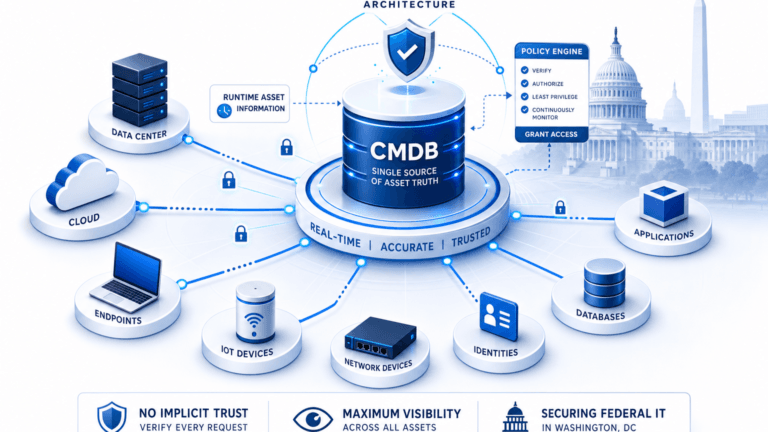
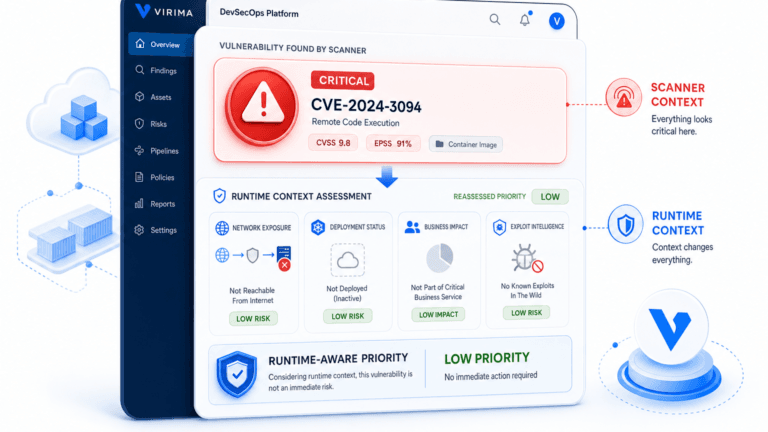
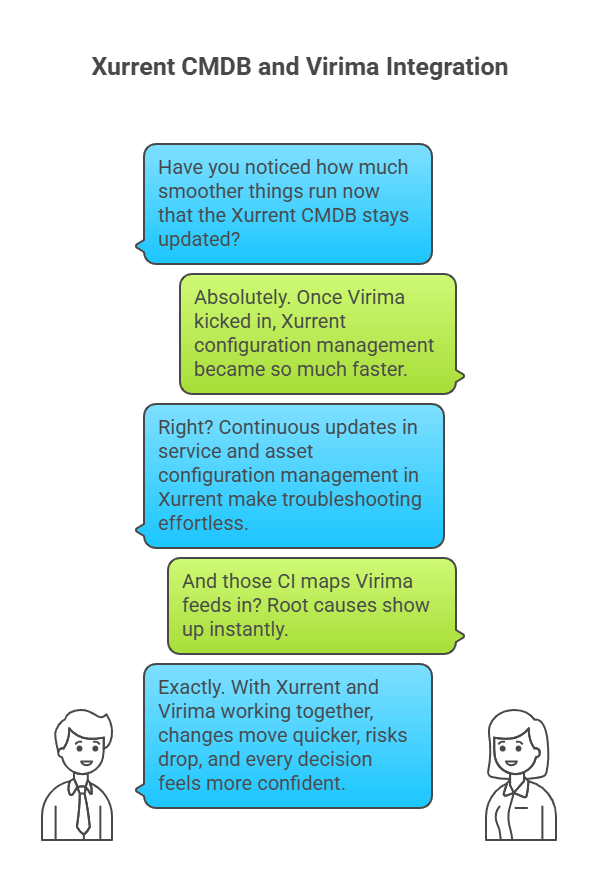
Xurrent holds the tickets, changes, and configuration records your service desk already trusts. Hybrid estates still change faster than manual CI imports and occasional scans can keep up. When a change window opens on last week’s owners and missing edges, responders pay identification tax before the first fix step. Virima does not replace Xurrent. High-frequency scheduled discovery feeds discovery-sourced inventory, ownership, and ViVID™ maps under the Xurrent CMDB you already run so configuration data stays usable for service and asset decisions.
| When Xurrent is the desk of record but CMDB currency and blast radius still lag the estate, start with discovery-backed accuracy under that desk. Explore Trusted Runtime Truth. |
How does Virima work with Xurrent CMDB?
Xurrent remains the ITSM system of engagement and CMDB of record for tickets and configuration management. Virima supplies multi-method discovery, multi-source inventory, ownership, and ViVID™ maps on high-frequency scheduled cycles, then syncs that context into Xurrent. Virima does not replace Xurrent workflows or the desk.
Why the Xurrent CMDB Needs Dynamic Configuration Data
The Xurrent CMDB works best when configuration data reflects real activity across the estate. Cloud resources, software versions, and service edges can shift between change windows. Like most ITSM platforms, Xurrent reflects the data it receives. When teams update CIs only through manual entry or rare imports, fast-changing hybrid environments outpace those inputs.
That lag shows up as weak service relationships, unsafe change planning, and longer triage. Federal asset-visibility guidance, including CISA Binding Operational Directive 23-01, treats complete asset visibility as a prerequisite for vulnerability and operations programs. Xurrent users need discovery authority that can keep the CMDB current enough for daily ITSM decisions, not only for a quarterly cleanup project.
Many organisations already pair the CMDB with broader configuration management practices so changes and relationships are tracked end to end. Discovery-sourced inventory is what makes that pairing durable when the estate does not sit still.
High-Frequency Discovery with Virima: Asset Insights on a Cadence You Control
High-frequency scheduled discovery means finding and updating asset details on cycles you set, not once a year and not as event-streamed change capture. It keeps the Xurrent CMDB aligned with changes across on-prem, cloud, and virtual environments with less spreadsheet chasing.
In practice, configuration management needs three answers: what exists, how it connects, and what changed. Virima’s multi-method discovery engine gives Xurrent users that visibility on a flexible schedule you choose. Unlike a one-time import or a rare network scan, discovery runs on a cadence you can set and revisit when the estate shifts.
What discovery methods feed a Xurrent CMDB?
Virima combines agentless network scanning, discovery agents on Windows, Linux, and macOS hosts, and API discovery for cloud and configuration sources. Results reconcile into multi-source inventory on high-frequency scheduled cycles, then sync into Xurrent so the CMDB is not limited to manual CI entry.
Agentless network scanning (scheduled)
Virima runs scans across networks, data centers, and hybrid systems on a schedule you choose. Agentless methods use IP-based discovery and multi-protocol probes to find hardware, virtual machines, software, and related configuration detail without installing agents on every device. You can set daily, weekly, or other intervals that match change risk. Each successful cycle updates records that can flow into the Xurrent CMDB so status accounting reflects what changed and when.
Discovery agents for deeper host detail
For deeper host inventory, Virima includes discovery agents for Windows, Linux, and macOS. Agents report configuration and software detail from inside the guest on their check-in schedule. That is deeper coverage for enrolled hosts, not streaming of every change the moment it happens. Use agents where agentless credentials or network reach are thin, and keep agentless coverage for racks, network gear, and many servers that already allow credentialed scans.
Coverage across hybrid IT
Hybrid estates need more than one method. Agentless covers large subnets. Agents cover remote and locked-down endpoints. API discovery fills cloud instance and configuration gaps that neither path sees from inside the guest alone. AWS and Azure inventory joins that mix for hybrid estates. Containers and virtual machines sit in the same discovery authority so the Xurrent CMDB is not limited to what someone remembered to type.
For the discovery capability pattern, see IT discovery.
Strengthening Xurrent CMDB: Accuracy You Can Trust
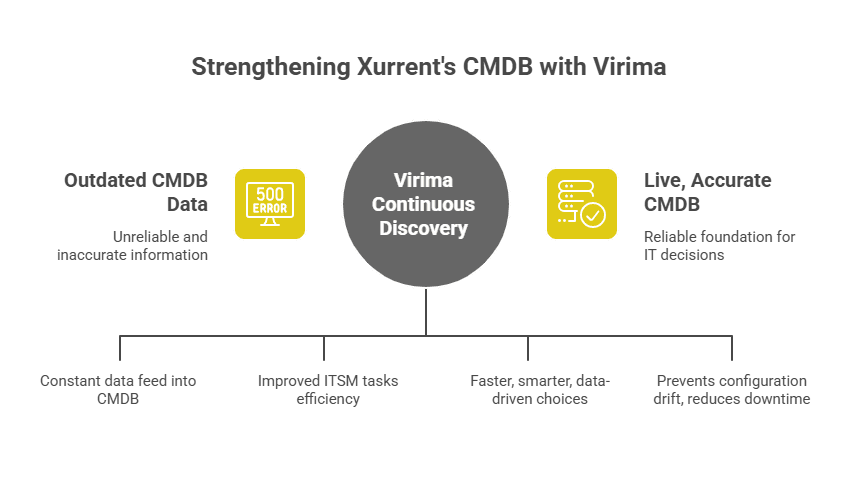
Xurrent is strong as the system of engagement. The CMDB is only as strong as the inventory feeding it. Discovery-sourced ground truth reduces blind spots from contractor devices, short-lived cloud nodes, and hosts that never received a clean manual entry.
From blind spots to fuller visibility
Manual CMDB projects often look complete after a cleanup week, then drift when the estate moves. Discovery authority is what tells you which devices and edges never made it into the last import. Pairing that inventory with Xurrent keeps tickets and changes attached to CIs that still match the live estate.
The Xurrent CMDB reflects what discovery last confirmed
No CMDB stays perfect between scans. The goal is currency on a schedule that matches risk, with owners and relationships good enough for change and incident work. High-frequency cycles beat annual spreadsheet campaigns for that job.
Better decisions and faster troubleshooting
When tickets inherit current owners and service paths, responders spend less of the open on identification. Change planners see which CIs sit under a production path before a reboot window fires. That is operational value on top of a desk that already runs well.
Reduced risk on change windows
Admin-defined device groups help, but they are not a full service model. After service definitions exist in Virima, either manually or through an integration, ViVID™ builds visual dependency maps teams can use under Xurrent workflows. Map depth still depends on those named definitions. Topology alone does not invent business services.
Map depth still depends on named service definitions before ViVID™ edges help a change window stay safe. Name the production paths that fail most often first. Attach owners next.
High-frequency scheduled discovery keeps those edges current after the last successful import. For the map capability pattern after definitions exist, see service mapping.
Does Virima replace Xurrent?
No. Virima and Xurrent solve different layers. Xurrent is the ITSM desk and CMDB of record for service management workflows. Virima discovers and maps the estate, then supplies multi-source inventory and ViVID™ context into Xurrent. Used together, they cover engagement and discovery-sourced truth without replacing either product.
Three Decision Paths: Stay, Pair, or Multi-Desk Context
Stay on Xurrent alone when the estate is small, CI hygiene is already strong, manual or import-based updates keep pace with change, and service dependency questions stay simple enough for admin-maintained records.
Pair Xurrent with Virima discovery when the desk and CMDB are correct as the system of engagement, but responders still lose time on stale owners, missing CIs, and edges that never entered the last import. Keep Xurrent for tickets and CM. Add Trusted Runtime Truth for discovery-sourced inventory under that desk.
Choose Virima under a multi-desk estate when Xurrent sits beside ServiceNow, Jira Service Management, Ivanti, HaloITSM, Hornbill, or another desk and you need the same discovery-sourced CI and map context across systems of engagement. Virima does not replace Xurrent.
The desk list is not the product decision. The decision is whether tickets inherit trusted CI, owner, dependency, and recent-change context from discovery-sourced records, or whether responders keep paying identification tax after every correct desk workflow. Xurrent can stay the system of engagement either way.
Name the production paths that fail most often under load. Clean owners on those paths next. Only then expect maps and CI attach to cut open time on a Monday morning window. High-frequency scheduled discovery is what keeps those records worth trusting after the last successful import. Agentless, agent-based, and API methods cover different corners of the same hybrid estate.
Confirm desk coverage on the integrations hub.
Seamless Integration: Virima and Xurrent Working in Tandem
Virima does not replace Xurrent, and it is not trying to. Xurrent remains the place work is done. Virima’s job is to make sure the inventory and maps under that work are discovery-sourced and current enough for the next change window.
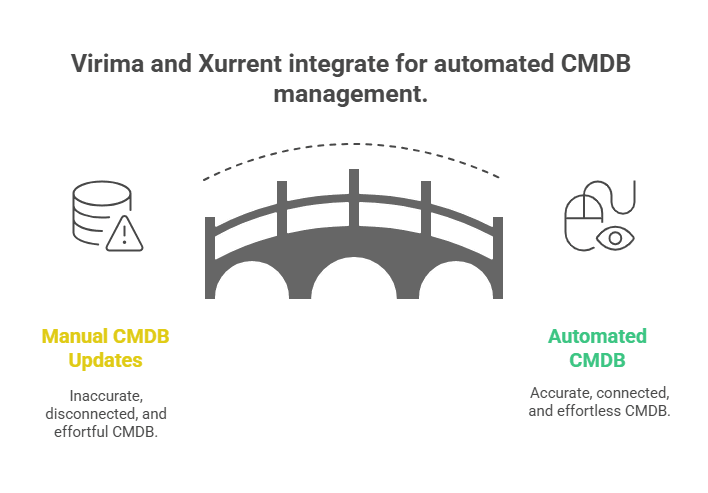
How it works together
Discovery runs on agentless, agent, and API methods. Results reconcile into multi-source CMDB-style inventory with owners and confidence. That inventory and, after service definitions exist, ViVID™ maps can sync into Xurrent so configuration management work starts from discovery-sourced records rather than spreadsheet leftovers. The CMDB pattern is multi-source, discovery-fed inventory with owners and confidence, not import-only reporting.
Teams that want deeper partner detail can still review the public discovery and service mapping materials for Xurrent on Virima’s site. The commercial path stays the same: keep the desk, improve the data layer under it.
Integration highlights
When you add Virima, Xurrent configuration management gains auto-discovery across hybrid environments, updated CI detail on a schedule you control, and dependency maps after services are defined. The integration is designed to be light for operators: enable the connection, set discovery scope and cadence, then let sync keep Xurrent records useful for daily ITSM work. App Store and code-free install paths are how many teams start; confirm current packaging in Xurrent and Virima documentation at purchase time.
When should Xurrent teams add external discovery?
Add external discovery when CMDB cleanup projects decay within weeks, change windows still open on missing CIs, cloud and contractor paths never enter manual imports, or service impact questions cannot be answered from admin-maintained records alone. Keep Xurrent for the desk. Add discovery authority for estate currency.
If identification still eats the open of every major under Xurrent after the desk itself is already correct, run a short pilot: keep Xurrent for tickets and CM, clean ownership and service links from discovery-sourced inventory, then attach CI and map context under the workflows you already use.
Name the production paths that fail most often. Clean owners on those paths next. Only then expect maps to change timing decisions on a Monday morning window. High-frequency scheduled discovery is what keeps those CI records and dependency edges worth trusting after the last successful import.
Agentless methods still cover racks, network gear, and many servers where credentials already exist. Agent coverage matters for remote endpoints that rarely stay on the corporate subnet long enough for a clean agentless pass. API discovery fills cloud instance and configuration gaps. AWS and Azure inventory joins that mix for hybrid estates.
Currency is the contract with responders. If the CMDB only refreshes when someone remembers a spreadsheet import, tickets inherit last quarter’s owners even when the Xurrent console looks orderly. That gap is expensive across a year of changes and majors.
Walk one of your own Xurrent change or incident paths with discovery-sourced CI context and ViVID™ maps under the desk you already run. Leave with a clearer picture of how much identification time and missing-CI risk your team can still reclaim.
Make the Xurrent CMDB Stronger Without Replacing the Desk
Enterprise service management needs both a strong ITSM desk and an authoritative, discovery-sourced inventory underneath it. Xurrent is a strong choice for ITSM workflows, configuration management as engagement, and day-to-day ticket work. Pairing that desk with high-frequency scheduled discovery is what keeps responders from starting every major blind on CIs and edges the last import never saw.
Virima does not replace Xurrent. It supplies Trusted Runtime Truth under the tickets and change windows where ownership, dependency, and blast radius decide whether a routine change stays routine.
Disclaimer: Product capabilities, integration packaging, and App Store listing details change over time. Confirm current Xurrent and Virima features, install paths, and commercial terms on vendor documentation. Outcomes vary by estate, discovery scope, credentials, and desk configuration.
Frequently Asked Questions
How does Virima help keep Xurrent’s CMDB accurate?
Virima runs multi-method discovery on high-frequency scheduled cycles, reconciles multi-source inventory with owners and confidence, and syncs that context into Xurrent so the CMDB is not limited to manual CI entry or rare imports.
Why do CMDBs often become outdated?
Most CMDBs rely on manual updates or occasional imports that cannot keep pace with hybrid change. New devices, apps, and cloud instances appear between cleanup projects, so gaps form unless discovery authority refreshes records on a cadence matched to risk.
What types of systems can Virima discover?
Virima covers hybrid environments including on-premises devices, cloud platforms such as AWS and Azure, virtual machines, and related configuration sources through agentless, agent-based, and API methods.
Do I need deep technical expertise to connect Virima with Xurrent?
Many teams start from a light, documented integration path, including App Store style enablement where offered. Confirm current install steps in Xurrent and Virima documentation. Scope still needs discovery design: credentials, subnets, cloud accounts, and sync rules.
Can Virima replace Xurrent?
No. Virima and Xurrent solve different problems. Xurrent runs ITSM workflows and holds the CMDB as the system of engagement. Virima discovers and maps the estate that feeds that CMDB. Used together, they cover both sides without replacing either product.