CMDB for Defense: A Clearer Configuration Record for Mission Readiness

Between March and December 2024, Salt Typhoon compromised a state Army National Guard network. A Department of Homeland Security memo, reported by Nextgov/FCW, described stolen administrator credentials and network traffic diagrams. It also identified a map of locations and personal information belonging to service members.
The reporting does not establish that a configuration management database would have prevented the intrusion. It does show why infrastructure records and network relationships matter to defenders and adversaries alike.
A CMDB for defense helps teams maintain their own picture of systems, ownership, and dependencies. Its usefulness depends on what the organization can verify, how recently it checked, and who resolves discrepancies.
What Is a CMDB for Defense, and What Does It Cover?
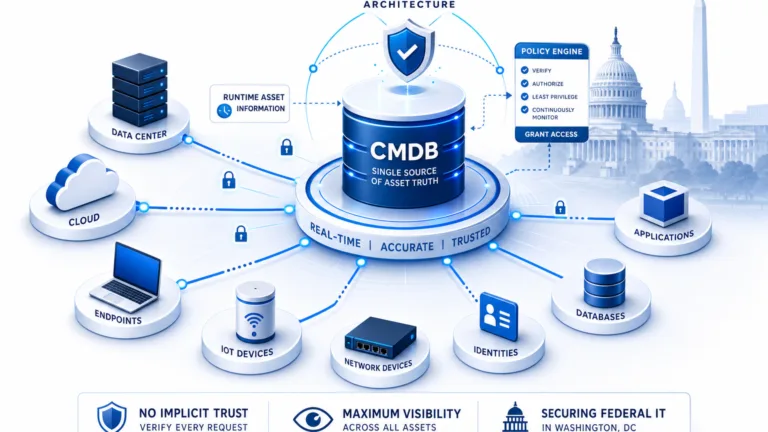
A configuration management database, or CMDB, records configuration items and their relationships. Configuration items can include servers, network devices, applications, and other components that support an organization’s services.
For defense teams, the record becomes more useful when it connects those components to mission-supporting services. A configuration manager can then examine a proposed change alongside the systems and service relationships recorded in the CMDB.
A useful record can include:
- Configuration items: Devices, applications, and supporting infrastructure within the organization’s approved scope.
- Attributes: Identifiers, configuration details, lifecycle status, and the source and date of an observation.
- Relationships: Connections between components, such as an application and its supporting server.
- Ownership: The people or teams responsible for reviewing and maintaining each record.
- Service associations: The mission-supporting services identified by their owners and linked to supporting infrastructure.
Discovery can refresh information for systems it can reach and identify. Other items may need approved imports or manual records. Coverage depends on access, discovery methods, network boundaries, and local policy.
The National Security Agency’s January 2026 discovery-phase guidance places device inventory among the activities supporting zero trust implementation. Its guidance describes maintaining an approved inventory of devices authorized to access the network.
A CMDB can support that inventory work. Authorization decisions, data classification, and policy enforcement remain the responsibility of the organization and its security controls.
What the Diagram Says Versus What Is Connected
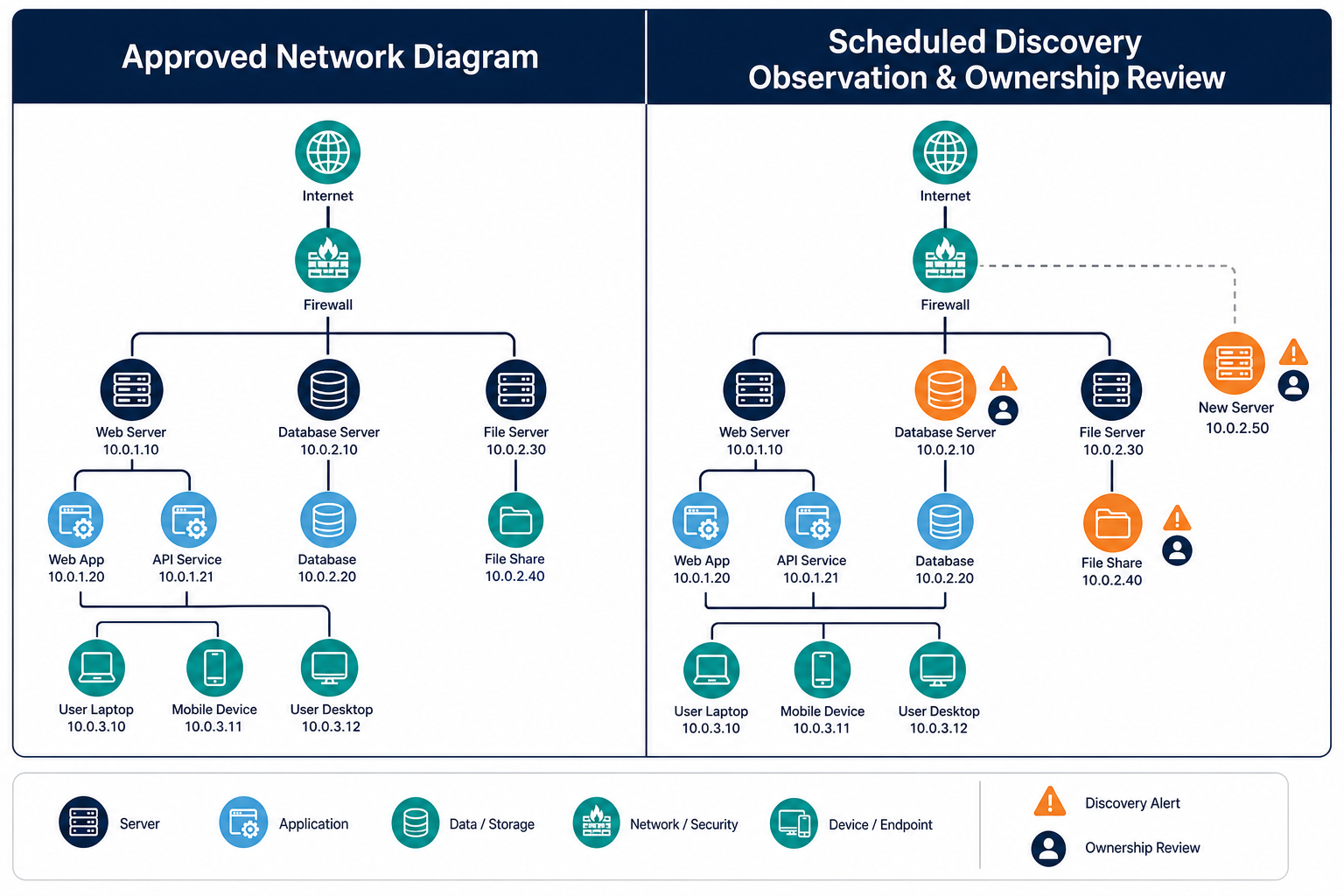
A network diagram may reflect an approved design at a particular point in time. The operational environment can change afterward, creating a gap that requires investigation.
| Situation | Question for the configuration team |
|---|---|
| A temporary test device is connected during a deployment. | Was the device approved, recorded, and assigned an owner? |
| A sustainment vendor installs a gateway during maintenance. | Do the inventory and diagram reflect its current connections? |
| A diagram has not been reviewed since authorization. | Which infrastructure changes require a relationship update? |
| A program office records a system as retired. | Do approved checks still find the system reachable? |
These examples describe possible gaps, not findings from a particular defense environment. Each discrepancy needs an owner, a review, and a decision about the authoritative record.
Why Configuration Truth Matters for Mission Readiness
Mission-supporting services depend on infrastructure that may cross organizational and technical boundaries. A maintenance decision can involve a shared application, its supporting hosts, and other services connected to those hosts.
When configuration records lag discovery, a change reviewer may miss a dependency. An incident responder may also need to verify basic information before determining which systems require attention.
The NSA’s Phase One and Phase Two guidance describes 36 activities in the first phase and 41 in the second. The agency recommends reviewing its discovery-phase guidance before those implementation phases.
Those counts describe the scope of the guidance. They do not measure an organization’s readiness or prove that each activity depends on a CMDB.
Four Ways Stale Records Can Delay a Mission
Change review: A reviewer approves maintenance using an incomplete dependency record. A connected service may be overlooked until its owner reports an interruption.
Incident scoping: Responders start with a diagram that omits a recently added gateway. They must identify and validate that connection before assessing its relevance to the incident.
Device accountability: An inventory misses a device that was added during a maintenance window. Security and operations teams must determine its owner and authorization status.
Retirement verification: A program office approves a system’s retirement, but an approved discovery check still finds it reachable. The owner can investigate before closing the retirement record.
Each example depends on the quality of the source data and the scope of the check. A map helps reviewers ask better questions; it cannot guarantee that every dependency has been captured.
What Stale Configuration Records Cost Each Role
Mission and Program Leaders
A program leader needs to understand which services support a mission and who can approve changes affecting them. If those associations are incomplete, the leader may receive a technical inventory without a clear view of mission dependencies.
A named service owner can define the service and review the infrastructure relationships associated with it. That review gives change discussions a starting point grounded in the organization’s own records.
IT and Operations Managers
Operations managers must resolve differences between discovery results, existing records, and information supplied by other teams. They also need to know when an observation was made and whether a segment was included in the latest cycle.
A scheduled review gives the team a repeatable point for investigating those differences. An exception can be assigned to an owner rather than left in a spreadsheet without a decision.
Finance and Sustainment Teams
Sustainment teams need reliable lifecycle records when evaluating support, maintenance, and replacement decisions. An asset marked as retired in one system may still appear in an inventory from another source.
Before changing a contract or retiring support, the responsible team should confirm the asset’s status with its owner. The CMDB record can support that conversation alongside procurement and contract records.
How Discovery-Driven Configuration Records Close the Gap
1. Compare Recorded and Observed Infrastructure
Scheduled discovery collects information from systems within an approved scope. Teams can compare those observations with existing configuration records and investigate differences.
The schedule should reflect each segment’s operational conditions. A frequently checked administrative network and a sensitive mission environment may require different methods and review cycles.
A discovery result also needs context. The team should retain the observation date, identify the source, and distinguish an unreachable system from a confirmed retirement.
For asset matching, use a suitable stable identifier such as a serial number or cloud instance ID. A hostname alone can change or be reused and should not serve as a durable join key.
2. Connect Configuration Items to Defined Services
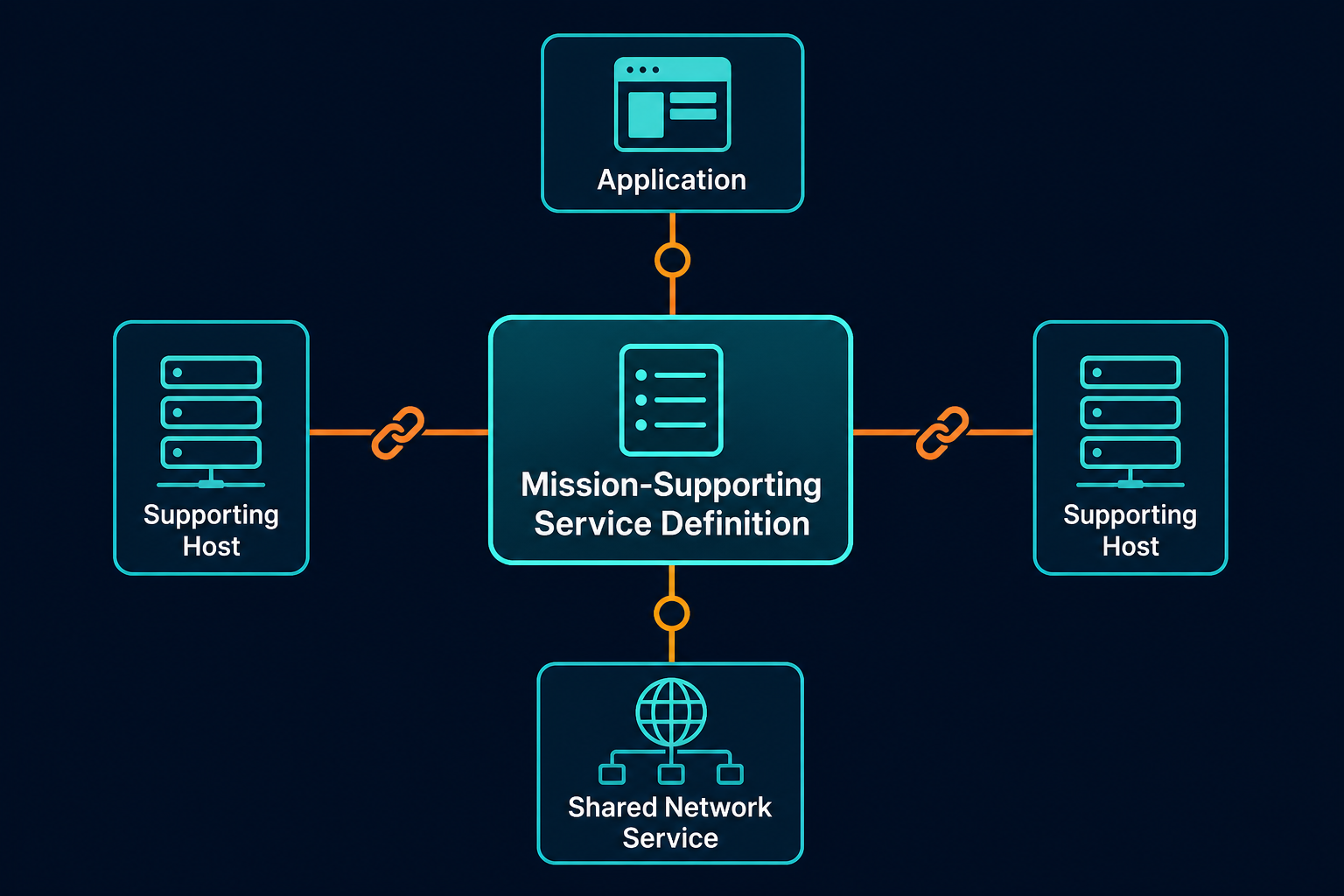
A service map shows relationships between a defined service and its supporting infrastructure. It can help a reviewer follow a dependency from an application to recorded components.
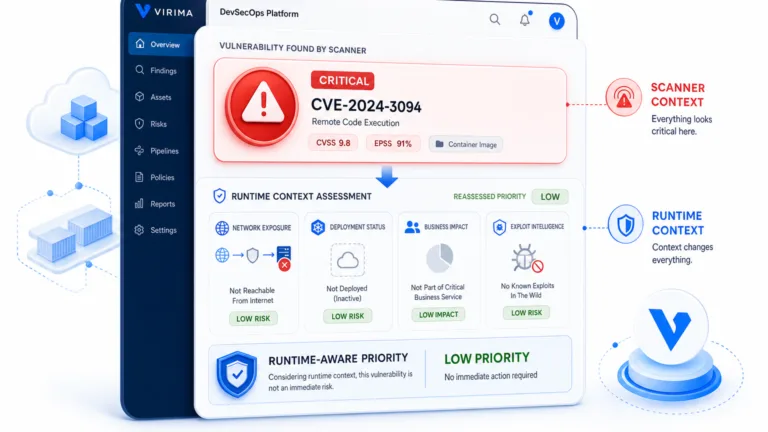
Service owners first provide the service definition. Virima’s ViVID™ then builds a dependency map using that definition and available relationship data.
The resulting map reflects the data provided and discovered within scope. Service owners still need to review missing or uncertain relationships, especially where a dependency crosses a restricted boundary.
3. Feed Existing Service Management Workflows
Configuration and relationship data become useful when teams can consult them during change and incident workflows. Virima can supply discovery-sourced data alongside an existing IT service management platform.
The available Virima integrations include ServiceNow, Jira Service Management, and Ivanti. Teams should confirm the supported data flow and configuration for their selected integration.
| Review area | Manual record maintenance | Discovery-supported record maintenance |
|---|---|---|
| Coverage | Depends on what contributors enter and review. | Adds observations from systems within the approved discovery scope. |
| Currency | Depends on the timing of manual updates. | Depends on the discovery schedule and subsequent review. |
| Dependencies | Relies on diagrams and relationships entered by teams. | Can add discovered relationships to service definitions supplied by owners. |
| Evidence | Requires teams to retain and reconcile supporting records. | Provides observations for review alongside other evidence sources. |
| Effort | Requires people to collect and maintain each entry. | Reduces some collection work while retaining human review and ownership. |
Operational technology and sensitive production systems require particular care. Network owners should approve suitable collection methods and use manual records or other approved sources where active discovery is unsuitable.
Where the Record Helps Teams Answer Operational Questions
The following examples show how a configuration record can support an investigation. Each depends on available data and confirmation by the responsible teams.
Pre-change impact check: A shared authentication service is scheduled for maintenance. The reviewer examines recorded dependencies and asks service owners to confirm the affected mission-supporting services.
Credential theft scoping: Responders identify an administrator account that may be compromised. They use the configuration record alongside identity and access systems to investigate which hosts the account could reach.
Baseline drift review: A team compares an approved baseline with available observations from an enclave. Differences are assigned for investigation before anyone changes the baseline.
Vendor onboarding: A sustainment contractor introduces a gateway during an approved maintenance window. The next authorized discovery cycle may identify it, after which an owner confirms its purpose and records it.
Decommission verification: A program office approves a system’s retirement. An authorized check can help determine whether it remains reachable within the checked scope.
A failed response from a system is only one observation. The owner should confirm the result against retirement and access records before treating it as proof of removal.
How Virima Supports a Mission-Focused Configuration Record
Virima combines scheduled discovery, a CMDB, and ViVID™ service mapping. Together, those capabilities help teams compare infrastructure observations with records and review known service dependencies.
Begin with an Approved Scope
A defense team can select a bounded environment for an initial evaluation. Network owners determine which systems may be checked, which methods are permitted, and which credentials are appropriate.
Discovery may identify devices or attributes missing from the existing record. The team then verifies each discrepancy and assigns ownership where necessary.
Results depend on reachability, permissions, configuration, and the methods approved for that environment. Restricted or disconnected deployment requirements should be discussed with Virima before an implementation decision.
Maintain the Record Across Scheduled Cycles
Subsequent discovery cycles provide new observations for comparison. Reconciliation rules can combine data from multiple sources into a configuration record.
People remain responsible for reviewing exceptions, confirming owners, and deciding how conflicting information should be handled. The team can also record when a segment was last checked and what the cycle covered.
Virima’s Trusted Runtime Truth approach brings together information about what exists, how it connects, what changed, potential impact, and ownership. Those records give reviewers context for change and incident decisions within the available scope.
Support Existing Workflows
Virima can complement an organization’s existing service management platform with discovery and relationship data. Teams can review the integration configuration to determine how the relevant records move between systems.
Virima does not make authorization decisions or enforce defense policy. Security teams retain those responsibilities and use their established controls and approval processes.
From Static Diagrams to a Record That Keeps Pace
A diagram remains useful for documenting an approved design. A discovery-supported configuration record adds observations that teams can review against that design.
| Starting point | Operational improvement |
|---|---|
| A diagram reflects the infrastructure recorded at its last update. | Scheduled observations prompt review of changes within approved scope. |
| Dependency knowledge sits with individual team members. | Service owners document definitions and review relationships in a shared map. |
Faster Change Reviews
Before approving a change, reviewers can examine known relationships and identify service owners who should participate. The map gives them a starting point for confirming impact.
Cleaner Incident Scoping
Responders can use configuration records to identify systems and relationships for investigation. They should validate those records against identity, network, and security data relevant to the incident.
Evidence for Review
A dated observation can help teams explain what was checked and when. Formal authorization and audit evidence may require additional records, approvals, and control assessments.
Getting Started
- Name the mission-supporting service. Ask its owner to define the applications and components that make up the service.
- Agree on discovery scope. Network owners should approve the segment, methods, credentials, and operational safeguards.
- Compare the first observations. Review discovery results against existing diagrams and configuration records.
- Assign discrepancies. Give each unresolved item an owner and a documented review decision.
- Set the next cycle. Agree on a discovery and review cadence appropriate for the segment and its operating constraints.
Start with One Mission-Supporting Service
A focused evaluation can show how Virima supports discovery, configuration records, and service mapping for your requirements. Your team can use the discussion to examine scope, existing workflows, and the constraints that apply to your environment.
Request a demo to discuss a mission-supporting service or infrastructure segment with a Virima product expert.
Frequently Asked Questions
What is a CMDB for defense?
A CMDB for defense records configuration items, their attributes, and their relationships. Defense teams can associate those records with mission-supporting services and use scheduled discovery observations to help review whether the recorded infrastructure remains current.
Why does a defense organization need a CMDB?
A CMDB gives teams a shared record to consult during change reviews, incident investigations, and lifecycle decisions. Its value depends on the scope of the information, the currency of observations, and the owners who review the records.
What does a defense CMDB track beyond servers and laptops?
Depending on scope and available data, it can record network devices, applications, relationships, owners, and service associations. Systems outside discovery reach can be represented through approved imports or manual records when organizational policy permits.
How does Virima support service mapping for defense teams?
Service owners provide definitions of the applications and components that make up each service. Virima’s ViVID™ builds dependency maps from those definitions and available relationship data, which teams can review for change and incident planning.
How does Virima work with an existing ITSM platform?
Virima can supply discovery and configuration data alongside supported IT service management platforms. Teams should review the selected integration and its data flows, then confirm how access, approvals, and operational responsibilities will be managed.