AI-Ready ITAM: Six Tests for Asset Data You Can Trust

An IT asset manager may have several answers to a single question: who owns this asset? Procurement records, cloud accounts, and the configuration management database (CMDB) can each tell a different story. When an AI system uses those records to recommend a change, conflicting data can turn a routine decision into an investigation.
AI-ready ITAM depends on giving people and automated systems asset information they can assess before acting. That includes knowing where a record came from, when it was last checked, and how the asset connects to a service.
Enterprise Management Associates (EMA) examines this challenge in ITAM in the Age of AI: EMA’s 2026 Maturity Benchmark. The research is based on a survey of 203 IT professionals at North American companies with at least 1,000 employees. The benchmark identifies six areas where organizations with optimized ITAM practices differ from those reporting AI readiness.
Those areas offer ITAM teams a useful way to examine their own data foundations. EMA Research Director Parker Hathcock will discuss the benchmark in an upcoming webinar sponsored by Virima.
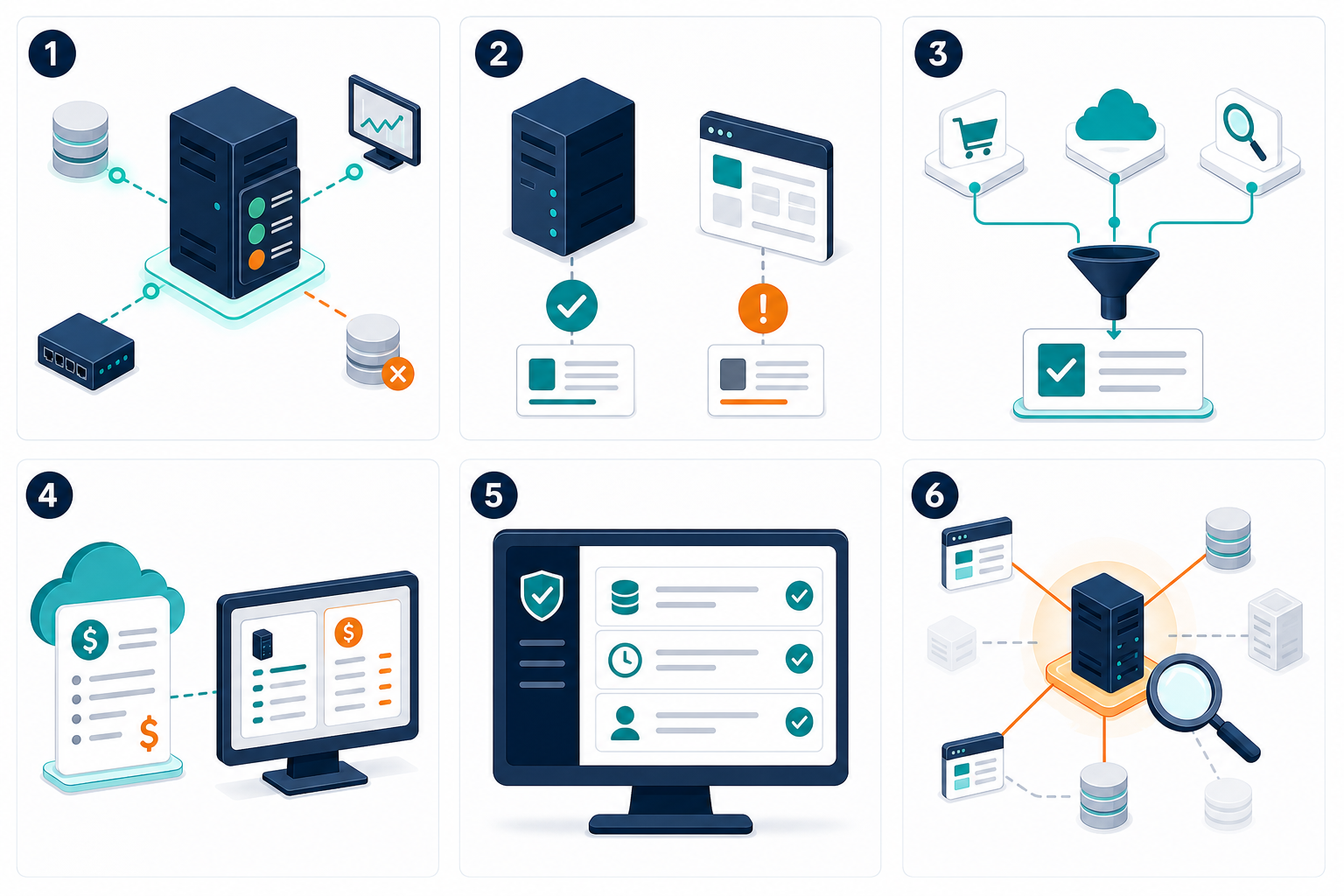
1. Runtime Data Availability: Can Teams See What Is Operating?
Runtime data describes the state of technology while it is operating. For ITAM, that can include whether a discovered server is active, which software is installed, and which other components it connects to.
A purchase record can confirm that an organization acquired an asset. Discovery data adds evidence about what is present in the environment during a scheduled discovery cycle. Both views help an ITAM team assess lifecycle status and investigate discrepancies.
The timing of that evidence matters. A cloud instance created and removed between discovery cycles may be absent from a scheduled inventory. Teams should identify where that gap matters, agree on appropriate discovery frequency, and use other authoritative sources when needed.
Start by asking which asset classes support the decisions your team makes most often. Then record the source and last-observed time for those assets. A reviewer can use that context to decide whether a record is suitable for a license review, renewal discussion, or operational change.
Virima’s Trusted Runtime Truth for Agentic IT approach connects discovery-sourced information with CMDB and service dependency context. It helps teams examine what exists, how assets are connected, what changed, what a change could affect, and who owns it.
2. CMDB Accuracy: Do Records Reflect the Environment?
A CMDB holds configuration items (CIs) and their relationships. A CI might represent a server, application, network device, or another component that an organization manages.
CMDB accuracy concerns whether those records and relationships reflect the environment closely enough for their intended use. A server entry may exist, for example, while its lifecycle status or connection to an application is outdated.
For an ITAM team, these discrepancies can complicate a license review or a discussion about retiring infrastructure. A decommissioned CI that still appears active may require investigation before the team can rely on a report.
A practical review begins with a defined set of important records. Compare their identifiers, lifecycle states, ownership fields, and relationships with the relevant source systems. Assign someone to investigate conflicts, and agree on when records should be checked again.
The configuration data management platform can help teams examine CI records, their relationships, and the condition of CMDB data. Virima also supports reconciliation across discovery sources, while people remain responsible for confirming ownership and resolving discrepancies.
Accuracy is tied to the decision at hand. A team assessing a software renewal may prioritize installation and entitlement records. A change manager may need current relationships between the affected infrastructure and business services.
3. Authoritative Asset Information: Which Source Should Guide a Decision?
Authoritative asset information is data that an organization has designated as reliable for a particular purpose. Different systems may be authoritative for different fields.
Procurement may hold the contract and purchase date. A cloud account may supply an instance identifier. A discovery source may provide observed configuration details. An asset owner or service owner may need to confirm who is accountable for the resource.
For ITAM teams, the work is to define which source governs each field and how conflicts are handled. A single consolidated record is useful only when the team understands the evidence behind it.
Durable identifiers help teams match records across systems. A hardware serial number or cloud instance ID can support that match, depending on the asset. Hostnames can change or be reused, so they should not serve as the sole durable join key.
The team should also document exceptions. If two systems disagree about an asset’s status, the record should be reviewed before an automated workflow treats either value as confirmed. Clear ownership of that review gives both people and AI systems a better basis for action.
4. FinOps Integration: Can Asset and Cost Records Be Compared?
FinOps brings technology, finance, and business teams together to manage cloud spending. ITAM contributes information about asset ownership, software entitlements, contracts, and lifecycle status.
Connecting those perspectives can help teams investigate spending with more context. A cloud bill may show a recurring charge, while an asset record can help identify the associated resource or owner. Contract information can add renewal terms or licensing restrictions.
The value depends on matching records accurately. An ITAM team can work with FinOps colleagues to agree on identifiers, ownership fields, and review responsibilities. A missing owner or inconsistent resource ID may need attention before a cost is allocated.
These checks can also improve conversations about unused resources. A team considering whether to retire an instance should confirm its purpose and dependencies before acting on a cost recommendation.
Virima’s IT asset lifecycle management capabilities include tracking hardware, software licenses, contracts, warranties, and asset financial information. Teams can use that asset context alongside the financial and usage information held in their FinOps systems.
5. AI Governance Confidence: Can Teams Explain the Evidence?
AI governance sets expectations for how AI systems are used, supervised, and assessed. Asset data supports that work when it helps teams identify the technology involved in a proposed action and the people responsible for it.
Consider an AI assistant recommending a server change. A reviewer may need to know when the server was last discovered, which service it supports, and whether its ownership has been confirmed. If those details are missing, the recommendation can be routed for further review.
For ITAM, governance confidence starts with questions about the data:
- Which source supplied the asset record?
- When was the record last checked?
- Is the owner confirmed?
- Are relevant relationships available?
- Who resolves a conflict between sources?
These questions do not make an organization compliant on their own. They help governance and operations teams judge the evidence behind a recommendation, establish review responsibilities, and retain appropriate human oversight.
6. Automated Change-Impact Analysis: What Could a Change Affect?
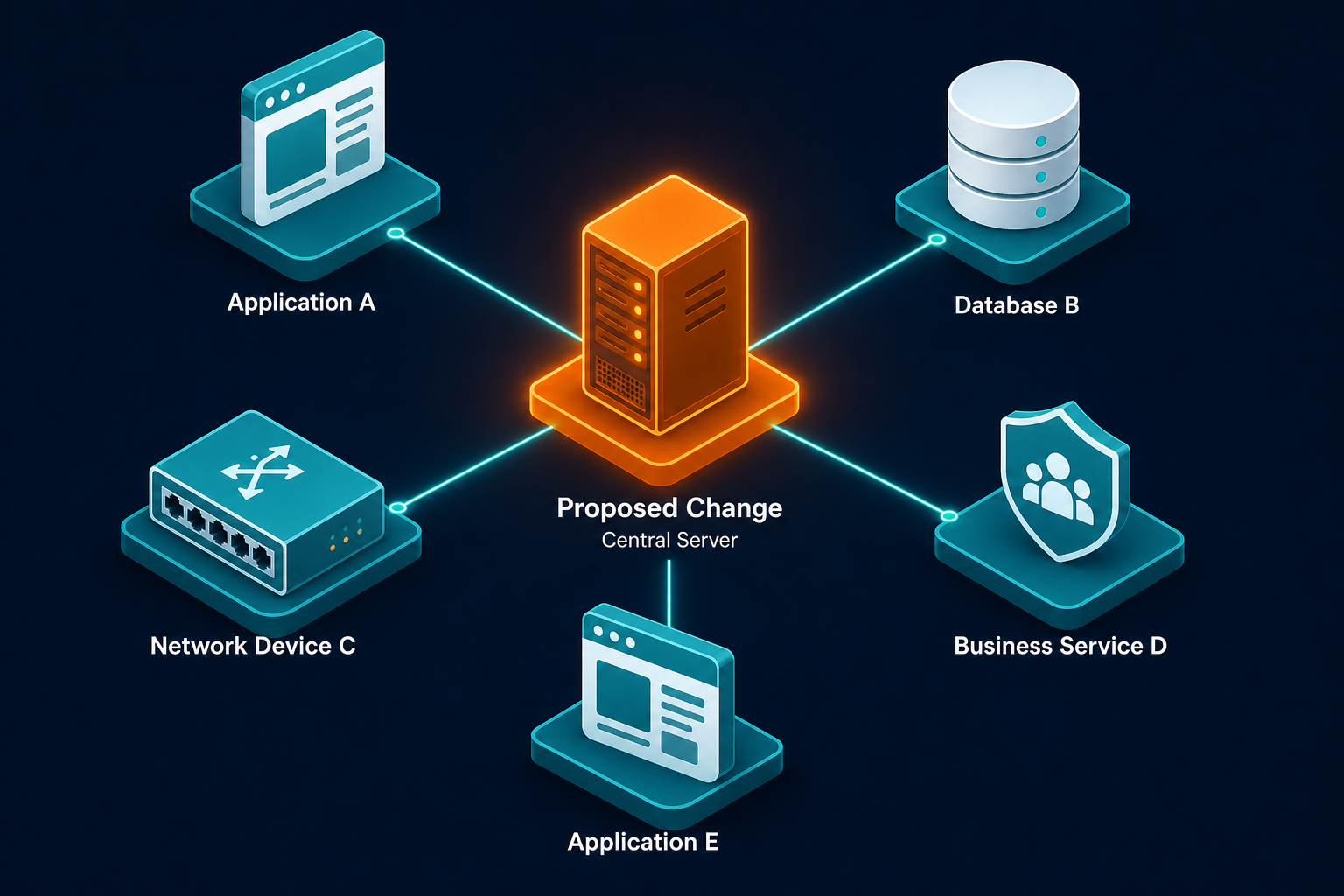
Change-impact analysis examines the assets and services that may be affected by a proposed change. Automation can help surface relationships for a reviewer, provided the underlying records contain the relevant dependencies.
An infrastructure team planning a server upgrade, for example, may need to see which applications depend on that server. An ITAM team can contribute lifecycle status, ownership, and contract information that helps the change team assess the proposal.
Virima’s CMDB supports change-impact analysis using CI relationships. Service dependency maps can add business service context once teams provide the relevant service definitions. The resulting view supports review, while its usefulness still depends on the available records and relationships.
Before relying on an impact analysis, teams should check whether the affected service is represented and whether its important dependencies have been reviewed. Missing relationships are a reason to investigate further before approving a change.
Explore the Benchmark With EMA
The six areas above give ITAM teams a starting point for reviewing how asset information supports decisions. Each area also raises a question about responsibility: who checks the evidence, and who acts when records disagree?
EMA will explore those questions and its benchmark research in ITAM in the Age of AI: How AI-Ready Organizations Stand Out. The webinar takes place on November 3 at 10 a.m. Pacific and 1 p.m. Eastern.
Register for the EMA webinar to hear Parker Hathcock discuss the research and its implications for ITAM teams.
Frequently Asked Questions
What is AI-ready IT asset management?
AI-ready IT asset management gives people and automated systems asset information they can assess before making decisions. Useful records identify the source, timing, ownership, and relationships relevant to the intended action.
Why does CMDB accuracy matter for AI?
AI systems may use CMDB records to inform recommendations about infrastructure and services. Accurate configuration items and relationships give reviewers a stronger basis for assessing those recommendations before action.
How can ITAM teams support FinOps?
ITAM teams can contribute asset ownership, lifecycle, license, and contract information to FinOps discussions. Matching that information with usage and cost records helps teams investigate spending with more context.
How does Virima support asset data reviews?
Virima provides discovery, CMDB, and ITAM capabilities that help teams examine asset records and configuration relationships. Teams can use scheduled discovery cycles and reconciliation alongside human review of ownership and conflicting records.
How does Virima support change-impact analysis?
Virima’s CMDB shows relationships between configuration items to help teams assess downstream impact before approving a change. Service dependency maps can add business context after the team provides its service definitions.