What ITIL4 Means for ITIL IT Operations Management?

ITIL4 moved past the old process-by-process thinking. Instead of treating each practice separately, it focuses on how IT delivers value to the business as a connected whole. For IT operations management (ITOM) teams, this shift has real weight — it ties day-to-day operational work like monitoring, event management, and incident response directly to business outcomes.
The question worth asking isn’t whether ITIL4 and ITOM belong together. It’s what happens when you try to deliver the benefits of ITIL4 without solid IT operations underneath.
How ITIL4 and ITOM Complement Each Other
Each operating model has a different focus:
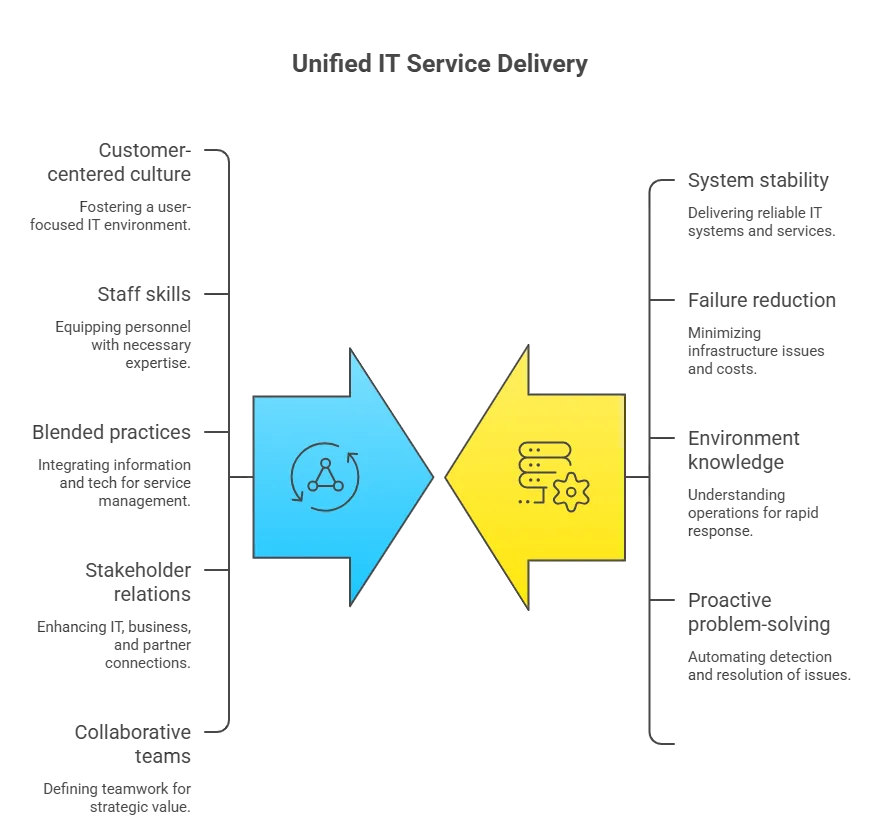
ITIL4 focuses on:
- Building a customer-centered IT culture
- Ensuring IT staff have the right skills and abilities
- Blending information and technology practices to manage services well
- Strengthening relationships between IT, the business, and external partners
- Defining how teams collaborate to create value through strategic outcomes
ITOM focuses on:
- Delivering stable systems and services
- Reducing infrastructure failures and the cost of those failures
- Knowing the operational environment well enough that teams respond faster when something breaks
- Using technology and automation to find and fix problems before they affect services
This alignment has a measurable impact. According to a report by IBM, organizations using AI-driven IT operations (AIOps) can reduce IT outages and downtime by up to 50%, improving overall service reliability. That pairing is why ITIL IT operations management alignment pays off.
This alignment has a measurable impact. When operations teams have accurate CMDB data and visual dependency context, they spend less time diagnosing and more time resolving — which directly reduces outage duration and recurrence.
How the ITIL4 Service Value Chain Connects to IT Operations Management
ITIL 4 introduced a model that brings governance and management practices together to turn demand for new or changed services into business value. At its core sits the service value chain: six activities (plan, improve, engage, design and transition, obtain/build, deliver and support) that define how IT creates products and services alongside the business.
ITIL 4 calls this value co-creation. IT doesn’t deliver value in isolation. It works with the organization to produce outcomes together. When service teams align delivery to business objectives rather than technical outputs, the result is faster resolution, fewer repeat incidents, and operations that scale with demand, not against it.
ITOM plugs directly into that model. Event management, performance monitoring, and data analysis let operations teams spot issues early, resolve incidents faster, and reduce the risk of changes in production. But none of it works without accurate data.
Why a CMDB is the Foundation for ITOM Under ITIL4
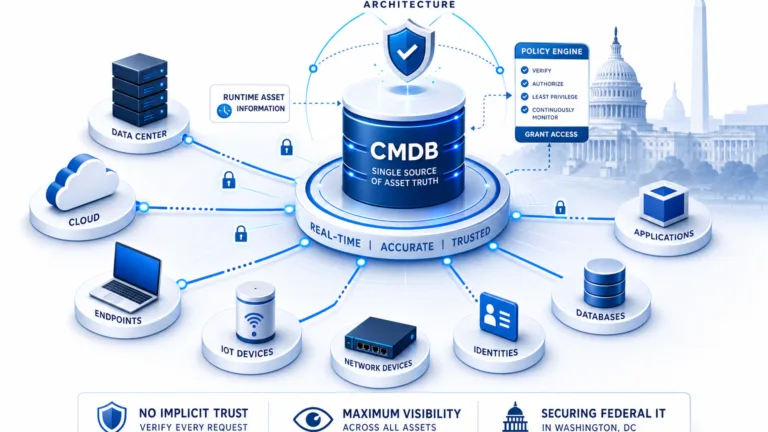
Under ITIL 4, a strong Configuration Management Database (CMDB) plays a key role in your service operation and continual improvement. It works as a single source of truth across your ITIL service lifecycle. Because of this, you can manage services with more clarity and confidence. When you rely on accurate data, your team spots trends early and acts before issues affect users.
A well-built CMDB also strengthens your service value system. It gives teams reliable, up-to-date configuration and relationship data to work with — which means your service desk resolves incidents faster and your change advisory board makes decisions based on facts, not assumptions.
Here is how this works in practice. IT discovery scans your environment and feeds asset and configuration data into the CMDB, keeping configuration management accurate. Service mapping then shows how those assets connect — so operations teams clearly see dependencies and the blast radius of any change or incident.
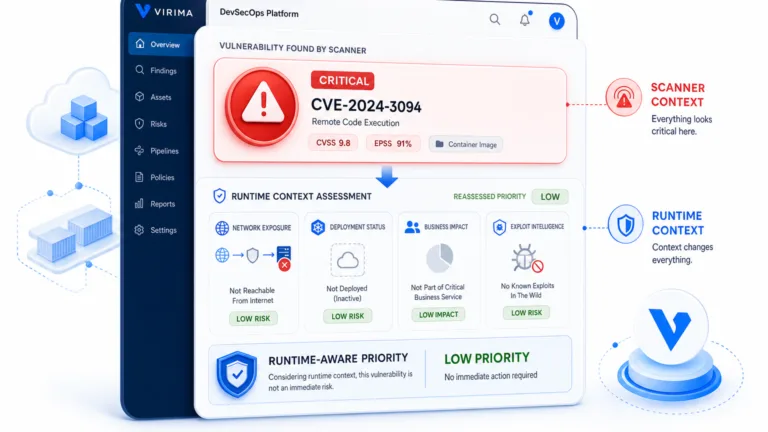
Moreover, tools like ViVID™ (Virima Visual Impact Display) add more value. They layer incidents, changes, alerts, and vulnerability data onto service maps. So, your service operation teams get a clear and visual view of system health. This makes it easier for you to understand risks and act quickly.
Over time, the CMDB becomes more valuable as it accumulates incident data and event history alongside configuration records. When your team reviews that data, patterns emerge — recurring failures on specific CIs, changes that repeatedly cause downstream incidents. Acting on those patterns before the next outage is what shifts your operations from reactive to proactive.
How does Proactive Problem Management Work with ITOM and ITIL4?
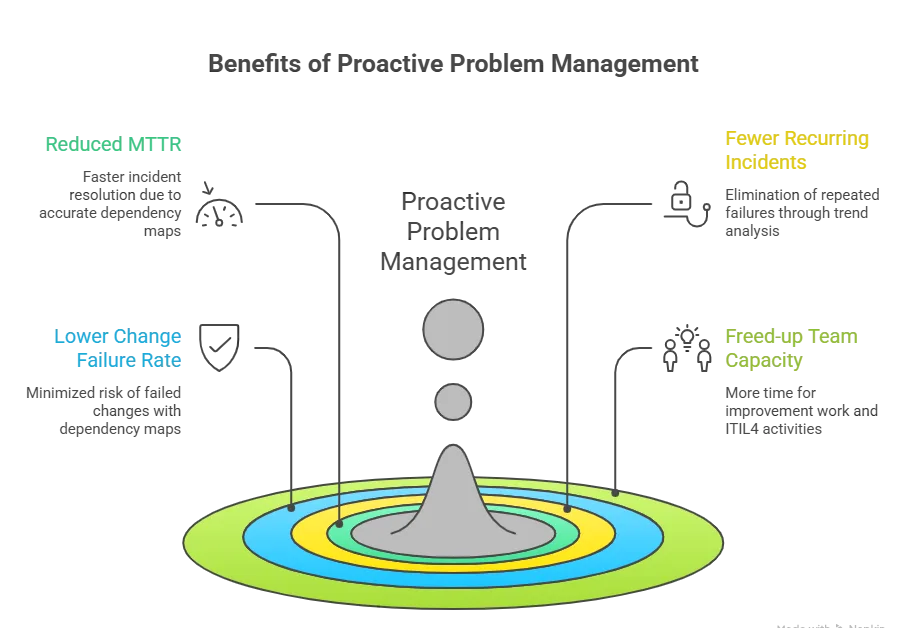
Proactive problem management means breaking the cycle of firefighting. Instead of waiting for incidents to stack up, your operations team identifies root causes from CMDB data, event trends, and service dependency maps, and fixes them before they hit users.
The concrete benefits for ITIL IT operations management teams:
- Reduced MTTR: Accurate dependency maps mean faster root cause identification. When a switch fails, your team instantly sees which services sit downstream. (See also: 8 strategies to reduce MTTR)
- Fewer recurring incidents: Reviewing incident history and configuration data in the CMDB reveals repeated failures, so problem management eliminates them at the source.
- Lower change failure rate: When the change advisory board reviews a request, dependency maps built from discovery and service mapping show exactly what the change touches. No guesswork.
- Freed-up team capacity: Less firefighting means more time for improvement work, which is exactly what ITIL4’s “improve” value chain activity calls for.
ITIL4 provides the guidance that says you should be doing proactive problem management. ITOM gives you the operational method.
What ITIL4 Practices are Most Relevant to IT Operations Management?
Not every ITIL4 practice connects equally to IT operations. These four carry the strongest ITOM dependency:
- Incident management: ITOM’s event monitoring and CMDB data feed directly into faster incident detection and resolution. Without accurate CI data, triage turns into guesswork.
- Problem management: Trend analysis from monitoring data and CMDB relationships powers proactive problem identification. This is the core ITOM value proposition.
- Change enablement: Dependency mapping and impact analysis reduce change risk. ViVID™ lets change managers visualize service impact before approving a change.
- Monitoring and event management: This is ITOM’s operational backbone. ViVID™ surfaces alerts from integrated event management tools (SolarWinds, Nagios, LogicMonitor, and others) directly on CMDB-backed service maps, so operations teams see which CIs are affected without switching between consoles.
How do you Implement ITOM Alongside ITIL4?
Start with the operational foundation:
- Build your CMDB with automated discovery. Manual CMDBs go stale within weeks. Agentless IT discovery keeps your CI data current without adding work to your team.
- Map service dependencies. Discovery tells you what exists. Service mapping tells you how it connects. Both feed the CMDB.
- Overlay operational context. Use ViVID™ to visualize incidents, changes, and vulnerabilities against your service maps so operational decisions happen with full context.
- Integrate with your ITSM platform. Virima’s CMDB syncs with ServiceNow, Jira Service Management, Ivanti, HaloITSM, and Cherwell, so discovered assets and configuration data flow into your existing ticketing and change workflows. All integrations are codeless and configured through Virima’s web admin portal.
- Establish proactive practices. With accurate CMDB data and dependency maps in place, shift from reactive incident management to proactive problem management.
How Does ITOM Reduce Mean Time to Resolution (MTTR)?
MTTR drops when responders have accurate context at the start of an incident, not after 30 minutes of manual investigation. ITOM reduces MTTR through three mechanisms:
- Event visibility on service maps: ViVID™ surfaces alerts from integrated event management tools directly onto CMDB-backed service dependency maps. Instead of jumping between monitoring consoles and a spreadsheet, your team sees which CIs are affected and what depends on them — in one view.
- Dependency visibility: When a database node fails, service dependency maps show which applications and business services sit downstream immediately. No manual investigation is needed to trace the impact chain.
- Richer incident context from the CMDB: The CMDB stores configuration data, relationship maps, and ITSM incident history. When an incident occurs, responders have the asset details, dependency context, and past incident data to identify root causes faster — without starting from scratch each time.
Accurate data and dependency context working together means your team spends less time diagnosing and more time resolving.
Why ITIL IT Operations Management Alignment Drives Measurable Results
Combining ITOM’s operational intelligence with ITIL4’s strategic framework connects people, processes, and tools into a single operating model. The result: IT operations that deliver measurable value — fewer outages, faster resolution, lower change risk, and a CMDB your team actually trusts.
Virima’s integrated platform spans IT discovery, CMDB, service mapping, ViVID™, and ITOM, providing the operational foundation that ITIL4 requires. Explore Virima’s ITOM capabilities or request a demo to see how it fits your operations.