IT Asset Visibility for Bay Area AI Startups: ShadowRay Risk

Bay Area founders are running straight at the AI boom, and commercial real estate is keeping pace. AI firms already pull a large share of tech-sector office demand nationwide, with San Francisco carrying a disproportionate slice of that footprint. Behind the leases sits a culture built for speed: long sprint weeks, tools that change daily, and little time to register what recently went live. Land closes faster than a lease review. Code ships faster than an asset gets an owner, and IT asset visibility for Bay Area AI startups is the first casualty of that pace.
That gap is not theoretical. Ray, the Bay Area-built framework used to run distributed AI workloads, has carried a known unauthenticated remote code execution risk for years. Anyscale disputes the flaw as by-design behavior rather than a scored CVE, which is part of why it has stayed unpatched and exploitable, and large numbers of servers remain reachable from the open internet. Federal responders later put related Ray flaws under short patch pressure. Every exposed cluster is infrastructure someone stood up, used, and lost track of — the failure mode sprint culture produces at scale.
Why Bay Area AI office growth masks the inventory gap
The physical footprint makes the governance lag concrete. Facilities Dive reports AI companies at 34 percent of tech-sector office space demand across the 17 US markets tracked by VTS. San Francisco alone accounts for near 5 million square feet, close to a third of the national AI total. AI office leases in the city rose from two in 2020 to 167 by early last year. The SF Standard recorded asking rents on vacant apartments up 14 percent between March and July 2026. Local business coverage described 31 new San Francisco coworking locations in a single year for startup overflow, while SFGate asked what happens if that pillar softens.
Desks, GPUs, cloud spend, and product velocity arrive together. Lease expansion still runs on commercial months. Cluster provisioning runs on hours. Inventory processes built for ticketed change sit between those speeds and fall behind.
What IT asset visibility means once velocity is the whole culture
IT asset visibility here is a current record of what exists, who owns it, what it connects to, and what fails if it is compromised. It is not a quarterly laptop list. It is not a cloud bill without owners. It is configuration-item truth for anything that runs code, holds credentials, or touches customer data — and a GPU cluster asset inventory that only updates quarterly already lags the infrastructure it’s supposed to track.
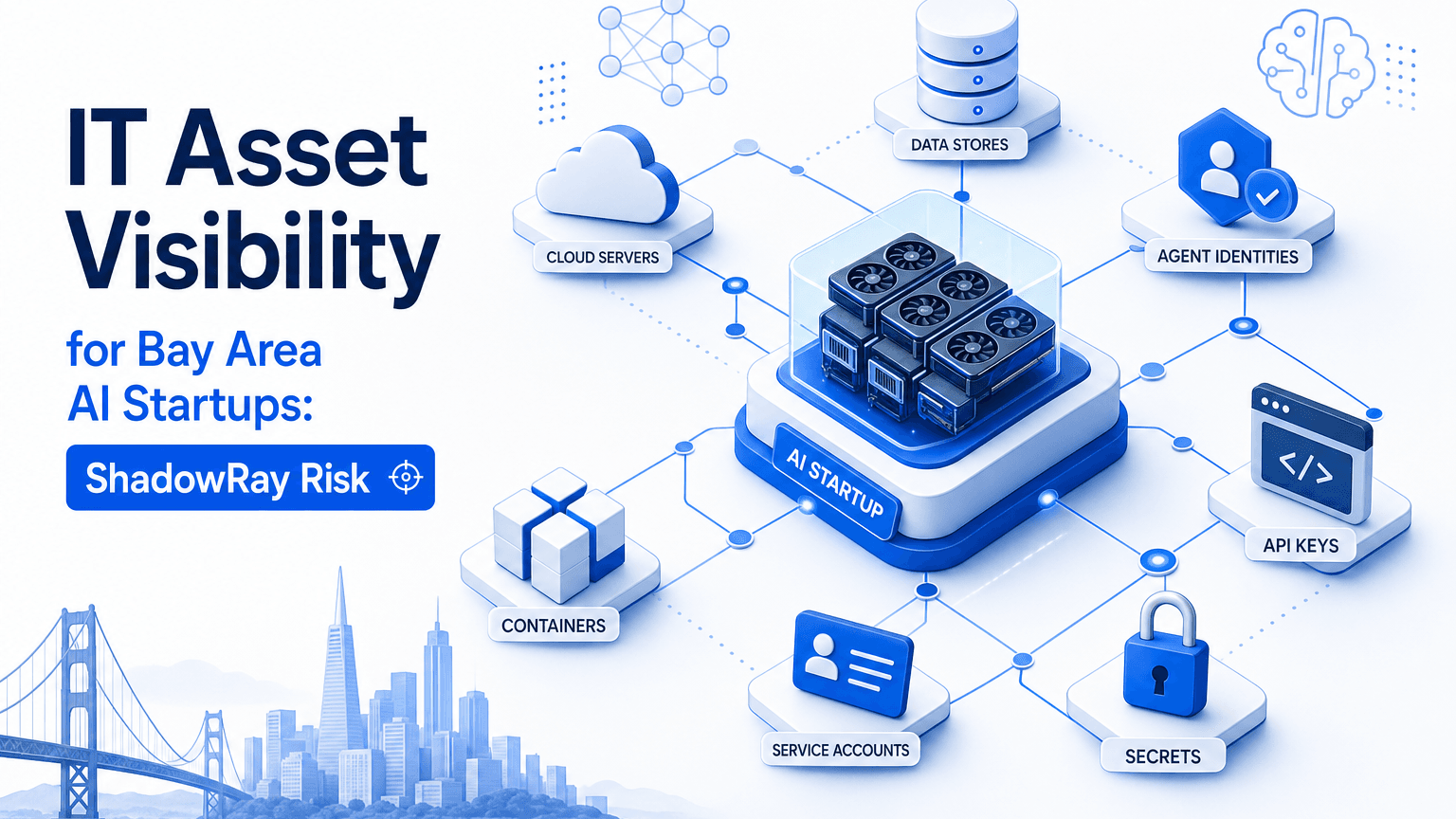
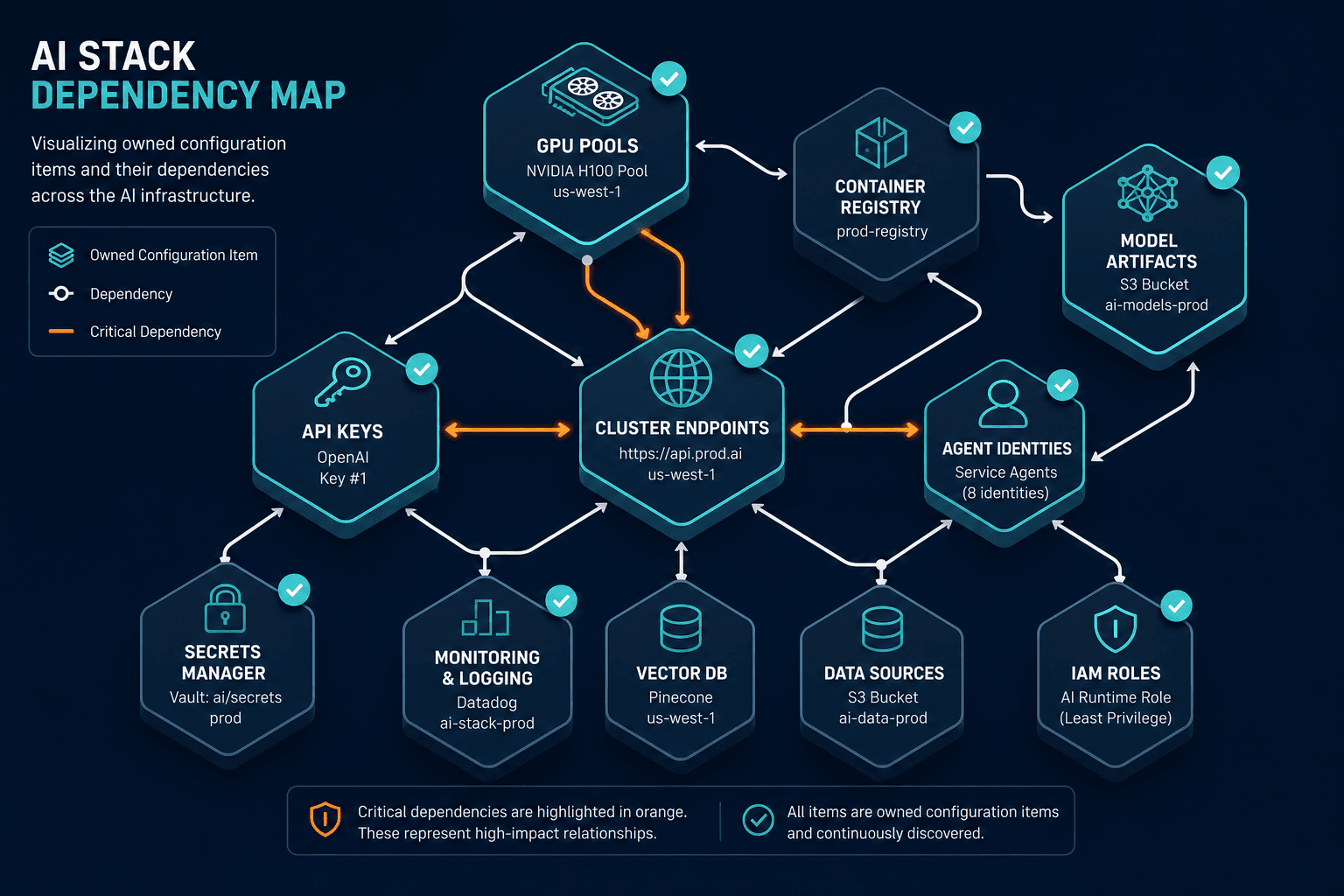
A GPU cluster is a configuration item the moment it is provisioned. An API key is one the moment it is issued. A Ray deployment, vector database, model endpoint, SaaS admin grant, and agent identity — the credential and permission set assigned to an autonomous AI process rather than a human user — each enter inventory when they exist, whether or not anyone opened a ticket. If security knows the threat model and operations never recorded the object, the gap is already open.
The Guardian reporting on AI work culture supplies the human mechanism. Founders and engineers describe 12-hour days, six or seven days a week, with some crews logging 16-hour stretches in apartments used as offices. Entry-level tech postings have dropped by about a third since 2022, which keeps pressure high to ship proof of progress. Sprint weeks leave little room for ticketed change. Registration loses to shipping. Inventory lags infrastructure by design.
Where the cracks show up
ShadowRay is the public case study. VentureBeat documented how open Ray clusters put AI workloads, compute, and data at risk. CVE-2023-48022 has been known since disclosure, exploited at scale since 2024, and resurfaced as ShadowRay 2.0 activity covered by eSecurity Planet in late 2025. Anyscale has not issued an official patch for CVE-2023-48022 itself, since the company maintains the behavior is by design; the CISA KEV action instead targeted a related, scored Ray flaw. More than 230,000 Ray servers have remained reachable from the open internet in recent counts. The Next Web reported CISA’s August 2026 Known Exploited Vulnerabilities action on that related Ray flaw, with a federal patch window measured in days.
Anyscale built Ray in the Bay Area. Customer names tied to the stack include OpenAI, Amazon, Instacart, and LinkedIn. That does not mean every customer left a cluster open. It does mean unauthenticated remote code execution on forgotten compute is what ship first, register later looks like when the bill comes due.
What is ShadowRay in AI infrastructure security?
ShadowRay is exploitation of known Ray framework weaknesses on internet-reachable clusters, including long-lived unauthenticated remote code execution risk that Anyscale disputes as by-design behavior rather than a scored CVE. It matters because Ray runs distributed AI workloads, and large server counts stayed exposed long after disclosure, including ShadowRay 2.0 activity and later CISA KEV pressure on a related flaw.
Why the Bay Area’s operating rhythm makes this worse
Sprint culture drives the visibility gap. When the default week is already maxed, friction loses to shipping. New GPU pools, experimental endpoints, and agent credentials appear through the easiest path: a personal cloud account, a shared token, a weekend deploy with no owner field. That pattern mirrors the shadow IT problem that has quietly inflated CMDBs for a decade, only now at AI speed instead of laptop-refresh speed (Elevate your IT operations: Transforming the future with Virima CMDB).
Commercial real estate moves on a second clock. Office and coworking capacity expand on landlord timelines while engineering provisions and abandons infrastructure daily. Local commentary that AI reprices neighborhoods faster than it stabilizes broader job growth points at the same imbalance from the property side. Capital and space reprice quickly. Institutions that track funded infrastructure often do not. Bay Area AI companies run land and headcount on one timeline and runtime systems on another, and the second timeline rarely enters the CMDB, identity catalog, or incident runbook.
See what trusted runtime truth requires when infrastructure changes faster than the inventory.
What breaks first when nobody has the map
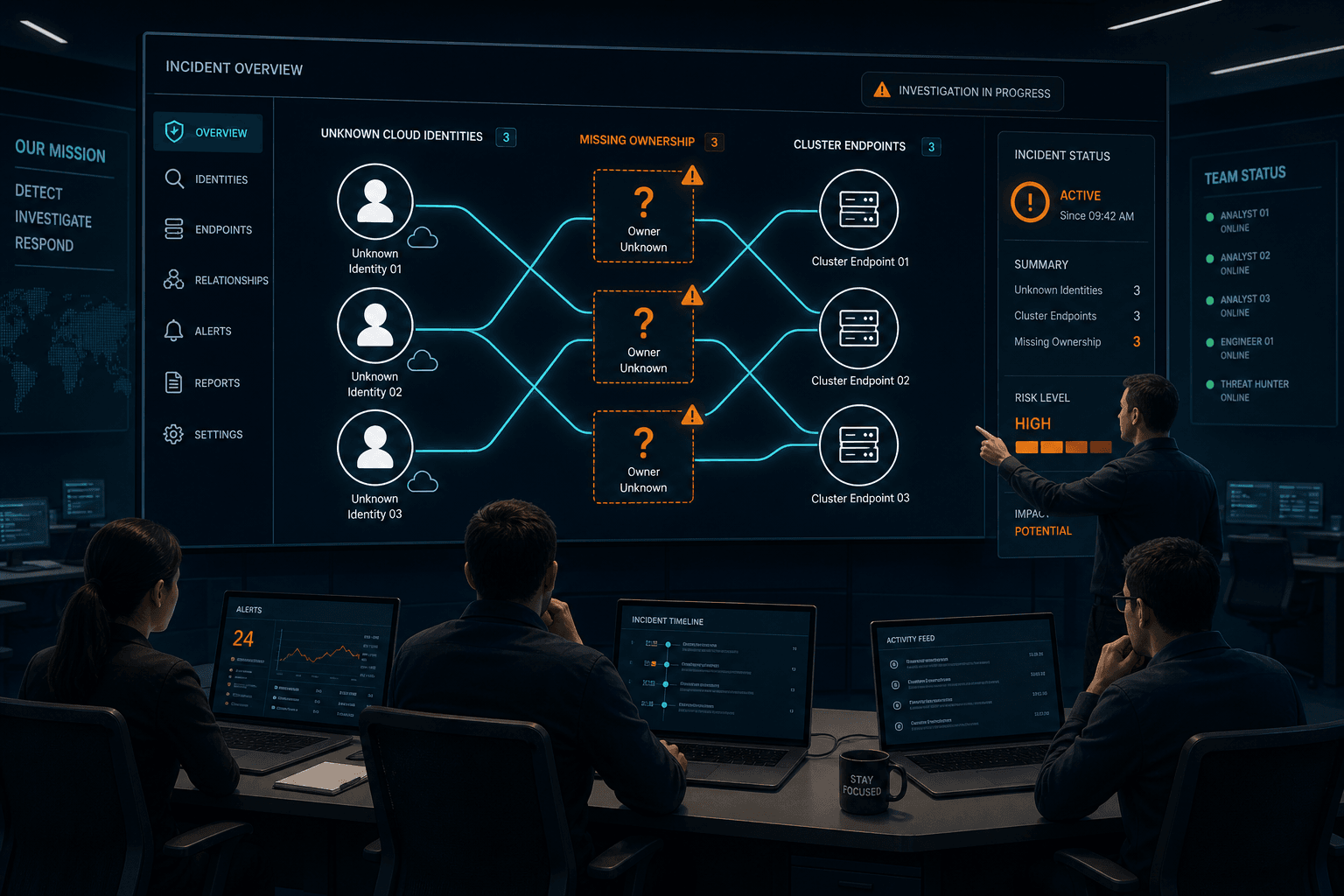
Incident response slows first. You cannot scope an exposure quickly if you cannot name which Ray clusters, GPU projects, SaaS tenants, and agent identities are yours. You also need to know where they run and what data they can reach. Containment becomes archaeology.
Cloud-native failure modes hit next. At BSides SF 2026, researchers showed identity-based, browser-oriented ransomware paths against SaaS and cloud assets that never need a traditional endpoint foothold. Those paths can evade endpoint detection and response tools entirely, as covered by SC World. They lean on ungoverned OAuth grants, session tokens, and over-permissioned identities, the objects that multiply when teams skip review. Those OAuth grants and service accounts are non-human identities, and they need the same ownership discipline as any employee login (Reduce IT Security Risks with Virima IT Asset Management). Agent identity visibility — knowing which credentials belong to which autonomous process — is exactly what closes this gap before an attacker finds it first.
Without a map, recovery order is guessed. With a map, responders start from owned inventory and dependency context instead of Slack threads and credit-card cloud receipts.
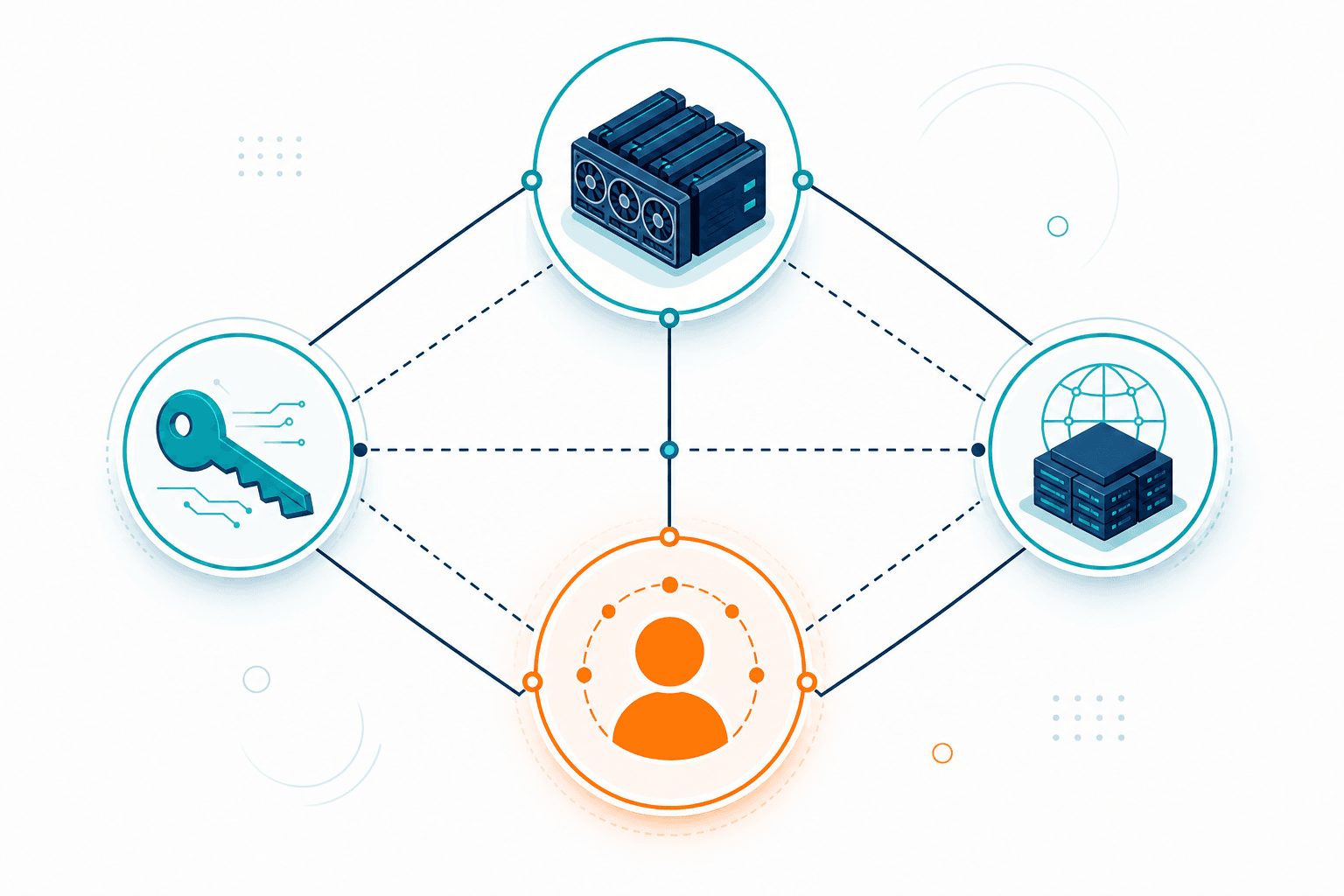
Why do Bay Area AI startups lose IT asset visibility during rapid growth?
Hiring, office expansion, and daily infrastructure provisioning outrun registration. GPU clusters, API keys, Ray deployments, and agent credentials become live systems before they become owned configuration items, so inventory lags production under sprint-speed engineering.
The vendor response, and what it reveals about the scale of the problem
Vendors are productizing around the gap rather than waiting for culture to slow down. Four unrelated, well-funded moves in the same window all target the same blind spot: visibility and privilege discipline for agentic, cloud-native infrastructure that sprint culture keeps outrunning.
HPCwire / AIwire covered Sysdig’s headless cloud security direction built for AI agents — a direct answer to identity-based attacks on SaaS and cloud objects nobody registered. GlobeNewswire reported SANS convening AWS, Google Cloud, Microsoft, and Anthropic on autonomous agents in cloud security, evidence the agent-identity gap has reached the platform vendors themselves. Businesswire detailed P0 Security’s partnership path with Zscaler around zero standing privilege for private resources, the governance layer this article’s inventory model depends on. SecurityWeek reported Upwind’s $250 million raise at a $1.5 billion valuation after rapid revenue growth, a signal buyers already pay for this problem at scale.
Buyers are funding visibility and privilege discipline because sprint culture alone does not produce either.
Why are security vendors building agent-specific visibility tools in 2026?
Four unrelated 2026 moves — Sysdig’s agent-focused security platform, SANS convening AWS, Google Cloud, Microsoft, and Anthropic, P0 Security’s Zscaler partnership, and Upwind’s $250 million raise — show buyers actively paying for AI-agent visibility and privilege discipline rather than waiting for sprint culture to slow down.
What accurate visibility actually looks like here
Accurate visibility starts with discovery that reaches managed cloud and AI infrastructure on a schedule teams can trust, not a quarterly walkdown. It records GPU allocations, cluster endpoints, service accounts, agent identities, and the services those objects touch. That combination — discovery plus governance — is what an AI startup CMDB actually needs to do, and it is different from a CMDB built for a slower-moving, laptop-and-server estate.
It joins identity to asset. A key or OAuth grant without an owner and a system of record is an open door with no door number. Zero standing privilege and short-lived, policy-driven access sit under that inventory as the governance layer. That governance layer is also where license and lifecycle tracking pays for itself, since the same inventory that scopes an incident also scopes a renewal or an audit (How to optimize IT asset lifecycle management with Virima). Privilege controls without discovery still leave unknown systems outside the policy. Discovery without privilege hygiene still leaves known systems over-entitled.
Service context matters once teams define which products and pipelines count as business services. Dependency maps then show blast radius from a compromised cluster or token into customer-facing paths, training data stores, and billing systems. The war-room test is short: what is running, who owns it, what it can reach, and what we shut off first.
Where a platform fits
Platforms that combine multi-source discovery, a governed configuration management database, and service mapping after service definitions are supplied turn that model into daily operations. Virima discovers and reconciles IT and cloud assets on scheduled discovery cycles and maintains configuration item relationships. It builds ViVID™ service maps once teams define the services that matter, so GPU-adjacent infrastructure, cloud workloads, and supporting systems show up as owned inventory instead of tribal knowledge. Integrations with ITSM platforms such as ServiceNow, Jira Service Management, Ivanti, HaloITSM, Xurrent, and Hornbill keep that inventory inside change and incident workflows through integrations.
As these companies scale past the point where a spreadsheet tracks GPU spend, IT and security leads inherit exactly this gap — the same discovery and CMDB model Virima’s enterprise customers already run.
The platform job is not a longer asset list for its own sake. It is a runtime picture engineering, security, and IT can share when the next cluster, key, or agent appears overnight.
Running discovery at AI infrastructure speed
A market that expands this fast needs an inventory that moves with it. Otherwise every new lease, hire, and model launch widens the same gap: infrastructure that exists in production, and nowhere on the map.
Frequently Asked Questions
What is ShadowRay and why does it matter for AI startups?
ShadowRay refers to exploitation of known Ray framework weaknesses, including long-lived unauthenticated remote code execution risk on exposed clusters. It matters because Ray underpins distributed AI workloads, and large numbers of servers have remained internet-reachable long after disclosure, including activity tracked into ShadowRay 2.0 and later CISA KEV pressure.
How does sprint culture create IT asset blind spots?
Long engineering weeks push teams to provision GPU clusters, API keys, SaaS tools, and agents without registration or ownership. Inventory processes that assume ticketed change cannot keep up, so production grows outside the CMDB and identity catalogs by default.
Can ransomware hit cloud and SaaS assets without malware on a laptop?
Yes. BSides SF 2026 research covered identity-based paths that abuse OAuth grants, sessions, and cloud permissions in the browser, reducing reliance on classic endpoint malware and weakening pure EDR-centric assumptions.
What should accurate IT asset visibility include for AI infrastructure?
It should include owned records for clusters, GPU allocations, endpoints, service accounts, agent identities, and the services they support, refreshed on scheduled discovery cycles, with privilege controls such as zero standing privilege applied to what discovery finds.
How does Virima help teams facing AI-speed infrastructure growth?
Virima runs scheduled discovery across IT and cloud environments, reconciles configuration items into a governed CMDB, and builds ViVID™ service maps after teams define services. That gives security and IT a shared view of what exists, how it connects, and what to prioritize in change and incident work.
Does Virima’s discovery cover cloud and GPU infrastructure alongside traditional IT assets?
Yes. Virima runs scheduled discovery across on-prem, cloud, and AI infrastructure, reconciling GPU allocations, cluster endpoints, and service accounts into the same governed CMDB as traditional IT assets, so AI-speed provisioning doesn’t create a second, ungoverned inventory.