What Is the Best Asset Management Tool for IT Teams?

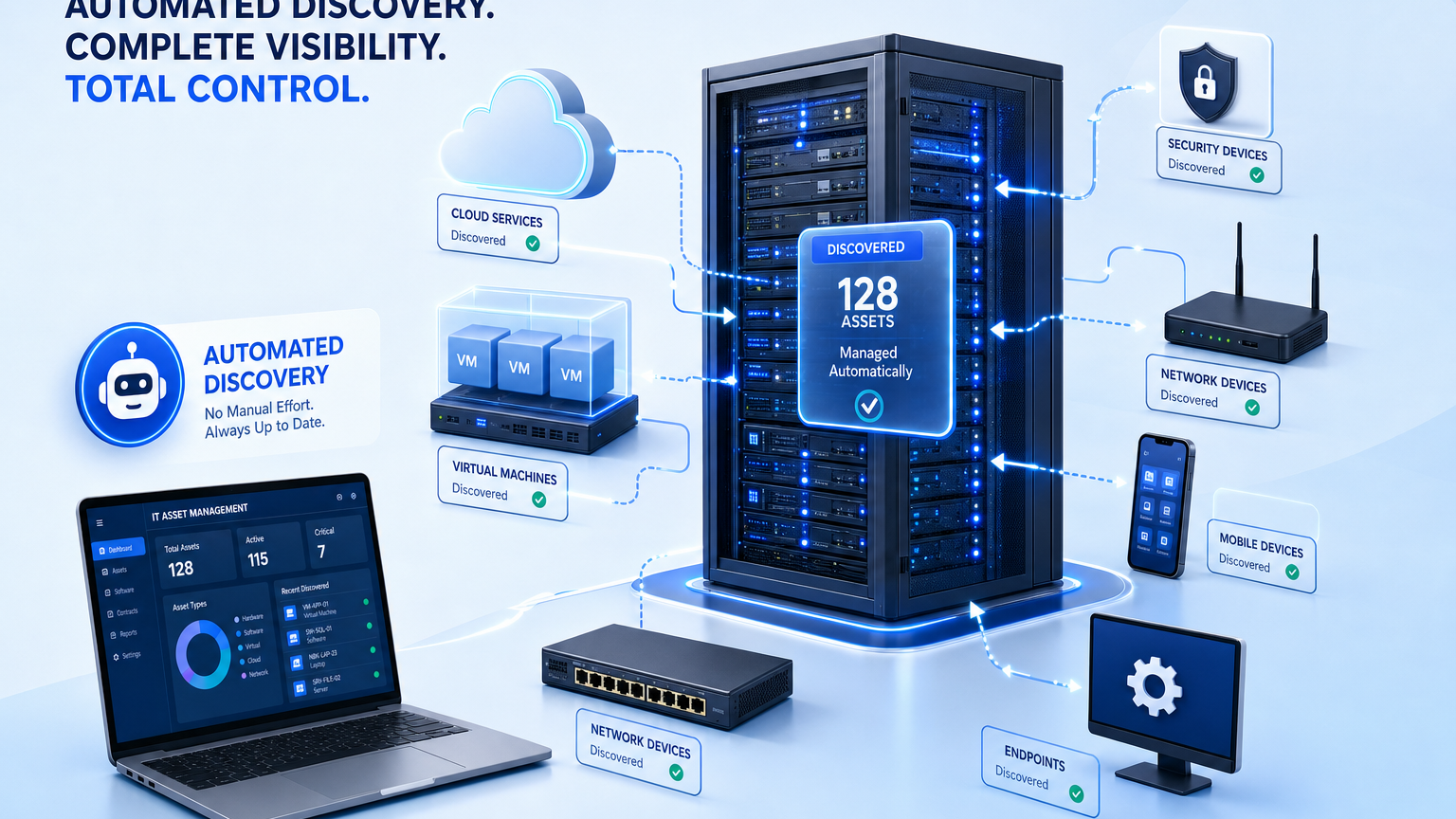
The best asset management tool for an IT team is the one that discovers devices automatically, keeps one record per asset, and ties assets to tickets and the CMDB. Small teams often start with Snipe-IT or Freshservice; enterprises with a CMDB use ServiceNow or Virima to maintain continuous operational accuracy. Selecting the best asset management tool for IT teams requires evaluating whether your primary operational objective centers on basic hardware tracking, software license governance, or unified service dependency visibility.
Managing physical, virtual, and cloud assets across distributed environments quickly exposes the limits of static documentation. When device inventories diverge from actual network operations, service desk technicians spend critical minutes verifying machine specifications during major incidents. Meanwhile, procurement specialists negotiate enterprise software agreements without reliable data on deployed installations.
NIST SP 1800-5 establishes that effective cybersecurity and operational resilience require continuous identification and management of all enterprise components. Evaluating asset management platforms demands an architectural question: does the tool only log procurement dates, or does it feed authoritative operational state into daily IT operations?
Quick answer: the best asset management tool for IT teams
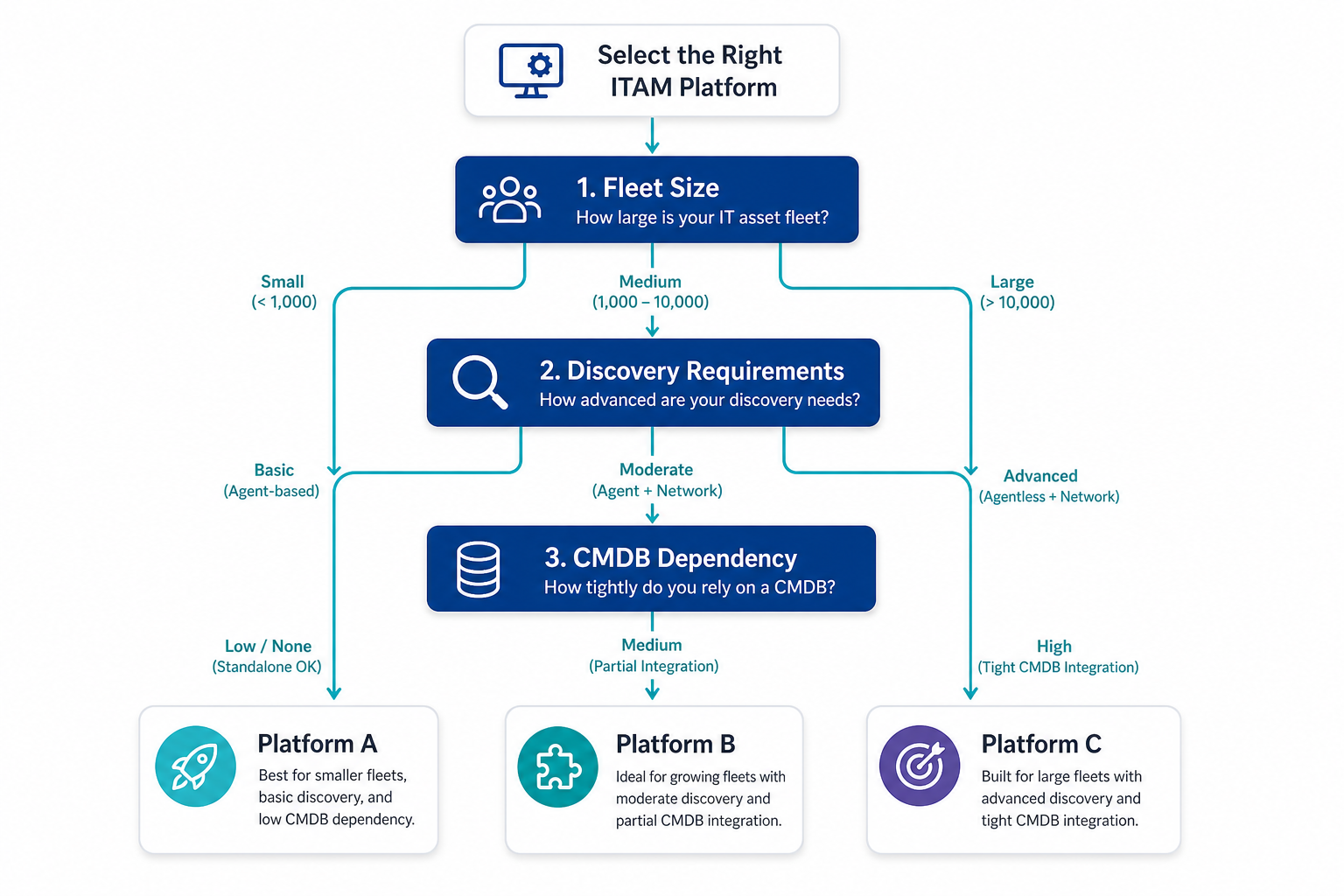
No single asset management platform satisfies every operational profile. An IT organization supporting two hundred endpoints across a single branch office has fundamentally different functional requirements than an enterprise coordinating fifteen thousand hybrid workloads across multiple private data centers and public cloud regions.
To select the optimal platform, IT engineering and asset management leaders evaluate four core technical dimensions:
- Discovery and Inventory Automation: How the platform identifies new hardware, unmanaged endpoints, virtual instances, and peripheral devices across corporate subnets and remote endpoints without manual user input.
- Data Model and Join-Key Durability: Whether the tool uses stable hardware identifiers such as manufacturer serial numbers and cloud instance IDs, avoiding fragile hostnames that break relationship continuity when devices are renamed.
- Operational Context and ITSM Integration: The mechanism by which physical and logical asset records attach to incident tickets, change requests, and configuration management databases.
- Lifecycle and Commercial Tracking: Built-in capabilities to monitor warranty expiration dates, vendor maintenance contracts, lease schedules, and software entitlement consumption.
When evaluating vendor options, teams typically categorize market offerings into distinct functional tiers ranging from entry-level open-source databases to fully integrated operational context engines.
What defines the best asset management tool for an IT department?
The best IT asset management platform combines agentless network discovery, durable hardware identifiers, automated software normalization, and native configuration management joins. This foundation ensures that physical device inventories, commercial support contracts, and service desk incident tickets remain synchronized across every lifecycle phase.
Asset management tool comparison by IT team need
Different engineering workflows prioritize different platform strengths. The table below maps standard industry solutions to specific organizational needs, technical constraints, and operational tiers:
| Operational Category | Primary Focus | Representative Tools | Key Architectural Strengths | Trade-offs to Consider |
|---|---|---|---|---|
| Hybrid Discovery + Discovery-Driven CMDB | Authoritative operational context, ViVID™ mapping. | Virima | Multi-source automated discovery, native CMDB, service dependency mapping, flexible ITSM augmentation. | Tailored specifically for IT operations, infrastructure governance, and risk mitigation rather than broad HR or ERP workflows. |
| Open Source / Free | Basic hardware tracking, self-hosted record-keeping. | Snipe-IT | Zero licensing fees, complete data sovereignty, reliable manual check-in and check-out workflows. | Lacks native agentless network discovery; requires external integrations or scripts for automated inventory. |
| Standalone Network Discovery | IP-range scanning, raw device inventory. | Lansweeper | Deep network scanning across subnets, broad hardware credential library. | Raw scans require significant data normalization before integration into enterprise CMDB structures. |
| Help Desk + Lightweight ITAM | Incident context for office IT, fast ticketing handoff. | Freshservice, Jira Service Management | Rapid deployment, intuitive ticketing user interface, consolidated agent licensing. | Limited native deep discovery for enterprise data centers and complex hybrid infrastructure. |
| Enterprise Service Management + CMDB | Massive ITSM suites, global workflow automation. | ServiceNow | Broad business process automation, established enterprise footprint. | High licensing costs, extended deployment timelines, and potential CMDB data decay without automated discovery hygiene. |
| Software Asset Management (SAM) | Complex licensing compliance, audit defense | Flexera, Snow Software | Deep software publisher catalog, contract entitlement reconciliation. | High implementation complexity; requires dedicated administrative specialists to maintain publisher rule sets. |
When comparing alternatives like Lansweeper or the broader landscape in our top asset management software analysis, the real question is how easily discovered inventory becomes actionable operational context. Enterprise discovery-and-CMDB platforms generally price on a quote basis tied to node or CI count rather than a flat per-seat rate, since scope varies with discovery breadth and ITSM integration depth.
ITAM software evaluation criteria for IT teams
Selecting a platform means looking past feature matrices to daily administrative overhead. Test prospective tools against four benchmarks during proof-of-concept evaluations.
Multi-source discovery and reconciliation
Scheduled discovery cycles must identify on-premises bare-metal servers, hypervisors, network switches, employee laptops, and cloud workloads. Relying exclusively on endpoint management agents leaves network appliances, storage arrays, and unmanaged devices invisible to the security team.
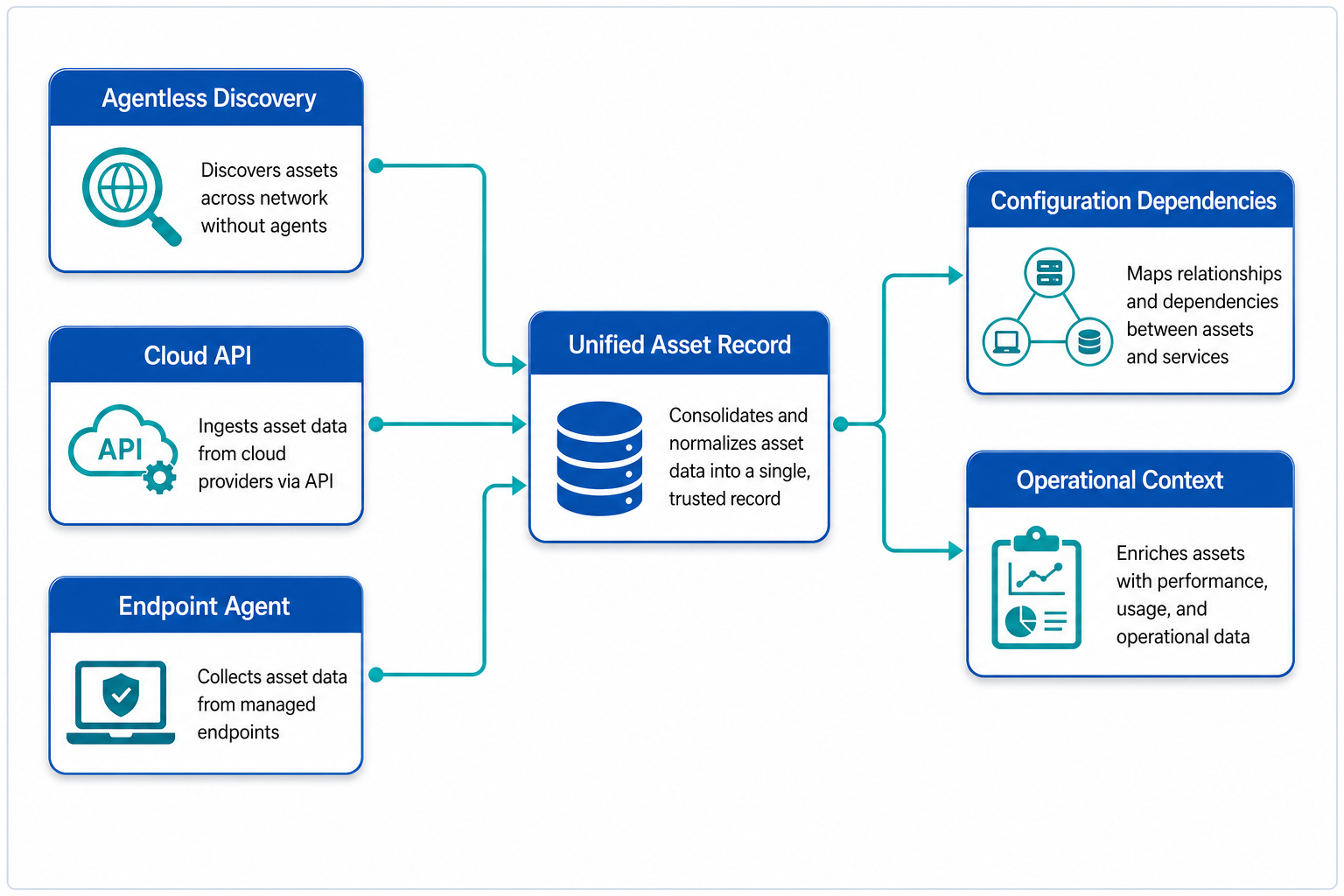
The ideal platform deploys agentless scanning protocols alongside lightweight endpoint agents. It reconciles conflicting data streams from Microsoft Entra ID, hypervisor APIs, and physical network sweeps into a single unified record without producing duplicate entries for dual-homed servers.
Durable join keys and inventory integrity
Many basic inventory platforms track systems by computer name. When a laptop is reimaged, reassigned, or renamed to conform to internal naming conventions, systems that rely on hostname join keys generate a second asset record, severing maintenance logs and ticket histories.
Enterprise-grade tools enforce immutable hardware identifiers. Serial numbers, motherboard UUIDs, and cloud instance identifiers serve as durable anchor keys. This ensures warranty records, incident histories, and compliance audit trails persist across device reassignments.
Integrated service dependency mapping
Knowing a physical server exists is helpful; knowing which business services, customer-facing applications, and database clusters depend on that server is critical. Basic inventory registers maintain flat asset lists with zero visibility into operational blast radius.
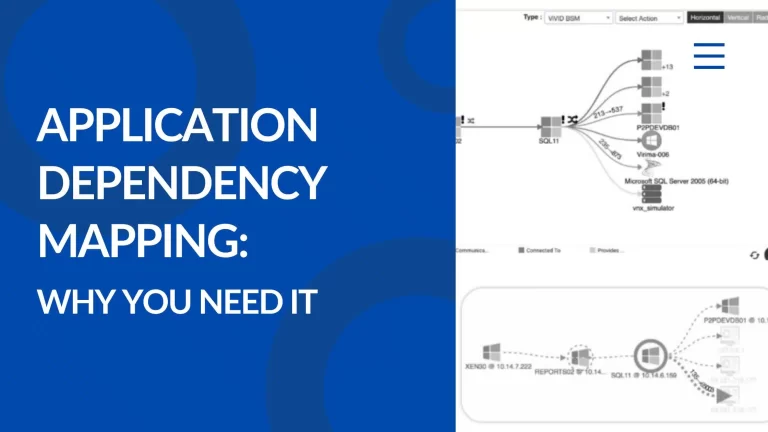
Modern asset management requires service dependency mapping, so engineering teams can identify upstream business services immediately when infrastructure faults or patch cycles hit, without manually cross-referencing architecture diagrams. Virima’s ViVID™ service maps are built for exactly this: once application owners define a service’s boundary components, the dependency map updates as the underlying infrastructure changes. For a closer look at how blast-radius context changes incident triage, see Improve your incident response process with service mapping.
Commercial lifecycle governance
Asset management bridges technical infrastructure and corporate finance. Tools must track purchase orders, depreciation schedules, warranty tiers, and software license entitlements. Automated alerts at 90, 60, and 30 days before contract expiration prevent unexpected renewal penalties and stop payments for retired hardware. For a detailed walkthrough of building an audit-ready license tracking process, see Virima’s blog post on software license audit readiness and compliance tracking.
Why does automated discovery matter for IT asset management tools?
Manual asset inventories decay immediately following initial entry due to frequent hardware refreshes, cloud provisioning, and device reassignments. Automated, scheduled discovery cycles scan subnets and cloud APIs to maintain an accurate system of record, eliminating blind spots during security vulnerability assessments and compliance audits.
Architectural trade-offs: standalone inventory vs. connected CMDB
A central decision facing IT leadership is whether to deploy a standalone asset inventory register or a discovery-driven configuration management database (CMDB). IT asset management (ITAM) tracks what an organization owns and what it costs: purchase date, warranty, assigned user. A CMDB tracks how those assets are configured and what depends on them: a standalone register can show who owns a server, but only a CMDB can show which business services go down if that server fails.
Standalone registers excel at procurement and accounting questions: serial numbers, purchase dates, assigned employees, office locations. But they operate in an operational vacuum. When a database administrator plans a maintenance window, a standalone register can’t show which APIs or reporting systems exchange data with that host.
| Evaluation Dimension | Standalone ITAM Register | Discovery-Driven CMDB Architecture |
|---|---|---|
| Core Data Model | Static accounting records, procurement timestamps, depreciated fiscal value, and user assignment. | Live operational configuration items (CIs), active firmware, network interfaces, and runtime dependencies. |
| Incident Triage Context | Technicians view device ownership and physical desk location without visibility into runtime traffic. | Engineers inspect connected upstream business services and downstream dependencies to isolate root cause. |
| Change Advisory Review | Provides no visibility into operational blast radius or affected upstream business applications. | Evaluates change risk against dynamic dependency graphs to prevent unintended service disruptions. |
| Inventory Maintenance | Manual data entry or occasional spreadsheet imports that decay between quarterly physical audits. | Automated, scheduled discovery sweeps that reconcile multi-source network and cloud state continuously. |
| Audit and Security Posture | Relies on self-reported spreadsheets during compliance reviews and software license audits. | Produces timestamped scan telemetry proving hardware presence, active patch versions, and ownership. |
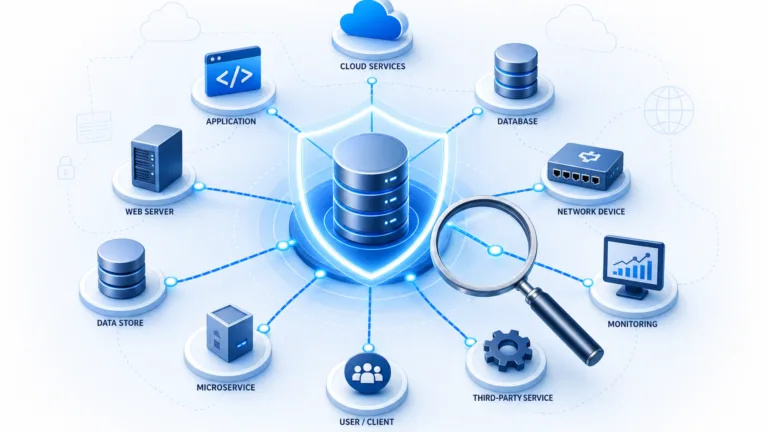
A connected, discovery-driven CMDB bridges physical hardware accounting and live service operations, modeling the relationships between physical hosts, virtualized infrastructure, microservices, and business processes.
Integrating ITAM and CMDB data provides direct operational advantages. Service desk engineers inspecting an incident ticket see the exact hardware model, firmware version, patch level, and upstream dependencies of the affected device, which accelerates mean time to resolution (MTTR). Change Advisory Boards evaluate proposed configuration changes against live dependency graphs, catching potential service disruptions before anyone executes a command. And internal compliance teams prove hardware ownership, location, and licensing state using automated scan timestamps instead of self-reported spreadsheets, producing a more defensible audit posture.
Organizations managing large, complex compute estates typically see measurable operational returns from a unified platform architecture rather than separate, disconnected databases for assets and configurations.
When IT asset management connects discovery to runtime dependency context, engineering teams resolve incidents faster and plan changes safely.
Where Virima fits in the IT asset management stack
Virima delivers a purpose-built operational context layer that unifies hardware asset management, software inventory, automated network discovery, and dynamic dependency mapping. Rather than forcing a choice between a basic asset register and an inflexible enterprise suite, Virima provides deep operational discovery that works standalone or integrates into existing environments.
Autonomous discovery across hybrid estates
Virima runs agentless network discovery across physical data centers, software-defined networks, and cloud environments including AWS and Azure. Scheduled discovery sweeps identify operating system versions, installed software, network interfaces, and storage allocations, updating Virima’s CMDB automatically.
ViVID™ service maps for dynamic dependency visualization
Through ViVID™ service maps, Virima turns flat asset inventories into multi-dimensional dependency visualizations. Once application owners define the boundary components of a business service, Virima builds and maintains the underlying dependency topology, so operations teams can see how network switches, servers, virtual machines, and storage volumes support production workloads.
Augmenting enterprise ITSM platforms
Organizations already invested in ITSM platforms don’t need to replace their service desks to get discovery accuracy. Virima integrates directly with ServiceNow, Jira Service Management, and Ivanti through our unified integrations hub. By feeding discovery-sourced runtime truth into third-party CMDBs, Virima eliminates the manual updates that let enterprise asset repositories go stale.
Commercial and financial lifecycle tracking
Through ITAM capabilities, Virima tracks hardware warranty coverage, OEM support contracts, lease expirations, and software license utilization. Automated notifications give procurement specialists warning before service agreements renew, with concrete utilization data to eliminate waste during vendor negotiations.
Teams evaluating pricing and deployment can explore our pricing and deployment plans to find the right tier.
Choosing the right path for your asset lifecycle
- Assessment Phase (Under 250 Endpoints): Organizations managing localized office endpoints with minimal server infrastructure can successfully establish asset discipline using open-source tools or basic help desk add-ons. The priority at this stage focuses on capturing reliable serial numbers, assignment dates, and warranty expiration milestones.
- Growth and Consolidation Phase (250 to 1,500 Endpoints): As organizations deploy hybrid cloud environments, manage remote workforces, and face formal security frameworks, manual tracking breaks down. This stage requires deploying automated discovery to detect rogue devices and establishing standard software normalization.
- Enterprise Operational Context (1,500+ Assets or Regulated Estates): Enterprises managing complex infrastructure, strict compliance mandates (such as HIPAA, PCI DSS, or SOC 2), or high-frequency change environments require deep discovery integrated directly with configuration management. The asset register must actively inform incident response, vulnerability management, and service continuity planning.
Selecting the optimal tool requires prioritizing long-term data integrity over short-term deployment speed. Platforms that automate discovery and maintain durable identity records ensure that your asset data remains an authoritative foundation for organizational decision-making.
Evaluate your asset management architecture
The best asset management platform for your IT organization is one that delivers dependable visibility across every physical, virtual, and cloud asset from deployment through final decommissioning. By anchoring asset registers in automated discovery, enforcing durable join keys, and connecting device records directly to operational service dependencies, IT teams replace guesswork with actionable intelligence.
Whether you need a dedicated system of record for hybrid infrastructure or want to eliminate data decay inside your existing enterprise CMDB, establishing discovery-backed asset truth protects operational uptime and optimizes technology investments.
Discover how Virima delivers automated asset discovery, native CMDB integrity, and dynamic ViVID™ service maps across your hybrid infrastructure.
Frequently Asked Questions
What is the best free asset management tool for IT teams?
Snipe-IT is widely recognized as the leading free and open-source IT asset management platform for tracking physical devices, accessories, and user assignments. Free tools typically lack native agentless discovery and real-time dependency mapping, so teams end up entering data manually or maintaining custom scanning scripts.
How many assets do I need before moving to dedicated ITAM software?
Most organizations hit friction with spreadsheet-based tracking once asset counts grow large enough that manual reconciliation of hardware reassignments and software renewals exceeds what one administrator can track each week — commonly somewhere around 150 to 250 active assets. Past that point, dedicated ITAM software becomes worth the switch.
Does Virima integrate with ServiceNow, Jira Service Management, or other ITSM platforms?
Yes. Virima integrates directly with ServiceNow, Jira Service Management, and Ivanti, feeding discovery-sourced data into existing ITSM workflows without requiring a service desk migration.
Can an asset management tool replace an enterprise CMDB?
No. A standalone asset management tool records financial and lifecycle attributes such as purchase price, vendor contracts, depreciation, and ownership. A CMDB models operational relationships, configuration parameters, and service dependencies needed for root-cause incident troubleshooting and change impact analysis.
How does Virima’s CMDB differ from a standalone IT asset register?
Virima combines agentless and agent-based discovery with a native CMDB and ViVID™ service maps, so asset records link directly to live service dependencies instead of sitting in a disconnected inventory list.