
Trusted data layer
for AI agents in ITSM
cause. Stale, incomplete, or out-of-step data is. Before
an agent earns the right to act, the data layer has to meet
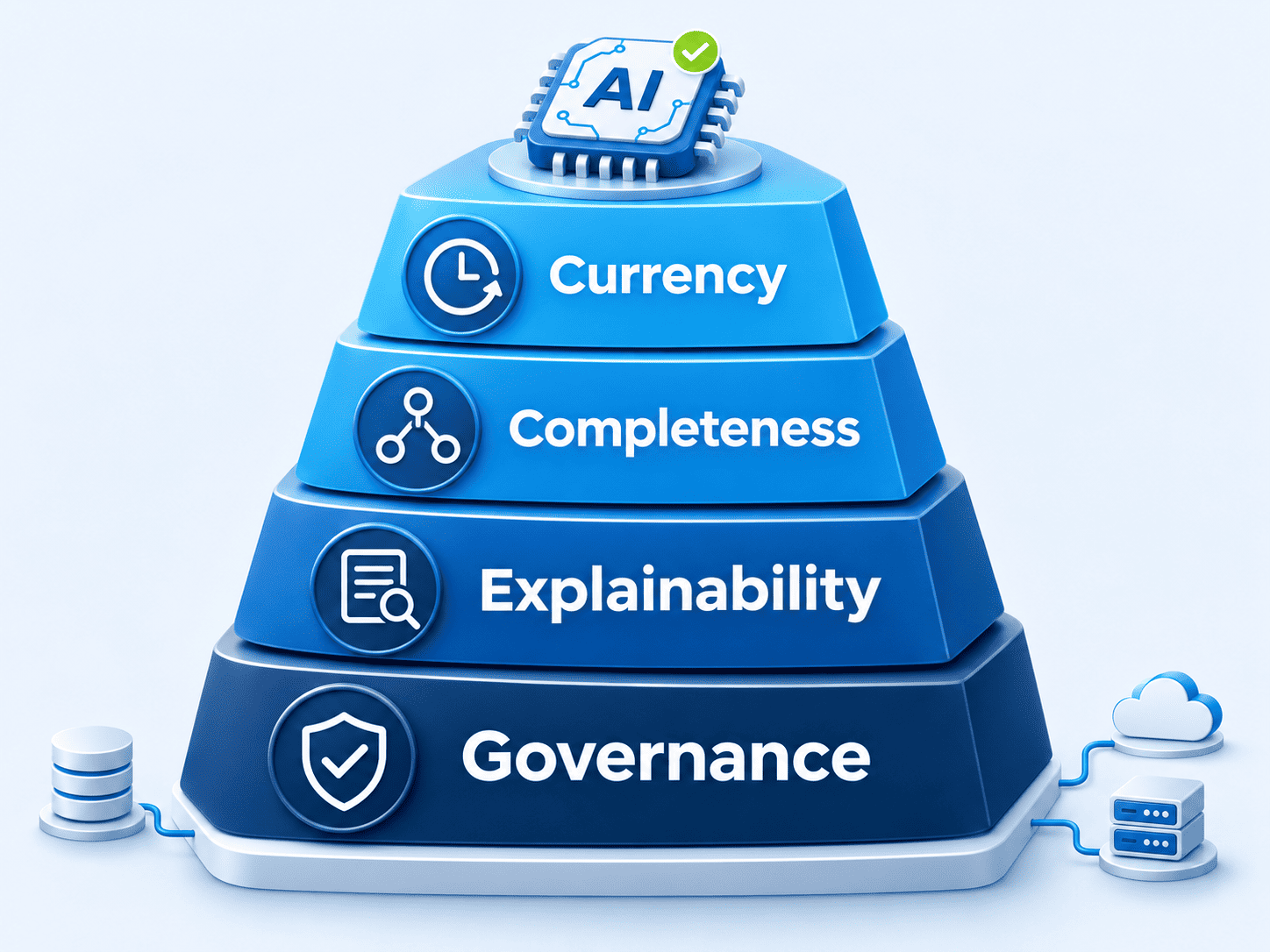
four conditions: currency, completeness, explainability,
and governance.
The agent is usually not the problem
Salil Kulkarni opens with a morning he has lived many times in hospitality technology. The overnight revenue report looks reasonable, yet an experienced revenue manager has already overridden three recommendations. The model was not wrong. It had not been told about a group booking still unconfirmed, a rate agreed verbally, or a competitor that began renovating at midnight.
The same thing happens in ITSM and ITAM. A team deploys an agent for incident triage, change-impact assessment, and asset lifecycle advice, and early results are good. Then the exceptions pile up. A change window is set for a system that was decommissioned but never removed from the CMDB. An incident is routed to an owner who changed departments six months ago. An escalation relies on a dependency that has since changed. Each miss is small, and together they wear down confidence; recommendations become first drafts, and the override becomes policy.
Once confidence in the outcome runs ahead of confidence in the data,
people start overriding the system.
— FOUR CONDITIONS
What a data layer must meet before an agent acts on it
- Currency
Fresh at the moment of decision
- Completeness
The relationships that matter are there
Routing an incident needs ownership, dependencies, service context, and blast radius. A gap here rarely looks like an error. It produces a recommendation that is technically defensible and contextually wrong.
- Explainability
Every action traces back to its data
- Governance
Rules travel with the data
— WORKS WITH YOUR STACK
You do not need to rip out the platform you already run
ITSM platforms such as ServiceNow, Ivanti, Halo, and Xurrent carry years of customization and investment, and most teams will keep them. The weak point is rarely the platform itself. It is the data feeding into that estate.
Think of a filter in front of your platform: it cleanses and governs data before that data enters your environment. Virima offers bidirectional sync with popular ITSM platforms including ServiceNow, Ivanti, Halo, Xurrent, Jira Service Management, and TeamDynamix, enriching your CMDB with discovery-sourced ground truth.
Data sources
Discovery, integrations, change activity


Virima
Cleanse and govern the data
Your system of record
Your ITSM platform and CMDB
Treat overrides as diagnostic information
At a casino resort company, executives overrode pricing recommendations almost constantly. That created friction between Finance, Analytics, and Revenue Management, and the CEO never had a clear answer to whether the company was actually optimized.
Competitors had the same problem, so the lost ground was relative and easy to miss. His conclusion is that the agent did not fail. The data layer failed the agent.
- Leaders treat agent recommendations as first drafts to review
- Changes get scheduled for systems that no longer exist
- Incidents are routed to owners who changed departments months ago
- Finance, analytics, and operations each argue the number is wrong
- Overrides have quietly become policy
— THE STANDARD
Trusted Runtime Truth
— CMDB Maturity Assessment
Is your CMDB mature enough for an AI agent to act on?
Score your CMDB across discovery, data quality, service mapping, governance, ITSM integration, and AI-readiness. Then get a personalized report on what to fix first.
27 questions, about 5-6 minutes
Want the full story?
— HEAR IT FROM THE AUTHOR
Listen to the conversation
— Off-Menu IT Podcast with Shaun Ashbury
AI Acts on Stale Data.
Virima’s Salil Kulkarni joins Shaun Ashbury to talk about what changes when an AI agent acts on stale data instead of a person. A person pauses when a record looks wrong. An agent doesn’t.
See Trusted Runtime
Truth in your environment
the ITSM platform you already run.