
ServiceNow MID Server Costs and Discovery Alternatives: How to Reduce Fleet Overhead
 Summarize with ChatGPT
 Summarize with Claude
An unfamiliar MID Server can remain on the patching list long after its original site or discovery schedule changes. Its host still needs an owner, a support plan, and a reason to exist. A platform owner evaluating ServiceNow MID Server costs and discovery alternatives must account for that work alongside discovery coverage.
Consider an illustrative fleet with older site deployments, separate test environments, and servers whose owners have changed. Before removing anything, the team needs to identify which workloads still depend on each server. A structured review can expose consolidation opportunities without sacrificing required network boundaries or availability.
What a MID Server does and why the count grows
A Management, Instrumentation, and Discovery (MID) Server runs within an organization’s environment and communicates with a ServiceNow instance. Discovery uses it to reach supported systems and collect information for the configuration management database (CMDB). Other ServiceNow products can also use a MID Server, so its discovery schedule is only one part of its workload.
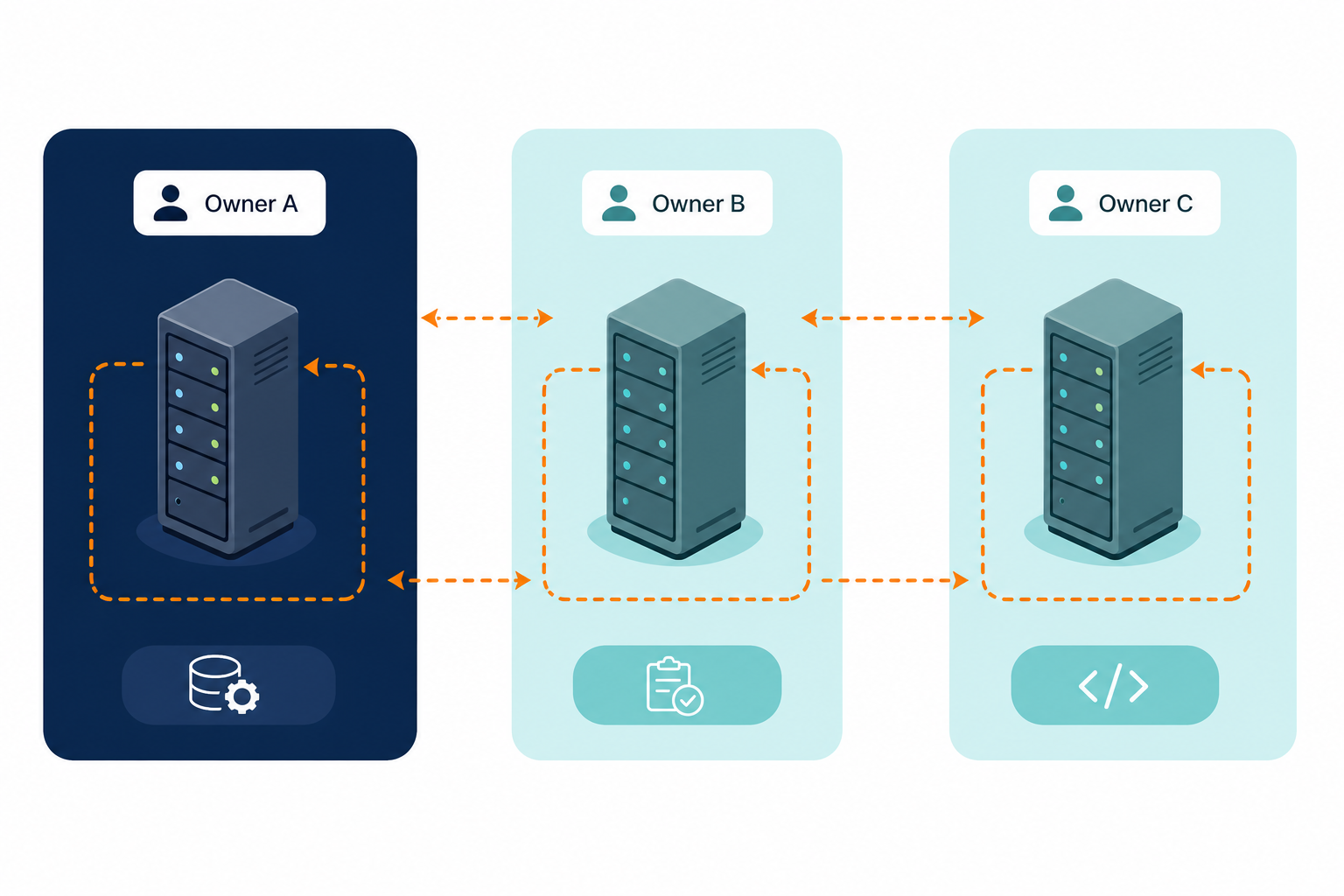
Network segmentation, geographic sites, environment separation, and availability requirements can each influence placement. Separate production and test instances may have different access rules. Some teams also provision capacity for workloads that cannot share a constrained host.
In a 2024 ServiceNow Community discussion, a practitioner described a proposed fleet across 18 data centers. The plan included 36 production servers and 18 each for test and development. A responder suggested assessing site criticality and connectivity before deciding how many were appropriate. The example describes one proposed deployment, not a sizing benchmark.
Where MID Server cost comes from
The relevant cost is the operating cost of the fleet plus the software and services it supports. A public per-server price is not established here. Review your contract and infrastructure records rather than applying an estimate from another organization.
| Cost driver | What to examine |
|---|---|
| Host capacity | Virtual or physical resources reserved for each server and its peak workload. |
| Operating system and infrastructure | Applicable platform licensing, hosting charges, backup, and support agreements. |
| Maintenance | Host patching, supported software versions, upgrades, and failed upgrade recovery. |
| Network and security | Firewall changes, proxy and certificate trust, approved routes, and access reviews. |
| Monitoring and support | Queue, capacity, availability, incident response, and troubleshooting effort. |
| Resilience | Additional capacity required for failover and recovery commitments. |
ServiceNow’s MID Server requirements provide a historical starting configuration for one Windows Server 2012 R2 host. It uses a quad-core processor above 2 GHz and 25 concurrent threads. The documentation says the Java virtual machine starts with 1 GB allocated. These figures are starting points, not a current sizing guarantee or a total host-memory requirement.
ServiceNow also says discovery workloads can produce high CPU utilization. Examine processor queues, workload duration, and competing applications before treating utilization alone as a failure. Check the requirements for your ServiceNow release and supported host operating system.
Licensing deserves a separate contract check. A 2020 community answer says the MID Server itself is not a licensed entity, while functions used through it may be licensed. That discussion is not a substitute for current subscription terms. Ask your ServiceNow account team to confirm the products and entitlements applicable to your deployment.
What should a MID Server cost review include?
A MID Server cost review should include infrastructure charges and the staff time required to maintain supported access and availability. Separate one-time migration work from recurring support. Record which other ServiceNow workloads use each server before assigning its full operating cost to discovery.
Fix the fleet first
A fleet audit gives the team a baseline before it chooses another architecture. Include the discovery owner, infrastructure team, network team, and anyone responsible for other MID Server workloads.
- Build an inventory. Record each MID Server’s host, instance, environment, owner, network zone, version, and status. Add the products, schedules, and integrations that use it.
- Investigate idle candidates. Review servers associated with closed sites or disabled schedules. Check event history and dependencies before disabling anything. Obtain the owner’s approval and retain a rollback plan.
- Group sites by need. Compare business criticality, approved connectivity, latency, recovery commitments, and discovery scope. A reachable site is not automatically suitable for shared coverage.
- Review test and development. Confirm separation policies and active workloads before sharing hosts. ServiceNow cautions against running multiple active MID Servers on the same constrained host. Stagger workloads only where security and capacity policies permit it.
- Measure before resizing. Examine CPU, memory, processor queues, discovery duration, and error patterns during representative runs. Adjust thread settings and host capacity using release-specific guidance, then repeat the measurements.
- Validate the result. Compare discovery coverage and completion times before and after each change. Test failover where required, and document who can restore the previous configuration.
The 2024 community discussion describes one implementation covering two data centers and eleven branches with two MID Servers. The responder attributed that design to strong connectivity. It is an anecdote, not evidence that another estate can use the same count.
A CMDB owner also needs a reliable view of what exists, how systems connect, what changed, what could be affected, and who owns them. Explore Trusted Runtime Truth for the discovery-sourced context supporting those decisions.
Options that reduce or remove MID Servers
The right option depends on which collection jobs a MID Server performs. Replacing a host inventory method does not necessarily replace cloud-resource discovery, service mapping, or another integration workload.
| Approach | Potential change | Boundary to verify |
|---|---|---|
| MID-less agent collection | Moves supported host collection to agents communicating through ITOM Cloud Services. | Agent deployment, product entitlements, supported features, and cloud-resource coverage. |
| Cloud connectors | May provide selected cloud inventory through a connector. | Attributes and patterns differ by connector and ServiceNow release. |
| Third-party discovery feed | Introduces another collection system that supplies CMDB records. | Collector placement, connection path, mapping, reconciliation, and licenses. |
| Regional consolidation | Shares capacity across locations when network design allows. | Approved routes, throughput, failure domains, and recovery objectives. |
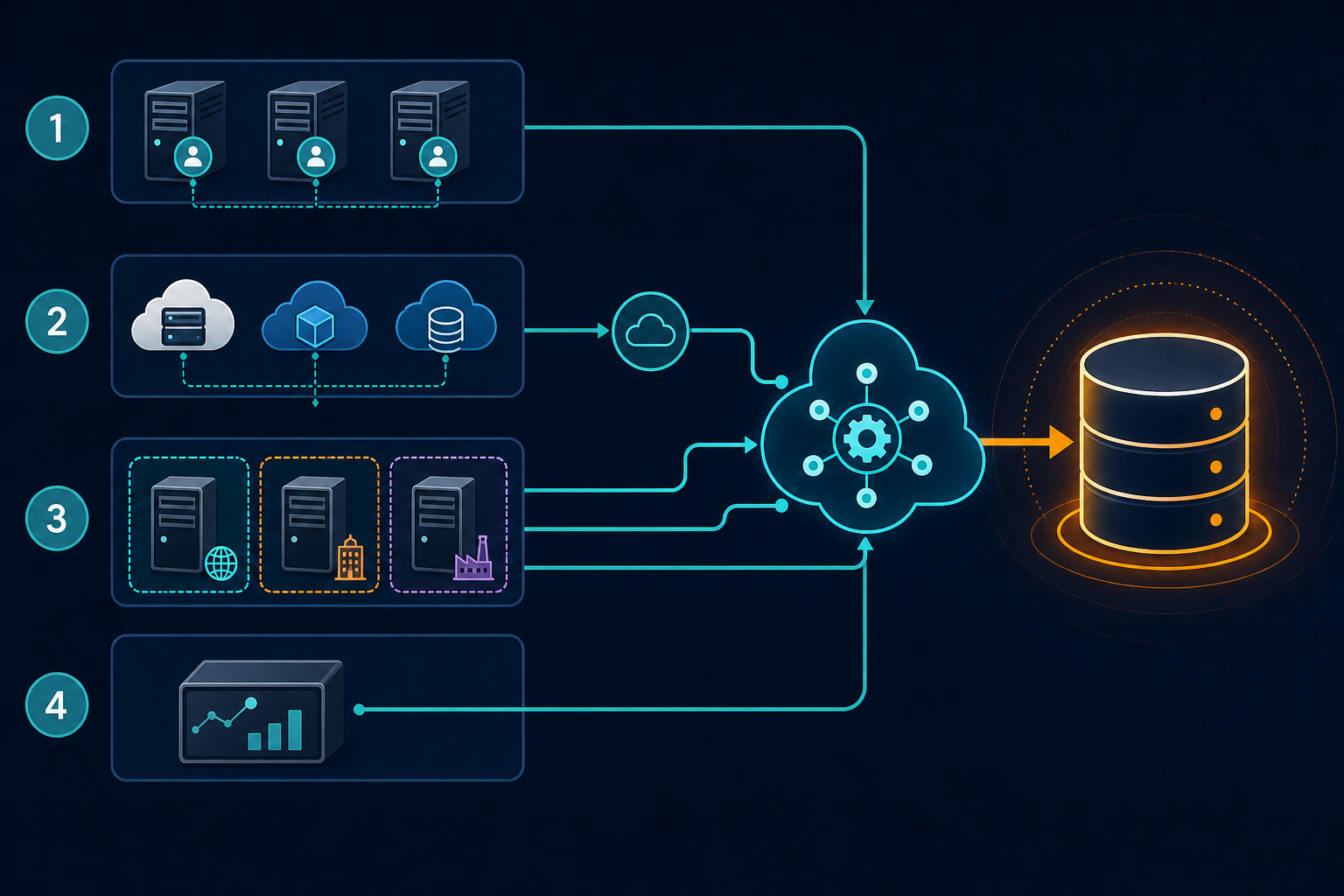
ServiceNow documents MID-less Agent Client Collector installation through ITOM Cloud Services. An October 2025 community discussion describes collecting Windows and Linux host information using that approach. The discussion distinguishes host information from cloud metadata and leaves the licensing question unresolved. Confirm current coverage and entitlements for your release before changing the design.
In a December 2025 community reply about AWS, a ServiceNow participant described pattern-based cloud discovery as requiring a MID Server. The reply also distinguished connector data from pattern results. Treat that answer as release-specific guidance, and validate current documentation against the attributes your team needs.
A third-party tool may feed ServiceNow while using its own collector. Whether that feed also requires a MID Server depends on the integration architecture and network path. Ask each vendor to document the complete path rather than assuming either answer.
When a different discovery approach makes sense
Revisit the architecture when the fleet keeps growing after a documented cleanup or when multiple teams need the same discovery data. A CMDB manager may also need to reconcile findings from sources outside ServiceNow. Those needs can justify comparing a supplementary feed with the current deployment.
Start with a controlled evaluation. Select a representative network segment and list the configuration items, attributes, and relationships that matter there. Compare successful discoveries, failed credentials, reconciliation outcomes, and operating tasks over the same period.
Ask each vendor these questions:
- What software must run inside our network, and where?
- Which access routes, credentials, certificates, and firewall changes are required?
- Who owns upgrades, monitoring, backup, and recovery?
- How are sources identified when two systems report different values?
- Which configuration items and relationships can be sent to our CMDB?
- What contract terms apply to the collector and the resulting data?
Use the existing discovery evaluation guide for the broader tool-selection decision. Compare documented coverage and operating effort before making a cost claim.
Could other costs outweigh MID Server upkeep?
Discovery subscriptions, implementation, and CMDB data work may outweigh the cost of several hosts. The balance depends on your agreement and estate. A fleet review still helps quantify the server-related work instead of assigning it a presumed share of the budget.
Count the hours spent on MID Server incidents, upgrades, access changes, and routine maintenance during the last quarter. Separate shared platform work from tasks attributable to discovery. Compare that baseline with the effort required to maintain any proposed alternative.
How can a team compare discovery operating effort?
Compare discovery operating effort using the same reporting period and incident categories for each option. Include planned maintenance, failed collection jobs, access changes, and recovery tests. Record shared responsibilities separately so the comparison does not charge one product for work performed across multiple systems.
Discovery with a different collector: what Virima documents
Virima offers agent-based, agentless, and API-based discovery methods. Its agentless Discovery App runs on a server the customer owns, and credentials are encrypted on that server. Virima also describes API-based discovery for AWS and Azure, along with supported virtualization platforms.
The Discovery App is an on-premises component that needs hosting, network access, and maintenance. Current sizing and supported software requirements should be confirmed with Virima for the intended release. The available documentation does not establish that its footprint is smaller than a ServiceNow MID Server deployment.
Virima’s CMDB supports reconciliation across discovery sources. The product documentation describes source information and timestamps for discovered attributes, with authority rules used to resolve conflicts. Virima can also share discovered configuration items and relationships with ServiceNow through its integrations hub. Confirm field mappings, network paths, and reconciliation behavior during an evaluation.
Choose the next step for your fleet
Begin with an inventory of servers, owners, workloads, and network zones. Test consolidation where capacity and recovery requirements allow it. If other teams need shared discovery data, compare a supplementary collector against that measured baseline.
Schedule a discovery demo to review Virima’s collector requirements and its ServiceNow CMDB integration for your environment.
Frequently Asked Questions
Is a MID Server licensed separately?
A 2020 ServiceNow Community answer says the MID Server itself is not a licensed entity. Product usage and contractual terms can differ. Confirm your current entitlements and applicable charges directly with your ServiceNow account team.
How many MID Servers does an organization need?
The number depends on network access, workload, site criticality, environment separation, and recovery requirements. Use ServiceNow’s release-specific guidance as a starting point, measure representative discovery runs, and validate failover before consolidating any servers.
Can ServiceNow collect discovery data without a MID Server?
ServiceNow documents MID-less Agent Client Collector installation through ITOM Cloud Services. Supported data, cloud-resource coverage, and entitlements depend on the product and release. Confirm those details before using agent collection to replace a MID Server workload.
Does Virima require a discovery component on premises?
Virima documents a Discovery App running on a customer-owned server for agentless discovery. Hosting, network access, security, and maintenance remain part of the design. Confirm current sizing and supported versions for the deployment under evaluation.
Can Virima discovery data feed the ServiceNow CMDB?
Virima lists a ServiceNow CMDB integration that can share discovered configuration items and relationships. The team should verify its required connection path, field mappings, identification rules, and reconciliation behavior for the specific implementation.