
IT Asset Visibility for Denver Aerospace and Defense Suppliers Starts With What a Prime Can Ask For
 Summarize with ChatGPT
 Summarize with Claude
Key Takeaways
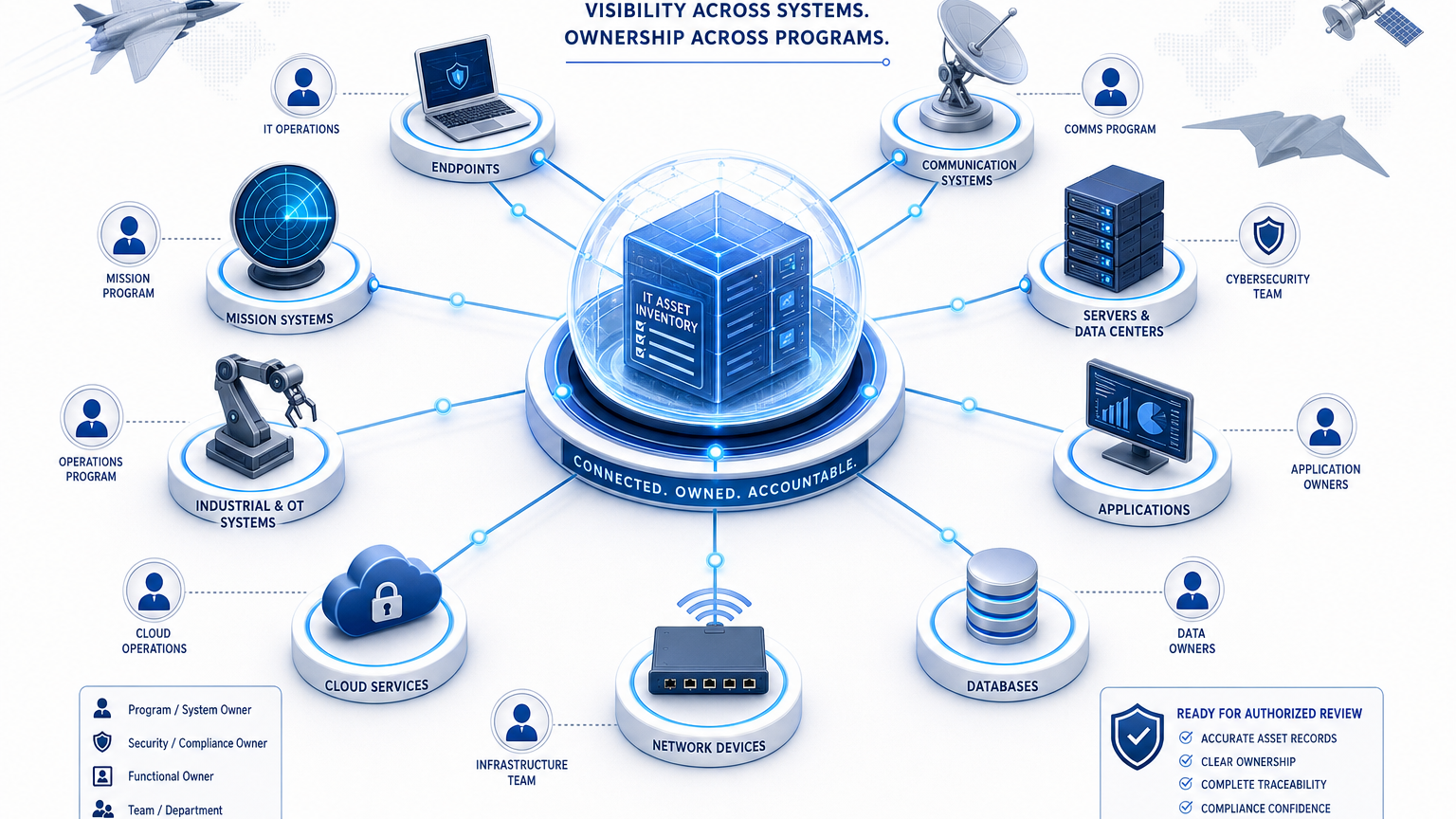
- IT asset visibility for Denver aerospace and defense suppliers connects systems to confirmed owners, programs, and evidence sources.
- Scheduled discovery can identify supported, reachable infrastructure, while supplier staff document isolated equipment and decide security scope.
- Defense suppliers can review ownership, observation dates, and contract context before sharing inventory evidence with authorized customers.
A customer’s security request can reach several teams before anyone agrees which systems supported the work. IT asset visibility for Denver aerospace and defense suppliers starts with a record that links systems to the people and programs responsible for them.
On November 3, 2026, the Department of Justice announced a settlement with two Delaware-based defense and aerospace contractors. They agreed to pay $13 million to resolve allegations involving cybersecurity requirements in federal contracts.
The allegations included outdated or missing system security plans and insufficient protections for controlled unclassified information stored with a cloud provider. The department said the claims were allegations and there was no determination of liability. Its notice did not identify an asset inventory failure.
For suppliers elsewhere, the case raises a practical preparation question. When a prime contractor requests evidence about a program, which records can the supplier safely share and explain?
Review Trusted Runtime Truth for operations to see what exists, how it connects, what changed, what may break, and who owns it. A supplier can use that context when preparing records for authorized review.
What a Prime Can Ask a Denver Supplier to Show
A prime contractor may request evidence about systems supporting contracted work. The exact request depends on the agreement, information involved, and assessment arrangements. The supplier’s security and legal teams should determine what can be shared.
The Colorado Chamber Foundation’s 2026 aerospace report counted 61,072 aerospace jobs statewide in 2025. That statewide figure describes the broader industry, not the number of Denver defense suppliers.
A March 2026 Government Accountability Office report describes cybersecurity requirements across defense contractors and subcontractors. The work depends on information passed through the supply chain and the terms of each contract.
| Potential requester | Question to clarify | Record fields that can help |
|---|---|---|
| Prime contractor | Which supplier systems support the contracted program? | System identifier, program association, and accountable owner. |
| Customer program office | Which systems or services support an agreed work package? | Service relationship, responsible contact, and review date. |
| Supplier’s assessor | How was the population for assessment established? | Inventory source, scope decision, and supporting evidence location. |
| Finance or procurement | Which assets and contracts remain associated with the program? | Contract reference, lifecycle status, and renewal owner. |
A record supports the answer when its owner can explain where each field came from. Program managers can confirm the business relationship. Security staff determine assessment scope and approve sensitive disclosures.
Should a defense supplier send its complete inventory to a prime?
A defense supplier should agree on the requested evidence and its authorized recipients before sharing inventory data. Security and contract teams can determine whether a filtered extract answers the request. They should also check handling restrictions, delivery method, and retention terms for the material being shared.
Why Program-by-Program Asset Lists Drift Apart
A program inventory usually starts with the systems a team knows about at the time. Later purchases, new cloud accounts, and staff changes can leave that list behind. The configuration management database (CMDB) owner needs a way to compare sources and route disagreements.
Program lists: A list may describe the original servers while missing systems added later. Preserve the program association, source, and date of the last review.
Lab equipment: Lab computers and test equipment may sit outside the central team’s discovery scope. An engineering owner can supply the identifiers and network location. Record whether collection succeeded, or whether the item was documented manually.
Project cloud accounts: An account can outlast the project that requested it. Record the authorized account owner and the program it supports. Review its purpose before changing its lifecycle status.
Contract-funded tools: Procurement can connect a purchase or subscription to the relevant contract. A renewal owner can then review the commitment against the program’s current needs.
Retired systems: The system owner decides when a system leaves service. The security lead confirms the security and assessment treatment. Preserve the retirement decision and date rather than deleting history because a scan missed the asset.
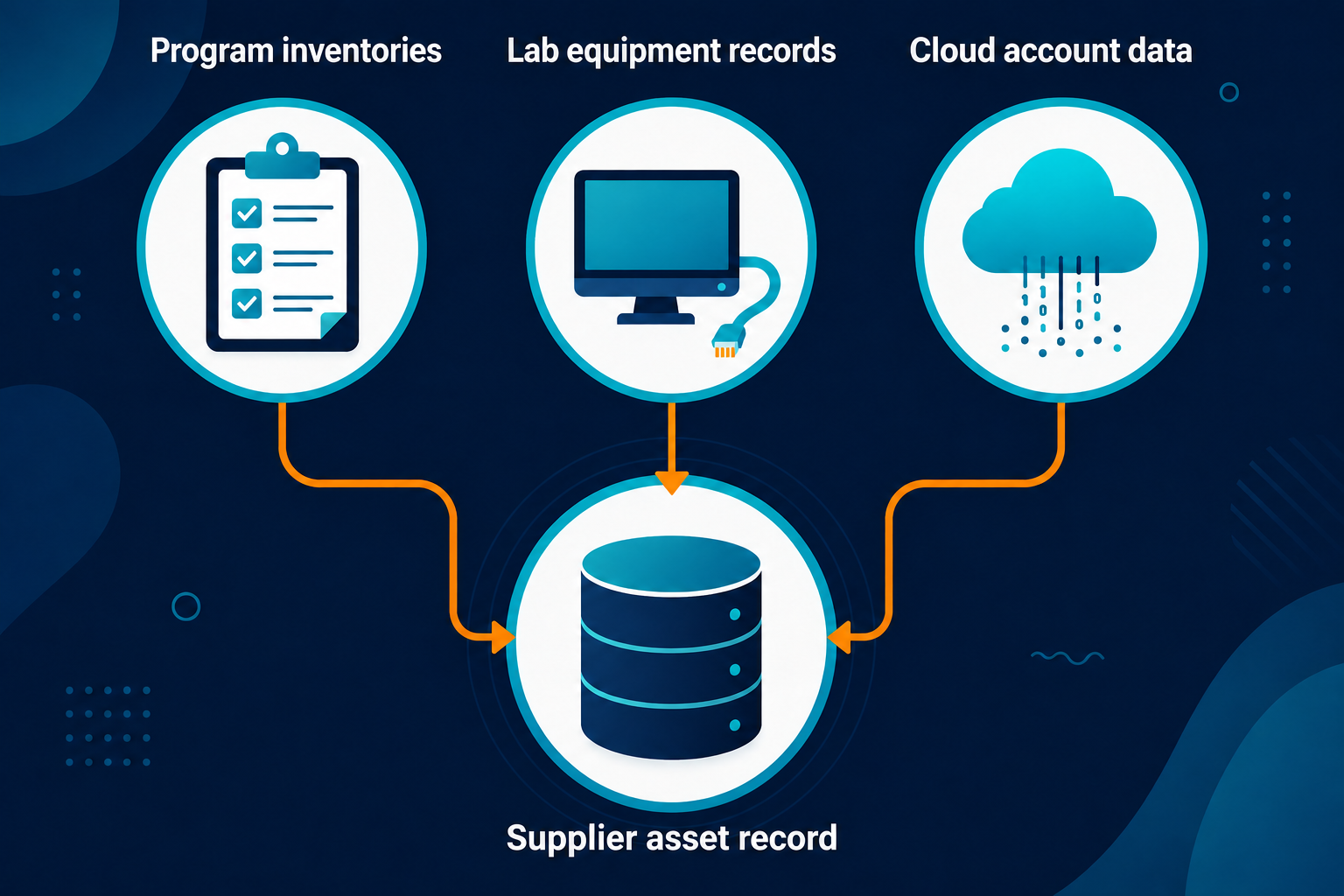
An unobserved item needs an explanation, not an automatic retirement decision. A collection failure, access restriction, or isolated network may explain the missing observation. The record should retain the last successful observation alongside the reason for the gap.
What an IT Asset Inventory for Defense Contractors Supports
National Institute of Standards and Technology (NIST) Special Publication 800-171 Revision 2 includes requirement 3.4.1. It calls for baseline configurations and inventories of organizational systems throughout their system development life cycles. The requirement names hardware, software, firmware, and documentation.
A supplier should confirm which requirements apply to its contracts and covered systems. The security team defines the assessment boundary and determines how controlled unclassified information (CUI) is handled. An inventory can support that work by identifying assets and supplying review history.
A complete-looking export still needs supporting decisions. Someone must reconcile its scope with the system security plan. They must identify excluded environments and document why they sit outside the assessment boundary.
For a customer request, link the inventory extract to the version and date of the supporting assessment. That makes it easier to explain changes between the assessment and a later request. The supplier should keep sensitive details in approved locations.
What happens when an asset has an unresolved scope decision?
A defense supplier can flag the unresolved asset and assign the decision to its security lead. The record should retain the date, relevant program, and location of supporting evidence. Until the decision is confirmed, reviewers should avoid treating the asset as conclusively included or excluded.
What Changed in July and What Still Applies
The Department of Defence’s CMMC guidance states that Phase II implementation was suspended on July 13, 2026. Cybersecurity Maturity Model Certification (CMMC) Phase I self-assessment requirements remain in place. The department also states that the suspension does not eliminate applicable obligations to protect covered defense information.
| Item | Department guidance | Supplier action |
|---|---|---|
| Phase II implementation | Suspended while the department reviews the program. | Check current official guidance and contract terms. |
| Phase I self-assessments | Requirements remain in place for applicable contracts. | Confirm the assessment and affirmation obligations for the work. |
| Information safeguarding | The department says applicable safeguarding obligations continue. | Review applicable clauses with security and contracting staff. |
The department’s published guidance describes Level 2 self-assessments against NIST SP 800-171 Revision 2. It describes a three-year assessment cycle and annual affirmation. Suppliers should verify the current requirements for each contract rather than assume every program has the same assessment path.
A program manager can keep a dated list of applicable contract clauses alongside the assessment documentation. When a customer changes its request, the security lead can compare that request with the existing boundary and identify any decisions that need review.
IT Asset Visibility for Denver Aerospace and Defense Suppliers From Discovery-Sourced Records
IT asset visibility for Denver aerospace and defense suppliers depends on authorized access and a clear boundary. Virima’s IT discovery capabilities support agent-based, agentless, and API-based collection for supported resources. Teams configure scheduled discovery at a frequency suited to their environment.
Agentless collection requires network connectivity and appropriate credentials. A disconnected lab system needs a separate inventory process until authorized access is available. Security staff should approve the collection scope before a discovery cycle runs.
| Record task | Available approach | Supplier decision |
|---|---|---|
| Collect supported infrastructure details | Configure agent-based or agentless discovery. | Approve network scope and collection credentials. |
| Collect cloud asset information | Use supported AWS or Azure connections. | Authorize accounts and confirm permissions. |
| Compare source records | Apply reconciliation and source-authority rules. | Resolve conflicting identifiers and ownership. |
| Maintain lifecycle information | Record the lifecycle state and associated history. | Approve and document retirement decisions. |
| Connect service relationships | Provide service definitions for ViVID™ dependency maps. | Confirm the services and relationships relevant to the program. |
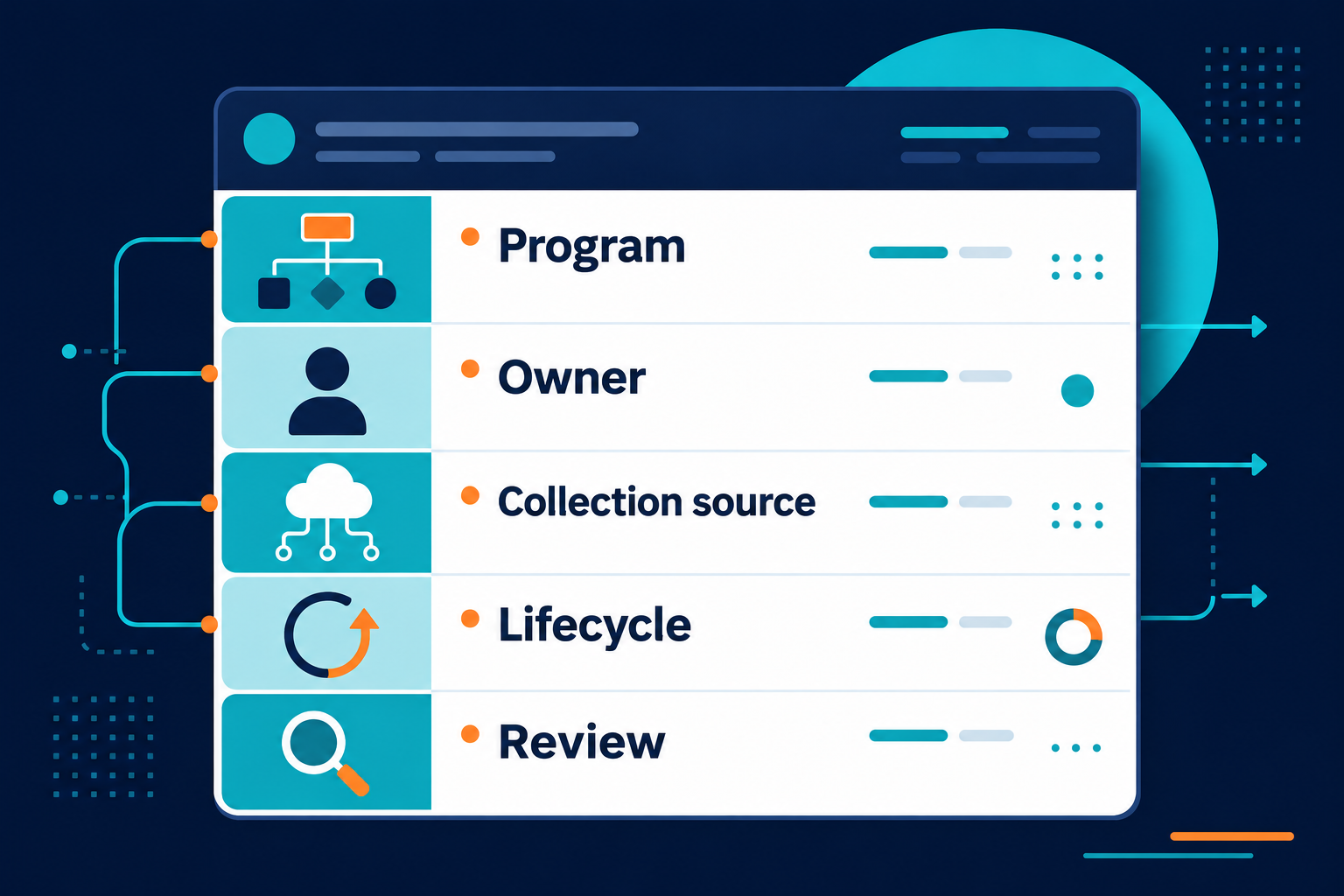
A record supplied by an engineering team can sit alongside discovery-sourced data. A supplier can identify those sources separately so reviewers understand which details were observed and which were supplied by staff.
Virima can store ownership and lifecycle information. People confirm which owner is accountable and which systems handle CUI. The product does not classify the information held on a system or replace the supplier’s security assessment. Supplier staff must document operational technology using their own approved inventory process.
Before joining two records, compare their durable identifiers and investigate disagreements. A hostname can change, so the supplier should use an appropriate identifier, such as a serial number or cloud instance ID, where available. Keep the unresolved entries visible until an owner confirms the match.
How should a supplier record an isolated lab device?
A supplier can maintain an isolated lab device as a manually supplied record with its identifier and responsible owner. The record should identify the manual source and review date. Engineering and security staff can confirm its network status without connecting the device solely to populate an inventory.
What One Maintained Record Can Help Measure
Discovery results and program lists need reconciliation before a supplier can use them together. Enterprise Management Associates’ October 2026 ITAM maturity benchmark asked respondents to name their single biggest discovery and asset-data gap.
Of 203 respondents, 31.0% selected data integration across silos. Another 27.1% selected stale, inconsistent, or untrustworthy data. Virima sponsored the research, which surveyed North American IT professionals at organizations with at least 1,000 employees. The survey does not represent Denver defense suppliers specifically.
A supplier can establish its own baseline using measures tied to the population under review:
- Owner and program coverage: Count in-scope records with both fields confirmed, and divide by the in-scope population.
- Observation freshness: Count eligible records observed inside the agreed review window, separating manually documented assets.
- Unmatched devices: Count devices found within approved scope that do not match an existing record.
- Open exceptions: Count records awaiting a decision on ownership, lifecycle, or assessment scope.
Keep the population and review dates visible beside each measure. A percentage can rise simply because the measured population became smaller. Finance can compare approved retirement decisions with contract and renewal records, without assuming a preset saving.
One Supplier Record, Field by Field
A supplier’s configuration item can connect operational information to an evidence request. The table identifies useful fields without assuming that every customer may receive them.
| Field | What it holds | Why a reviewer may ask |
|---|---|---|
| Owner | The person or team responsible for the system. | Identifies who can confirm the record. |
| Program | The work or service associated with the system. | Helps define the requested population. |
| Source | The discovery feed or person who supplied the field. | Shows how the information was obtained. |
| Last observation | The latest successful collection date, where applicable. | Helps a reviewer assess the age of the observation. |
| Lifecycle state | The approved operational or retirement status. | Separates active records from documented retirements. |
| Dependency | A recorded relationship to another system or service. | Supports review of affected systems and contacts. |
| Service ticket | A reference to a related incident or change. | Connects the asset to an operational decision. |
A restricted extract can omit sensitive fields that the recipient does not need. The supplier should retain the original record and its access controls, then document which version was supplied to the customer. The supported integration catalog lists connections with service-management platforms. Confirm the available fields, direction, permissions, and security controls before moving records between systems.
Discuss your supplier inventory requirements with Virima, including the sources your team can access and the records customers may request.
Frequently Asked Questions
What is IT asset visibility for a defense supplier?
It is the ability to identify relevant systems and understand who maintains their records. A supplier can use asset identifiers and documented source information to distinguish similar devices across separate programs and locations.
Why maintain an inventory during the CMMC Phase II suspension?
An inventory gives suppliers a starting population for security and operational reviews. Contract requirements can differ by program, so teams should check the governing clauses and keep a dated record of the instructions they apply.
Which systems might an aerospace supplier record?
A supplier might record servers, engineering workstations, lab computers, cloud accounts, and relevant software. The security team decides which records belong in each assessment, and engineering staff can document equipment outside approved discovery scope.
Who decides which supplier systems are in scope?
The supplier’s security team determines its assessment boundary using applicable requirements and contract information. The prime can clarify the information and obligations passed to the supplier, while the supplier documents its own scope decisions.
How often does Virima refresh discovered asset records?
Virima discovery runs on a schedule configured by the customer. Teams should choose a frequency that respects network access and maintenance windows, then investigate failed collection attempts before relying on the resulting observation date.