
Two Inventories, One Network. IT Asset Discovery for Baltimore Academic Medical Centers
 Summarize with ChatGPT
 Summarize with Claude
Key Takeaways
- IT asset discovery for Baltimore academic medical centers can document servers and workstations supporting clinical care and research.
- Separate patient-data and controlled-access research tags can identify overlapping systems in one configuration record.
- Medical center inventory owners should confirm discovery coverage and assign alternate sources for clinical devices outside scope.
IT asset discovery for Baltimore academic medical centers and research institutes begins with a difficult inventory question. Which systems support patient information, and which support controlled-access research data? The answers can overlap, while ownership and evidence remain spread across clinical, campus, and research groups.
A configuration management database (CMDB) can hold infrastructure records from approved sources. Clinical and research owners still determine which systems fall inside each review. Medical devices and physical equipment tracking require separate sources and decisions.
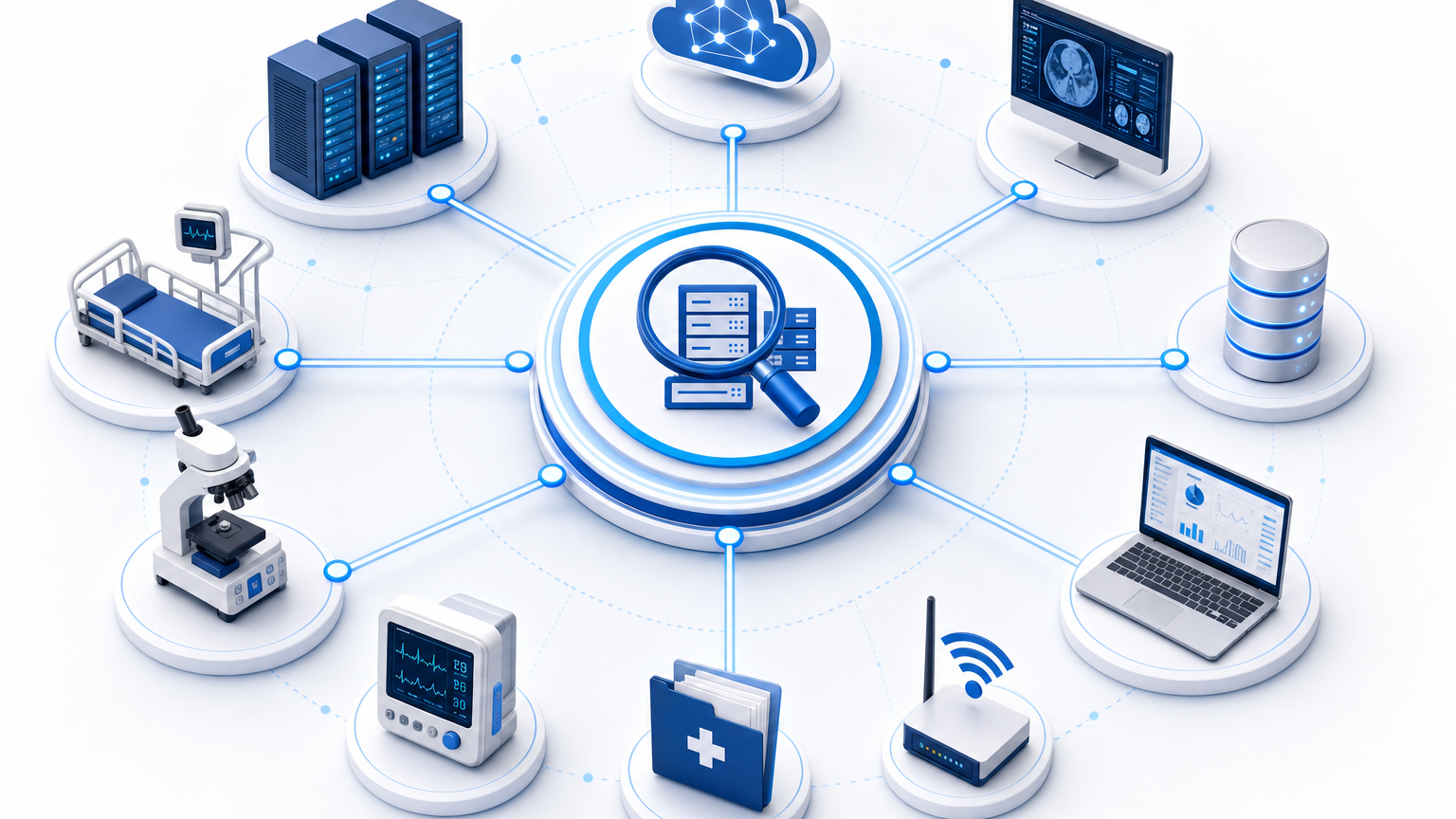
IT asset discovery for Baltimore academic medical centers and research institutes across four environments
Academic medical centers combine clinical systems with teaching and research infrastructure. A server supporting an application may sit alongside departmental workstations, research services, and cloud resources. Their ownership can cross organizational boundaries even when the systems share network connections.
The University of Maryland, Baltimore research guidance offers a local example of different data-handling boundaries. Its Research Electronic Data Capture service has a separate secure research environment for projects involving patient medical records. The university requires that environment for specified sensitive projects and restricts how project data can be exported.
Those public instructions describe research workflows, not the university’s asset inventory or its use of Virima. Other institutions should define their own technical and administrative boundaries.
| Environment | Potential records | Inventory approach |
|---|---|---|
| Clinical IT | Application servers and workstations | Discover approved IT systems and confirm clinical ownership |
| Academic departments | Department servers and managed endpoints | Compare discovery with departmental records |
| Research cores | Lab servers and instrument workstations | Verify access, ownership, and approved methods |
| Research cloud | Virtual machines and cloud resources | Use supported connectors and owner-supplied scope |
| Clinical devices | Biomedical equipment | Use a separately maintained clinical equipment source |
A medical device register and an IT inventory may use different identifiers and stewardship rules. Clinical engineering should identify the equipment source and its owner before records are compared. Asset managers can document which populations are covered and which require another source.
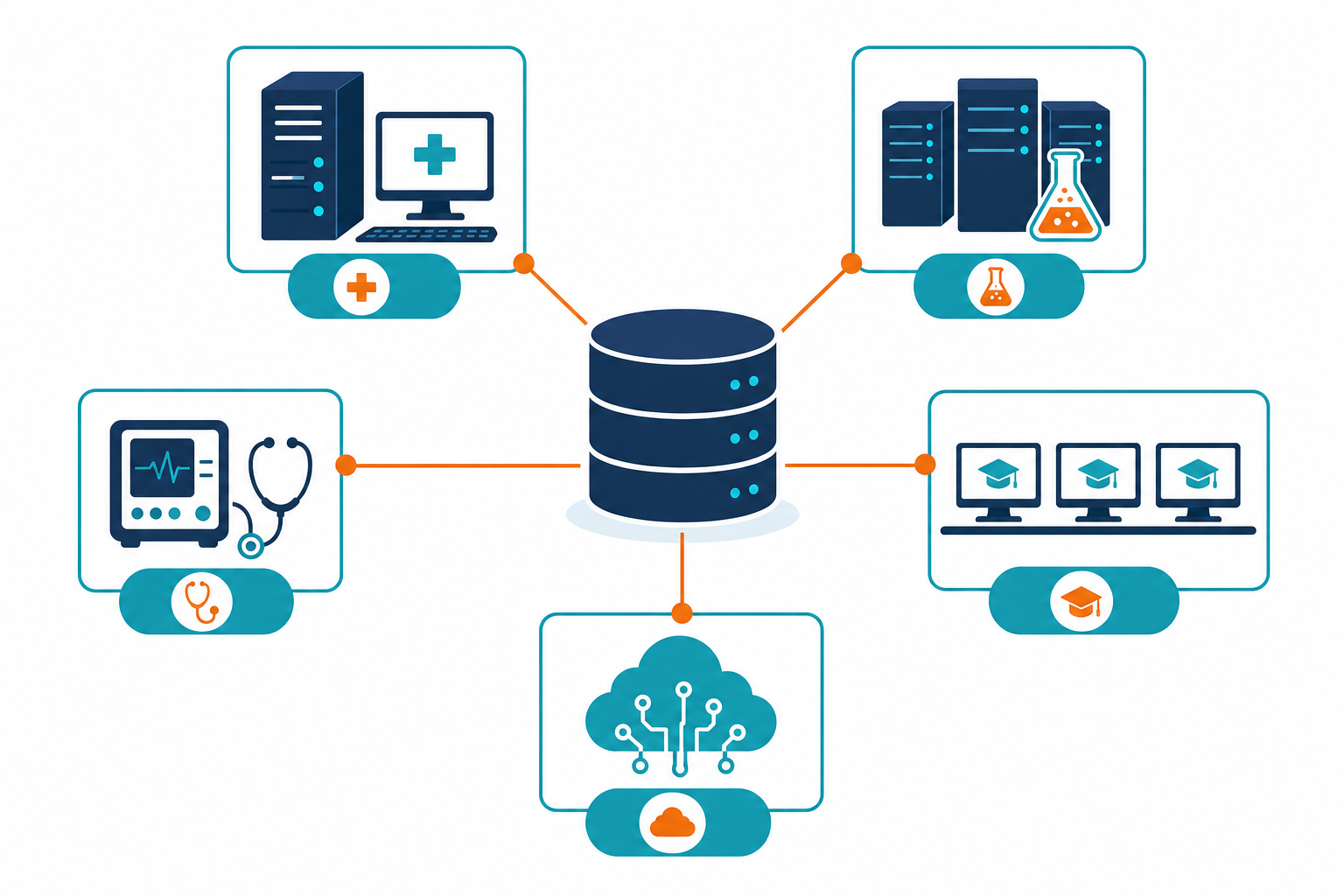
Two inventory duties, and where each stands today
The Health Insurance Portability and Accountability Act (HIPAA) Security Rule addresses electronic protected health information (ePHI). The current Security Rule remains in effect while the US Department of Health and Human Services considers its proposed changes.
The department’s 2025 proposal would require regulated entities to maintain a technology asset inventory and a network map. The map would illustrate how ePHI moves through relevant electronic systems. The proposal calls for updates at least every 12 months and after relevant changes. The federal rulemaking agenda entry lists the proposal as a long-term action, with July 2027 as the estimated final action date. Agenda dates are planning estimates, not legal deadlines. Institutions should monitor the final rule and seek their own legal guidance.
The National Institutes of Health (NIH) has a separate set of expectations for controlled-access research data. Under NIH’s genomic data sharing update, the user-security update took effect on January 25, 2025. It applies to approved users of controlled-access human genomic data under the policy, including relevant new or renewed agreements.
The update expects users to attest that their institution complies with National Institute of Standards and Technology Special Publication 800-171 (NIST SP 800-171). Users selecting third-party systems or cloud providers also provide the applicable attestation. A system record can support the institution’s assessment, but the institution remains responsible for the attestation.
NIH’s current requirements page also describes expectations for users of other NIH controlled-access repositories. It identifies February 25, 2026, for new or renewed agreements under that broader scope. Researchers should check their actual agreement and data type rather than assume all NIH-funded projects share identical terms.
Does a hospital asset inventory establish compliance with research data terms?
An asset inventory gives research compliance staff a list of systems to examine. The applicable agreement determines the security expectations for each project. The institution must assess safeguards, document its conclusions, and make any required attestation through the relevant approval process.
Where the two boundaries cross on one network
Clinical and research boundaries answer different questions. A clinical review considers systems relevant to protected health information. A research review examines the environment used for a particular controlled-access dataset and agreement.
The same server may appear in both reviews when an institution determines that both scopes apply. A configuration item (CI) can carry separate fields for those decisions. A shared record reduces the need to reconstruct a second list from the beginning.
The tags need named decision makers. Application owners can identify patient-data workflows, while research compliance staff confirm the controlled-access boundary. Security staff can review the supporting evidence and assign unresolved cases for investigation.
A discovery result alone cannot determine what a dataset contains. An unclassified server should remain marked for review until an authorized owner makes that decision. Keep the decision date and source alongside the field so a later reviewer can follow the reasoning.
What happens when clinical and research owners disagree about a system?
Clinical and research owners can record their separate decisions against the same system while the disagreement is investigated. The asset manager should identify the outstanding evidence and assign a reviewer. Retaining both decisions prevents an unresolved classification from disappearing inside a merged asset record.
Virima’s Trusted Runtime Truth approach connects discovered infrastructure with ownership, relationships, change history, and potential service impact. Those details give reviewers a starting point for checking the relevant environment.
What scheduled discovery can hold, and what it cannot see
Discovery coverage depends on network reach, credentials, supported integrations, and the institution’s approved scope. Infrastructure teams can schedule discovery cycles at a frequency suited to their environment. Failed jobs and excluded segments still need an owner.
Agentless discovery uses network access and appropriate credentials to collect information from supported systems. An agent can collect information from supported endpoints where installation is approved. Compare both methods before selecting one for a sensitive research environment.
AWS and Azure integrations can contribute supported cloud asset records. VMware and Microsoft Hyper-V are examples of supported virtual infrastructure sources. The integration catalog also lists Kubernetes, OpenShift, and other container platforms. Confirm the specific fields available for each source during evaluation.
Research workstations attached to instruments require additional care. The lab owner should check vendor support and local approval before credentials or an agent are introduced. When discovery is unsuitable, document an alternate inventory source and a review date.
Clinical and biomedical devices are outside the discovery scope described here. Clinical engineering should maintain the authoritative equipment register and determine how it shares its records. Virima’s IT record does not physically locate equipment or inspect information pasted into an outside browser tool.
How should research IT handle an unreachable discovery target?
Research IT should check the approved network path and credentials before treating an unreachable system as absent. The owner can compare the failed target with a departmental register and record the investigation date. A repeated failure may require a different approved source or an explicit scope exception.
IT asset discovery for Baltimore academic medical centers and research institutes with Virima
Virima combines discovery-sourced infrastructure data with information supplied by other approved sources. The CMDB holds records, relationships, lifecycle details, and history for the items an organization chooses to manage. Owners must resolve conflicting information and confirm classifications.
| Capability | Use in a medical research environment |
|---|---|
| Discovery | Collect supported server, endpoint, and infrastructure details on a schedule |
| Reconciliation | Bring multiple source records together using configured rules |
| Lifecycle and history | Retain changes and record an asset’s lifecycle state |
| Health scoring | Review record completeness, accuracy, and staleness indicators |
| Service mapping | Build dependency maps after service definitions are supplied |
| Application programming interface | Support approved exchange with other systems |
A system owner can use a durable serial number or cloud instance identifier to investigate a match. Hostnames and network addresses can change, so they should not serve as the sole evidence for merging records. Where records disagree, preserve the conflict until the responsible owner confirms the correct information.
ViVID™ builds a dependency map after the institution provides service definitions. Application and infrastructure owners should review the resulting relationships before using a map for change planning. A dependency map can support that review without establishing the movement of protected data by itself.
For service-management handoffs, confirm the connector’s field mappings and exchange direction before using its records in a review. The responsible owner should resolve conflicting values between the service desk and the configuration record.
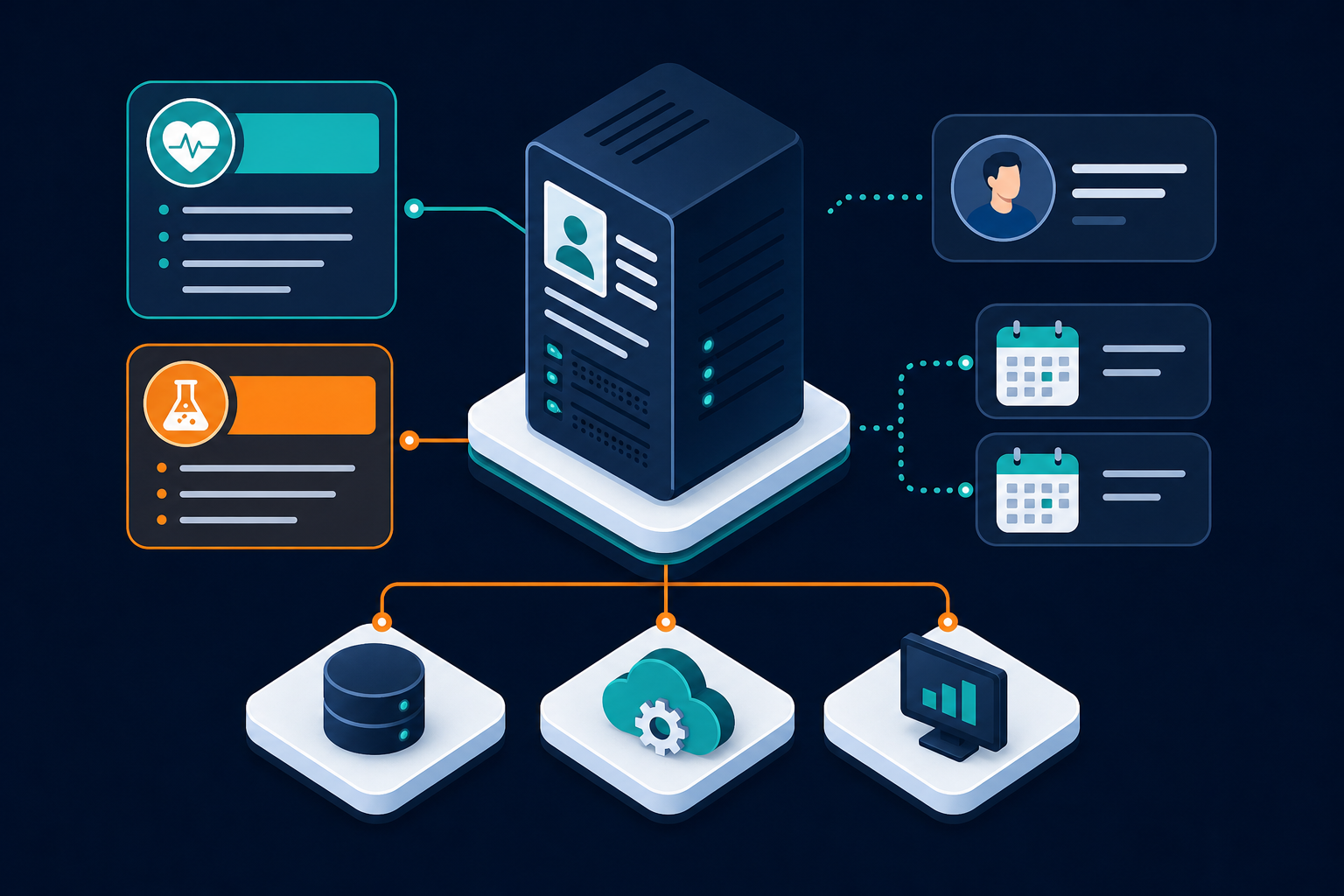
What one maintained record can and cannot cut
Enterprise Management Associates (EMA) asked 203 North American technology professionals to identify their single biggest discovery and asset-data gap. In the Virima-sponsored ITAM maturity benchmark, 31.0% selected integration of siloed data. Another 27.1% selected stale or untrustworthy data, while 12.8% selected coverage.
Respondents worked at organizations with at least 1,000 employees. The survey was not limited to healthcare and does not establish a cause for any medical center’s inventory gaps. It describes respondents’ selected challenges rather than measured Virima outcomes.
An asset manager can measure the work involved in producing each review list. Record the hours spent reconciling sources and resolving ownership questions. Compare that effort across reviews only after noting changes in scope and staffing.
Three measures can make the record useful for both groups:
- The share of in-scope configuration items with a confirmed owner.
- The share of relevant servers with a reviewed environment classification.
- The age of the last successful observation for controlled-access systems.
Use a documented expected population as the denominator. A rising asset count alone does not establish complete coverage. Review exceptions alongside the measures so an unreachable segment is visible to the people responsible for it.
How can research IT measure an inventory’s usefulness?
Research IT can compare records against a defined system population and track unresolved ownership or classification decisions. The denominator should exclude assets outside the agreed scope. Reviewers can then investigate missing records without treating an expanded inventory count as proof of complete coverage.
A twelve-month calendar for one record
A calendar gives owners recurring opportunities to inspect the record. Institutions should set their own review cadence and check applicable agreements. The table below is an operating example, not a legal deadline.
| Quarter | Review | Record fields |
|---|---|---|
| First | Confirm clinical and research review boundaries | Owner, environment classification, review date |
| Second | Inspect discovery failures and source conflicts | Source, last observed date, exception owner |
| Third | Review systems involved in upcoming changes and agreement renewals | Service relationship, agreement reference, assigned reviewer |
| Fourth | Review the inventory and retirements against local policy | Lifecycle state, decision date, history |
A new or renewed data agreement may require review outside this calendar. Likewise, changes affecting a clinical system should prompt the institution to inspect the relevant records. The proposed HIPAA update describes a minimum 12-month inventory review and change-related updates if finalized in that form.
For decommissioning, the system owner decides whether the asset is retired. The security lead confirms the decision against local procedures. The record should retain the lifecycle state, decision date, and available history for later review.
Schedule a discovery and CMDB demo to discuss how Virima can support your clinical and research infrastructure records.
Frequently asked questions
What is IT asset discovery for an academic medical center?
IT asset discovery collects information about supported infrastructure within an approved scope. A medical center can compare those results with departmental registers and assign owners to records that need investigation.
Why review the HIPAA inventory proposal before it becomes final?
Reviewing the proposal can help an organization identify its existing information sources and responsible owners. Its compliance team should continue applying the current Security Rule and monitor any final rule for changes.
Which research systems are worth recording?
Research servers, managed laboratory workstations, and approved cloud resources can be useful inventory entries. The institution should confirm which systems support each research environment and identify an owner for uncertain records.
Does Virima discover clinical and biomedical devices?
Clinical and biomedical devices are outside the discovery scope described in this article. Clinical engineering should maintain its equipment records and decide how to provide relevant information to other asset owners.
How often can Virima refresh discovered infrastructure records?
Virima supports scheduled discovery cycles configured for the environment. The institution should choose an appropriate frequency, monitor job failures, and assign owners to investigate systems that cannot be reached.